Social Listing, a New York City startup launched last week at Tech Crunch Disrupt with a location-based mobile application to connect local buyers and sellers. The new app for both iPhone and Android aims to reinvent local classified advertisements by enabling users to sell anything, socially, locally and in realtime from their mobile phone.... [read full story http://is.gd/Az7ykJ]
The Internet isn't just transforming the world of professional publishing, it's opening up a whole new world of self publishing, too. Sites like Wattpad have become hubs for people wanting to share their homespun fiction.
One of the benefits of so much fiction being shared digitally (Wattpad says it sees over 150,000 new works uploaded each month) is that trends can be spotted, telling us about what’s on the minds of creative people out there.
One of the most interesting trends Wattpad has spotted in recent months is ‘Facebook fan fiction’..... [read full article http://is.gd/eXejJX]
Patagonia clothing company is a designer of outdoor clothing and gear.
Patagonia is one such company [Magnify.net provides a video curation platform for.]
They’re passionate about global warming, they’re passionate about the environment, and they’re passionate about outdoor adventure and clothing. There’s lots of video out there that kind of orbits around the Padagonia brand but isn’t necessarily about their products... [read more http://is.gd/Ntzgpa]
Once upon a time, search engine optimization (SEO) was the number one tool for optimizing your visibility and business on the Internet. Now it’s all about “social media optimization” (SMO).
The five SMO rules are: 1. Create shareable content 2. Make sharing easy 3. Reward engagement 4. Proactively share content 5. Encourage the mashup
The rules have changed because we are returning to what Brian Solis loves to call “the human algorithm”.
Brian Solis talked about the importance of the interest graphs as relationships will be built around them. In this day in age of digital abundance it is also vital that the discussion be relevant. As we’ve mentioned before context is god.... [read full article http://is.gd/zW5mpC]
New York Times best-selling author, Neil Strauss talks about how to create great content.
As far as content creators come, Neil Strauss is one of the best there is. As a six-time New York Times best-selling author, Strauss has time and time again given us a look into the lives of celebrities who, before Strauss, had been hidden behind the veil of stardom.
In his "Rise to the Top" interview with David Garland, Strauss shares some of the tactics he's used to develop such interesting stories. Although most inbound marketers will never find themselves in a position to interview such notorious celebrities, many of his strategies can be applied to everyday content creation. You can watch the full interview below for more details on what has made Strauss such a good storyteller....
A recommendation from the recommendation frontier: You may not want to fire your human editor just yet. For the last year, I've been investigating the weird, wild, mostly hidden world of personalization for my book, The Filter Bubble.
The business logic behind this race to personalize is quite simple: if you can draw on the vast amount of information users often unwittingly provide to deliver more personally relevant content, your visitors have a better experience and keep coming back. And of course, once you've got the code running, why suffer the overhead of expensive human editors? In theory, personalization can do a better job at a lower price: what's not to love?
In practice, a lot. While personalized feeds are taking off, they still fall short of good human editors in some important ways. Here are seven of them: 1. Anticipation. 2. Risk-taking. 3. The whole picture.... [read full article http://is.gd/MN2rzi]
Good content is an essential element to any digital marketing strategy. Content “scent trails” can help generate awareness and give prospects a stronger sense of your organization and its offerings. It keeps them interested.
I’ve written about organizing and managing a team blog for business, and shared some pointers about how to choose the perfect authors to generate juicy content. You may need to curate content from other sources.
Content curation is the much-discussed tactic of gathering, cataloging, and presenting work of potential value to others.
Get good content in front of readers in more ways than just a tweet. Use email, user-generated content, and themed blog posts to catch their eyes... [read full story http://is.gd/8iuyXk]
As NASA embarked on the final launch of the Endeavour Space Shuttle, it also launched a new type of endeavour…its own network here on SlideShare, aptly named “NASA Universe”. Can you even imagine how much content that NASA has to share? The network aggregates content from existing NASA channels including Ames, Dryden, Glenn, Goddard, Johnson, JPL, Kennedy, Langley, Marshall and Stennis field centers. It also includes channels on NASA Technology and the NASA Open Source Summit event. What a treasure trove of information for researchers, students and the general public!
In an article from Federal Computer World [http://is.gd/aQRrIe], NASA’s social media manager Stephanie Schierholz describes the challenge of managing and making available so much information. She says, ”NASA Universe aggregates the content, which is great for us because we have 10 different field centers. Aggregation makes sense for us.” Mashable also took notice of the sharing and social media aspects in its article.
NASA Universe offers a single location for sharing many types of content, including videos, Microsoft PowerPoint presentations and Adobe PDFs.... [view more http://is.gd/fmC0FC]
When creating content for your brand, you are helping to educate your prospects only through vendor content. Without content from outside experts and peer groups, they are left on their own, out of your reach, to find it themselves.
That’s why creating content is no longer enough: It is essential to curate content from other sources, as well. Content curation is the art of finding, organizing, and sharing the best and most relevant online content on a specific topic or issue. Just as a museum curator procures, contextualizes, and shares the most interesting masterpieces in a gallery, a content curator must do the same. As a content curator, a marketer brings together the most relevant content from the experts, from their peers, and from vendors (yes, even competitors), packaged into a single location for prospects to consume... [read full story http://is.gd/3cEJFT]
For the last six months, Pulse has curated Top Stories feeds to help users discover interesting content when it is most relevant. Top Stories has been one of our most popular features, receiving millions of update requests per day.
To help start off our new engineering blog, I’ll share some of the technical details behind how we build these feeds. Yesterday we also announced the ability to follow our Top Stories by category via Twitter.
We start building the Top Stories feeds by analyzing anonymous data on what stories are currently being read and shared the most through Pulse. Since the volume of data coming from Pulse is always growing, we’ve built several highly scalable systems for collection and analysis.... [read full story http://is.gd/XANBtC]
Marketers are all abuzz about content marketing. Indeed, it seems to be the hottest marketing topic right now, and everyone is taking a serious look at how to evolve digital programs to align to a content-centric approach.
In many aspects, this renewed focus on content is an extension of the social media marketing evolution, and the recognition that in order to succeed in a real-time, always-on social web, content - as it always has been for search - is king. As the sounding bell for content grows louder, there are many questions that arise when talking about content strategy.
When developing a content marketing strategy, consider the five P's framework: prep, program, produce, publish, and propagate.... [read full story http://is.gd/X75VQj]
We’ve all heard the phrase, typically uttered by agencies and ‘social media experts’, “Content is King”. This proclamation throughout the industry is the crux of a main challenge faced by fashion and luxury brands in particular.
If creating engaging and relevant information is the key to digital success, it is critical brands understand the guiding principles of content creation and curation.
As it has been learned throughout the industry, it is not especially effective to merely be present within social media. Simply hanging the proverbial shingle that is a dedicated Twitter handle or Facebook page does not equate to social success by any stretch of the imagination. The immediate gratification received initially by brand marketers as they watched the number of fans and followers climb has resulted in a less than monumental shift in consumer brand perception, sales figures, and marketing reach. The emptiness of a brand position within social media becomes painfully obvious when the content is lacking. On the other hand, we see brands and users reap sizable rewards when subject matter is interesting, engaging and tailored for the audience.
As mentioned at yesterday’s Luxury Interactive conference in London, “Content is the social currency.” In other words, content is what sparks the exchange of information, or the dialogue. Without (interesting) material, the conversation quickly becomes one-sided and ineffective.... [read full story http://is.gd/XvUw8x]
Whatser is a location-based social app that sits somewhere between Foursquare and Yelp, letting users share their favourite places, rather than their current location, with friends. It’s now opened up to brands too, letting them do the same... [read full story http://is.gd/EuFBKX]
100 Cameras in 1, a photo app created by Stuck in Customs, can now export photos manipulated by his app directly to Instagram. 100 Cameras and 1 is a photo filter software that allows you to add more effects to your photos, the first app to do so.
If more apps export to Instagram, the upstart photo network could become the center of the iPhone mobile photo experience...
With so much real-time reporting of news events via Twitter, some argue that we no longer need the traditional news article. But I disagree — while real-time reporting is very powerful, we still need someone to make sense of those streams and put them in context. In fact, we arguably need that even more.
As anyone who has read my posts on social media and the future of media knows by now, I am a big fan of the way that social tools such as Twitter and Facebook and Flickr and YouTube have democratized the production of content of all kinds. And so is the kind of journalism that Brian Stelter did from Joplin, and the way that Andy Carvin of NPR has been using Twitter as a live news-curation tool.... [read full story http://is.gd/htWapa]
Most of us will never have enough time to consume the information we might otherwise want to absorb. There's simply too much info and too few waking hours. Enter the notion of curation, a relatively new term that is not unlike the editor of old, a trusted person or organization that filters information and aggregates it in an organized fashion for others to enjoy. According to Steve Rosenbaum, author of Curation Nation, "curation is the new way of organizing the web going forward." And no doubt he's right.
Curious about why new curators like Thrillist and PSFK were thriving while the traditional publishing world floundered, I spent some time with their respective founders, Ben Lerer and Piers Fawkes. These conversations plus one with Eric Alterman, the founder of a new curation engine called iFlow, revealed four insights that could help you too capitalize on the curation phenomenon. 1. You can't curate for everyone, so be targeted; 2. It's not curation without a well-defined focus; 3. If the curation is good enough, it will [almost] market itself; 4. Human curators are smarter than algorithms..
Guest Post wrote by Oliver Starr, Chief Evangelist for Pearltrees.
Perhaps you won't believe me since it's my job to "spread the gospel" of curation as the Chief Evangelist of Pearltrees but I think curation is here to stay. These are the reasons why I believe this is the case:
This year there has been a tremendous amount of buzz in Silicon Valley about curation.
With all the attention curation has suddenly received people are probably wondering whether this is just another fad or is it something bigger? Is curation something more important than just the day's newest flavor; is it something that's going to have real sticking power? In short is curation something that really merits our attention?
First, curation is one of the underlying principles of the Web. Secondly, we have very strong evidence that curation has begun a similar process towards democratization.... [read full story http://is.gd/l8sLCD]
What exactly is “curation” and how does it relate to web video marketing? To find out, I spoke to several curation experts. They explain why they consider it the best way to blend work relationships between machines and human beings to deliver rich and relevant video content to your audience; and why those who expect to be successful web marketers will also need to learn how to be successful video curators.
Steve Rosenbaum, founder of the video curation service Magnify.net and author of Curation Nation, has offered his own updated definition of a curator as “someone who is deeply familiar with their areas of expertise.”.... [read full article and watch video http://is.gd/7sqf8d]
Curated Kindle content, digital lessons from a web documentary, and the pursuit of concise categorization.
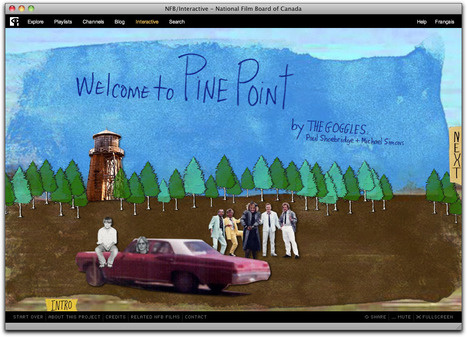
In the latest Publishing News, you can read about: - Web content curation welcomed a new platform — your Kindle A new project called Delivereads curates interesting content from around the web and delivers it to your Kindle; - Pete Meyers on how "Welcome to Pine Point" creates a truly digital reading experience not mired in nor based on print; - George Oates on how a minimum viable record could improve library catalogs and information systems.... [read full article http://is.gd/hSVQkN]
In his latest column on “The Business of Storytelling,” corporate technologist Gunther Sonnenfeld explains how brands like Audi, Kraft and Red Bull are using stories to curate meaningful experiences for people.
Storymaking is a word I’ve made up to describe the discipline of good curation. Brands and marketers have become curators of stories, most often so that they can provide people – their customers – with relevant content, or empower them to curate content and connect to other like-minded people.
If communities are connected through content, then they are also encouraged to build upon those conversations by sharing stories of their own.
Good storymaking consists of four core tenets – the “4 Es”: – Entertainment ... – Engagement ... – Enlightenment ... – Experience ... [read full story http://is.gd/oRMfKs]
VHX.tv is preparing to open up for public beta this Tuesday, offering a new crowd of users the opportunity to test out the video sharing and discovery site. VHX serves a two-fold purpose, offering a social dashboard of videos being shared by other users, as well as the opportunity for users browsing elsewhere to queue up videos for later viewing. The idea is to solve the problem of how people watch and share videos with friends.
VHX addresses the same concept that other startups have approached — that is, the idea that the best way to discover new content is not through an algorithm, but through social interaction... [read full article http://is.gd/Unoa6g]
If you want your branded content to reach the web masses, it needs to be packaged accordingly. These 5 tips will help get your message ready for the road. 1. Create Quality Content; 2. Organize Around Your Message; 3. Operate Like A Publisher; 4. Make Your Content Portable; 5. Make Your Content Findable. [read full story http://is.gd/LWrdHE]
I’ve been having a quick play with Turntable.fm since signing up last night and it’s got me thinking about user-generated and user-controlled radio, which is something I was involved with at Absolute Radio with the dabbl project.
Internet radio listening is a pretty small proportion of overall radio listening, and I wouldn’t suggest otherwise in the near future, even if just to escape the wrath of James Cridland. So then you have user-generated radio as a niche within that area, and yet there are a number of services which have been joined by Turntable FM.
In an age of democratisation of content creation and particularly at the moment, content curation, it seems as if simple and easy user-generated radio is an obvious desire and fit. Make it quick, simple and easy, and you don’t have to worry about on-air talent or programme managers. And at the same time, everyone will love and share the service because they’re involved, engaged and that’s what social networks are all about.... [read full story http://is.gd/IQn9am]
The New York Times is turning off the automatic feed for its main Twitter account this week in an experiment to determine if a human-run, interactive approach will be more effective.
It’s a departure from the normal “cyborg” approach, social media editor Heron told me, which combines an automated headline-and-a-link feed of homepage stories with occasional contributions from the social media editors. That combination has created a bad perception: “that it’s mostly an RSS feed of auto headlines,” Heron said.
This week’s experiment “is about changing the perception, and it’s about being a little more strategic about what we put out there — finding the most engaging content.”... [read full story http://is.gd/PCr1sx]
To get content containing either thought or leadership enter:
To get content containing both thought and leadership enter:
To get content containing the expression thought leadership enter:
You can enter several keywords and you can refine them whenever you want. Our suggestion engine uses more signals but entering a few keywords here will rapidly give you great content to curate.


 Your new post is loading...