Your new post is loading...

|
Scooped by
Giuseppe Mauriello
September 1, 2011 2:16 PM
|
In my last article for the Content Marketing Institute, I outlined why there’s a huge opportunity for content marketers to explore and expand into foreign language online markets. I also offered three quick tips for producing and marketing content in multiple languages. This time around, I’d like to expand on that theme with five tips that will get you on the road to running content marketing campaigns internationally even when you’re monolingual yourself. 1) Researching your market... 2) Localizing duplicate content... 3) Hiring in-country copywriters and pitchers... 4) Researching and localizing your keywords... 5) Harnessing foreign social media... [read full article http://j.mp/piflsE]
|
|
Scooped by
Giuseppe Mauriello
August 31, 2011 5:10 PM
|
2011/08/31 - by Joe Pulizzi that explains why this marks a turning point in the content revolution. First, every software technology company is launching a “content” product. It’s amazing the number and velocity of startup launches in and around content marketing. Second, the term “content marketing” is being bantered around like social media was just a few years ago. People are more confused about the true power of content marketing than ever before. Lots of education is needed. So, will this bubble pop? Honestly, I’m not sure. Content marketing is here to stay, but with it being “the flavour of the month” it’s hard to get a true feel for where it’s going (and how fast). The more I talk to journalism and business professors at universities across North America, the more I realize that they are not talking about content marketing as a career path. Especially for journalism and writing major, universities need to start talking about the real opportunities for young storytellers… with brands. The job market for journalism majors has never looked better, but we have to look at the market in a new way...... [read full article http://j.mp/mPOprR]
|
|
Scooped by
Giuseppe Mauriello
August 31, 2011 11:11 AM
|
Walk past a bus shelter, check product packaging, visit a home improvement store and you’ll see Quick Response (QR) codes. They have gone mainstream, as 14 million people scanned a QR code in June, according to a new report from comScore, and it turns out that half of the time they scanned codes in a newspaper or magazine. Newspapers (and some broadcasters) are exploring how they can make good use of these codes to drive traffic from the print product to the Web via mobile devices, and it may be working. Danny Sanchez, online content manager at the Ft. Lauderdale Sun-Sentinel, says they’ve found QR codes to be more effective than traditional print refers. As they test and experiment, newsroom editors are starting to learn what works — and what doesn’t. That’s the good news. The bad news is that what is working at one news organization isn’t necessarily what’s working at another. But editors at six places have some common suggestions for effectively using QR codes to drive traffic to news content..... [read full article http://j.mp/ojRhqP]
|
|
Scooped by
Giuseppe Mauriello
August 30, 2011 7:30 PM
|
Collaboration's in the air in the run-up to next month's anniversary. The New York Times is in collaboration mode. Today, it’s announced a collaboration that is decidedly more national in scope. In the run-up to September 11, the paper is joining with YouTube and the video-curation service Storyful to gather and share users’ reflections on 9/11 and the meaning of the ten years that have passed since the attacks. “I think this is the first time that we’ve officially been working with YouTube in this way,” says Lexi Mainland, the Times social editor who is helping to oversee the project on the Times’ end..... [read full article http://j.mp/plEtvR]
|
|
Scooped by
Giuseppe Mauriello
August 30, 2011 3:19 PM
|
The Times’ new Twitter megaphone for in-depth, real-time curation of big news stories got its first test run this weekend for Hurricane Irene. What did the Times staff learn? “We learned that people wanted a lot of information, fast,” Social Media Editor Liz Heron told me Monday. “One hypothesis we had never really given ourselves a chance to test was, will people get annoyed with us if they felt like we were tweeting too much? In this case, nobody was complaining.” The people who started to follow the account after it debuted Friday knew they were signing up for a large volume of hurricane-related tweets, so that helped. Despite that, the Times editors tried to make sure they did not waste anyone’s time..... [read full article http://j.mp/oLKeX0]
|
|
Scooped by
Giuseppe Mauriello
August 30, 2011 2:02 PM
|
Last week we talked about reasons why a person (like me) who is curating content may not include certain kind of posts. This week I want to talk about some of the traps one can fall into when working on curating content. Having fallen into most of them, this is something I know a lot about. Or, like Han Solo famously said, “Hey, trust me.” 1. Curating content from only the biggest bloggers out there.... 2. Curating content only from people that are your personal friends..... [read full article http://j.mp/ovJ1QJ]
|
|
Scooped by
Giuseppe Mauriello
August 30, 2011 12:52 PM
|
Many years ago, Google stated ten points on their Corporate Philosophy page. They are still applicable with a constant endeavor by Google to follow the stated norms and also with constant improvements in the implementation procedures. This was reflected in the Scientific Evaluation, recently discussed by Amit Singhal at the discussion hosted by Church Hill Club where he openly explained the testing procedure of every algorithmic update at Google. He says that the focus has always been “DO What Is Best For The User”
All search activity starts and ends with the user.
- The user types in the query in the search box
- The results are displayed for the user by the search engine
- The user decides which results to click on
It seems so simple, but there are scientific and psychological principles which this whole activity revolves around........
[read full article http://j.mp/pyfWNj]
|
|
Scooped by
Giuseppe Mauriello
August 29, 2011 11:34 AM
|
There’s a growing market for content curation, where people dedicate time to sift through the information rubble and extract the best articles, videos, photos…whatever…for a particular audience. Techmeme, for example, pulls together all the best pieces from across the many technology blogs and news websites, and arranges these links into a single, easy-to-scan page. It’s partly automated, but it does have direct human editorial input too. Content curation, in a nutshell, means finding the most relevant, high quality content on a given subject and sharing it with a specific target audience. And CurationSoft is a new tool to help the content curation cause. CurationSoft is a software startup based in Indiana, in the north-east of the US. The desktop software lets publishers gather content from across multiple platforms, and publish it as a single piece...... [read full article and watch video http://j.mp/nkPQUU]
|
|
Scooped by
Giuseppe Mauriello
August 29, 2011 11:26 AM
|
There are several services that curate or organize tweets based on Twitter lists or keywords. Why bother with these services? Its ultimately a chicken-or-an-egg situation, because the service you choose will depend on what your trying to accomplish. Generally speaking though, they lend themselves to community building and time saving features. In some cases they may even help with audience building. For those who track this sort of thing, I’ve noticed that in some cases using a curation service can increase the Klout Score. Unlike a Twitter stream, these curation tools offer a way to collect a lot of information in a single place. Having content in a single space that isn’t changing every 10 seconds has its benefits. For businesses, it gives them another opportunity to showcase the most important or relevant information for their audiences..... [read full article http://j.mp/pS9xDl]
|
|
Scooped by
Giuseppe Mauriello
August 27, 2011 4:06 PM
|
With the Libyan uprising still in full swing, earlier this week we looked at some of the trusted places people could go to get reliable coverage of events as they unfolded. Whilst some of these were the usual news outlets, such as Reuters and the BBC, there was also a plethora of citizens on the ground reporting what they saw as it happened. It’s political and social events such as this that help to demonstrate how citizen journalism has really come to the fore, and it’s something traditional media outlets can’t compete with given that have-a-go hacks are normally at the scene of a story before it even happens. We’ve previously written about how new media is creating a new style of journalism, and we’ve even compiled lists of apps that can help citizen journalists on the move. But here, we’ll look at some of the top websites and blogs out there that help give citizen journalists a voice...... [read full article http://j.mp/oFrZRk]
|
|
Scooped by
Giuseppe Mauriello
August 27, 2011 4:00 PM
|
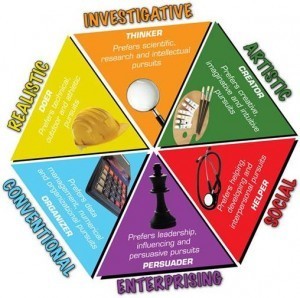
Many marketers are now adding content curation— the act of finding, organizing and sharing online content to engage customers and prospects—to their job descriptions. As with other marketing strategies, personality type can play a big part in your content curation style, from the types of content you share to where you share it and how you go about the process. What’s your curation type? Match your own personality to the qualities below so you can embrace your inner curator. - If You’re Investigative… - If You’re Artistic… - If You’re Social… - If You’re Enterprising… - If You’re Conventional… - If You’re Realistic… [read full article http://j.mp/p9Zf1z]
|
|
Scooped by
Giuseppe Mauriello
August 27, 2011 3:52 PM
|
A content curator is more than someone who re-posts links, quotes sources and aggregates content from feeds. A content curator uses their own passion for the topic to filter and give meaning to the content they select. They also add their own information and ideas to the updates. I have worked as someone who collects content in several ways and methods: web directory editor, topic writer and group moderator. Each requires some aspects of content curating. Online content curators will not only present content but give it their own perspective and priorities. A content curator can shape public opinion with the choices they make, the content they choose to include or pass by.... [read full article http://j.mp/n6qp36]
|
|
Scooped by
Giuseppe Mauriello
August 26, 2011 1:25 PM
|
There is a lot of sound online during a impulse as well as anticipating good calm is tough. We all have about 3 or 4 sites where we stop to reade headlines as well as party each day yet increasingly a media expenditure is entrance to us around curated sources similar to a own personal networks. There has been a outrageous change from a aged indication where “gatekeepers” commanded what calm we used up as well as how we accessed it a latest indication in which curation plays a first roll. Caught in a cranky hairs have been a aged media institutions, yet as consumers we have been winning since not usually do we have entrance to incomparable amounts of calm in genuine time yet a intelligent people have been curating it by a accumulation of sources to compare their needs as well as they have been we do so mostly for free. So what purpose is curation personification as well as what have been a implications for a media universe during immeasurable?...... [read full article http://j.mp/oH0mBg]
|
|
|
Scooped by
Giuseppe Mauriello
September 1, 2011 6:06 AM
|
Harvard Business School's Ray Weaver is exploring the idea that many consumer-centric web-based businesses would benefit from acting more like museum curators. Weaver argues that web-based businesses would benefit from such expert curators. On the web, options for products, services, and information are virtually endless, too. It's daunting for customers, and there's an increasing body of academic research showing that the public responds positively to limited choices. But like museums, these businesses must go beyond simply limiting choices, Weaver says. They must present their wares in such a way that the consumer understands and appreciates the limitations. "Curators don't just put the stuff out there. They make choices about which pieces to put next to other pieces, and put little plaques next to them explaining why you should care," he explains. "They educate their 'customers' about what they're looking at. And that is the missed opportunity in many for-profit businesses today." [read full article http://j.mp/oGHEUu]
|
|
Scooped by
Giuseppe Mauriello
August 31, 2011 4:14 PM
|
Information is everywhere — in the world, in your home, everywhere. In today’s pair of videos from my visit to The New York Times Co.’s R&D Lab, Brian House, The Times Co.’s Creative Technologist for R&D, demonstrates the Lab’s, er, reflection of that idea — in the form of a data-bearing mirror. The device (working name: “the magic mirror”) uses Microsoft’s Kinect motion-sensing technology to read physical cues from its user; it uses voice recognition technology to detect verbal cues. (In the videos, you’ll hear House talk to the mirror, Snow White-style.) The mirror also uses the the Times’ powerful APIs to serve up information on-demand. Essentially, the mirror fuses news — and, in this case, a highly branded, New York Times experience of the news — with all the other forms of data that we encounter in our daily lives. Again, the “information shadow” idea. By building a device that is both a screen and a mirror, the R&D Lab can experiment with the ways to combine the personal and the informational in ways that (it hopes!) aren’t intrusive, but rather helpful and, in that, welcome. This is The New York Times Company acting not just as a curator of information about the wider world, but also as a curator of the information that punctuates, and complicates, and in some sense defines its customers’ personal lives...... [read full article and view video http://j.mp/rur13s]
|
|
Scooped by
Giuseppe Mauriello
August 30, 2011 7:44 PM
|
Last week, we reported that interactive marketing was forecasted to grow substantially over the next five years. Almost on cue, two launches seek to capitalize on this predicted growth. Ventana, best known for its public relations, has spawned a new entity it's calling Ventana New Media. With it comes the release of the Ventana New Media Engine, designed to optimize content-driven search engine communications so organizations can build an effective brand identity, while generating leads accurately across appropriate platforms. In an effort to help companies harness the value of social media, the New Media Engine is a publishing platform that connects content to six major types of networks, which could accelerate a message or visibility. The platform aims to help companies control their message in a way that adds value for both company and customer...... [read full article http://j.mp/qFiLKv]
|
|
Scooped by
Giuseppe Mauriello
August 30, 2011 6:20 PM
|
Web content management is at the most significant inflection point in its 15-year history. It's now all about the context. Context defines a visitor’s Web experience. If a visitor has come to a site through a search, he doesn’t want to click through multiple, slow-loading, hard-to-read pages to find a single piece of information. If visitors are on your site to make a purchase, it is imperative they experience the same level of checkout/shopping cart convenience that they would in the brick-and-mortar world. If a prospect has arrived on a landing page via an e-mail marketing campaign, Sales and Marketing definitely wants that page to display correctly on any device the prospect is using. “Delighting customers doesn’t build loyalty,” note the authors of a recent Harvard Business Review article. “Reducing their effort — the work they must do to get their problem solved — does.” Showing an understanding for the customer and respecting the manner they want to interact breeds loyalty.... [read full article http://j.mp/poOShm]
|
|
Scooped by
Giuseppe Mauriello
September 1, 2011 4:58 AM
|
While it’s great to place a company’s name in front of prospects, if the exposure doesn’t drive more sales, the results weren’t worth the effort. After all, the desired outcomes of good marketing are: - lead generation
- sales
- customer retation
There’s a direct link between those revenue oriented goals and content curation. Content curation sends information to an audience over a variety of channels, matching message delivery methods to those most likely to engage and purchase. Focused online marketing performed in this manner has been known to vastly increase lead generation and sales.
Here are 3 Ways Content Marketing Drives Sales...
[read full article http://j.mp/rfFcQl]
|
|
Scooped by
Giuseppe Mauriello
August 30, 2011 1:52 PM
|
Press Release - CAMBRIDGE, MA, Aug 30, 2011 HiveFire, Inc., an online content marketing technology company, today announced that CEO Pawan Deshpande will lead an informative session at Content Marketing World, taking place Sept. 6-8 in Cleveland, Ohio. During his presentation, "Constructing a Powerful Content Curation Formula for Your Brand," Deshpande will provide an overview on the growing practice of content curation -- the process of finding, organizing and sharing online content -- to support marketing goals and explain its key benefits, which include establishing thought leadership, improving SEO and increasing brand visibility..... [read full article http://j.mp/pC2lkx]
|
|
Scooped by
Giuseppe Mauriello
August 30, 2011 7:12 AM
|
The New Search Engine for Sources of Real-Time News. That being said, when I was introduced to Proliphiq, a service that defines itself as a new social media search tool focusing on providing users with, and becoming, truly credible sources for real-time content, I wondered if it could truly deliver. Instead of relying on AI or machine-based guesswork to determine how influential a user is on a specific topic, Proliphiq instead relies upon the combined opinions and suggestions of its actual user base along with statistical analysis to provide a more accurate score. Proliphiq’s ranking system scores profiles based on three metrics: - Engagement
- Credibility
- Audience
What makes the service unique is how it determines these metrics. By deeply integrating user reviews along with “personality” and “tone”, Proliphiq manages to create an entirely original tool that better engages those using the platform and hopefully provides a more accurate way to measure ourselves and our peers on the social scale.....
[read full article http://j.mp/pGkw2c]
|
|
Scooped by
Giuseppe Mauriello
August 29, 2011 8:52 AM
|
The proliferation of the Internet has transformed the way we create, publish and distribute content. Think about the pre-Internet era when companies were at the mercy of content publishers for distribution of content, and where consumers had very few options and meager resources for information gathering. Today, the situation is exactly the opposite. The Internet has made a publisher of each one of us. We now have a problem of plenty – there is too much information available for consumers but it is scattered across the web in different forms, across social networks, and in different languages. And now the new challenge for marketers is to make themselves visible to their consumers in this information deluge. So how does one handle this information overload and how do B2B marketers compete to stay on the top of search results, in this continuous flood of content that will only increase by the day? One new tactic that is gaining popularity in recent years is that of Content Curation....... [read full article http://j.mp/pE6hLs]
|
|
Scooped by
Giuseppe Mauriello
August 29, 2011 8:29 AM
|
It's the "community" part that's at the heart of the whole curation movement and the most powerful element when it comes to curating content as a way of drawing traffic and attention in your marketing efforts. Just as a carefully-curated museum exhibit is sure to draw like-minded people together, carefully-curated content on the web has the potential to attract (and/or build) an online community of people who are into the same stuff. Making curation work for your brand is a lot easier said than done. As countless would-be content curation kings (and queens) have found out, just gathering a lot of links together doesn't guarantee anything except that you'll spend a lot of time curating links. You need to commit resources to both curation and promotion if you're going to be successful. And that's just the first step. To truly succeed as a curator, you need to think like a curator (not just an aggregator) and keep the following in mind.... [read full article http://j.mp/nfzMCT]
|
|
Scooped by
Giuseppe Mauriello
August 27, 2011 12:21 PM
|
As Hurricane Irene storms its way toward the Eastern seaboard — and as news organizations scramble to cover it — The New York Times has launched @NYTLive, a Times-run account featuring “in-depth Twitter curation of major news stories by New York Times editors.” The paper’s main account, @NYTimes, has over 3.6 million followers; the brand new @NYTLive has only 2,200. Not at all shabby for an hour-old account, but why wouldn’t the Times use its biggest Twitter megaphone? First, it solves a problem faced by many news organizations, the small and especially the big, that use Twitter to share stories across several topics and coverage areas. By breaking out the breaking news from the everyday news — the you-care-about-it-now from the comparatively evergreen — @NYTLive gives the Times the flexibility to live-tweet big stories without flooding its main account and overwhelming the other stories that are sent out on its feed..... [read full article http://j.mp/qHTLZi]
|
|
Scooped by
Giuseppe Mauriello
August 27, 2011 1:25 AM
|
A 2010 study by the Pew Internet Project found that searching for health information online was the third most popular online pursuit. But what you find when you search is not necessarily what you need if you’re managing a disease. Searching “autism,” for instance, brings up a Wikipedia page, a fact sheet from the National Institutes of Health and an overview from MayoClinic. If I get more specific with my search, and type in “Risperdal,” a drug that is sometimes used to treat autism symptoms, I get a result titled “What Risperdal did to me” and another for a dense 2002 study by the Massachusetts Medical Society... [read full article http://j.mp/oePMaR]
|
|
Scooped by
Giuseppe Mauriello
August 26, 2011 6:01 AM
|
So you get started on the right path, information overload was bound to happen, it always does. As social creatures we cannot get enough of socializing – that is, until we have had too much. MySpace was in, now Facebook is, soon G + will be, and Twitter is only good for saying; “Hi!” Isn’t then next iteration obvious? Content, like (video, text, or scratch and sniff, whatever) has to be packaged in meaningful and useful ways – aggregated, filtered, condensed, and even expanded upon – what people are looking for is a Twitter than when you click a button, explodes into a rich formatted full feature film – we are talking ultimate flexibility.
We are in a period of flux where our communicative skills and efforts are concerned. Those who learn and adapt, will go forward into the forefront of online outreach, and those who lag behind in their methods… This story is ongoing, it’s not just about DO you curate content, it’s about what type of content curator you ARE. Investigative or Artistic, Social or Enterprising, even down to Earth Realistic, methods have to adapt to the people and their stereotypical traits too. This is the complex versions of, “we need to understand one another.”....
[read full article and view presentation http://j.mp/nhGNJ5]
|