Your new post is loading...

|
Scooped by
Giuseppe Mauriello
November 14, 2011 5:46 PM
|
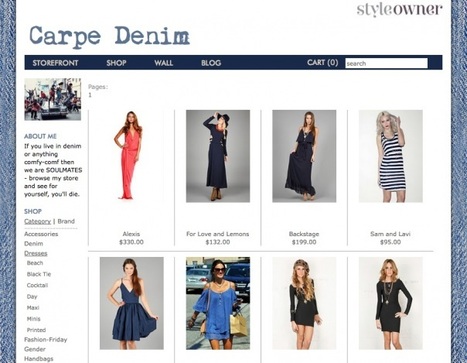
Personal style curation is a huge thing online, especially among females. Sites such as Polyvore and Pinterest have become massively popular by allowing users to assemble collages comprised of their favorite clothing items, accessories and beauty products. These platforms are addictive because they let users express themselves creatively and get positive feedback from other users who dig their personal style. Brands, naturally, are increasingly keen to have their products featured on such sites because of the great sell-through potential they provide. But what if the people who spend hours curating fashion and style products online could make money from the experience as well? StyleOwner is a new e-commerce platform that lets anyone in the United States create and run an online boutique. Users can customize the decor of their online shops using a variety of templates and fill them up with clothing, accessories and beauty products from over 2,000 StyleOwner brand and retail partners... [read full article http://j.mp/shF3fZ]
|
|
Scooped by
Giuseppe Mauriello
November 14, 2011 3:01 PM
|
Excerpt from article intro: We all start with search to find answers to questions, but with so many websites out there, knowing which ones are worth your time can be challenging. That’s why we’re launching Bing Editors’ Picks. Editors’ Picks were designed to enhance Bing results by bringing editorially selected sites to your search experience. Our goal, whether delivered by algorithm or by editors, is to help you find what you’re looking for faster and to get stuff done. Editors’ Picks are small collections of relevant sites that our online editorial experts think will be useful to you, but may not always make it to the top of the search results page... [read full article http://j.mp/uWMvae]
|
|
Scooped by
Giuseppe Mauriello
November 13, 2011 2:02 AM
|
A few weeks back, we reported on N0tice, a pretty innovative project that the Guardian newspaper is trialling, one with potential to take news reporting, and news gathering, in new directions. With that in mind, we thought we’d take a look at CivicBoom, a young Internet startup based in Canterbury, England. It’s a similar proposition to N0tice, except Civicboom claims to incorporate “many more exciting extra features – many of which are still in development.” Civicboom is an online platform designed to facilitate content-driven organizations and individuals to work together in generating rich media content. Civicboom is built from its own open API platform, which means it’s customizable – the platform can be tailored and applied to different industry workflows through the development of an application or plugin. “The aim is to develop Civicboom as the answer to topical concerns over the future role of content-seekers by using our open API”... [read full article http://j.mp/sTFDPe]
|
|
Scooped by
Giuseppe Mauriello
November 10, 2011 5:55 PM
|
Storify is about helping users like you tell the best stories from social media. Today, we're launching a new home page, what we call our "front page," to help readers discover the stories you create on our platform. The new Storify front page includes:
- Four featured Storify stories;
- “Featured topics” that link to more stories;
- Top Storify stories;
- Top stories from Storify users you subscribe to;
- Featured users.
Story pages now also include related stories by the same Storify user and more on the same topic... [view official website http://storify.com/ and read the news here http://j.mp/uW5iZJ]
|
|
Scooped by
Giuseppe Mauriello
November 10, 2011 3:56 PM
|
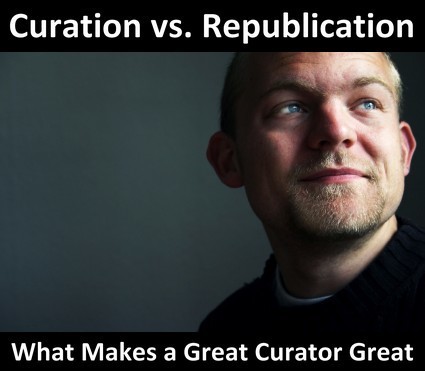
After that the famous content curation platform Scoop.it is now out beta, Beth Kanter analyzes the great article that Robin Good, master curator, wrote here: "How To Distinguish High Value Curation From Republishing: What Makes A True Curator Great" [http://bit.ly/uaIBMD] - Robin gave us a great checklist of skills. Moreover, Beth introduces other trusted curators as Giuseppe Mauriello and Jan Gordon. Beth Kanter remembers us again about an important point: "As soon as quality, value-creation curators start to emerge and gain authority, the gap between them and the others will be very hard to fill."... [read full article http://j.mp/tvtneI ]
|
|
Scooped by
Giuseppe Mauriello
November 10, 2011 7:04 AM
|
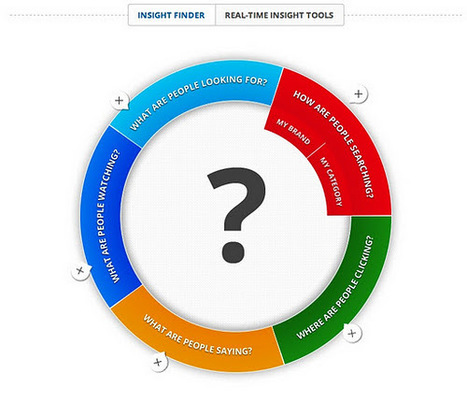
Today at Google, the Think with Google team known for The Google Think Quarterly has launched its next project: Think Insights. In an effort to position itself as a thought leader, Google’s Think Insights is a one-stop shop for consumer trends, marketing insights and industry research. The site includes statistics, a research library including videos and infographics, planning tools, and a section for emerging digital trends. If you only have a few minutes to spare, try playing with its Real Time Insights Finder tool, which lets you spot emerging trends and gain valuable consumer insights, all in real time.... [read full article http://j.mp/sHIrmW]
|
|
Scooped by
Giuseppe Mauriello
November 8, 2011 2:44 PM
|
Content curation strategies and tactics, as presented by Donna Papacosta at the IABC Western Region conference, Whistler, BC, November 8, 2011.
|
|
Scooped by
Giuseppe Mauriello
November 8, 2011 11:21 AM
|
It is a project devoted to explore digital communication and social experience based on content. Flyabit is also about digital identities, perception and social awareness at a glance. We investigate new means of interaction, experience and social curation based on design and digital intelligence. [view more http://www.flyabit.es/]
|
|
Scooped by
Giuseppe Mauriello
November 7, 2011 1:45 AM
|
Recent content discovery tools have been trending towards taking over an increasing part of the selection process on behalf of users. While this helps to reduce noise and save valuable time sifting through content, this process ultimately promotes content of a certain popularity, or based on social graphs or user history. While tools carry the advantage of computing and aggregating information quickly on the user’s behalf, the user possesses a number of natural skills that tools cannot adequately take the place of. Here are the most important ones: 1. Users are contextual thinkers... 2. Users possess relevant expertise... 3. Users make sense of patterns... 4. Users are adaptable... 5. Users can decipher unstructured information... [read full article http://j.mp/uujoZn]
|
|
Scooped by
Giuseppe Mauriello
November 5, 2011 1:43 AM
|
In March, Eli Pariser gave a popular TED talk about “filter bubbles”. Pariser is concerned that web personalization is only showing us content we "like," and not content we need. As users increasingly get their news from curated social channels, this trend has the potential to isolate us and damage our world view. But he proposed some solutions at the Mashable Media Summit. Pariser pointed out the critical things that social personalization gets wrong when it comes to content: - Anticipation... - Risk Taking... - Big Picture... - Pairing... - Social Importance... - Mind-Blowingness... - Trust... In his talk, Pariser noted that nearly every major online media company and platform is moving toward some level of personalization.... [read full article http://j.mp/tWrk1v]
|
|
Scooped by
Giuseppe Mauriello
November 3, 2011 5:57 PM
|
Content curation is how we make sense of our world today. And there are tremendous opportunities for brands, if we pay attention to the way consumers are connecting through shared interests (aka – interest graphs). To explore these opportunities, let’s look at content curation in three categories: 1. Consumers as curators. Everything is curated now. We view the world through filters – trusted sources like friends or online communities to which we belong. ‘I want to look at topic X through your lens because you are someone I trust.’ 2. Brands as content. This one is simple. Consumers use your brands to express themselves. Therefore brands have to provide variety and portability if they want to show up in their customers’ content stream. By allowing people access to the raw material of your brand, they can better identify with your products and amplify your messages. 3. Brands as curators. Proper positioning allows brands to apply their expertise, act as smart filters and become the go-to destination on certain topics. This is what we’re all striving for. [read full article http://j.mp/sH6qmX]
|
|
Scooped by
Giuseppe Mauriello
November 4, 2011 4:25 PM
|
Excerpt from article intro: Mashable announced the Mashable Publisher Platform, a new editorially curated syndication experience that brings content from select publishers to our site. Starting next week, you’ll begin seeing articles from AppAdvice, Causecast, ClickZ, GeekSugar, International Journalists’ Network, paidContent, Pocketnow, PSFK and UX Magazine appearing on Mashable. For readers, the Publisher Platform means more great content that goes deeper into the topics that you care most about – hand-selected by our editors – appearing on Mashable... [read full article http://j.mp/w1XOLB]
|
|
Scooped by
Giuseppe Mauriello
November 4, 2011 3:40 AM
|
Yahoo has officially launched Livestand, a social newsstand tablet app that presents a new challenge to Flipboard, AOL Editions and other magazine-style apps. Livestand, now available for iPad, lets users consume news and content from Yahoo’s properties and a slew of partners. OMG!, Yahoo News, Yahoo Today and Yahoo Sports are prominently placed on the app, but that content is mixed with information from Consumer Reports, Forbes, Scientific American, the NFL and several others. Livestand boasts more than 100 content sources in total. The key feature of Livestand is its ability to deliver a personalized stream of content, based on your Facebook activity and your reading habits. You can log in with a Yahoo or Facebook account, which quickly populates the app with a “Personal Mix” of news that you can check out at a glance... [read full article http://j.mp/w0zlNq]
|
|
|
Rescooped by
Giuseppe Mauriello
from Content Curation World
November 22, 2011 9:19 AM
|
McKinsey has published a wonderfully curated selection of data from five of surveys about business and web 2.0.
The curated data is accessible through a highly visual and interactive data explorer, which allows you to easily navigate the data you are interested in the most.
The curated data includes useful information about what technologies and tools companies view as most important to what kind of investments, if any, organizations plan to make in Web 2.0 in the future.
In addition, this curated data collection examines the business use of 12 technologies and tools: - blogs, - mash-ups (a Web application that combines multiple sources of data into a single tool), - microblogging, - peer to peer, - podcasts, - prediction markets, - rating, - RSS (Really Simple Syndication), - social networking, - tagging, - video sharing, - wikis. Using the interactive, you can track the performance of each technology through the years or customize the view to compare particular technologies side by side.
To access the interactive data explorer you need to freely register with McKinsey... [read more http://j.mp/5Qklxc]
Via Robin Good
|
|
Scooped by
Giuseppe Mauriello
November 14, 2011 7:30 AM
|
Excerpt from article: Today, Docphin is launching a new Web service the company likens to a “Bloomberg for Doctors.” The site aims to help physicians organize, bookmark, read and track medical news and research from a number of sources, all within a single dashboard interface. Included with the service are simple tools to view and filter through hundreds of medical journals, something which has been difficult to do using traditional research methods. The service even offers a built-in personalized Twitter widget for keeping up with medical societies, sources and other leaders in a doctor’s given speciality. Docphin is simple to set up and use. In less than five minutes, a new user can create their own page to aggregate information from medical journals, news media and Twitter feeds. The site’s filters and tools let doctors sort and browse through the articles, share articles with their colleagues, start discussions by posting comments, bookmark articles for later reading and more.... [read full article http://j.mp/vEnmmy]
|
|
Scooped by
Giuseppe Mauriello
November 11, 2011 6:59 AM
|
Personal Capital today launched Daily Capital, a new financial media site combining original expert financial content with custom-curated financial news from hundreds of premier sources around the web. Daily Capital is powered by Eqentia’s semantic technology. Eqentia offers a content discovery and knowledge management portal for consumers, and also has other enterprises using its technology. There’s a lot of that content around, and not just from the major media sources, and currently it’s not possible to find it all in one place, he says. Or for people to filter specific financial information needs much beyond a Google search and hope for the best. That helped lead Personal Capital to the door of semantic technology. A semantic platform like Daily Capital captures a lot of great content in one place as well as the ability to distribute that customized content based on customer preferences. [read full article http://j.mp/tDCF6Z]
|
|
Scooped by
Giuseppe Mauriello
November 10, 2011 4:49 PM
|
With big data all the rage these days, last year, he turned his sights to the next big thing: App data and data interoperability, with the goal of allowing developers to share and exchange the massive amounts of data created daily by the world’s growing collection of web and mobile apps. Today, Alterman and co-founder Tom Luczak are announcing officially announcing their new venture, Flow Corporation, and the beta release of its eponymous Flow platform — a realtime data platform-as-a-service (PaaS) and content curation platform. The technology is, on the one hand, a data exchange for app developers, and on the other hand, an off-the-shelf dashboard for consumers and enterprises that allows them to create and curate information streams on any subject — like a suped-up RSS reader... [read full article http://j.mp/tdcdg8]
|
|
Scooped by
Giuseppe Mauriello
November 10, 2011 12:30 PM
|
Amateur bloggers want exposure, while publishers and brands want cheap content they can monetize. Tidal launches today with hopes of connecting the two. Bloggers signup, and Tidal’s licensable content curation platform pulls out the best posts that match what its clients are looking for. These posts are delivered to the editors of apps and sites like Zagat’s Fork and Tell, Condé Nast’s Teen Vogue, and Bob Vila Nation, who have the final say of what to publish. The sites are willing to pay Tidal because the crowdsourced content draws traffic but is cheaper than paying writers or hiring an editor to go find content... [read full article http://j.mp/syuOqW]
|
|
Scooped by
Giuseppe Mauriello
November 9, 2011 3:00 AM
|
Excerpt from article: "Here’s what we see happening… 1. First, there is massive growth in social content. That much is obvious, and it’s not slowing down.
2. Second, there is massive growth and fragmentation in the digital “surfaces” where audiences and customers spend time (web, apps, mobile sites, TV, social network, displays).
3. Finally, audiences are demonstrating short attention span. Real-time, social content is proven to get more engagement and interaction within owned and paid media (aforementioned “surfaces”). Why? Social conversations aren’t viewed as advertising or broadcasting. They represent authentic voices. Someone “like me”.
We believe the convergence of these and other foundational shifts represent the next stage in the evolution of digital and social media...." [read full article http://j.mp/sU2cjJ]
|
|
Scooped by
Giuseppe Mauriello
November 7, 2011 5:28 AM
|
Interesting excerpt from this article: "Content is in the center of it all. Few organizations have an overarching strategy that channels all this branded content into a consolidated planning model. In parallel, we see lack of defined leadership for overall orchestration and accountability for content-driven programs. This will become a business priority as companies seek more discipline in how stories are conveyed – not to mention cost savings that come with more disciplined sourcing, curating and production. Look for new leaders and content functions to emerge to support a range of marketing disciplines and community programs. And as part impart new ways to help teams understand how content plays holistically within plans that reflect the way people now consume and share content...." [read full article http://j.mp/uGwFo8]
|
|
Scooped by
Giuseppe Mauriello
November 4, 2011 11:53 AM
|
Today content curation is "sold", promoted and marketed as the latest and trendiest approach to content production, SEO visibility, reputation and traffic building. But is it really so? Is it really true that by aggregating many content sources and picking and republishing those news and stories that you deem great is really going to benefit you and your readers in the long run? Is the road to easy and effortless publishing via curation tools a true value creation business strategy, or just a risky fad? How can one tell? Robin Good clarifies few key points in his article: 1. Curation can be effective only... 2. Shallow curation efforts... 3. Curation is an effective means to... 4. The key element that makes curation work is the competence... For these reasons, Robin Good thinks that much of the apparent new curation work being done is bound to be soon disappointed by the results it will gain. Robin Good's goal is to help you understand how you can start to evaluate and distinguish value-creating content curation, from shallow aggregation, noise-making republication and pure content regurgitation before it is too late or someone else in your same niche will have done it before you. How Do You Recognize a Quality Content Curator: - Optimizes titles... - Edits / rewrites titles... - Formats curated content with microscopic precision... - Selects and adds relevant images... - Excerpts selected text... - Writes his/her own intro... How Do You Recognize a Wasteland-Filler - Aggregator - Republisher? - No Additional Value... - No Editing... - No selection... - No filtering... [read full article http://j.mp/v34MXW]
|
|
Scooped by
Giuseppe Mauriello
November 6, 2011 2:05 PM
|
Excerpt from article: The current toast of the web is Pinterest, the visual pinboard for collecting and sharing content online. The “pinning” phenomena is spreading from its modest beginnings to appearing in national media outlets. Pinterest is growing for a variety of reasons. It enables users to clip things they like. It emphasize pictures over text, which are more visually appealing and easier to digest. Signing up is easy. Pinterest has crafted a fun, whimsical, artistic image. In particular, it has struck a chord with female users, an attractive demographic. Pinterest has added to the lexicon of “like” or “retweeting” or “reblogging” or “upvoting” with the ability to “pin” content and then “repin” it across the site and other networks. There is too much information online, too many pages filled with stock images and no context. Search engines provide significant utility, but we still have to exert energy to find what we need after results are algorithmically surfaced. The new crop of social media companies help discovery come online and threaten traditional search. With these new tools, users are able to clip and collect the bits of the web that they are most interested in and, in the process, disregard the rest as noise... [read full article http://j.mp/tbAjGV]
|
|
Scooped by
Giuseppe Mauriello
November 4, 2011 5:39 AM
|
This article provides some useful tips. This is an interesting excerpt: With every news publisher jumping on the topic page bandwagon, it’s become a race to the bottom in terms of quality. News readers are now inundated with too many topic pages that offer too little value. Not only are they starting to look the same, a lot of these pages are optimized for the GoogleBot (for SEO reasons) rather than human readers. In a quest to increase eyeballs and pageviews, we’ve forgotten the basic premise and goal of the topic pages: to provide readers with more context. So here are some tangible ideas to help your company create topic pages that stand out from the crowd, add value to the lives of your readers. - Editorial Resources. First and foremost, we must abandon the idea that topic pages are fully automated and can scale easily without any staffing overhead. Yes, one of the attractions of these topic pages is the fact that they scale easily, but the idea that topic pages do not require human editors or curators is a fallacy. Pure and simple.... - Curation. Once you have an editor or multiple editors, start curating these pages. The most successful topic pages combine efficient and intelligent aggregation with high quality human curation... If you think a reader can’t spot the difference between algorithmically generated articles and human curated ones, you are wrong.... [read full article, you will find other interesting points: http://j.mp/tLqeLQ]
|
|
Scooped by
Giuseppe Mauriello
October 15, 2011 3:30 AM
|
We’ve been wondering what computer scientist Gary Flake has been up to ever since we discovered his new startup company, Clipboard. Now, Flake, a former technical fellow at Microsoft who previously ran the company’s Live Labs research group, is taking the wraps off the new service.
And so what’s Clipboard all about?
Basically, it allows users to save parts of Web pages, blowing past traditional screen grab technologies.
“With Clipboard, you activate our clipper from your browser’s bookmark bar and then click on what you want,” writes Flake in a blog post. “That’s it. You can optionally annotate, tag, organize, share, and search your clips, but the core steps remains the same: Click and save.”
[read full article http://j.mp/qacq5L and view official website http://www.clipboard.com ]
|
|
Scooped by
Giuseppe Mauriello
November 8, 2011 12:40 PM
|
Excerpt form article intro: Shuffler.fm, a music aggregation and curation site that got a ton of buzz over the summer, launched its iPad app today. The app is being touted by the company as a "Flipboard for music," but we think that comparison has its limitations, and that's okay. Music blogs have become a huge component of how people discover and hear new music, especially in smaller scenes that may be overlooked by more mainstream channels. Shuffler.fm taps into this phenomenon by aggregating audio from countless music blogs and then using the Last.fm API to divvy them up by genre. What results is a new way to explore and discover music, and the experience feels like it was ready-made for the tablet form factor... [read full article http://j.mp/uOtpoh]
|