Five years ago, who would have predicted that the rich world would reprise the Great Depression?
And yet here we are. The surprising frequency of the "unthinkable" happening suggests we are overly confident in our ability to see the future. The "risk-parity" approach to portfolio construction is a powerful way to combat this mistake. Pioneered by Bridgewater Associates, modern risk-parity portfolios adhere to a simple principle: balance exposures across all the major economic scenarios by volatility. The hope is that such a portfolio will perform well in all economic climates--and indeed risk-parity strategies have.
The strategy is gaining influential adherents, mainly among institutions, but hasn't caught on with individuals. Will this strategy work in the future? Could an individual investor apply it? I think the answer is, tentatively, yes to both questions. To understand why risk-parity works, we have to revisit a common fundamental misconception of portfolio construction.
The typical investor thinks of assets as being like indivisible elements, with distinct characteristics. In contrast, the risk-parity approach begins with the observation that asset classes can be described in much the same way atoms can be described as combinations of electrons, protons, and neutrons. The fundamental particles in the risk-parity view of the world are inflation and economic growth. This isn't a modern insight, but one that's been around academia for decades. The risk-parity application is relatively new, however.
Standard asset allocation problems such as mean variance or conditional value at risk can be easily developed and solved using MATLAB® and Financial ...
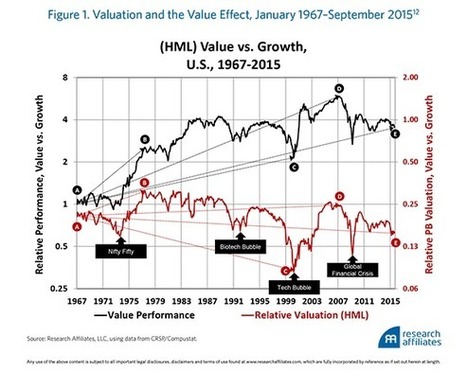
If investors don’t wise up soon that rising valuations are responsible for most of the “alpha” produced by smart beta, the inevitable mean reversion to historical valuation norms threatens to unleash a smart beta crash.
By Bradley Krom While smart beta has become prevalent for equity strategies, its application to fixed income is still more or less in its infancy. Over the next
“Deconstructing 'Smart Beta'ETF.comThe inquiries are coming in faster and harder than ever before. Everyone wants facts and figures about so-called smart-beta funds: How many are there? What's the biggest one?”
“Nest moves to smart beta investment approachCitywire.co.ukAs a result, Nest said it had built on its belief in passive investing to invest more into alternative indexing, or smart beta, to get the best returns at a low cost.”
“ETF TrendsAre Smart Beta ETFs Smart Investments?ForbesThe concept of smart beta funds has intrigued me. Smart beta funds use quantitative rankings to determine what stocks to hold and how to weight them.”
Investment Week Recent market commentary has raised concerns around crowded trades that could adversely affect smart beta strategies, writes Gaurav Mallik, global head of equity strategies at State Street Global Advisors.
Scientific Beta, the smart beta index provider that has come out of academic work done by Edhec Risk Institute, has launched an flexible fee structure.
Find our latest news and press releases here. BlackRock’s iShares business, the world’s largest manager of exchange traded funds (ETFs), projects that smart beta ETF assets will reach $1 trillion globally by 2020 and $2.4 trillion by 2025.
“Investors can target quality international stocks through a new suite of so-called Quality Mix exchange traded funds that mirror strategies employed by Warren (Smart-Beta International ETFs With a Buffett-esque Approach: Investors can target...”
To get content containing either thought or leadership enter:
To get content containing both thought and leadership enter:
To get content containing the expression thought leadership enter:
You can enter several keywords and you can refine them whenever you want. Our suggestion engine uses more signals but entering a few keywords here will rapidly give you great content to curate.


 Your new post is loading...