Same Melody, Different Key
In music, transposition means shifting a piece to a different key. The melody stays the same—every interval, every relationship between notes remains intact. But the key change reveals new tonal qualities and makes the piece accessible to different instruments or vocal ranges.
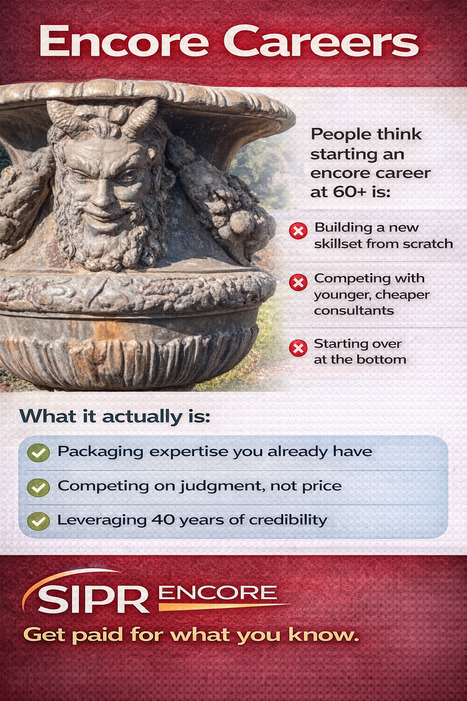
Your career in your 50s or 60s works the same way.
You don't need to compose an entirely new piece. You need to transpose what you've already mastered to a different context.
A pharmaceutical scientist transposes 30 years of research expertise to advising biotech startups. A supply chain executive transposes operational knowledge to e-commerce logistics consulting. A regulatory affairs director transposes compliance mastery to teaching and thought leadership.
Same foundational expertise. Different key. And suddenly, qualities emerge that weren't visible in the original context—new applications, new audiences, new meaning, new impact.
Transposition isn't reinvention. It's recognition that what you've built has value beyond its original setting.
The work becomes enriching in ways your first career never was—because now you're choosing the context, the application, the audience. You're playing in a key that reveals what matters most to you.
Your encore career isn't about learning a new instrument. It's about transposing your mastery to where it can be heard differently, valued differently, and applied in ways that create something entirely new.
Ready to create your own outcomes story?
Schedule your SIPR Encore strategy call: judy@sipr.com





 Your new post is loading...









"Retirement must shift from retreat to renewal.
Longevity gives us time. The Intelligent Age gives us tools. What remains is leadership—the courage to rethink deeply embedded assumptions about life’s trajectory."
This article in Time Magazine, by Klaus Schwab, the founder of the World Economic Forum and the author of "Longevity and Retirement in the Intelligent Age" is worth your time.