 Your new post is loading...

|
Scooped by
Gust MEES
February 9, 2015 3:37 AM
|
Security researchers with Russian anti-virus company Doctor Web have examined a complex, multi-purpose backdoor for Linux. This malicious program can execute various commands issued by intruders such as to mount DDoS attacks and to perform a wide range of other malicious tasks.
Learn more:
- http://www.scoop.it/t/securite-pc-et-internet/?tag=Linux
|
|
Scooped by
Gust MEES
January 28, 2015 7:42 AM
|
|
|
Scooped by
Gust MEES
January 10, 2015 9:31 AM
|
|
|
Scooped by
Gust MEES
December 3, 2014 7:28 AM
|
Mitarbeiter des russischen Security-Software-Anbieters Doctor Web haben einen Linux-Trojaner entdeckt, der Denial-of-Service-Attacken in größerem Ausmaß starten kann. Den Schädling benannten sie mit Linux.BackDoor.Fgt.1.
Sobald er auf einem befallenen Gerät startet, prüft er erst einmal, ob es eine Internetverbindung gibt, indem er auf einen der Google-Server zugreift. Findet er keine, bleibt er ruhig, um nicht von verhaltensbasierenden Systemen erkannt zu werden. Ist die Verbindung erfolgreich, erfasst die Malware IP- und MAC-Adresse des infizierten Systems. Danach versucht sie, diese Informationen und Daten über die eigene Version an einen Steuer-Server zu senden.
Schließlich wartet Linux.BackDoor.Fgt.1 auf einen Datenblock, der einen auszuführenden Befehl enthält. Wenn vom Verwaltungsserver ein Ping-Befehl eintrifft, antwortet der Trojaner mit Pong und fährt mit seiner Mission fort. Beim Befehl DUP schließt er seine Arbeit ab.
Learn more:
- http://www.scoop.it/t/securite-pc-et-internet/?tag=Linux
|
|
Scooped by
Gust MEES
September 25, 2014 11:24 AM
|
|
|
Scooped by
Gust MEES
September 25, 2014 11:12 AM
|
|
|
Scooped by
Gust MEES
September 25, 2014 10:27 AM
|
|
|
Scooped by
Gust MEES
March 4, 2014 3:07 PM
|
This GnuTLS bug is worse than the big Apple "goto fail" bug patched last week.
|
|
Scooped by
Gust MEES
December 18, 2013 12:23 PM
|
A blended DDoS botnet consisting of both Windows and Linux machines has been detected by researchers working with the Polish CERT.
The botnet is exclusively dedicated to mounting DDoS attacks, mainly DNS amplification attacks.
|
|
Scooped by
Gust MEES
November 25, 2013 5:12 AM
|
Le ver Java.Tomdep a été spécialement créé pour cibler les serveurs Tomcat et infecte déjà une dizaine de pays.
|
|
Scooped by
Gust MEES
November 14, 2013 6:49 AM
|
In May of this year, sophisticated attackers breached a large Internet hosting provider and gained access to internal administrative systems. The attackers appear to have been after customer record information such as usernames, emails, and passwords.
While these internal administrative systems had access to customer records, discovery of the attack and certain security implementations mitigated the scope of the breach. Customer passwords were accessible, but these passwords were hashed and salted making mass password cracking difficult. Customer financial information was also accessible, but encrypted. Unfortunately, access to the encryption key cannot be ruled out.
While breaches of organizations and mass customer record dumps are posted almost daily, this particular attack was more sophisticated than we have seen in the past.
|
|
Scooped by
Gust MEES
July 21, 2013 10:27 AM
|
Canonical, the lead developers of the Ubuntu Linux-based operating system, have admitted that its online forums were not just defaced this weekend, but also that hackers managed to steal every users' email address, password and username from the... Canonical, the lead developers of the Ubuntu Linux-based operating system, have admitted that its online forums were not just defaced this weekend, but also that
===> hackers managed to steal every users’ email address, password and username from the Ubuntu Forums database. <===
Malware that hides itself from admins has been found in the wild, allowing attackers to compromise web servers and redirect users to sites hosting exploit kits. Researchers at security firm ESET have dubbed the malware Linux/Cdorked.A and are calling it "the most sophisticated Apache backdoor" due to its ability to evade detection. ===> Apache web servers run about 50 percent of the world’s websites, according to UK-based internet security firm, Netcraft. <=== The researchers claim the malware has been installed on hundreds of compromised web servers, which have served up malicious redirects to thousands of visitors.
|
|
|
Scooped by
Gust MEES
February 7, 2015 6:41 AM
|
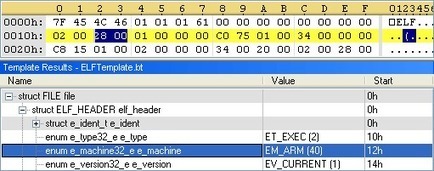
A malware program designed for Linux systems, including embedded devices with ARM architecture, uses a sophisticated kernel rootkit that’s custom built for each infection.
The malware, known as XOR.DDoS, was first spotted in September by security research outfit Malware Must Die. However, it has since evolved and new versions were seen in the wild as recently as Jan. 20, according to a new report Thursday from security firm FireEye, which analyzed the threat in detail.
XOR.DDoS is installed on targeted systems via SSH (Secure Shell) brute-force attacks launched primarily from Internet Protocol (IP) addresses registered to a Hong Kong-based company called Hee Thai Limited.
The attacks attempt to guess the password for the root account by using different dictionary-based techniques and password lists from past data breaches. FireEye observed well over 20,000 SSH login attempts per targeted server within a 24-hour period and more than 1 million per server between mid-November and end of January.
Learn more:
- http://www.scoop.it/t/securite-pc-et-internet/?tag=Linux
|
|
Scooped by
Gust MEES
January 27, 2015 6:38 PM
|
|
|
Scooped by
Gust MEES
December 10, 2014 10:00 AM
|
Backdoor tied to espionage campaign that has targeted governments in 45 countries.
Researchers have uncovered an extremely stealthy trojan for Linux systems that attackers have been using to siphon sensitive data from governments and pharmaceutical companies around the world. The previously undiscovered malware represents a missing puzzle piece tied to "Turla," a so-called advanced persistent threat (APT) disclosed in August by Kaspersky Lab and Symantec. For at least four years, the campaign targeted government institutions, embassies, military, education, research, and pharmaceutical companies in more than 45 countries. The unknown attackers—who are probably backed by a nation-state, according to Symantec—were known to have infected several hundred Windows-based computers by exploiting a variety of vulnerabilities, at least two of which were zero-day bugs. The malware was notable for its use of a rootkit that made it extremely hard to detect.
Learn more:
- http://www.scoop.it/t/securite-pc-et-internet/?tag=Linux
|
|
Scooped by
Gust MEES
September 25, 2014 12:24 PM
|
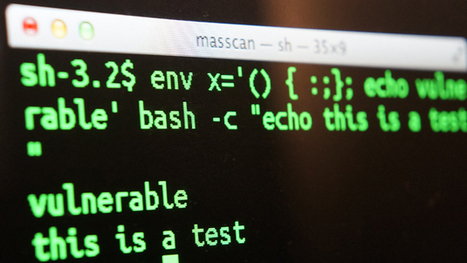
A critical vulnerability in the Bourne again shell, simply known as Bash and which is present in most Linux and UNIX distributions and Apple’s Mac OS X, has been discovered and administrators are being urged to patch immediately.
The flaw allows an attacker to remotely attach a malicious executable to a variable that is executed when Bash is invoked.
Learn more:
- http://www.scoop.it/t/securite-pc-et-internet/?tag=Bash+Command+Flaw
|
|
Scooped by
Gust MEES
September 25, 2014 11:19 AM
|
Security researchers have found the first malware using the new Bash bug.
Security researchers have found proof of concept code that attempts to exploit the serious bug discovered this week in Bourne-Again Shell, also known as Bash, which according to US CERT affects both Linux and Mac OS X.
The good news yesterday that some Linux distributions shipped patches for the bug yesterday has already been tempered by the discovery that those patches only partially dealt with potential attacks. In an update overnight, Red Hatsaid that it was developing a new patch, however, it is still advising users to apply the incomplete one for now. At the same time as security experts have been racing to develop fixes for the bug and patch systems, it appears hackers have been working on tools to attack vulnerable systems.
Learn more:
- http://www.scoop.it/t/securite-pc-et-internet/?tag=Bash+Command+Flaw
|
|
Scooped by
Gust MEES
September 25, 2014 10:39 AM
|
|
|
Scooped by
Gust MEES
July 17, 2014 2:51 PM
|
|
|
Rescooped by
Gust MEES
from CYBER SECURITY LIVES HERE
January 8, 2014 6:30 AM
|
A Pakistani hacker named ‘H4x0r HuSsY’ has successfully compromised the official Forum of the popular Linux OS openSUSE accessing to the database.
Via GianniPintonello
|
|
Scooped by
Gust MEES
November 27, 2013 12:09 PM
|
Symantec has discovered a new Linux worm that appears to be engineered to target the “Internet of things”. The worm is capable of attacking a range of small, Internet-enabled devices in addition to traditional computers.
|
|
Scooped by
Gust MEES
November 23, 2013 11:08 AM
|
During an investigation into how a breach occurred at a large internet hosting provider, researchers found a Linux backdoor capable of stealing login credentials from secure shell connections.
===> The Fokirtor Trojan targets users of the Linux operating system. <===
|
|
Scooped by
Gust MEES
July 21, 2013 6:17 PM
|
Ubuntu Forums has been hacked.
As well as leaving behind an AK-waving penguin, the hackers also took away millions of usernames, email addresses and password hashes.
Le centre d’expertise gouvernemental CERTA, vient de mettre en ligne sur son site web, un bulletin d’alerte qui a pour objet la vulnérabilité dans le noyau Linux. Cette faille permet à un attaquant de provoquer une élévation de privilèges. Elle lui offre la possibilité d'exploiter un code publiquement et activement.
|




























Learn more:
- http://www.scoop.it/t/securite-pc-et-internet/?tag=Linux