ICT Security + Privacy + Piracy + Data Protection - Censorship - Des cours et infos gratuites sur la"Sécurité PC et Internet" pour usage non-commercial... (FR, EN+DE)...
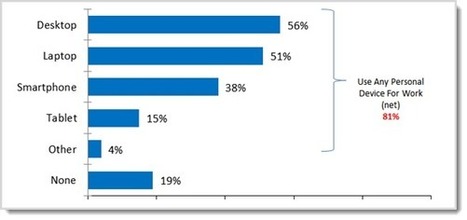
The Security, Privacy and Legal Implications of BYOD
Some organizations believe that BYOD will allow them to avoid significant costs. Other companies believe that company data on personal devices is inevitable.
Unfortunately, BYOD raises significant data security and privacy concerns, which can lead to potential legal and liability risk. Many companies are having to play catch-up to control these risks.
===> This blogpost identifies and explores some of the key privacy and security legal concerns associated with BYOD, including “reasonable” BYOD security, BYOD privacy implications, and security and privacy issues related to BYOD incident response and investigations. <===
Ignorance, as those in IT security know, is not bliss.
And, two new studies when viewed together show that consumer ignorance of the consequences of their actions coupled with enterprises' unawareness of their computing environment equal unacceptable risk.
===> Many organizations unduly place themselves at risk by allowing access to their computers by mobile devices used by employees who download apps without understanding their consequences. That doesn't seems like a smart information risk management policy; actually, it doesn't seem like a policy at all. <===
Don Knezek, executive director of the International Society for Technology in Education (ISTE), notes that starting a BYOD program means making adjustments when it comes to security, especially protecting a district’s proprietary and secure data. That function, he says, used to be handled by an effective firewall that kept out unwanted users and their devices.
“Nowadays, you have to have a layer past the firewall that we didn’t have to deal with when we simply said no to user-owned devices,” he says. “Now all of a sudden, you have multiple points of entry at different levels of access, and that requires more diligence.”
One key to maintaining adequate security, Knezek and other experts say, is to have multiple networks: one for Wi-Fi traffic, one for district business and for other secure information for teachers and administrators only, and one for students and outside users of the district’s Web site.
Antiviren-Software auf dem PC ist heute so selbstverständlich wie das Schloss an der Haustür – nur bei Smartphones nicht. Wir zeigen, wie Sie Handy-Schädlinge abwehren.
February 29, 2012 — Network World — America's intelligence agency, the National Security Agency (NSA), today disclosed how it's going to handle mobile security.
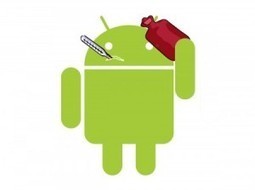
Experts from a cyber security firm, CrowdStrike, have reportedly discovered a flaw in a component of smartphones powered by Google's Android OS. Apparently, this flaw can allow hackers to gain control of these devices.
A Reuters reports says CrowdStrike will demonstrate their findings at a major computer security conference to be held in San Francisco next week....
Shortly put, the original Android application downloaded from a third-party location contains “the real deal” as well as a Trojanized service (usually called “GoogleServicesFrameworkService”), which is launched as soon as the host application is started.
As many organisations rush to adopt technologies that enable their workforce to be more mobile and satiate user demand that IT support mobile devices, security often becomes an afterthought.
Most people already know what QR codes are: a new type of "barcode" that can be used for a variety of purposes - tracking, ticketing, labeling of products, and many more.
They can also be used for storing URLs, allowing users to scan them with their smartphones and be immediately directed to the URL in question on their device's browser - an ability that researcher Augusto Peryra recently claimed will be soon misused by cyber criminals to direct users to malware.
I don't think it's far-fetched to say that most people have no idea if their mobile devices have been infected with malware, simply because they don't think mobile malware even exists (call it the Mac syndrome?).
No Excuse for No Antivirus
The only way to confirm your suspicions is to install an antivirus app. There are lots of free, fast, non-intrusive mobile antivirus solutions out there. Lookout for Android is our Editors' Choice for Android security, but other high-performing malware detectors include F-Secure Mobile Security 7.6 and McAfee Mobile Security 2.0.
===> All have free versions that include a quick malware scan.<===
We are at an interesting tipping point in terms of Internet access. We have just passed the point where there are more mobile devices on ...
Secret knowledge stored in the human memory remains the most widely used means of human-computer authentication.
Think of it as something you know, in contrast to biometrics (something you are) or hardware tokens (something you have). If that secret is to be something as simple as a four digit PIN, then it really is vital that it is as random as possible.
So, choose a PIN that cannot be easily related to you, and certainly not something that you might easily pick up from information in your wallet.
===> Better still, consider one of the newer forms of securing your mobile device and abandon those old-fashioned PINs!!! <===
If you think Android phones are immune from malware, listen up: you need to protect yourself. A recent exploit that stole personal data shows why.
There are a few anti-malware apps for Android, including Norton Antivirus & Security, and McAfee Mobile Security among others. Those can help, but they won’t catch everything.
To really be secure, you also have to pay attention to the permissions an app is looking for when you’re installing...if a game is looking for access to your contact list, think twice before accepting. But in some cases, even that isn’t enough, because this particular exploit didn’t even ask for permissions.
===> Ultimately, you should be trying to only get apps from trusted sources. <===
And you should always try to check around to be sure that an app is safe before installing it on an impulse. Just the same what you used to do (or should have done) on your PC.
Nearly one in five (20%) mobile phone users have experienced some type of security threat with their device. That's the finding of a Cloudmark survey of 1,000 cellphone users, scheduled to be released Tuesday.
January 28 is the US is Data Privacy Day (it’s also the European Data Protection Day). To mark the event, a new report on users’ attitudes toward and understanding of mobile security issues has been published.
Now a days when visiting Internet with what ever device (Apple products included!) we need to secure our devices, if that is a PC, a computer (Mac) or even smartphones!
Secure your smartphones by easy to follow steps, stay informed!!!
To get content containing either thought or leadership enter:
To get content containing both thought and leadership enter:
To get content containing the expression thought leadership enter:
You can enter several keywords and you can refine them whenever you want. Our suggestion engine uses more signals but entering a few keywords here will rapidly give you great content to curate.


 Your new post is loading...