 Your new post is loading...

|
Scooped by
Gust MEES
February 22, 2016 8:40 AM
|
If you downloaded a new build from the website over the weekend, you'll probably need to start over.
Hackers took control of the official website for the Linux Mint distro over the weekend, resulting in some users downloading a build of the OS that had been modified to include a backdoor that would give attackers full access to a user’s system. Announced in a blog post, the organization said it quickly spotted and rectified the issue, but that anyone who downloaded Linux Mint (Cinnamon Edition) on February 20 should probably start over. At the very least, you’ll want to check the MD5 signature of your download to ensure it’s legit.
Learn more / En savoir plus / Mehr erfahren:
http://www.scoop.it/t/securite-pc-et-internet/?tag=Linux
http://www.scoop.it/t/securite-pc-et-internet/?tag=Linux+Mint
|
|
Scooped by
Gust MEES
February 21, 2016 8:13 AM
|
|
|
Scooped by
Gust MEES
February 18, 2016 5:03 PM
|
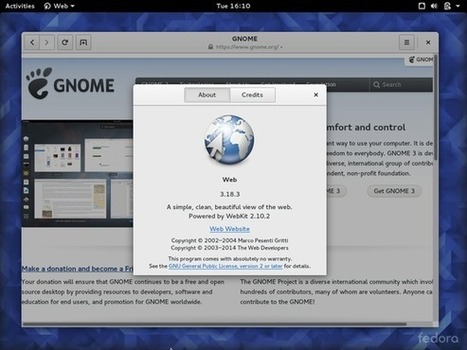
The WebKit rendering engine used in many Linux applications is a complete security mess. That’s the takeaway from a blog post by Michael Catanzaro, who works on GNOME’s WebKitGTK+ project. He’s sounding the alarm about a problem the open-source community needs to fix.
The problem with WebKit
Most web browsers issue regular security updates to their users. But, if you’re using a WebKit-based browser, or email client, or any other application that uses that rendering engine, on Linux, you almost certainly aren’t getting security updates.
WebKit is a large open-source project. Apple uses WebKit for Safari on Mac and iOS, and those versions of WebKit receive regular security updates. But the WebKit port used for Linux does not.
The common port used by Linux distros is WebKitGTK+, which is associated with GNOME software and other applications that use the GTK+ toolkit. This includes Epiphany, GNOME’s flagship web browser, often called simply “Web” or “GNOME Web.” It also includes a variety of other applications, such as the Evolution email client, Midori web browser, GIMP image-editing program, Banshee and Rhythmbox media players, and many other programs.
Learn more / En savoir plus / Mehr erfahren:
http://www.scoop.it/t/securite-pc-et-internet/?tag=Linux
|
|
Scooped by
Gust MEES
February 16, 2016 2:57 PM
|
Sicherheitslücke gefährdet fast alle Linux-Systeme
Eine schwerwiegende Sicherheitslücke klafft in der Glibc-Bibliothek, die in fast allen Linux-Systemen genutzt wird: Eine DNS-Funktion erlaubt die Ausführung von bösartigem Code. Nutzer sollten schnellstmöglich Updates installieren.
Diese Sicherheitslücke hat es in sich: Mittels gezielter DNS-Antworten lässt sich unter Umständen die Namensauflösungsfunktion der Glibc-Bibliothek dazu bringen, fremden Code auszuführen. Die Glibc ist die Standard-C-Bibliothek, die üblicherweise auf Linux-Systemen zum Einsatz kommt.
Learn more / En savoir plus / Mehr erfahren:
http://www.scoop.it/t/securite-pc-et-internet/?tag=Linux
|
|
Scooped by
Gust MEES
January 20, 2016 10:04 AM
|
|
|
Scooped by
Gust MEES
January 19, 2016 12:32 PM
|
|
|
Scooped by
Gust MEES
November 11, 2015 5:25 PM
|
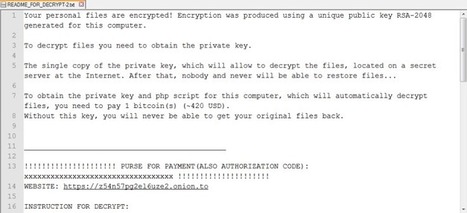
Researchers have exploited a flaw in the encryption procedure used by the Linux.Encoder.1 - the first ransomware targeting the Linux platform - to develop a decryption tool for victims.
On Thursday, Russian anti-virus company Dr. Web first disclosed the existence of Linux.Encoder.1, a strain of ransomware similar to other notorious ransomware families such as CryptoWall and TorLocker, but targeting computers running Linux rather than Windows. Evidence of infections by Linux.Encoder.1 are scattered across the net, because many websites appear to be revealing their impacted state in search engine results.
Learn more:
http://www.scoop.it/t/securite-pc-et-internet/?tag=Linux
http://www.scoop.it/t/securite-pc-et-internet/?tag=RANSOMWARE
|
|
Scooped by
Gust MEES
November 7, 2015 12:41 PM
|
|
|
Scooped by
Gust MEES
October 30, 2015 10:51 AM
|
|
|
Scooped by
Gust MEES
October 2, 2015 7:29 PM
|
|
|
Scooped by
Gust MEES
September 30, 2015 7:41 AM
|
Linux won the day as the more secure alternative to Windows, but now its popularity has made it vulnerable, according to Akamai.
A decade ago, Linux was seen as the more secure alternative to Windows environments, which suffered the lion's share of attacks at the time, and companies increasingly adopted Linux as part of their security-hardening efforts," Akamai notes.
"As the number of Linux environments has grown, the potential opportunity and rewards for criminals has also grown. Attackers will continue to evolve their tactics and tools and security professionals should continue to harden their Linux based systems accordingly," Akamai concludes.
Akamai provides details on removal and remediation of the threat here.
Learn more:
http://www.scoop.it/t/securite-pc-et-internet/?tag=Linux
|
|
Scooped by
Gust MEES
May 26, 2015 9:41 AM
|
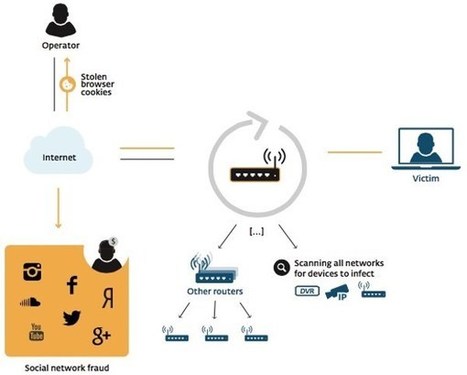
ESET researchers have issued a technical paper today, analysing a new worm that is infecting routers in order to commit social networking fraud, hijacking victims’ internet connections in order to “like” posts and pages, “view” videos and “follow” other accounts.
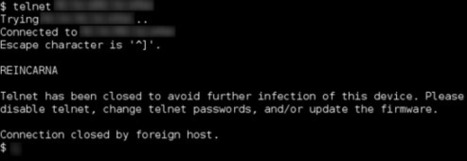
The malware, dubbed Linux/Moose by researchers Olivier Bilodeau and Thomas Dupuy, infects Linux-based routers and other Linux-based devices, eradicating existing malware infections it might find competing for the router’s limited resources, and automatically finding other routers to infect.
Learn more:
- http://www.scoop.it/t/securite-pc-et-internet/?tag=Router
|
|
Scooped by
Gust MEES
April 9, 2015 8:51 AM
|
|
|
|
Scooped by
Gust MEES
February 21, 2016 12:49 PM
|
|
|
Scooped by
Gust MEES
February 19, 2016 9:10 AM
|
|
|
Scooped by
Gust MEES
February 17, 2016 12:58 PM
|
|
|
Scooped by
Gust MEES
February 8, 2016 11:32 AM
|
|
|
Scooped by
Gust MEES
January 19, 2016 12:46 PM
|
Malware for Linux becomes more and more diverse. Among them are spyware programs, ransomware, and Trojans designed to carry out DDoS attacks. Doctor Web security researchers examined yet another cybercriminals’ creation dubbed Linux.Ekoms.1. This Trojan can periodically take screenshots and download different files to a compromised machine.
Learn more / En savoir plus / Mehr erfahren:
http://www.scoop.it/t/securite-pc-et-internet/?tag=Linux
|
|
Scooped by
Gust MEES
December 17, 2015 8:37 AM
|
|
|
Scooped by
Gust MEES
November 9, 2015 2:55 PM
|
A new ransomware campaign dubbed Linux.Encoder.1 is targeting web servers using the Linux operating system and is demanding a payment of one bitcoin, or $380, from its victims for the release of the captured files.
Researchers at the anti-virus firm Dr. Web said the cybercriminals appear to target network administrator computers because these hold the web server software that they are interested in controlling. It was also noted that in some cases the attackers used the CMS Magneto vulnerability to attack the web servers.
The Dr. Web staff did not have a firm idea how prevalent these attacks have been, but they “presume that at least tens of users have already fallen victim to this trojan.” An email by SCMagazine.com to Dr. Web to confirm the number of infected systems has not yet been returned.
Learn more:
http://www.scoop.it/t/securite-pc-et-internet/?tag=Linux
http://www.scoop.it/t/securite-pc-et-internet/?tag=RANSOMWARE
|
|
Scooped by
Gust MEES
November 7, 2015 11:37 AM
|
|
|
Scooped by
Gust MEES
October 26, 2015 1:31 PM
|
|
|
Scooped by
Gust MEES
October 2, 2015 11:12 AM
|
|
|
Scooped by
Gust MEES
July 28, 2015 8:30 PM
|
What about malware on Linux?
Here's how the argument might go if you were to ask that question:
Malware is impossible on Linux because Linux is secure by design, unlike Windows.
Even if Linux malware were possible, users would have to agree to run it, so that wouldn't count.
Even if users agreed to run it, they wouldn't be root, so that wouldn't count.
Even if they were root, who cares? There isn't any malware for Linux, so there.
The simple truth, of course, is that Linux is much more similar to Windows – in design, implementation and real-world security – than it is different.
As a result: there is malware for Linux; it can do plenty of harm even if you aren't root; and it may be able to infect without you realising.
Just like on Windows.
For all that, the "malware scene" on Linux simply never unfolded like it did on Windows, because the vast
Learn more:
http://www.scoop.it/t/securite-pc-et-internet/?tag=Linux
|
|
Scooped by
Gust MEES
May 8, 2015 11:49 AM
|
The Jellyfish proof-of-concept rootkit uses the processing power of graphics cards and runs in their dedicated memory
A team of developers has created a rootkit for Linux systems that uses the processing power and memory of graphics cards instead of CPUs in order to remain hidden.
The rootkit, called Jellyfish, is a proof of concept designed to demonstrate that completely running malware on GPUs (graphics processing units) is a viable option. This is possible because dedicated graphics cards have their own processors and RAM.
Such threats could be more sinister than traditional malware programs, according to the Jellyfish developers. For one, there are no tools to analyze GPU malware, they said.
Learn more:
- http://www.scoop.it/t/securite-pc-et-internet/?tag=Linux
|


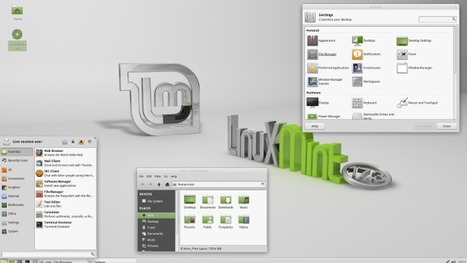





















Hackers took control of the official website for the Linux Mint distro over the weekend, resulting in some users downloading a build of the OS that had been modified to include a backdoor that would give attackers full access to a user’s system.
Announced in a blog post, the organization said it quickly spotted and rectified the issue, but that anyone who downloaded Linux Mint (Cinnamon Edition) on February 20 should probably start over. At the very least, you’ll want to check the MD5 signature of your download to ensure it’s legit.
Learn more / En savoir plus / Mehr erfahren:
http://www.scoop.it/t/securite-pc-et-internet/?tag=Linux
http://www.scoop.it/t/securite-pc-et-internet/?tag=Linux+Mint