 Your new post is loading...

|
Scooped by
Gust MEES
March 28, 2013 9:34 AM
|
Kaspersky uncovers trojan spread by "spear-phish" to Tibet activists. Malware used to spy on Tibetan activists and other ethnic groups in China is nothing new. But a new Trojan discovered by researchers at Kaspersky Labs has widened the scope of this digital espionage and intimidation. The malware uses a combination of e-mail hacking, "spear phishing," and a Trojan built specifically for Android smartphones.
===> Kaspersky claims this is the first discovery of a targeted attack that uses mobile phone malware. <===
|
|
Scooped by
Gust MEES
March 11, 2013 12:35 PM
|
Android is now the focus for security attacks and prevention — even if it doesn't get as much attention in this regard as Windows used to. Ironically, as Android's secuirty issues grow, Windows is actually getting better. "Microsoft deserves kudos for making Windows more and more secure," Cobb said. And with the move to Windows 8, Microsoft is shifting toward a more closed, more secure model, specifically by by not allowing apps unless they are from a legitimate developer. Plus, Windows' issues over the years have had the effect of training people to be more careful. "Someone who's been using Windows for the last 10 years is probably better protected than a Mac person," Cobb joked. "They've had to learn the hard way."
|
|
Scooped by
Gust MEES
January 18, 2013 11:49 AM
|
A new report showcases increased security risks with mobile device usage within Federal government as adoption of smartphones and other mobile devices becomes more widespread.
Sponsored by EMC, VMware, Cisco, and Carahsoft, the report reveals that more than half of smartphone users in the Federal government use their personal smartphone for job-related tasks. Out of this group, one in three workers do not have password protection.
|
|
Scooped by
Gust MEES
January 10, 2013 3:33 PM
|
The fact that Android malware is an escalating issue comes as no surprise, but a recent analysis of its sheer 'market share' of the mobile malware universe is noteworthy.
|
|
Scooped by
Gust MEES
December 25, 2012 2:27 PM
|
Android is the mobile equivalent of Windows -- hugely popular and open to security threats such as malware. Here's how to keep safe.
|
|
Scooped by
Gust MEES
December 19, 2012 8:21 PM
|
|
|
Scooped by
Gust MEES
September 6, 2012 10:45 AM
|
Mobile Security Review September 2012 [pdf]
|
|
Scooped by
Gust MEES
September 1, 2012 7:52 AM
|
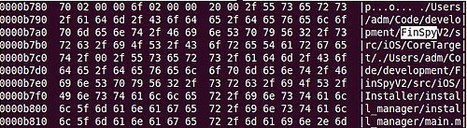
(Phys.org)—Spyware sold legally can infect BlackBerrys, iPhones, and other mobile devices, according to a study from two security researchers at the University of Toronto Munk School of Global Affairs' Citizen Lab. Gust MEES: NOBODY IS PERFECT! Read more: http://phys.org/news/2012-09-toronto-mobile-spyware-shadow.html
|
|
Scooped by
Gust MEES
July 10, 2012 10:24 AM
|
Recently Trusteer discovered the first Tatanga-based man in the mobile (MITMO) attack as well as new SPITMO configurations which are targeting Android mobile banking users in Germany, the Netherlands, Portugal and Spain. With nearly 60 percent of the market and a reputation for weak app security, it’s no surprise that Android has become the preferred target for financial malware. Read more: http://www.net-security.org/malware_news.php?id=2183
|
|
Scooped by
Gust MEES
June 8, 2012 11:16 AM
|
Facebook has introduced three security updates for protecting its mobile users: a code generator, the ability to report unwanted content on your phone, and improved mobile recovery flows. The code generator should make it easier to confirm logins made on new devices, as users will be able to receive Login Approval codes through their Facebook Application and via SMS, so it will work regardless of whether the users have cellular or Internet access. Read more: http://www.net-security.org/secworld.php?id=13065
Analysts with Lookout Mobile Security have found websites that have been hacked to deliver malicious software to devices running Android, an apparent new attack vector crafted for the mobile operating system. Read more...
|
|
Scooped by
Gust MEES
April 24, 2012 9:23 AM
|
” Mobile devices can expose users’ and
organizations’ valuable data to unauthorized people if
necessary precautions are not taken.
|
|
|
Scooped by
Gust MEES
March 21, 2013 10:46 AM
|
Flaws in Samsung Phones Allow Hackers to Make Calls, Install Apps and Change Settings Two of the vulnerabilities can be leveraged to silently install highly privileged apps without requiring any user interaction. A different issue can be exploited by an attacker to send SMS messages without requiring the android.permission.SEND_SMS permission.
Another vulnerability can be used to silently make phone calls, send emails and SMSs, and perform “almost any action.”
|
|
Scooped by
Gust MEES
February 27, 2013 11:35 AM
|
Secunia Releases Personal Software Inspector for Android
|
|
Scooped by
Gust MEES
January 10, 2013 4:09 PM
|
McAfee makes some predictions about what to expect and trends to watch for security in 2013.
|
|
Rescooped by
Gust MEES
from 21st Century Learning and Teaching
December 27, 2012 12:44 PM
|
Spoofing, banking attacks, authentication flaws, and more top the list of 2012's biggest mobile security headaches
|
|
Rescooped by
Gust MEES
from 21st Century Learning and Teaching
December 20, 2012 5:22 AM
|
Au même titre que les années passées, les appareils connectés et en particulier les tablettes et les smartphones, seront sûrement dans de nombreuses (...)
|
|
Scooped by
Gust MEES
September 10, 2012 5:52 AM
|
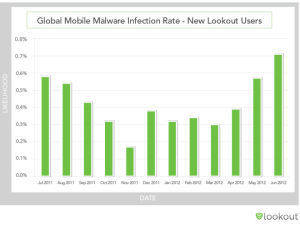
Mobile malware has now become a profitable industry. Because of its global ubiquity as a phone payment mechanism, premium text billing is the most common tactic used by malware writers to commit financial fraud on mobile. This class of malware, termed “Toll Fraud,” has become the most prevalent type of malware within the past year. Just one family of Toll Fraud malware, FakeInst, accounted for 82 percent of Lookout user detections in June 2012 and is estimated to have successfully stolen millions of dollars from people in Russia, the Middle East, and parts of Europe. Read more: http://www.net-security.org/malware_news.php?id=2260&utm_source=dlvr.it&utm_medium=twitter
|
|
Scooped by
Gust MEES
September 5, 2012 8:12 AM
|
The Norton Cybercrime Report is out for 2012! Cybercrime continues to have far-reaching effects and is increasingly a problem on mobile devices and in our social networks (where we seem to be less vigilant). After surveying more than 13,000 consumers in 24 countries, the researchers found that the numbers of online adults increased by 20 percent from last year, and that cybercrime impacted just under ½ of them in the previous 12 months. The total direct consumer cost was calculated to be $110 billion, slightly down from last year’s $114 billion (USD), with the average cost per victim down approximately 20 percent. The reason the overall cost remains so high is that the pool of victimized online adults grew more rapidly - in other words, less money, but from more victims. The nature of the crimes is shifting towards the social networks we love and the mobile devices we use constantly. Consumers seem to have figured out the basics of protecting themselves on their desktop and laptop computers and report using basic security measures and caution to stay safe. It would seem they’ve really gotten the message about things like being careful what you click on and deleting suspicious emails without opening them. Programs, like the October Cyber Security Awareness Month and the NCSA’s “Stop.Think.Connect.” campaign, are likely having a positive impact on consumer behavior! Read more: http://community.norton.com/t5/Ask-Marian/Cybercrime-is-a-Global-Problem-Increasingly-Social-and-Mobile/ba-p/796538
|
|
Scooped by
Gust MEES
September 1, 2012 8:08 AM
|
|
|
Scooped by
Gust MEES
July 30, 2012 6:03 PM
|
Android, Nokia compromised.... A malicious wireless tag has been created that can crack an Android phone in seconds. The tag exploits a vulnerability in near field communication (NFC), a wireless technology popular on Android phones that establishes communication between devices through physical contact. Well-known Apple hacker and Accuvant researcher Charlie Miller wowed the crowed at Black Hat Las Vegas through a demo that involved infiltrating an Android phone by simply grazing it with a tag embedded with an NFC chip... Read more: http://www.scmagazine.com.au/News/310189,blackhat-phones-hijacked-by-malicious-nfc-tag.aspx?utm_source=dlvr.it&utm_medium=twitter
|
|
Scooped by
Gust MEES
July 3, 2012 3:05 AM
|
What is "jailbreaking" and "rooting"? iOS: Jailbreaking is the process of modifying iOS system kernels to allow file system read and write access. Most jailbreaking tools (and exploits) remove the limitations and security features built by the manufacturer Apple (the "jail") through the use of custom kernels, which make unauthorized modifications to the operating system. Almost all jailbreaking tools allow users to run code not approved and signed by Apple. This allows users to install additional applications, extensions and patches without the control of Apple’s App Store. Android: Rooting is the process of gaining administrative or privileged access for the Android OS. As the Android OS is based on the Linux Kernel, rooting a device is analogous to gaining access to administrative, root user-equivalent, permissions on Linux. Unlike iOS, rooting is (usually) not required to run applications outside from the Android Market. Some carriers control this through operating system settings or device firmware. Rooting also enables the user to completely remove and replace the device's operating system. Read more: http://www.owasp.org/index.php/Projects/OWASP_Mobile_Security_Project_-_Dangers_of_Jailbreaking_and_Rooting_Mobile_Devices
|
|
Scooped by
Gust MEES
May 3, 2012 2:41 PM
|
Lookout Mobile Security has identified hacked websites targeting Android devices, an attack vector previously only used to infect PCs with malware. Read more...
|
|
Scooped by
Gust MEES
April 30, 2012 12:21 PM
|
A new Symantec report shows that while the number of vulnerabilities decreased by 20 percent, the number of malicious attacks continued to skyrocket by 81 percent. In addition, the report highlights that advanced targeted attacks are spreading to organizations of all sizes and variety of personnel, data breaches are increasing, and that attackers are focusing on mobile threats. Read more...
|





























Malware used to spy on Tibetan activists and other ethnic groups in China is nothing new. But a new Trojan discovered by researchers at Kaspersky Labs has widened the scope of this digital espionage and intimidation. The malware uses a combination of e-mail hacking, "spear phishing," and a Trojan built specifically for Android smartphones.
===> Kaspersky claims this is the first discovery of a targeted attack that uses mobile phone malware. <===