ICT Security-Sécurité PC et Internet
114.2K views | +1 today
ICT Security-Sécurité PC et Internet
ICT Security + Privacy + Piracy + Data Protection - Censorship - Des cours et infos gratuites sur la"Sécurité PC et Internet" pour usage non-commercial... (FR, EN+DE)...
Curated by Gust MEES
Your new post is loading...
Scooped by Gust MEES
December 2, 2016 5:53 AM
Scoop.it!

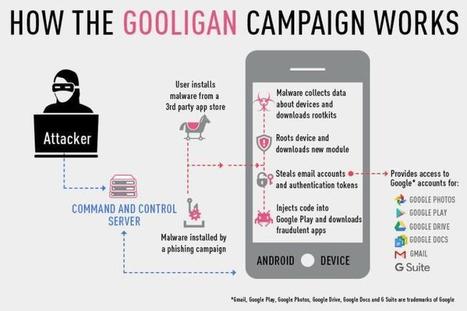
​Gooligan Android malware grabs a million Google accounts in huge Google Play fraud | #CyberSecurity

​Gooligan Android malware grabs a million Google accounts in huge Google Play fraud | #CyberSecurity | ICT Security-Sécurité PC et Internet | Scoop.it
A million Google accounts have been compromised in a massive fraud campaign exploiting Android devices and Google Play.

At the heart of the campaign is a new variant of Android malware dubbed Gooligan, concealed in dozens of Android apps that exploit two unpatched flaws in Android to root infected devices.

The malware nabs email account information and authentication tokens for accessing Google accounts. The attackers use the tokens to install select apps from Google Play on an infected device to boost in-app advertising revenue.


Learn more / En savoir plus / Mehr erfahren:


http://www.scoop.it/t/securite-pc-et-internet/?tag=Android


Gust MEES's insight:
A million Google accounts have been compromised in a massive fraud campaign exploiting Android devices and Google Play.

At the heart of the campaign is a new variant of Android malware dubbed Gooligan, concealed in dozens of Android apps that exploit two unpatched flaws in Android to root infected devices.

The malware nabs email account information and authentication tokens for accessing Google accounts. The attackers use the tokens to install select apps from Google Play on an infected device to boost in-app advertising revenue.


Learn more / En savoir plus / Mehr erfahren:


http://www.scoop.it/t/securite-pc-et-internet/?tag=Android


No comment yet.
Scooped by Gust MEES
November 7, 2016 7:54 AM
Scoop.it!

Linux/Moose: Analysis finds IoT botnet malware favors Instagram fraud | #CyberSecurity #InternetOfThings

Not all Internet-of-Things botnets take down the Internet like Mirai did, but that doesn't necessarily mean they should be allowed to perpetuate. Yet that seems to be the case for Linux/Moose, a malware program that recruits IoT devices to engage in social media fraud, according to a pair of reports from ESET and GoSecure.


Learn more / En savoir plus / Mehr erfahren:


http://www.scoop.it/t/securite-pc-et-internet/?tag=Mirai+Botnet


http://www.scoop.it/t/securite-pc-et-internet/?tag=wearables


https://globaleducationandsocialmedia.wordpress.com/2014/01/21/why-is-it-a-must-to-have-basics-knowledge-of-cyber-security-in-a-connected-technology-world/


http://www.scoop.it/t/securite-pc-et-internet/?tag=SHODAN+Search+Engine


http://www.scoop.it/t/21st-century-learning-and-teaching/?tag=Internet+of+Things


http://www.scoop.it/t/securite-pc-et-internet/?tag=smart-TV


http://www.scoop.it/t/securite-pc-et-internet/?tag=Internet+of+things


http://www.scoop.it/t/securite-pc-et-internet/?tag=Cars


Gust MEES's insight:
Not all Internet-of-Things botnets take down the Internet like Mirai did, but that doesn't necessarily mean they should be allowed to perpetuate. Yet that seems to be the case for Linux/Moose, a malware program that recruits IoT devices to engage in social media fraud, according to a pair of reports from ESET and GoSecure.


Learn more / En savoir plus / Mehr erfahren:


http://www.scoop.it/t/securite-pc-et-internet/?tag=Mirai+Botnet


http://www.scoop.it/t/securite-pc-et-internet/?tag=wearables


https://globaleducationandsocialmedia.wordpress.com/2014/01/21/why-is-it-a-must-to-have-basics-knowledge-of-cyber-security-in-a-connected-technology-world/


http://www.scoop.it/t/securite-pc-et-internet/?tag=SHODAN+Search+Engine


http://www.scoop.it/t/21st-century-learning-and-teaching/?tag=Internet+of+Things


http://www.scoop.it/t/securite-pc-et-internet/?tag=smart-TV


http://www.scoop.it/t/securite-pc-et-internet/?tag=Internet+of+things


http://www.scoop.it/t/securite-pc-et-internet/?tag=Cars


No comment yet.
Scooped by Gust MEES
April 12, 2016 7:21 PM
Scoop.it!

Massive malvertising attack poisons 288 sites | #Netherlands #Malware #CyberSecurity #CyberCrime 

Massive malvertising attack poisons 288 sites | #Netherlands #Malware #CyberSecurity #CyberCrime  | ICT Security-Sécurité PC et Internet | Scoop.it
A malvertising campaign has swamped most of the Netherlands’ most popular sites, affecting millions of users.

The campaign began to take root on Sunday, when security firm Fox-IT noted a spike in incidents involving malware exploit kits.

Spotted among those kits was the notorious Angler: the CaaS, or Crimeware-as-a-Service, that crooks have chosen to spread such nasties as the CryptoWall 4.0 ransomware.

As of Monday, at least 288 websites had been infected with malvertising, exposing millions to poisoned ads.

One example of how far its tentacles have reached: the campaign has hit Nu.nl, the most-visited Dutch-language news portal.

Nu.nl alone is estimated to have scored more than 50 million visitors in March, according to Tech Week Europe.

Other affected sites include eBay-style service Marktplaats.nl and well-known news and culture sites, according to Fox-IT.


Gust MEES's insight:

A malvertising campaign has swamped most of the Netherlands’ most popular sites, affecting millions of users.

The campaign began to take root on Sunday, when security firm Fox-IT noted a spike in incidents involving malware exploit kits.

Spotted among those kits was the notorious Angler: the CaaS, or Crimeware-as-a-Service, that crooks have chosen to spread such nasties as the CryptoWall 4.0 ransomware.

As of Monday, at least 288 websites had been infected with malvertising, exposing millions to poisoned ads.

One example of how far its tentacles have reached: the campaign has hit Nu.nl, the most-visited Dutch-language news portal.

Nu.nl alone is estimated to have scored more than 50 million visitors in March, according to Tech Week Europe.

Other affected sites include eBay-style service Marktplaats.nl and well-known news and culture sites, according to Fox-IT.


No comment yet.
Scooped by Gust MEES
February 21, 2016 12:49 PM
Scoop.it!

Linux Mint hacked: malware-infected ISOs linked from official site | CyberSecurity | Nobody Is Perfect

Linux Mint hacked: malware-infected ISOs linked from official site | CyberSecurity | Nobody Is Perfect | ICT Security-Sécurité PC et Internet | Scoop.it
Downloaded Linux Mint on February 20th? Check for infection NOW


Learn more / En savoir plus / Mehr erfahren:


http://www.scoop.it/t/securite-pc-et-internet/?tag=Linux


http://www.scoop.it/t/securite-pc-et-internet/?tag=Linux+Mint


Gust MEES's insight:
Downloaded Linux Mint on February 20th? Check for infection NOW


Learn more / En savoir plus / Mehr erfahren:


http://www.scoop.it/t/securite-pc-et-internet/?tag=Linux


http://www.scoop.it/t/securite-pc-et-internet/?tag=Linux+Mint


No comment yet.
Scooped by Gust MEES
December 5, 2015 7:32 AM
Scoop.it!

Widespread exploit kit, ransomware program, and password stealer mixed into dangerous malware cocktail

Widespread exploit kit, ransomware program, and password stealer mixed into dangerous malware cocktail | ICT Security-Sécurité PC et Internet | Scoop.it
An ongoing attack campaign combines a very effective password stealer, the most widespread exploit kit, called Angler, and the latest version of the infamous CryptoWall file-encrypting ransomware program.
Gust MEES's insight:

An ongoing attack campaign combines a very effective password stealer, the most widespread exploit kit, called Angler, and the latest version of the infamous CryptoWall file-encrypting ransomware program.


No comment yet.
Scooped by Gust MEES
November 10, 2015 6:00 AM
Scoop.it!

UK parliament's secure network hit with crypto-ransomware | CyberSecurity

UK parliament's secure network hit with crypto-ransomware | CyberSecurity | ICT Security-Sécurité PC et Internet | Scoop.it
The UK parliament's secure network has been breached and several computers on it have been compromised by hackers, The Times has reported.

The newspaper makes is sound like the attack was targeted, and the target was Chi Onwurah, MP for Newcastle upon Tyne Central and the Labour Party’s shadow minister for culture and the digital economy, and her employees.

But they also say that they hackers compromised the systems by delivering and spreading crypto-ransomware, which ended up encrypting sensitive files stored in a shared drive used by some 8,500 government employees (MPs, lords, staff, etc.).

After MP Onwurah was faced with the ransom note, she reported the problem and the Parliamentary Digital Service (PDS) first cut her off the shared drive, than took her computers and cleaned them up by replacing the hard drives.

The MP said that no files containing information about constituents were compromised.


Learn more:


http://www.scoop.it/t/securite-pc-et-internet/?tag=RANSOMWARE


Gust MEES's insight:

The UK parliament's secure network has been breached and several computers on it have been compromised by hackers, The Times has reported.

The newspaper makes is sound like the attack was targeted, and the target was Chi Onwurah, MP for Newcastle upon Tyne Central and the Labour Party’s shadow minister for culture and the digital economy, and her employees.

But they also say that they hackers compromised the systems by delivering and spreading crypto-ransomware, which ended up encrypting sensitive files stored in a shared drive used by some 8,500 government employees (MPs, lords, staff, etc.).

After MP Onwurah was faced with the ransom note, she reported the problem and the Parliamentary Digital Service (PDS) first cut her off the shared drive, than took her computers and cleaned them up by replacing the hard drives.

The MP said that no files containing information about constituents were compromised.


Learn more:


http://www.scoop.it/t/securite-pc-et-internet/?tag=RANSOMWARE


No comment yet.
Scooped by Gust MEES
November 7, 2015 12:41 PM
Scoop.it!

Linux Ransomware Is Now Attacking Webmasters | CyberSecurity | Malware | CryptoWare

Linux Ransomware Is Now Attacking Webmasters | CyberSecurity | Malware | CryptoWare | ICT Security-Sécurité PC et Internet | Scoop.it
A new bit of ransomware is now attacking Linux-based machines, specifically the folders associated with serving web pages. Called Linux.Encoder.1 the..


Learn more:


http://www.scoop.it/t/securite-pc-et-internet/?tag=Linux


http://www.scoop.it/t/securite-pc-et-internet/?tag=RANSOMWARE


Gust MEES's insight:
A new bit of ransomware is now attacking Linux-based machines, specifically the folders associated with serving web pages. Called Linux.Encoder.1 the..


Learn more:


http://www.scoop.it/t/securite-pc-et-internet/?tag=Linux


http://www.scoop.it/t/securite-pc-et-internet/?tag=RANSOMWARE


No comment yet.
Scooped by Gust MEES
November 6, 2015 11:19 AM
Scoop.it!

Verschlüsselungstrojaner Chimera droht mit Veröffentlichung persönlicher Daten | CryptoMalware | CyberSecurity | RansomWare

Verschlüsselungstrojaner Chimera droht mit Veröffentlichung persönlicher Daten | CryptoMalware | CyberSecurity | RansomWare | ICT Security-Sécurité PC et Internet | Scoop.it
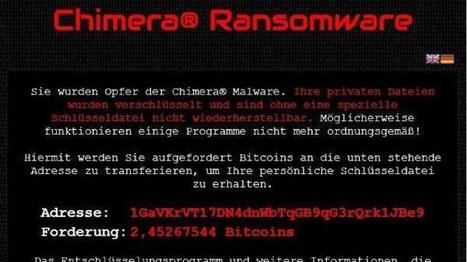
Wer sich die Ransomware Chimera eingefangen hat und das Lösegeld nicht zahlt, muss damit rechnen, dass die Erpresser etwa private Fotos veröffentlichen.


Learn more / En savoir plus / Mehr erfahren:


http://www.scoop.it/t/securite-pc-et-internet/?tag=RANSOMWARE


Gust MEES's insight:
Wer sich die Ransomware Chimera eingefangen hat und das Lösegeld nicht zahlt, muss damit rechnen, dass die Erpresser etwa private Fotos veröffentlichen.


Learn more / En savoir plus / Mehr erfahren:


http://www.scoop.it/t/securite-pc-et-internet/?tag=RANSOMWARE


No comment yet.
Scooped by Gust MEES
July 28, 2015 8:30 PM
Scoop.it!

Malware on Linux - When Penguins Attack | NobodyIsPerfect | ICT | eSkills | CyberSecurity

Malware on Linux - When Penguins Attack | NobodyIsPerfect | ICT | eSkills | CyberSecurity | ICT Security-Sécurité PC et Internet | Scoop.it
What about malware on Linux?

Here's how the argument might go if you were to ask that question:

Malware is impossible on Linux because Linux is secure by design, unlike Windows.
Even if Linux malware were possible, users would have to agree to run it, so that wouldn't count.
Even if users agreed to run it, they wouldn't be root, so that wouldn't count.
Even if they were root, who cares? There isn't any malware for Linux, so there.
The simple truth, of course, is that Linux is much more similar to Windows – in design, implementation and real-world security – than it is different.

As a result: there is malware for Linux; it can do plenty of harm even if you aren't root; and it may be able to infect without you realising.

Just like on Windows.

For all that, the "malware scene" on Linux simply never unfolded like it did on Windows, because the vast


Learn more:


http://www.scoop.it/t/securite-pc-et-internet/?tag=Linux


Gust MEES's insight:
What about malware on Linux?

Here's how the argument might go if you were to ask that question:

Malware is impossible on Linux because Linux is secure by design, unlike Windows.
Even if Linux malware were possible, users would have to agree to run it, so that wouldn't count.
Even if users agreed to run it, they wouldn't be root, so that wouldn't count.
Even if they were root, who cares? There isn't any malware for Linux, so there.
The simple truth, of course, is that Linux is much more similar to Windows – in design, implementation and real-world security – than it is different.

As a result: there is malware for Linux; it can do plenty of harm even if you aren't root; and it may be able to infect without you realising.

Just like on Windows.

For all that, the "malware scene" on Linux simply never unfolded like it did on Windows, because the vast


Learn more:


http://www.scoop.it/t/securite-pc-et-internet/?tag=Linux


No comment yet.
Scooped by Gust MEES
February 16, 2015 8:07 AM
Scoop.it!

Spam und Malvertising werden gefährlicher

Spam und Malvertising werden gefährlicher | ICT Security-Sécurité PC et Internet | Scoop.it

Die Ergebnisse des Cisco Annual Security Report 2015 zeigen allerdings auch einen Wandel bei den Angriffsmethoden der Cyberkriminellen.


Ihr Primärziel sind nicht mehr Server und Betriebssysteme, ===> sondern einzelne Nutzer. <===

.

Im Vergleich zum Vorjahr nahmen dabei betrügerische Mails und Malvertising-Attacken um satte 250 Prozent zu. Und: Vor allem Anwender in hochgefährdeten Branchen fallen laut Cisco doppelt so häufig auf betrügerische Links und Adware herein.

.

Learn more:

.

- https://gustmees.wordpress.com/2012/10/11/learning-basics-of-cyber-security-by-easy-to-follow-steps/

.

- https://gustmees.wordpress.com/2012/11/29/cyber-hygiene-ict-hygiene-for-population-education-and-business/

.

- https://gustmees.wordpress.com/2014/11/18/why-cybersecurity-starts-at-home-and-is-concerning-all-of-us/


Gust MEES's insight:

Die Ergebnisse des Cisco Annual Security Report 2015 zeigen allerdings auch einen Wandel bei den Angriffsmethoden der Cyberkriminellen.


Ihr Primärziel sind nicht mehr Server und Betriebssysteme, ===> sondern einzelne Nutzer. <===

.

Im Vergleich zum Vorjahr nahmen dabei betrügerische Mails und Malvertising-Attacken um satte 250 Prozent zu. Und: Vor allem Anwender in hochgefährdeten Branchen fallen laut Cisco doppelt so häufig auf betrügerische Links und Adware herein.


Learn more:


- https://gustmees.wordpress.com/2012/10/11/learning-basics-of-cyber-security-by-easy-to-follow-steps/


- https://gustmees.wordpress.com/2012/11/29/cyber-hygiene-ict-hygiene-for-population-education-and-business/


- https://gustmees.wordpress.com/2014/11/18/why-cybersecurity-starts-at-home-and-is-concerning-all-of-us/

No comment yet.
Scooped by Gust MEES
January 28, 2015 6:35 AM
Scoop.it!

Hijacking drones with malware

Hijacking drones with malware | ICT Security-Sécurité PC et Internet | Scoop.it

A recent incident at the White House showed that small aerial vehicles (drones) present a specific security problem.

While in this particular case the actual danger turned out to be non-existent, the fact that these devices can be hijacked and misused for malicious purposes is something that the manufacturers will have to think about very soon.


Learn more:


- http://www.scoop.it/t/securite-pc-et-internet/?tag=Maldrone


Gust MEES's insight:

A recent incident at the White House showed that small aerial vehicles (drones) present a specific security problem. 

While in this particular case the actual danger turned out to be non-existent, the fact that these devices can be hijacked and misused for malicious purposes is something that the manufacturers will have to think about very soon.


Learn more:


- http://www.scoop.it/t/securite-pc-et-internet/?tag=Maldrone


No comment yet.
Scooped by Gust MEES
January 15, 2015 8:34 AM
Scoop.it!

Sicherheitsforscher entdecken Hintertür zum Active Directory | Skeleton-Key-Backdoor | CyberSecurity

Sicherheitsforscher entdecken Hintertür zum Active Directory | Skeleton-Key-Backdoor | CyberSecurity | ICT Security-Sécurité PC et Internet | Scoop.it
Bei einer Analyse eines sich seltsam verhaltenden Domain Controllers entdeckten Sicherheitsspezialisten eine ganz besondere Hintertür: Einbrecher hatten die Windows Server so manipuliert, dass ein Master-Passwort universellen Zugang gewährte.


Learn more:


- http://www.scoop.it/t/securite-pc-et-internet/?tag=Skeleton-Key


Gust MEES's insight:
Bei einer Analyse eines sich seltsam verhaltenden Domain Controllers entdeckten Sicherheitsspezialisten eine ganz besondere Hintertür: Einbrecher hatten die Windows Server so manipuliert, dass ein Master-Passwort universellen Zugang gewährte.


Learn more:


- http://www.scoop.it/t/securite-pc-et-internet/?tag=Skeleton-Key


No comment yet.
Scooped by Gust MEES
January 14, 2015 12:17 PM
Scoop.it!

Sicherheits-Allianz gegen Dropperbot Malware | CyberSecurity | Botnets

Sicherheits-Allianz gegen Dropperbot Malware | CyberSecurity | Botnets | ICT Security-Sécurité PC et Internet | Scoop.it
Ein Zusammenschluss aus BKA, BSI, dem Frauenhofer-Institut sowie den IT-Sicherheitsfirmen Avira und G Data hat das Botnetz Dropperbot zerschlagen. Über 11.000 Systeme habe die Malware infiltriert.


Learn more:


- http://www.scoop.it/t/securite-pc-et-internet/?tag=Botnet


Gust MEES's insight:
Ein Zusammenschluss aus BKA, BSI, dem Frauenhofer-Institut sowie den IT-Sicherheitsfirmen Avira und G Data hat das Botnetz Dropperbot zerschlagen. Über 11.000 Systeme habe die Malware infiltriert.


Learn more:


- http://www.scoop.it/t/securite-pc-et-internet/?tag=Botnet

No comment yet.
Scooped by Gust MEES
November 23, 2016 5:31 PM
Scoop.it!

Millionen Android-Smartphones mit Rootkit ab Werk | #CyberSecurity #MobileSecurity #Awareness

Millionen Android-Smartphones mit Rootkit ab Werk | #CyberSecurity #MobileSecurity #Awareness | ICT Security-Sécurité PC et Internet | Scoop.it

Ein Android-Updater der eher unbekannten Firma Ragentek ist nicht nur extrem unsicher, er verhält sich auch wie ein Rootkit. Das Programm steckt in etlichen Smartphone-Modellen chinesischer Hersteller, welche auch auf dem hiesigen Markt vertreten sind.


Über 2,8 Millionen Geräte kontaktierten die falschen Update-Server. Die Forscher versuchten, die Gerätemodelle zu identifizieren und Herstellern zuzuordnen.
Bild: AnubisNetworks In zahlreichen Android-Smartphone chinesischer Hersteller steckt eine Backdoor, durch die der Hersteller – oder ein Angreifer – beliebige Befehle mit Root-Rechten ausführen kann. Für das Security-Debakel ist offenbar ein Update-Prozess verantwortlich, der gewährleisten soll, dass die Geräte-Software auf dem aktuellen Stand ist.


Sie stammt von Ragentek und kommt nicht nur auf Android-Geräten dieses Herstellers zum Einsatz sondern auch bei BLU, Infinix Mobility, Beeline, Doogee, IKO Mobile, Leagoo und XOLO.

2,8 Millionen Geräte kontaktieren falschen Update-Server!!!


Learn more / En savoir plus / Mehr erfahren:


http://www.scoop.it/t/securite-pc-et-internet/?tag=Android


No comment yet.
Scooped by Gust MEES
June 1, 2016 1:00 PM
Scoop.it!

Malware installiert und missbraucht Fernwartungssoftware Teamviewer | #CyberSecurity #Awareness

Malware installiert und missbraucht Fernwartungssoftware Teamviewer | #CyberSecurity #Awareness | ICT Security-Sécurité PC et Internet | Scoop.it
Die vom Security-Anbieter Doctor Web als “BackDoor.TeamViewer.49” bezeichnete Schadsoftware schleicht sich als vermeintliches Update für den Adobe Flash Player auf Windows-Rechner. Über die mitinstallierte Teamviewer-Software verschaffen sich die Kriminellen dann Zugang zu dem infizierten Rechner.

Der IT-Security-Anbieter Doctor Web hat vor einer neu aufgetauchten Malware gewarnt, mit der Kriminelle Windows-Systeme angreifen. Die Malware installiert dazu missbräuchlich die verbreitete Fernwartungssoftware Teamviewer und stellt darüber die Verbindung zu einem Server der Hintermänner her, um den Datenverkehr dann an eine vordefinierte Adresse weiterzuleiten. Die Cyberkriminellen verwischen so ihre Spuren und stellen eine Verbindung zu Remote-Befehlszentren über einen infizierten PC als Proxy-Server her.


Learn more / En savoir plus / Mehr erfahren:


http://www.scoop.it/t/securite-pc-et-internet/


Gust MEES's insight:
Die vom Security-Anbieter Doctor Web als “BackDoor.TeamViewer.49” bezeichnete Schadsoftware schleicht sich als vermeintliches Update für den Adobe Flash Player auf Windows-Rechner. Über die mitinstallierte Teamviewer-Software verschaffen sich die Kriminellen dann Zugang zu dem infizierten Rechner.

Der IT-Security-Anbieter Doctor Web hat vor einer neu aufgetauchten Malware gewarnt, mit der Kriminelle Windows-Systeme angreifen. Die Malware installiert dazu missbräuchlich die verbreitete Fernwartungssoftware Teamviewer und stellt darüber die Verbindung zu einem Server der Hintermänner her, um den Datenverkehr dann an eine vordefinierte Adresse weiterzuleiten. Die Cyberkriminellen verwischen so ihre Spuren und stellen eine Verbindung zu Remote-Befehlszentren über einen infizierten PC als Proxy-Server her.


Learn more / En savoir plus / Mehr erfahren:


http://www.scoop.it/t/securite-pc-et-internet/


No comment yet.
Scooped by Gust MEES
March 30, 2016 7:36 PM
Scoop.it!

New Remaiten Malware Builds Botnet of Linux-Based Routers | #CyberSecurity #InternetOfThings #IoT

New Remaiten Malware Builds Botnet of Linux-Based Routers | #CyberSecurity #InternetOfThings #IoT | ICT Security-Sécurité PC et Internet | Scoop.it
Remaiten Linux Bot Targets Routers and Potentially Other Embedded (IoT) Devices

A new piece of malware is targeting embedded systems with the mission to compromise and make them part of a botnet, ESET security researchers have discovered.

Dubbed “Remaiten” (Linux/ Remaiten), the new threat combines the capabilities of previously spotted Tsunami (also known as Kaiten) and Gafgyt malware and also brings a series of improvements and new features. According to ESET, three versions of Remaiten have already emerged, while the malware authors call their creation “KTN-Remastered” or “KTN-RM.”

One of the capabilities that Remaiten borrows from Gafgyt is telnet scanning, though Remaiten enjoys a series of improvements, ESET’s Michal Malik explains in a blog post. Both, however, rely on improperly secured devices to successfully infect them.

Gafgyt attempts to connect to random routers via port 23, which it then issues a shell command to download bot executables for multiple architectures and tries to run them. Remaiten, on the other hand, carries downloaders for CPU architectures commonly used in embedded Linux devices, then tries to trigger the device’s platform to drop only the appropriate downloader.


Learn more / En savoir plus / Mehr erfahren:


http://www.scoop.it/t/securite-pc-et-internet/?tag=Linux


http://www.scoop.it/t/securite-pc-et-internet/?tag=Internet+of+things


http://www.scoop.it/t/securite-pc-et-internet/?tag=Router


Gust MEES's insight:
Remaiten Linux Bot Targets Routers and Potentially Other Embedded (IoT) Devices

A new piece of malware is targeting embedded systems with the mission to compromise and make them part of a botnet, ESET security researchers have discovered.

Dubbed “Remaiten” (Linux/ Remaiten), the new threat combines the capabilities of previously spotted Tsunami (also known as Kaiten) and Gafgyt malware and also brings a series of improvements and new features. According to ESET, three versions of Remaiten have already emerged, while the malware authors call their creation “KTN-Remastered” or “KTN-RM.”

One of the capabilities that Remaiten borrows from Gafgyt is telnet scanning, though Remaiten enjoys a series of improvements, ESET’s Michal Malik explains in a blog post. Both, however, rely on improperly secured devices to successfully infect them.

Gafgyt attempts to connect to random routers via port 23, which it then issues a shell command to download bot executables for multiple architectures and tries to run them. Remaiten, on the other hand, carries downloaders for CPU architectures commonly used in embedded Linux devices, then tries to trigger the device’s platform to drop only the appropriate downloader.


Learn more / En savoir plus / Mehr erfahren:


http://www.scoop.it/t/securite-pc-et-internet/?tag=Linux


http://www.scoop.it/t/securite-pc-et-internet/?tag=Internet+of+things


http://www.scoop.it/t/securite-pc-et-internet/?tag=Router


No comment yet.
Scooped by Gust MEES
December 30, 2015 2:31 PM
Scoop.it!

New malware sets up anonymous proxies on infected PCs | CyberSecurity

New malware sets up anonymous proxies on infected PCs | CyberSecurity | ICT Security-Sécurité PC et Internet | Scoop.it
ProxyBack stealthily uses your bandwidth to route traffic from a shady Russian proxy seller. ...


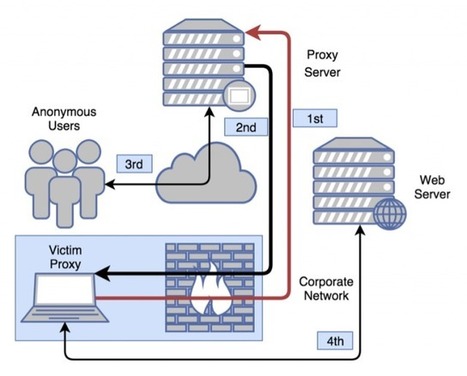
For as long as people have been doing productive things with software, there have been jerks making malware to screw things up and make money. As security gets better, the malware has gotten smarter over the years. Some modern variants like ransomware are pretty clever, but Palo Alto Networks has just reported discovery of something new. ProxyBack sets up anonymous proxies on infected PCs to route traffic over the victim’s connection.


There is demand for proxy connections in various countries, for both legitimate and non-legitimate uses. When ProxyBack managed to infiltrate a system (probably via deceptive software downloads), it goes to work setting up a reverse tunnel on the machine. This allows ProxyBack to circumvent security measures like software and hardware firewalls that prevent the flow of data.


Gust MEES's insight:
ProxyBack stealthily uses your bandwidth to route traffic from a shady Russian proxy seller. ...


For as long as people have been doing productive things with software, there have been jerks making malware to screw things up and make money. As security gets better, the malware has gotten smarter over the years. Some modern variants like ransomware are pretty clever, but Palo Alto Networks has just reported discovery of something new. ProxyBack sets up anonymous proxies on infected PCs to route traffic over the victim’s connection.


There is demand for proxy connections in various countries, for both legitimate and non-legitimate uses. When ProxyBack managed to infiltrate a system (probably via deceptive software downloads), it goes to work setting up a reverse tunnel on the machine. This allows ProxyBack to circumvent security measures like software and hardware firewalls that prevent the flow of data.

No comment yet.
Scooped by Gust MEES
November 11, 2015 5:25 PM
Scoop.it!

Website files encrypted by Linux.Encoder.1 ransomware? There is now a free fix | CyberSecurity

Researchers have exploited a flaw in the encryption procedure used by the Linux.Encoder.1 - the first ransomware targeting the Linux platform - to develop a decryption tool for victims.


On Thursday, Russian anti-virus company Dr. Web first disclosed the existence of Linux.Encoder.1, a strain of ransomware similar to other notorious ransomware families such as CryptoWall and TorLocker, but targeting computers running Linux rather than Windows.

Evidence of infections by Linux.Encoder.1 are scattered across the net, because many websites appear to be revealing their impacted state in search engine results.


Learn more:


http://www.scoop.it/t/securite-pc-et-internet/?tag=Linux


http://www.scoop.it/t/securite-pc-et-internet/?tag=RANSOMWARE


Gust MEES's insight:
Researchers have exploited a flaw in the encryption procedure used by the Linux.Encoder.1 - the first ransomware targeting the Linux platform - to develop a decryption tool for victims.


On Thursday, Russian anti-virus company Dr. Web first disclosed the existence of Linux.Encoder.1, a strain of ransomware similar to other notorious ransomware families such as CryptoWall and TorLocker, but targeting computers running Linux rather than Windows.

Evidence of infections by Linux.Encoder.1 are scattered across the net, because many websites appear to be revealing their impacted state in search engine results.


Learn more:


http://www.scoop.it/t/securite-pc-et-internet/?tag=Linux


http://www.scoop.it/t/securite-pc-et-internet/?tag=RANSOMWARE


No comment yet.
Scooped by Gust MEES
November 9, 2015 2:55 PM
Scoop.it!

Linux web servers targeted in new ransomware scam | CyberSecurity | CryptoWare | Malware

Linux web servers targeted in new ransomware scam | CyberSecurity | CryptoWare | Malware | ICT Security-Sécurité PC et Internet | Scoop.it
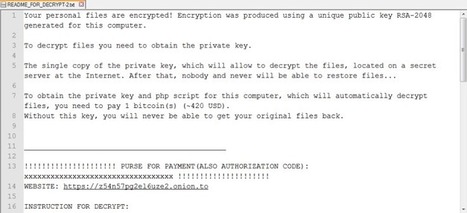
A new ransomware campaign dubbed Linux.Encoder.1 is targeting web servers using the Linux operating system and is demanding a payment of one bitcoin, or $380, from its victims for the release of the captured files.

Researchers at the anti-virus firm Dr. Web said the cybercriminals appear to target network administrator computers because these hold the web server software that they are interested in controlling. It was also noted that in some cases the attackers used the CMS Magneto vulnerability to attack the web servers.

The Dr. Web staff did not have a firm idea how prevalent these attacks have been, but they “presume that at least tens of users have already fallen victim to this trojan.” An email by SCMagazine.com to Dr. Web to confirm the number of infected systems has not yet been returned.


Learn more:


http://www.scoop.it/t/securite-pc-et-internet/?tag=Linux


http://www.scoop.it/t/securite-pc-et-internet/?tag=RANSOMWARE


Gust MEES's insight:
A new ransomware campaign dubbed Linux.Encoder.1 is targeting web servers using the Linux operating system and is demanding a payment of one bitcoin, or $380, from its victims for the release of the captured files.

Researchers at the anti-virus firm Dr. Web said the cybercriminals appear to target network administrator computers because these hold the web server software that they are interested in controlling. It was also noted that in some cases the attackers used the CMS Magneto vulnerability to attack the web servers.

The Dr. Web staff did not have a firm idea how prevalent these attacks have been, but they “presume that at least tens of users have already fallen victim to this trojan.” An email by SCMagazine.com to Dr. Web to confirm the number of infected systems has not yet been returned.


Learn more:


http://www.scoop.it/t/securite-pc-et-internet/?tag=Linux


http://www.scoop.it/t/securite-pc-et-internet/?tag=RANSOMWARE


No comment yet.
Scooped by Gust MEES
November 7, 2015 11:37 AM
Scoop.it!

Encryption ransomware threatens Linux users | CyberSecurity | Malware | CryptoWare

Encryption ransomware threatens Linux users | CyberSecurity | Malware | CryptoWare | ICT Security-Sécurité PC et Internet | Scoop.it
Doctor Web warns users about new encryption ransomware targeting Linux operating systems. Judging from the directories in which the Trojan encrypts files, one can draw a conclusion that the main target of cybercriminals is website administrators whose machines have web servers deployed on. Doctor Web security researchers presume that at least tens of users have already fallen victim to this Trojan.


Learn more:


http://www.scoop.it/t/securite-pc-et-internet/?tag=Linux


http://www.scoop.it/t/securite-pc-et-internet/?tag=RANSOMWARE


Gust MEES's insight:
Doctor Web warns users about new encryption ransomware targeting Linux operating systems. Judging from the directories in which the Trojan encrypts files, one can draw a conclusion that the main target of cybercriminals is website administrators whose machines have web servers deployed on. Doctor Web security researchers presume that at least tens of users have already fallen victim to this Trojan.


Learn more:


http://www.scoop.it/t/securite-pc-et-internet/?tag=Linux


http://www.scoop.it/t/securite-pc-et-internet/?tag=RANSOMWARE

No comment yet.
Scooped by Gust MEES
October 2, 2015 7:29 PM
Scoop.it!

Internet of Things vigilante malware strikes tens of thousands of devices - to protect them | CyberSecurity | #IoT

Internet of Things vigilante malware strikes tens of thousands of devices - to protect them | CyberSecurity | #IoT | ICT Security-Sécurité PC et Internet | Scoop.it
Linux.Wifatch: A force for good or evil?


Learn more / En savoir plus / Mehr erfahren:


http://www.scoop.it/t/securite-pc-et-internet/?tag=Linux.Wifatch


http://www.scoop.it/t/21st-century-learning-and-teaching/?tag=Internet+of+Things


http://www.scoop.it/t/securite-pc-et-internet/?tag=Router


http://www.scoop.it/t/securite-pc-et-internet/?tag=smart-TV


http://www.scoop.it/t/securite-pc-et-internet/?tag=Internet+of+things


http://globaleducationandsocialmedia.wordpress.com/2014/01/21/why-is-it-a-must-to-have-basics-knowledge-of-cyber-security-in-a-connected-technology-world/


http://www.scoop.it/t/securite-pc-et-internet/?tag=Cars


Gust MEES's insight:
Linux.Wifatch: A force for good or evil?


Learn more / En savoir plus / Mehr erfahren:


http://www.scoop.it/t/securite-pc-et-internet/?tag=Linux.Wifatch


http://www.scoop.it/t/21st-century-learning-and-teaching/?tag=Internet+of+Things


http://www.scoop.it/t/securite-pc-et-internet/?tag=Router


http://www.scoop.it/t/securite-pc-et-internet/?tag=smart-TV


http://www.scoop.it/t/securite-pc-et-internet/?tag=Internet+of+things


http://globaleducationandsocialmedia.wordpress.com/2014/01/21/why-is-it-a-must-to-have-basics-knowledge-of-cyber-security-in-a-connected-technology-world/


http://www.scoop.it/t/securite-pc-et-internet/?tag=Cars

No comment yet.
Scooped by Gust MEES
May 27, 2015 4:40 PM
Scoop.it!

Online-Dienst erstellt maßgeschneiderte Krypto-Trojaner | TOR | CyberSecurity | eSkills

Online-Dienst erstellt maßgeschneiderte Krypto-Trojaner | TOR | CyberSecurity | eSkills | ICT Security-Sécurité PC et Internet | Scoop.it
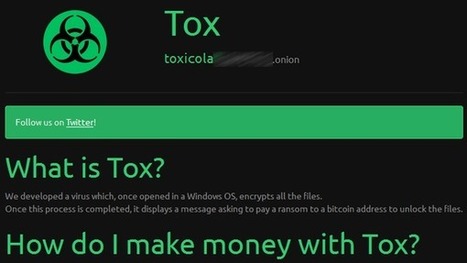
Die Einstiegshürde für angehende Online-Erpresser ist erneut gesunken: Ein Dienst im Tor-Netz erstellt nach wenigen Klicks den individuellen Erpressungs-Trojaner. Falls ein Opfer das geforderte Lösegeld zahlt, verdienen die Betreiber mit.


Die Einstiegshürde für angehende Online-Erpresser ist erneut gesunken: Ein Dienst im Tor-Netz erstellt nach wenigen Klicks den individuellen Erpressungs-Trojaner. Falls ein Opfer das geforderte Lösegeld zahlt, verdienen die Betreiber mit.


- http://www.scoop.it/t/securite-pc-et-internet/?tag=TOR


Gust MEES's insight:

Die Einstiegshürde für angehende Online-Erpresser ist erneut gesunken: Ein Dienst im Tor-Netz erstellt nach wenigen Klicks den individuellen Erpressungs-Trojaner. Falls ein Opfer das geforderte Lösegeld zahlt, verdienen die Betreiber mit.


- http://www.scoop.it/t/securite-pc-et-internet/?tag=TOR


No comment yet.
Scooped by Gust MEES
February 7, 2015 6:41 AM
Scoop.it!

Sneaky Linux malware comes with sophisticated custom-built rootkit | CyberSecurity

Sneaky Linux malware comes with sophisticated custom-built rootkit | CyberSecurity | ICT Security-Sécurité PC et Internet | Scoop.it
A malware program designed for Linux systems, including embedded devices with ARM architecture, uses a sophisticated kernel rootkit that’s custom built for each infection.

The malware, known as XOR.DDoS, was first spotted in September by security research outfit Malware Must Die. However, it has since evolved and new versions were seen in the wild as recently as Jan. 20, according to a new report Thursday from security firm FireEye, which analyzed the threat in detail.

XOR.DDoS is installed on targeted systems via SSH (Secure Shell) brute-force attacks launched primarily from Internet Protocol (IP) addresses registered to a Hong Kong-based company called Hee Thai Limited.

The attacks attempt to guess the password for the root account by using different dictionary-based techniques and password lists from past data breaches. FireEye observed well over 20,000 SSH login attempts per targeted server within a 24-hour period and more than 1 million per server between mid-November and end of January.


Learn more:


- http://www.scoop.it/t/securite-pc-et-internet/?tag=Linux


Gust MEES's insight:
A malware program designed for Linux systems, including embedded devices with ARM architecture, uses a sophisticated kernel rootkit that’s custom built for each infection.

The malware, known as XOR.DDoS, was first spotted in September by security research outfit Malware Must Die. However, it has since evolved and new versions were seen in the wild as recently as Jan. 20, according to a new report Thursday from security firm FireEye, which analyzed the threat in detail.

XOR.DDoS is installed on targeted systems via SSH (Secure Shell) brute-force attacks launched primarily from Internet Protocol (IP) addresses registered to a Hong Kong-based company called Hee Thai Limited.

The attacks attempt to guess the password for the root account by using different dictionary-based techniques and password lists from past data breaches. FireEye observed well over 20,000 SSH login attempts per targeted server within a 24-hour period and more than 1 million per server between mid-November and end of January.


Learn more:


- http://www.scoop.it/t/securite-pc-et-internet/?tag=Linux


No comment yet.
Scooped by Gust MEES
January 28, 2015 5:53 AM
Scoop.it!

Maldrone: Malware which hijacks your personal drone | CyberSecurity

Maldrone: Malware which hijacks your personal drone | CyberSecurity | ICT Security-Sécurité PC et Internet | Scoop.it
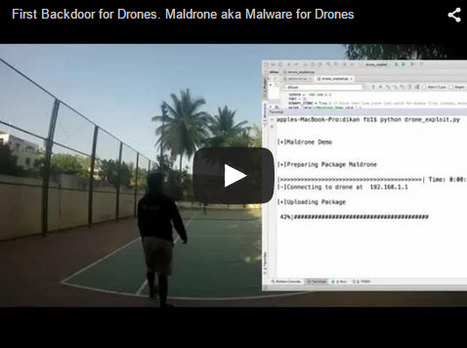
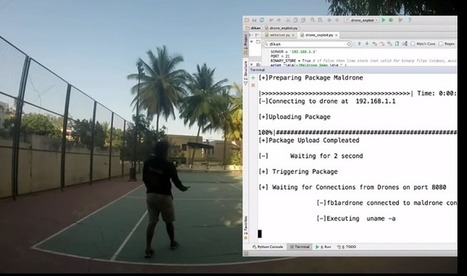
A backdoor has been discovered in popular consumer drones which can hijack your favorite new flying toy.


Learn more:


- http://www.scoop.it/t/securite-pc-et-internet/?tag=Maldrone


Gust MEES's insight:

A backdoor has been discovered in popular consumer drones which can hijack your favorite new flying toy.


Learn more:


- http://www.scoop.it/t/securite-pc-et-internet/?tag=Maldrone


No comment yet.
Scooped by Gust MEES
January 14, 2015 2:37 PM
Scoop.it!

'Skeleton Key' malware unlocks corporate networks | CyberSecurity

'Skeleton Key' malware unlocks corporate networks | CyberSecurity | ICT Security-Sécurité PC et Internet | Scoop.it
It's time to use two-factor authentication, folks.


The newly-discovered "Skeleton Key" malware is able to circumvent authentication on Active Directory systems, according to Dell researchers.

The Dell SecureWorks Counter Threat Unit (CTU) teampublished their findings in an advisory notice this week.


Gust MEES's insight:
It's time to use two-factor authentication, folks.


The newly-discovered "Skeleton Key" malware is able to circumvent authentication on Active Directory systems, according to Dell researchers.

The Dell SecureWorks Counter Threat Unit (CTU) teampublished their findings in an advisory notice this week.


No comment yet.