 Your new post is loading...

|
Scooped by
Gust MEES
December 15, 2016 4:45 AM
|
Despite spending more money on security than ever, organisations struggling with a widespread cybersecurity skills gap are often told how technologies like big data, analytics, machine learning, and artificial intelligence can aid them in protecting their data or critical infrastructure from attackers.
Organisations ranging from startups to established large corporations are investing in the building of AI systems to bolster defences by analysing vast amounts of data and helping cybersecurity professionals identify far more threats than would be possible if they were left to do it manually.
But the same technologies that improve corporate defences could also be used to attack them. Learn more / En savoir plus / Mehr erfahren: http://www.scoop.it/t/securite-pc-et-internet/?tag=Cyberattacks http://www.scoop.it/t/securite-pc-et-internet/?tag=Artificial+Intelligence
|
|
Scooped by
Gust MEES
October 28, 2016 4:08 AM
|
Im Netz kursiert eine gewaltige Menge an Zugangsdaten aus Raubzügen bei Yahoo, LinkedIn und Co. c't hat die Spur der Daten-Hehler verfolgt und einen Insider interviewt. Zudem liefert das Magazin Tipps, wie man sich vor Account-Missbrauch schützt. Learn more / En savoir plus / Mehr erfahren: http://www.scoop.it/t/securite-pc-et-internet/?tag=cybercrime
|
|
Scooped by
Gust MEES
October 24, 2016 12:58 PM
|
|
|
Scooped by
Gust MEES
October 6, 2016 11:51 AM
|
Vorsicht! Auf diese Links sollten Sie nie klicken
Cyberkriminelle versuchen es leider immer wieder, Schadsoftware zu verbreiten. Dieses Mal haben sie es auf die User der Facebook-Messenger-App abgesehen. Deswegen: Klicken Sie nie auf Links denen Sie nicht hundertprozentig vertrauen können. Weitere Infos und Tipps zu der Masche bekommen Sie im Video.
Sie haben sich bereits einen Virus eingefangen? Wir zeigen Ihnen hier was Sie tun können, wenn Sie einen Virus auf Ihrem Android-Gerät haben.
|
|
Scooped by
Gust MEES
September 22, 2016 4:29 PM
|
|
|
Scooped by
Gust MEES
September 20, 2016 7:23 AM
|
Forscher des chinesischen Internetunternehmens Tencent demonstrieren, wie sie manche Funktionen eines Tesla Model S unautorisiert von fern steuern. Dabei gelang es ihnen auch, ein fahrendes Auto anzuhalten. Learn more / En savoir plus / Mehr erfahren: http://www.scoop.it/t/securite-pc-et-internet/?tag=Cars
|
|
Scooped by
Gust MEES
September 6, 2016 10:38 AM
|
At Tokyo's MtGox, customers have yet to recover their investments more than two years after closure.
Experts say trading venues acting like banks such as Bitfinex will remain vulnerable. These exchanges act as custodial wallets in which they control users' digital currencies like banks control customer deposits.
"The big exchanges that hold customer deposits are a big target for hackers," said ShapeShift's Voorhees, "and unfortunately most bitcoin exchanges store user funds."
When customers' checking accounts are hacked, there is always a third party at the bank that can step in to deal with the theft.
Not so with bitcoin, said Seattle-based Darin Stanchfield, chief executive officer at KeepKey, a hardware wallet provider. He expects more of these attacks to happen despite efforts to improve security at bitcoin exchanges.
"Unfortunately because of its irreversible nature, bitcoin requires near perfect security. " Learn more / En savoir plus / Mehr erfahren: http://www.scoop.it/t/securite-pc-et-internet/?tag=Bitcoin
|
|
Scooped by
Gust MEES
September 1, 2016 10:54 AM
|
OneLogin describes itself as the "identity and access management (IAM) solution without compromise."
Which means it must be OneLogin's very worst nightmare to discover that it has itself been compromised.
It appears that a hacker was able to view "Secure Notes" updated by OneLogin users between 25 July and 25 August 2016, because of a bug that was exploited after a hacker gained access to the company's systems after stealing a OneLogin employee's password.
Security staff at the identity management firm say no other systems have been affected.
OneLogin says that the issue has impacted a "small subset" of its customers, but that's really beside the point.
Damage has been done to the company's reputation, and when a company has actively promoted itself for so long as a solution for securing enterprise data it will take a long time before clients and prospective customers forget about their security snafu.
More details can be found in OneLogin's blog post. Learn more / En savoir plus / Mehr erfahren: https://gustmees.wordpress.com/2013/06/23/ict-awareness-what-you-should-know/
|
|
Scooped by
Gust MEES
August 31, 2016 8:23 AM
|
|
|
Scooped by
Gust MEES
August 29, 2016 7:43 AM
|
F-Secure's Mikko Hypponen tells SCMagazineUK.com how the company is now tracking ransomware Bitcoin wallets to reveal the huge amounts of money the gangs are making.
Could we ever put an end the blight of ransomware?
Are we about to witness a ransomware unicorn? According to Mikko Hypponen, chief research officer of Finnish F-Secure, we are. But there's a caveat.
A unicorn is a startup business which has received the valuation of a US$ 1 billion dollars (£757 million) or more. Think AirBnB, Uber, or Spotify.
In an interview with SCMagazineUK.com, Hypponen explained: "Bitcoin is based on Blockchain, and Blockchain is a public ledger of transactions. So all Bitcoin transactions are public. Now, you don't know who is who. But we can see money moving around, and we can see the amounts."
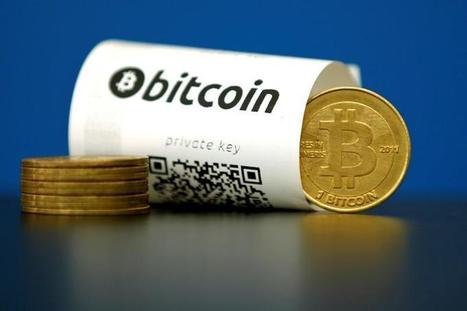
Bitcoin has not only changed the economics of cyber-crime by providing crooks with an encrypted, nearly anonymous payment system autonomous from any central bank. It's also changed researchers' ability to track how much money criminals are making.
Hypponen detailed how F-Secure is tracking over 100 wallets, the biggest of which contains over 12,000 Bitcoins (over £5 million). And interestingly, Hypponen says there appears to be a lot of gangs who aren't cashing out. Learn more / En savoir plus / Mehr erfahren: http://www.scoop.it/t/securite-pc-et-internet/?tag=Bitcoin http://www.scoop.it/t/21st-century-learning-and-teaching/?tag=bitcoin
|
|
Scooped by
Gust MEES
August 20, 2016 5:26 AM
|
More evidence surfaced this week that computer surveillance tools belonging to the mysterious Equation hacking group are linked to the US National Security Agency.
Cyber-security experts were divided on the origin of the hacking code, which was leaked on Monday by another hacking group called calling itself the "Shadow Brokers." But The Intercept reported on Friday that a specific 16-character string found in a leaked NSA instruction manual also appears in the Shadow Brokers code.
The manual, a 31-page document entitled "FOXACID SOP for Operational Management," describes administrative tools for tracking surveillance targets, including a set of tags used to catalogue servers, according to The Intercept. The tags are used to trick Internet users into thinking they're browsing a safe website when in fact they've been sent a malicious payload from an NSA server.
Although it appears to show a link between the Shadow Brokers hack and the NSA, The Intercept acknowledges its findings don't necessarily mean that the NSA itself was hacked. The code could have been stolen from third-party hackers, a possibility Edward Snowden alluded to on Monday. Learn more / En savoir plus / Mehr erfahren: http://www.scoop.it/t/securite-pc-et-internet/?tag=Shadow+Brokers http://www.scoop.it/t/securite-pc-et-internet/?tag=NSA
|
|
Scooped by
Gust MEES
August 19, 2016 4:35 PM
|
Notorious NSA contractor-turned-privacy advocate Edward Snowden warns the recent NSA hacks could have some really "messy" consequences. Notorious NSA contractor-turned-privacy advocate Edward Snowden today took toTwitter to discuss the details of yesterday’s ‘Equation Group’ hack. The Equation Group — allegedly an offshoot of the NSA — saw its defenses penetrated by a group calling itself ‘The Shadow Brokers.’ Eventually this data began to make its way online. The collected data is reported to be a cache of hack tools, known as binaries. According to Snowden, these tools are uploaded onto an NSA staging server as part of on-going operations to target and trace rival malware servers. The practice is known as Counter Computer Network Exploitation, or CCNE — a process that allows NSA hackers to steal tools used by foreign (or domestic rival) hackers in order to fingerprint them. Learn more / En savoir plus / Mehr erfahren: http://www.scoop.it/t/securite-pc-et-internet/?tag=Shadow+Brokers
|
|
Scooped by
Gust MEES
August 19, 2016 1:55 PM
|
Last Friday, a mysterious group by the name of “The Shadow Brokers” dumped what appeared to be some of the National Security Agency’s hacking tools online. There was some speculation as to whether the tools were legitimate. According to The Intercept, these tools are mentioned in documents leaked by NSA whistleblower Edward Snowden. Learn more / En savoir plus / Mehr erfahren: http://www.scoop.it/t/securite-pc-et-internet/?tag=Shadow+Brokers
|
|
|
Scooped by
Gust MEES
December 13, 2016 11:58 AM
|
|
|
Scooped by
Gust MEES
October 27, 2016 5:13 PM
|
Are the Days of “Booter” Services Numbered?
It may soon become easier for Internet service providers to anticipate and block certain types of online assaults launched by Web-based attack-for-hire services known as “booter” or “stresser” services, new research released today suggests.
The findings come from researchers in Germany who’ve been studying patterns that emerge when miscreants attempt to mass-scan the entire Internet looking for systems useful for launching these digital sieges — known as “distributed denial-of-service” or DDoS attacks. Learn more / En savoir plus / Mehr erfahren: http://www.scoop.it/t/securite-pc-et-internet/?tag=Internet+of+things
|
|
Scooped by
Gust MEES
October 24, 2016 12:27 PM
|
|
|
Scooped by
Gust MEES
September 26, 2016 12:15 PM
|
An internet hosting company has been the subject of a distributed denial of service attacks the likes of which the world has never seen.
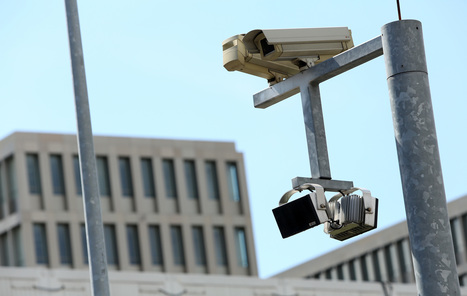
The hosting company found that hacked CCTV cameras to blame for historic attack (Nasanbuyn via wikimedia commons)
Hosting company OVH has been subject to the biggest attack DDoS known to date, with peaks of over 1 Tbps of traffic.
Over the past week, the company has been subjected to an attack greater than the one suffered by Krebs on Security.
The attack led to company founder and CTO Octave Klaba tweeting, “last days, we got lot of huge DDoS. Here, the list of ‘bigger that 100Gbps' only. You can see the simultaneous DDoS are close to 1Tbps!”
Klaba also shared a screenshot of the multiple attacks on its infrastructure that when added together produced the 1Tbps directed at the company. The biggest single attack was documented at 799Gbps.
Learn more / En savoir plus / Mehr erfahren: https://gustmees.wordpress.com/2013/05/13/visual-cyber-security-see-attacks-on-real-time/
|
|
Scooped by
Gust MEES
September 22, 2016 11:01 AM
|
|
|
Scooped by
Gust MEES
September 19, 2016 7:22 PM
|
|
|
Scooped by
Gust MEES
September 1, 2016 11:02 AM
|
|
|
Scooped by
Gust MEES
September 1, 2016 9:29 AM
|
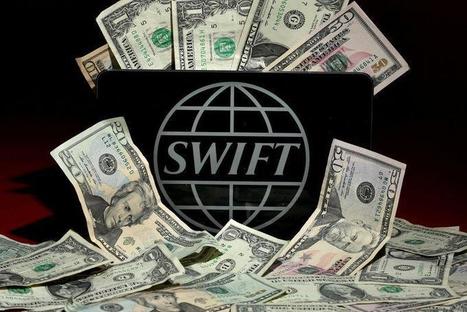
SWIFT, the global financial messaging system, on Tuesday disclosed new hacking attacks on its member banks as it pressured them to comply with security procedures instituted after February's high-profile $81 million heist at Bangladesh Bank.
In a private letter to clients, SWIFT said that new cyber-theft attempts - some of them successful - have surfaced since June, when it last updated customers on a string of attacks discovered after the attack on the Bangladesh central bank.
"Customers’ environments have been compromised, and subsequent attempts (were) made to send fraudulent payment instructions," according to a copy of the letter reviewed by Reuters. "The threat is persistent, adaptive and sophisticated - and it is here to stay."
The disclosure suggests that cyber thieves may have ramped up their efforts following the Bangladesh Bank heist, and that they specifically targeted banks with lax security procedures for SWIFT-enabled transfers.
The Brussels-based firm, a member-owned cooperative, indicated in Tuesday's letter that some victims in the new attacks lost money, but did not say how much was taken or how many of the attempted hacks succeeded. It did not identify specific victims, but said the banks varied in size and geography and used different methods for accessing SWIFT. Learn more / En savoir plus / Mehr erfahren: http://www.scoop.it/t/securite-pc-et-internet/?tag=banking+trojans
|
|
Scooped by
Gust MEES
August 30, 2016 8:24 AM
|
Forscher von Eset weisen auf ein Android-Botnetz hin, das nicht von einem Kommandoserver, sondern über Twitter gesteuert wird. Diese von PC-Schädlingen seit mindestens 2009 bekannte Verfahren wird damit nach ihrer Einschätzung erstmals für einen Android-Trojaner verwendet.
Aufgrund des für die Koordination verwendeten Kommunikationskanals haben die Forscher den Trojaner Twitoor getauft. Ist er einmal installiert, fragt er regelmäßig ein spezielles Twitter-Konto ab, um eventuelle Befehle zu empfangen. Die Hintermänner können den Trojaner so beispielsweise anweisen, weitere bösartige Anwendungen zu installieren (in der Praxis bisher vor allem solche, die Bankdaten stehlen) oder auch, den Twitter-Kanal zu wechseln.
Learn more / En savoir plus / Mehr erfahren: http://www.scoop.it/t/securite-pc-et-internet/?tag=Android http://www.scoop.it/t/securite-pc-et-internet/?tag=Botnets http://www.scoop.it/t/21st-century-learning-and-teaching/?tag=Botnet
|
|
Scooped by
Gust MEES
August 28, 2016 5:04 PM
|
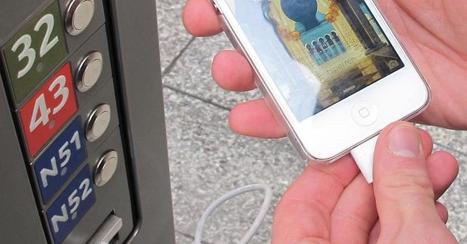
Praktisch, wenn man unterwegs ein USB-Kabel zum Aufladen des Smartphones findet. Allerdings sollte man sein Telefon nicht an jedes beliebige Kabel hängen. Über präparierte Ladestationen können Unbefugte in den Besitz persönlicher Daten gelangen.
Smartphones an öffentlich zugänglichen USB-Steckern aufzuladen, kann ein Sicherheitsrisiko sein. Zum Schutz vor Spionage sollte man lieber auf eigene Kabel und Ladegeräte zurückgreifen, rät der Sicherheitsexperte Brian Krebs in seinem Blog „ krebsonsecurity.com“.
Er warnt vor dem sogenannten Video Jacking. Dabei wird über vermeintliche Ladestationen der Displayinhalt des Smartphones übertragen. Angreifer können so Sicherheitscodes, Passwörter und Texteingaben auslesen und verfolgen, was auf dem Smartphonebildschirm angezeigt wird.
Nehmen Sie ihr eigenes Kabel mit!!!
Betroffen sind Geräte, an deren Micro-USB-Port auch der formgleiche Mobile High Definition Link (MHL) oder ein Slimport-HDMI-Adapter angeschlossen werden kann. Diese Stecker ermöglichen auch die Übertragung des Bildschirminhalts vieler Android- und Blackberry-Smartphones. Für das ungeübte Auge sind sie von normalen Micro-USB-Steckern nicht zu unterscheiden - den Akku des Smartphones laden sie alle. Mit einem speziellen Adapter funktioniert der Angriff den Angaben nach auch mit Apples iPhone 6.
Learn more / En savoir plus / Mehr erfahren: http://www.scoop.it/t/securite-pc-et-internet/?tag=Video+Jacking
|
|
Scooped by
Gust MEES
August 19, 2016 4:49 PM
|
Der Nachrichtendienst NSA ist offenbar Opfer eines Hackerangriffs geworden. Bereits 2013 erbeutete Überwachungsprogramme wurden jetzt im Internet veröffentlicht. Edward Snowden vermutet russische Hintermänner. Für die NSA könnte der Hack unangenehme Folgen haben.
|
|
Scooped by
Gust MEES
August 19, 2016 3:21 PM
|
This is surely no frivolous hacker feud, but an incredibly sophisticated attack on the US cyber-security infrastructure — even though it was meant to look like it was carried out by Guy-Fawkes-mask-wearing ideological warriors, at least a bit. It even features a quasi-illiterate intro/rant railing against “the elites.” It’s a familiar refrain in an American political season dominated by anti-establishment politicians, and it fits well with the stereotype of the libertarian hacker — but it also seems to want to convince these elites not to support the sort of offensive hacking on display in their leak. Emphasis added:
We want make sure Wealthy Elite recognizes the danger cyber weapons, this message, our auction, poses to their wealth and control. Let us spell out for Elites. Your wealth and control depends on electronic data. You see what “Equation Group” can do. You see what cryptolockers and stuxnet can do. You see free files we give for free. You see attacks on banks and SWIFT in news. Maybe there is Equation Group version of cryptolocker+stuxnet for banks and financial systems? If Equation Group lose control of cyber weapons, who else lose or find cyber weapons? If electronic data go bye bye where leave Wealthy Elites? Maybe with dumb cattle? Learn more / En savoir plus / Mehr erfahren: http://www.scoop.it/t/securite-pc-et-internet/?tag=Shadow+Brokers http://www.scoop.it/t/securite-pc-et-internet/?tag=NSA
|

























Learn more / En savoir plus / Mehr erfahren:
http://www.scoop.it/t/securite-pc-et-internet/?tag=Cyberattacks
http://www.scoop.it/t/securite-pc-et-internet/?tag=Artificial+Intelligence