ICT Security-Sécurité PC et Internet
114.2K views | +1 today
ICT Security-Sécurité PC et Internet
ICT Security + Privacy + Piracy + Data Protection - Censorship - Des cours et infos gratuites sur la"Sécurité PC et Internet" pour usage non-commercial... (FR, EN+DE)...
Curated by Gust MEES
Your new post is loading...
Scooped by Gust MEES
January 20, 2021 4:41 PM
Scoop.it!

Ongoing 'FreakOut' malware attack turns Linux devices into IRC botnet | #CyberSecurity 

Ongoing 'FreakOut' malware attack turns Linux devices into IRC botnet | #CyberSecurity  | ICT Security-Sécurité PC et Internet | Scoop.it

According to Checkpoint, the “FreakOut” malware attack is exploiting “newest vulnerabilities.”
Cybersecurity researchers identify vulnerabilities regularly, some serious, some not. In the latest, researchers from Checkpoint have discovered a range of attacks against Linux devices.

Dubbed FreakOut; the malware attack is being carried out to create an IRC botnet. It is worth noting that an IRC Botnet is a collection of machines infected with malware that can be controlled remotely via an IRC channel.

Done by a threat actor named “freak;” the botnet in question would allow attackers to perform malicious tasks such as brute-forcing attacks, network sniffing, killing processes, crypto-mining, and DDoS attacks.

Delving into the details, the campaign is not aimed at the masses but chooses a targeted approach in which it only attacks systems running the TerraMaster operating system ZEND framework or Liferay Portal. What’s troubling is that all 3 have a significant number of users globally.


Learn more / En savoir plus / Mehr erfahren:


https://www.scoop.it/t/securite-pc-et-internet/?&tag=Linux


Gust MEES's insight:

According to Checkpoint, the “FreakOut” malware attack is exploiting “newest vulnerabilities.”
Cybersecurity researchers identify vulnerabilities regularly, some serious, some not. In the latest, researchers from Checkpoint have discovered a range of attacks against Linux devices.

Dubbed FreakOut; the malware attack is being carried out to create an IRC botnet. It is worth noting that an IRC Botnet is a collection of machines infected with malware that can be controlled remotely via an IRC channel.

Done by a threat actor named “freak;” the botnet in question would allow attackers to perform malicious tasks such as brute-forcing attacks, network sniffing, killing processes, crypto-mining, and DDoS attacks.

Delving into the details, the campaign is not aimed at the masses but chooses a targeted approach in which it only attacks systems running the TerraMaster operating system ZEND framework or Liferay Portal. What’s troubling is that all 3 have a significant number of users globally.


Learn more / En savoir plus / Mehr erfahren:


https://www.scoop.it/t/securite-pc-et-internet/?&tag=Linux


No comment yet.
Scooped by Gust MEES
September 21, 2020 12:52 PM
Scoop.it!

Android Malware Bypasses 2FA And Targets Telegram, Gmail Passwords | #CyberSecurity

Android Malware Bypasses 2FA And Targets Telegram, Gmail Passwords | #CyberSecurity | ICT Security-Sécurité PC et Internet | Scoop.it

A new Android malware strain has been uncovered, part of the Rampant Kitten threat group’s widespread surveillance campaign that targets Telegram credentials and more.

Researchers have uncovered a threat group launching surveillance campaigns that target victims’ personal device data, browser credentials and Telegram messaging application files. One notable tool in the group’s arsenal is an Android malware that collects all two-factor authentication (2FA) security codes sent to devices, sniffs out Telegram credentials and launches Google account phishing attacks.

Researchers found the threat group, dubbed Rampant Kitten, has targeted Iranian entities with surveillance campaigns for at least six years. It specifically targets Iranian minorities and anti-regime organizations, including the Association of Families of Camp Ashraf and Liberty Residents (AFALR); and the Azerbaijan National Resistance Organization.

The threat group has relied on a wide array of tools for carrying out their attacks, including four Windows info-stealer variants used for pilfering Telegram and KeePass account information; phishing pages that impersonate Telegram to steal passwords; and the aforementioned Android backdoor that extracts 2FA codes from SMS messages and records the phone’s voice surroundings.


Learn more / En savoir plus / Mehr erfahren:


https://www.scoop.it/t/securite-pc-et-internet/?&tag=Two-factor+authentication


Gust MEES's insight:

A new Android malware strain has been uncovered, part of the Rampant Kitten threat group’s widespread surveillance campaign that targets Telegram credentials and more.

Researchers have uncovered a threat group launching surveillance campaigns that target victims’ personal device data, browser credentials and Telegram messaging application files. One notable tool in the group’s arsenal is an Android malware that collects all two-factor authentication (2FA) security codes sent to devices, sniffs out Telegram credentials and launches Google account phishing attacks.

Researchers found the threat group, dubbed Rampant Kitten, has targeted Iranian entities with surveillance campaigns for at least six years. It specifically targets Iranian minorities and anti-regime organizations, including the Association of Families of Camp Ashraf and Liberty Residents (AFALR); and the Azerbaijan National Resistance Organization.

The threat group has relied on a wide array of tools for carrying out their attacks, including four Windows info-stealer variants used for pilfering Telegram and KeePass account information; phishing pages that impersonate Telegram to steal passwords; and the aforementioned Android backdoor that extracts 2FA codes from SMS messages and records the phone’s voice surroundings.


Learn more / En savoir plus / Mehr erfahren:


https://www.scoop.it/t/securite-pc-et-internet/?&tag=Two-factor+authentication


No comment yet.
Scooped by Gust MEES
July 28, 2020 3:40 PM
Scoop.it!

New Linux malware uses Dogecoin API to find C&C server addresses | #CyberSecurity

New Linux malware uses Dogecoin API to find C&C server addresses | #CyberSecurity | ICT Security-Sécurité PC et Internet | Scoop.it

While Linux malware was once sitting on the fringes of the malware ecosystem, today, new Linux threats are being discovered on a weekly basis.

The latest finding comes from Intezer Labs. In a report shared with ZDNet this week, the company analyzed Doki, a new backdoor trojan they spotted part of the arsenal of an old threat actor known for targeting web servers for crypto-mining purposes.

The threat actor, known as Ngrok because of its initial penchant for using the Ngrok service for hosting control and command (C&C) servers, has been active since at least late 2018.


Learn more / En savoir plus / Mehr erfahren:


https://www.scoop.it/t/securite-pc-et-internet/?&tag=Linux


Gust MEES's insight:

While Linux malware was once sitting on the fringes of the malware ecosystem, today, new Linux threats are being discovered on a weekly basis.

The latest finding comes from Intezer Labs. In a report shared with ZDNet this week, the company analyzed Doki, a new backdoor trojan they spotted part of the arsenal of an old threat actor known for targeting web servers for crypto-mining purposes.

The threat actor, known as Ngrok because of its initial penchant for using the Ngrok service for hosting control and command (C&C) servers, has been active since at least late 2018.


Learn more / En savoir plus / Mehr erfahren:


https://www.scoop.it/t/securite-pc-et-internet/?&tag=Linux


No comment yet.
Scooped by Gust MEES
February 5, 2020 11:58 AM
Scoop.it!

Twitter says an attacker used its API to match usernames to phone numbers | #CyberSecurity #SocialMedia #2FA 

Twitter says an attacker used its API to match usernames to phone numbers | #CyberSecurity #SocialMedia #2FA  | ICT Security-Sécurité PC et Internet | Scoop.it

In a statement published today, Twitter disclosed a security incident during which third-parties exploited the company's official API (Application Programming Interface) to match phone numbers with Twitter usernames.

In an email seeking clarifications about the incident, Twitter told ZDNet that they became aware of exploitation attempts against this API feature on December 24, 2019, following a report from tech news site TechCrunch. The report detailed the efforts of a security researcher who abused a Twitter API feature to match 17 million phone numbers to public usernames.

Twitter says that following this report it intervened and immediately suspended a large network of fake accounts that had been used to query its API and match phone numbers to Twitter usernames.


Learn more / En savoir plus / Mehr erfahren:


https://www.scoop.it/t/securite-pc-et-internet/?&tag=Two-factor+authentication


https://www.scoop.it/topic/securite-pc-et-internet/?&tag=Twitter


Gust MEES's insight:

In a statement published today, Twitter disclosed a security incident during which third-parties exploited the company's official API (Application Programming Interface) to match phone numbers with Twitter usernames.

In an email seeking clarifications about the incident, Twitter told ZDNet that they became aware of exploitation attempts against this API feature on December 24, 2019, following a report from tech news site TechCrunch. The report detailed the efforts of a security researcher who abused a Twitter API feature to match 17 million phone numbers to public usernames.

Twitter says that following this report it intervened and immediately suspended a large network of fake accounts that had been used to query its API and match phone numbers to Twitter usernames.


Learn more / En savoir plus / Mehr erfahren:


https://www.scoop.it/t/securite-pc-et-internet/?&tag=Two-factor+authentication


https://www.scoop.it/topic/securite-pc-et-internet/?&tag=Twitter


No comment yet.
Scooped by Gust MEES
September 8, 2019 5:01 PM
Scoop.it!

FunkyBot Malware Intercepts Android Texts, 2FA Codes | #CyberSecurity #MobileSecurity

FunkyBot Malware Intercepts Android Texts, 2FA Codes | #CyberSecurity #MobileSecurity | ICT Security-Sécurité PC et Internet | Scoop.it

The spyware poses as a legitimate application, spreading via SMS messages to victims’ contact lists.

An Android malware dubbed “FunkyBot” has started making the scene in Japan, operated by the same attackers responsible for the FakeSpy malware. It intercepts SMS messages sent to and from infected devices.

According to FortiGuard Labs, the malware (named after logging strings found in the persistence mechanism of the payload) masquerades as a legitimate Android application. The payload thus consists of two .dex files: One is a copy of the original legitimate application that the malware is impersonating, and the other is malicious code.

As for the kill chain, a packer first determines which version of Android the phone is running on, in order to generate the proper payload. After that, the payload is started by calling the method `runCode` class through Java reflection. This starts a class called KeepAliceMain, which is used as persistence mechanism by the malware.


Learn more / En savoir plus / Mehr erfahren:


https://www.scoop.it/t/securite-pc-et-internet/?&tag=Android


Gust MEES's insight:

The spyware poses as a legitimate application, spreading via SMS messages to victims’ contact lists.

An Android malware dubbed “FunkyBot” has started making the scene in Japan, operated by the same attackers responsible for the FakeSpy malware. It intercepts SMS messages sent to and from infected devices.

According to FortiGuard Labs, the malware (named after logging strings found in the persistence mechanism of the payload) masquerades as a legitimate Android application. The payload thus consists of two .dex files: One is a copy of the original legitimate application that the malware is impersonating, and the other is malicious code.

As for the kill chain, a packer first determines which version of Android the phone is running on, in order to generate the proper payload. After that, the payload is started by calling the method `runCode` class through Java reflection. This starts a class called KeepAliceMain, which is used as persistence mechanism by the malware.


Learn more / En savoir plus / Mehr erfahren:


https://www.scoop.it/t/securite-pc-et-internet/?&tag=Android


No comment yet.
Scooped by Gust MEES
August 2, 2019 11:00 AM
Scoop.it!

New Windows malware sets up proxies on your PC to relay malicious traffic | #CyberSecurity #SystemBC

New Windows malware sets up proxies on your PC to relay malicious traffic | #CyberSecurity #SystemBC | ICT Security-Sécurité PC et Internet | Scoop.it

A new malware strain targeting Windows systems is rearing its ugly head. Named SystemBC, this malware installs a proxy on infected computers.

The bad news is that SystemBC never comes alone, and usually, the presence of this malware indicates that a computer was also infected by a second threat.

Proofpoint researchers, who recently analyzed the malware, say its creators are advertising it on underground cybercrime forums to other malware authors.

The SystemBC malware is effectively an on-demand proxy component that other malware operators can integrate and deploy on compromised computers alongside their primary strain.

SystemBC's main role is to create a SOCKS5 proxy server through which the other malware can create a tunnel to bypass local firewalls, skirt internet content filters, or connect to its command-and-control server without revealing its real IP address.


Learn more / En savoir plus / Mehr erfahren:


https://www.scoop.it/t/securite-pc-et-internet/?&tag=Malware


Gust MEES's insight:

A new malware strain targeting Windows systems is rearing its ugly head. Named SystemBC, this malware installs a proxy on infected computers.

The bad news is that SystemBC never comes alone, and usually, the presence of this malware indicates that a computer was also infected by a second threat.

Proofpoint researchers, who recently analyzed the malware, say its creators are advertising it on underground cybercrime forums to other malware authors.

The SystemBC malware is effectively an on-demand proxy component that other malware operators can integrate and deploy on compromised computers alongside their primary strain.

SystemBC's main role is to create a SOCKS5 proxy server through which the other malware can create a tunnel to bypass local firewalls, skirt internet content filters, or connect to its command-and-control server without revealing its real IP address.


Learn more / En savoir plus / Mehr erfahren:


https://www.scoop.it/t/securite-pc-et-internet/?&tag=Malware


No comment yet.
Scooped by Gust MEES
July 4, 2019 6:00 PM
Scoop.it!

Android malware returns and this time it will record what is on your screen, too | #CyberSecurity #MobileSecurity 

Android malware returns and this time it will record what is on your screen, too | #CyberSecurity #MobileSecurity  | ICT Security-Sécurité PC et Internet | Scoop.it

An Android banking trojan has returned with improvements which allow it to record the screens of infected devices while also adding new techniques that help the malware remain hidden from victims.

Can Google win its battle with Android malware?

Cybercriminals are sneaking malicious apps into Google's official app store. Can they be stopped?

First detailed by cybersecurity researchers at ThreatFabric in October last year, BianLian started life as a dropper for other forms of malware, most notably the Anubis banking malware, which has stolen funds from thousands of Android users around the globe.

But the cybercriminals behind BianLian soon changed their tactics, altering the code and re-purposing the malware into a banking trojan in its own right – repeatedly bypassing protections in the official Google Play app store as a means of distributing their malicious payload.


Learn more / En savoir plus / Mehr erfahren:


https://www.scoop.it/t/securite-pc-et-internet/?&tag=Android


Gust MEES's insight:

An Android banking trojan has returned with improvements which allow it to record the screens of infected devices while also adding new techniques that help the malware remain hidden from victims.

Can Google win its battle with Android malware?

Cybercriminals are sneaking malicious apps into Google's official app store. Can they be stopped?

First detailed by cybersecurity researchers at ThreatFabric in October last year, BianLian started life as a dropper for other forms of malware, most notably the Anubis banking malware, which has stolen funds from thousands of Android users around the globe.

But the cybercriminals behind BianLian soon changed their tactics, altering the code and re-purposing the malware into a banking trojan in its own right – repeatedly bypassing protections in the official Google Play app store as a means of distributing their malicious payload.


Learn more / En savoir plus / Mehr erfahren:


https://www.scoop.it/t/securite-pc-et-internet/?&tag=Android


No comment yet.
Scooped by Gust MEES
June 1, 2019 7:29 PM
Scoop.it!

New Linux Malware ‘HiddenWasp’ Borrows from Mirai, Azazel | #CyberSecurity

New Linux Malware ‘HiddenWasp’ Borrows from Mirai, Azazel | #CyberSecurity | ICT Security-Sécurité PC et Internet | Scoop.it

HiddenWasp is unique for Linux-based malware in that it targets systems to remotely control them.

A new strain of malware targeting Linux systems has been identified by researchers. The malware, dubbed HiddenWasp, is believed to be used as part of a second-stage attack against already-compromised systems and is composed of a rootkit, trojan and deployment script.

“The ratio of Linux treats has increased significantly over the years” said Nacho Sanmillan, a security researcher at Intezer Labs who analyzed the malware. “However, the majority of [Linux] malware is either tied to IoT, DDoS bots or cryptominers.”

Sanmillan said what’s unique about HiddenWasp is some of the evasion techniques implemented in the malware and that it contains rootkit used to hide the main trojan implant. “Rootkits are not artifacts commonly seen deploy along simple Linux malware.”

Learn more / En savoir plus / Mehr erfahren:


https://www.scoop.it/t/securite-pc-et-internet/?&tag=Linux


Gust MEES's insight:

HiddenWasp is unique for Linux-based malware in that it targets systems to remotely control them.

A new strain of malware targeting Linux systems has been identified by researchers. The malware, dubbed HiddenWasp, is believed to be used as part of a second-stage attack against already-compromised systems and is composed of a rootkit, trojan and deployment script.

“The ratio of Linux treats has increased significantly over the years” said Nacho Sanmillan, a security researcher at Intezer Labs who analyzed the malware. “However, the majority of [Linux] malware is either tied to IoT, DDoS bots or cryptominers.”

Sanmillan said what’s unique about HiddenWasp is some of the evasion techniques implemented in the malware and that it contains rootkit used to hide the main trojan implant. “Rootkits are not artifacts commonly seen deploy along simple Linux malware.”

Learn more / En savoir plus / Mehr erfahren:


https://www.scoop.it/t/securite-pc-et-internet/?&tag=Linux


No comment yet.
Scooped by Gust MEES
March 4, 2019 7:34 AM
Scoop.it!

Über ein Drittel aller VPN-Apps sind mit Malware verseucht - com! professional

Besonders datenschutzbewusste Nutzer greifen gerne auf einen VPN-Dienst zurück. Untersuchungen zeigen jedoch immer wieder, dass viele Anbieter die Sicherheit nur vorgaukeln. In Wahrheit werden über die Apps genauso Daten getrackt und übermittelt.

Wie die Sicberheitsexperten von Trend Micro herausgefunden haben wollen, verfügen über ein Drittel der angebotenen VPN-Dienste über direkt mitgelieferte Malware.


(Quelle: Trend Micro ) Über ein Drittel aller angebotenen VPN-Apps beinhalten Malware, so die Sicherheitsexperten von Trend Micro. Andere VPN-Dienste tracken das Nutzerverhalten oder übertragen Daten an Drittanbieter. Experten raten deshalb dringend dazu, die AGB und Nutzungsbedingungen der Dienste genauestens zu lesen. Bei Versprechungen wie etwa einer "100-prozentigen Anonymität" sollten die Alarmglocken schrillen.


Nutzer, die viel Wert auf ihre Privatsphäre legen, greifen gerne auf ein Virtual Private Network (VPN) zurück. Egal ob am Desktop oder mobil auf dem Laptop, Tablet oder auch am Smartphone ist die Einrichtung eines VPN mithilfe eines entsprechenden Dienstes meist in wenigen Minuten erledigt.


Aber bei der Auswahl des Anbieters sollte man vorsichtig sein. Darunter tummeln sich auch viele schwarze Schafe, die weniger den Schutz der Privatsphäre des Einzelnen im Sinn haben. Lukrativer ist es da, die vermeintlich geschützten Daten abzugreifen und zu monetarisieren.


Learn more / En savoir plus / Mehr erfahren:


https://www.scoop.it/t/securite-pc-et-internet/?&tag=VPN


Gust MEES's insight:
Besonders datenschutzbewusste Nutzer greifen gerne auf einen VPN-Dienst zurück. Untersuchungen zeigen jedoch immer wieder, dass viele Anbieter die Sicherheit nur vorgaukeln. In Wahrheit werden über die Apps genauso Daten getrackt und übermittelt.

Wie die Sicberheitsexperten von Trend Micro herausgefunden haben wollen, verfügen über ein Drittel der angebotenen VPN-Dienste über direkt mitgelieferte Malware.


(Quelle: Trend Micro ) Über ein Drittel aller angebotenen VPN-Apps beinhalten Malware, so die Sicherheitsexperten von Trend Micro. Andere VPN-Dienste tracken das Nutzerverhalten oder übertragen Daten an Drittanbieter. Experten raten deshalb dringend dazu, die AGB und Nutzungsbedingungen der Dienste genauestens zu lesen. Bei Versprechungen wie etwa einer "100-prozentigen Anonymität" sollten die Alarmglocken schrillen.


Nutzer, die viel Wert auf ihre Privatsphäre legen, greifen gerne auf ein Virtual Private Network (VPN) zurück. Egal ob am Desktop oder mobil auf dem Laptop, Tablet oder auch am Smartphone ist die Einrichtung eines VPN mithilfe eines entsprechenden Dienstes meist in wenigen Minuten erledigt.


Aber bei der Auswahl des Anbieters sollte man vorsichtig sein. Darunter tummeln sich auch viele schwarze Schafe, die weniger den Schutz der Privatsphäre des Einzelnen im Sinn haben. Lukrativer ist es da, die vermeintlich geschützten Daten abzugreifen und zu monetarisieren.


Learn more / En savoir plus / Mehr erfahren:


https://www.scoop.it/t/securite-pc-et-internet/?&tag=VPN


No comment yet.
Scooped by Gust MEES
December 6, 2018 5:07 PM
Scoop.it!

Bereits hohe Schäden: BSI warnt vor Malware Emotet | #CyberSecurity #Malware 

Bereits hohe Schäden: BSI warnt vor Malware Emotet | #CyberSecurity #Malware  | ICT Security-Sécurité PC et Internet | Scoop.it

Das Bundesamt für Sicherheit in der Informationstechnik (BSI) warnt am Mittwoch vor einer Malware, die in Deutschland bereits für hohe Schäden gesorgt habe. Sie trägt den Namen Emotet und verbreitet sich über gefälschte Mails im Namen von Kollegen, Geschäftspartnern oder Bekannten.


Schon im Jahr 2015 hatte sich Emotet auf die Jagd nach deutschen Opfern gemacht.


"Emotet gilt als eine der gefährlichsten Bedrohungen durch Schadsoftware weltweit und verursacht auch durch das Nachladen weiterer Schadprogramme aktuell hohe Schäden auch in Deutschland", erklärt das BSI. Demnach sei es in den vergangenen Tagen zur einer auffälligen Häufung neuer Vorfälle gekommen, die in Verbindung mit Emotet stehen. 

Die Schäden seien teils enorm: So gäbe es etwa Betroffene, bei denen die komplette IT-Infrastruktur ausgefallen sei, wodurch kritische Geschäftsprozesse eingeschränkt wurden. Dies könnte Schäden in Millionenhöhe nach sich ziehen.


Learn more / En savoir plus / Mehr erfahren:


https://www.scoop.it/t/securite-pc-et-internet/?&tag=Malware


https://www.scoop.it/t/securite-pc-et-internet/?&tag=Emotet


Gust MEES's insight:

Das Bundesamt für Sicherheit in der Informationstechnik (BSI) warnt am Mittwoch vor einer Malware, die in Deutschland bereits für hohe Schäden gesorgt habe. Sie trägt den Namen Emotet und verbreitet sich über gefälschte Mails im Namen von Kollegen, Geschäftspartnern oder Bekannten.


Schon im Jahr 2015 hatte sich Emotet auf die Jagd nach deutschen Opfern gemacht.


"Emotet gilt als eine der gefährlichsten Bedrohungen durch Schadsoftware weltweit und verursacht auch durch das Nachladen weiterer Schadprogramme aktuell hohe Schäden auch in Deutschland", erklärt das BSI. Demnach sei es in den vergangenen Tagen zur einer auffälligen Häufung neuer Vorfälle gekommen, die in Verbindung mit Emotet stehen. 

Die Schäden seien teils enorm: So gäbe es etwa Betroffene, bei denen die komplette IT-Infrastruktur ausgefallen sei, wodurch kritische Geschäftsprozesse eingeschränkt wurden. Dies könnte Schäden in Millionenhöhe nach sich ziehen.


Learn more / En savoir plus / Mehr erfahren:


https://www.scoop.it/t/securite-pc-et-internet/?&tag=Malware


No comment yet.
Scooped by Gust MEES
September 19, 2018 9:05 AM
Scoop.it!

Das IoT wird zunehmend zur Malware-Schleuder | #CyberSecurity #InternetOfThings

Das Internet der Dinge entpuppt sich mehr und mehr als Sicherheitsrisiko für die heutige IT-Landschaft. Denn Cyberkriminelle nutzen schlecht gesicherte Smart-Home-Geräte für ihre Attacken aus.


Dass das Internet der Dinge mit seinen unzähligen vernetzten Geräten eine ungeheure Angriffsfläche für Cyberattacken bietet, ist ein offenes Geheimnis. Wie schlecht es um die vernetzte Welt der Gadgets und smarten Helferlein aber wirklich bestellt ist, haben nun die Sicherheitsexperten von Kaspersky Labs in einer Studie ermittelt. Demzufolge waren im ersten Halbjahr 2018 IoT-Geräte weltweit den Angriffen von mehr als 120.000 unterschiedlichen Malware-Varianten ausgesetzt. Dies entspricht dem dreifachen Wert des gesamten Vorjahres 2017.


Learn more / En savoir plus / Mehr erfahren:


https://www.scoop.it/t/securite-pc-et-internet/?&tag=iot


Gust MEES's insight:

Das Internet der Dinge entpuppt sich mehr und mehr als Sicherheitsrisiko für die heutige IT-Landschaft. Denn Cyberkriminelle nutzen schlecht gesicherte Smart-Home-Geräte für ihre Attacken aus.


Dass das Internet der Dinge mit seinen unzähligen vernetzten Geräten eine ungeheure Angriffsfläche für Cyberattacken bietet, ist ein offenes Geheimnis. Wie schlecht es um die vernetzte Welt der Gadgets und smarten Helferlein aber wirklich bestellt ist, haben nun die Sicherheitsexperten von Kaspersky Labs in einer Studie ermittelt. Demzufolge waren im ersten Halbjahr 2018 IoT-Geräte weltweit den Angriffen von mehr als 120.000 unterschiedlichen Malware-Varianten ausgesetzt. Dies entspricht dem dreifachen Wert des gesamten Vorjahres 2017.


Learn more / En savoir plus / Mehr erfahren:


https://www.scoop.it/t/securite-pc-et-internet/?&tag=iot


No comment yet.
Scooped by Gust MEES
March 29, 2018 11:21 AM
Scoop.it!

'Fauxpersky' malware steals and sends passwords to an attacker's inbox | #Keylogger #CyberSecurity

'Fauxpersky' malware steals and sends passwords to an attacker's inbox | #Keylogger #CyberSecurity | ICT Security-Sécurité PC et Internet | Scoop.it

Researchers say the malware is "highly efficient," even if it's not very sophisticated.

A newly-discovered keylogger malware has been found infecting computers in the wild. Though the malware is far from advanced, it's efficient at stealing passwords.

Researchers at Cybereason, a Boston, Mass.-based security firm, call the malware "Fauxpersky," as it impersonates the Russian antivirus software Kaspersky. The keylogger is built off a popular app, AutoHotKey, which lets users write small scripts for automating tasks, and compile the script into an executable file. In this case, the app was abused to build a keylogger, which spreads through USB drives and infects Windows PCs -- and replicates on the computer's listed drives.

"This malware is by no means advanced or even very stealthy," said researchers Amit Serper and Chris Black, in a detailed blog post, published Wednesday.

"However, this malware is highly efficient at infecting USB drives and exfiltrating data from the keylogger through Google directly to the attacker's mailbox," the researchers said.

That's where the malware's functionality gets interesting: Once the malware's core files are all running, everything typed on the computer is recorded into a text file with the window's name -- giving the malware author a better idea of the context to the keylogged text.

The contents of that text file is exfiltrated from the computer through a Google Form. The file is then deleted from the disk. Each form response goes directly to the malware author's email inbox.

Serper and Black reported the malicious form to Google, which took it down within an hour.

Learn more / En savoir plus / Mehr erfahren:


https://www.scoop.it/t/securite-pc-et-internet/?&tag=Keylogger


Gust MEES's insight:

Researchers say the malware is "highly efficient," even if it's not very sophisticated.

A newly-discovered keylogger malware has been found infecting computers in the wild. Though the malware is far from advanced, it's efficient at stealing passwords.

Researchers at Cybereason, a Boston, Mass.-based security firm, call the malware "Fauxpersky," as it impersonates the Russian antivirus software Kaspersky. The keylogger is built off a popular app, AutoHotKey, which lets users write small scripts for automating tasks, and compile the script into an executable file. In this case, the app was abused to build a keylogger, which spreads through USB drives and infects Windows PCs -- and replicates on the computer's listed drives.

"This malware is by no means advanced or even very stealthy," said researchers Amit Serper and Chris Black, in a detailed blog post, published Wednesday.

"However, this malware is highly efficient at infecting USB drives and exfiltrating data from the keylogger through Google directly to the attacker's mailbox," the researchers said.

That's where the malware's functionality gets interesting: Once the malware's core files are all running, everything typed on the computer is recorded into a text file with the window's name -- giving the malware author a better idea of the context to the keylogged text.

The contents of that text file is exfiltrated from the computer through a Google Form. The file is then deleted from the disk. Each form response goes directly to the malware author's email inbox.

Serper and Black reported the malicious form to Google, which took it down within an hour.

Learn more / En savoir plus / Mehr erfahren:


https://www.scoop.it/t/securite-pc-et-internet/?&tag=Keylogger


No comment yet.
Scooped by Gust MEES
February 19, 2018 9:40 AM
Scoop.it!

Google Chrome: Beware these malicious extensions that record everything you do | #Droidclub #SessionReplay #CyberThreats

Google Chrome: Beware these malicious extensions that record everything you do | #Droidclub #SessionReplay #CyberThreats | ICT Security-Sécurité PC et Internet | Scoop.it

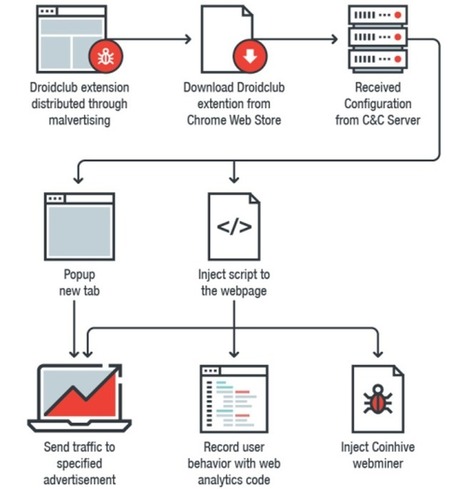
Google has removed 89 malicious extensions from the Chrome Web Store that have been installed on over 420,000 browsers, turning them into Monero-mining slaves and loading a tool to record and replay what their owners do on every website they visit.

Researchers at Trend Micro dubbed the family of malicious extensions Droidclub and discovered they included a software library with so-called "session-replay scripts" used by online analytics firms.

Princeton's Center for Information Technology in November drew attention to the increasing use of session-replay scripts by third-party analytics firms on high-traffic websites.

The study looked at replay services from Yandex, FullStory, Hotjar, UserReplay, Smartlook, Clicktale, and SessionCam, which were found on nearly 500 popular sites.

The scripts allow a site owner to essentially shoulder-surf their visitors by recording and replaying your "keystrokes, mouse movements, and scrolling behavior, along with the entire contents of the pages you visit".

But instead of allowing a site owner to record and play back what users do on one site, Droidclub extensions allow the attacker to see what victims do on every single site they visit.


Learn more / En savoir plus / Mehr erfahren:


https://www.scoop.it/t/securite-pc-et-internet/?&tag=Cyberespionage


https://www.scoop.it/t/securite-pc-et-internet/?&tag=Privacy


https://gustmees.wordpress.com/2013/12/21/privacy-in-the-digital-world-shouldnt-we-talk-about-it/


https://www.scoop.it/t/securite-pc-et-internet/?&tag=Session-Replay+Scripts


Gust MEES's insight:

Google has removed 89 malicious extensions from the Chrome Web Store that have been installed on over 420,000 browsers, turning them into Monero-mining slaves and loading a tool to record and replay what their owners do on every website they visit.

Researchers at Trend Micro dubbed the family of malicious extensions Droidclub and discovered they included a software library with so-called "session-replay scripts" used by online analytics firms.

Princeton's Center for Information Technology in November drew attention to the increasing use of session-replay scripts by third-party analytics firms on high-traffic websites.

The study looked at replay services from Yandex, FullStory, Hotjar, UserReplay, Smartlook, Clicktale, and SessionCam, which were found on nearly 500 popular sites.

The scripts allow a site owner to essentially shoulder-surf their visitors by recording and replaying your "keystrokes, mouse movements, and scrolling behavior, along with the entire contents of the pages you visit".

But instead of allowing a site owner to record and play back what users do on one site, Droidclub extensions allow the attacker to see what victims do on every single site they visit.


Learn more / En savoir plus / Mehr erfahren:


https://www.scoop.it/t/securite-pc-et-internet/?&tag=Cyberespionage


https://www.scoop.it/t/securite-pc-et-internet/?&tag=Privacy


https://gustmees.wordpress.com/2013/12/21/privacy-in-the-digital-world-shouldnt-we-talk-about-it/


https://www.scoop.it/t/securite-pc-et-internet/?&tag=Session-Replay+Scripts


No comment yet.
Scooped by Gust MEES
November 16, 2020 4:16 PM
Scoop.it!

Jupyter trojan: Newly discovered malware stealthily steals usernames and passwords #CyberSecurity #FSCD 

Jupyter trojan: Newly discovered malware stealthily steals usernames and passwords #CyberSecurity #FSCD  | ICT Security-Sécurité PC et Internet | Scoop.it

A newly uncovered trojan malware campaign is targeting businesses and higher education in what appears to be an effort to steal usernames, passwords and other private information as well as creating a persistent backdoor onto compromised systems.

Jupyter infostealer has been detailed by cybersecurity company Morphisec who discovered it on the network of an unnamed higher education establishment in the US. It's thought the trojan has been active since May this year.

The attack primarily targets Chromium, Firefox, and Chrome browser data, but also has additional capabilities for opening up a backdoor on compromised systems, allowing attackers to execute PowerShell scripts and commands, as well as the ability to download and execute additional malware.

The Jupyter installer is disguised in a zipped file, often using Microsoft Word icons and file names that look like they need to be urgently opened, pertaining to important documents, travel details or a pay rise.

If the installer is run, it will install legitimate tools in an effort to hide the real purpose of the installation – downloading and running a malicious installer into temporary folders in the background.


Learn more / En savoir plus / Mehr erfahren:


https://www.scoop.it/t/securite-pc-et-internet/?&tag=Malware


Gust MEES's insight:

A newly uncovered trojan malware campaign is targeting businesses and higher education in what appears to be an effort to steal usernames, passwords and other private information as well as creating a persistent backdoor onto compromised systems.

Jupyter infostealer has been detailed by cybersecurity company Morphisec who discovered it on the network of an unnamed higher education establishment in the US. It's thought the trojan has been active since May this year.

The attack primarily targets Chromium, Firefox, and Chrome browser data, but also has additional capabilities for opening up a backdoor on compromised systems, allowing attackers to execute PowerShell scripts and commands, as well as the ability to download and execute additional malware.

The Jupyter installer is disguised in a zipped file, often using Microsoft Word icons and file names that look like they need to be urgently opened, pertaining to important documents, travel details or a pay rise.

If the installer is run, it will install legitimate tools in an effort to hide the real purpose of the installation – downloading and running a malicious installer into temporary folders in the background.


Learn more / En savoir plus / Mehr erfahren:


https://www.scoop.it/t/securite-pc-et-internet/?&tag=Malware


No comment yet.
Scooped by Gust MEES
September 3, 2020 5:40 PM
Scoop.it!

KryptoCibule malware uses Tor & Torrent sites to steal your cryptocurrency | #CyberSecurity 

KryptoCibule malware uses Tor & Torrent sites to steal your cryptocurrency | #CyberSecurity  | ICT Security-Sécurité PC et Internet | Scoop.it

The malware also mines Monero & Ethereum cryptocurrency on targeted devices. 
We’re seeing new variants of malware being deployed every day. just yesterday we covered a skimmer funneling funds through Telegram and today we’re back with a new report by WeLiveSecurity.

Shedding light on a new malware family named KryptoCibule; the researchers report on 3 main tasks that it seeks to perform:

Mining Monero and Ethereum cryptocurrencies using a CPU and GPU respectively
Stealing funds by replacing legitimate wallet addresses with attacker-controlled ones with the help of the clipboard
Steal and extract cryptocurrency-related files
See: Best legal, safe & free online streaming sites – 2020

Alongside this, a remote administration tool (RAT) is also used to maintain access to the victim’s machine in order to control it. Furthermore, both the TOR Network and BitTorrent protocol is used for transmitting data and communication in general. This is yet another example of how legitimate services can be used by attackers for their own nefarious motives.


Learn more / En savoir plus / Mehr erfahren:


https://www.scoop.it/t/securite-pc-et-internet/?&tag=crypto-currency


https://www.scoop.it/topic/securite-pc-et-internet/?&tag=TOR


Gust MEES's insight:

The malware also mines Monero & Ethereum cryptocurrency on targeted devices. 
We’re seeing new variants of malware being deployed every day. just yesterday we covered a skimmer funneling funds through Telegram and today we’re back with a new report by WeLiveSecurity.

Shedding light on a new malware family named KryptoCibule; the researchers report on 3 main tasks that it seeks to perform:

Mining Monero and Ethereum cryptocurrencies using a CPU and GPU respectively
Stealing funds by replacing legitimate wallet addresses with attacker-controlled ones with the help of the clipboard
Steal and extract cryptocurrency-related files
See: Best legal, safe & free online streaming sites – 2020

Alongside this, a remote administration tool (RAT) is also used to maintain access to the victim’s machine in order to control it. Furthermore, both the TOR Network and BitTorrent protocol is used for transmitting data and communication in general. This is yet another example of how legitimate services can be used by attackers for their own nefarious motives.


Learn more / En savoir plus / Mehr erfahren:


https://www.scoop.it/t/securite-pc-et-internet/?&tag=crypto-currency


https://www.scoop.it/topic/securite-pc-et-internet/?&tag=TOR


No comment yet.
Scooped by Gust MEES
July 25, 2020 9:20 AM
Scoop.it!

Als Google-Update getarnt: Gefährliche Android-Malware stiehlt Daten und Passwörter - so schützen Sie sich | #CyberSecurity #MobileSecurity #Apps

Als Google-Update getarnt: Gefährliche Android-Malware stiehlt Daten und Passwörter - so schützen Sie sich | #CyberSecurity #MobileSecurity #Apps | ICT Security-Sécurité PC et Internet | Scoop.it

Auf Android-Smartphones wurde eine neue, besonders perfide Malware entdeckt. Der Trojaner imitiert populäre Banking-, Social Media- oder Dating-Apps wie PayPal, Instagram und Tinder, um sensible Nutzerdaten abzugreifen; potenziell sind über 300 Apps betroffen. Wir zeigen Ihnen, wie die Malware vorgeht und geben Ihnen Tipps, wie Sie das Risiko für die Installation von Schadsoftware minimieren können; im Video stellen wir Ihnen drei kostenlose Anti-Viren-Programme für das Smartphone vor.


Learn more / En savoir plus / Mehr erfahren:


https://gustmees.wordpress.com/2014/03/05/often-asked-questions-are-there-cyber-security-dangers-with-apps-and-whats-about-privacy/


https://www.scoop.it/t/securite-pc-et-internet/?&tag=Android


https://www.scoop.it/topic/securite-pc-et-internet/?&tag=Apps


Gust MEES's insight:

Auf Android-Smartphones wurde eine neue, besonders perfide Malware entdeckt. Der Trojaner imitiert populäre Banking-, Social Media- oder Dating-Apps wie PayPal, Instagram und Tinder, um sensible Nutzerdaten abzugreifen; potenziell sind über 300 Apps betroffen. Wir zeigen Ihnen, wie die Malware vorgeht und geben Ihnen Tipps, wie Sie das Risiko für die Installation von Schadsoftware minimieren können; im Video stellen wir Ihnen drei kostenlose Anti-Viren-Programme für das Smartphone vor.


Learn more / En savoir plus / Mehr erfahren:


https://gustmees.wordpress.com/2014/03/05/often-asked-questions-are-there-cyber-security-dangers-with-apps-and-whats-about-privacy/


https://www.scoop.it/t/securite-pc-et-internet/?&tag=Android


https://www.scoop.it/topic/securite-pc-et-internet/?&tag=Apps


No comment yet.
Scooped by Gust MEES
November 3, 2019 6:41 AM
Scoop.it!

New 'unremovable' xHelper malware has infected 45,000 Android devices | #CyberSecurity #MobileSecurity #Apps

New 'unremovable' xHelper malware has infected 45,000 Android devices | #CyberSecurity #MobileSecurity #Apps | ICT Security-Sécurité PC et Internet | Scoop.it

Over the past six months, a new Android malware strain has made a name for itself after popping up on the radar of several antivirus companies, and annoying users thanks to a self-reinstall mechanism that has made it near impossible to remove.

Named xHelper, this malware was first spotted back in March but slowly expanded to infect more than 32,000 devices by August (per Malwarebytes), eventually reaching a total of 45,000 infections this month (per Symantec).

The malware is on a clear upward trajectory. Symantec says the xHelper crew is making on average 131 new victims per day and around 2,400 new victims per month. Most of these infections have been spotted in India, the US, and Russia.

INSTALLED VIA THIRD-PARTY APPS
According to Malwarebytes, the source of these infections is "web redirects" that send users to web pages hosting Android apps. These sites instruct users on how to side-load unofficial Android apps from outside the Play Store. Code hidden in these apps downloads the xHelper trojan.


Learn more / En savoir plus / Mehr erfahren:


https://gustmees.wordpress.com/2014/03/05/often-asked-questions-are-there-cyber-security-dangers-with-apps-and-whats-about-privacy/


https://www.scoop.it/topic/securite-pc-et-internet/?&tag=Android


Gust MEES's insight:

Over the past six months, a new Android malware strain has made a name for itself after popping up on the radar of several antivirus companies, and annoying users thanks to a self-reinstall mechanism that has made it near impossible to remove.

Named xHelper, this malware was first spotted back in March but slowly expanded to infect more than 32,000 devices by August (per Malwarebytes), eventually reaching a total of 45,000 infections this month (per Symantec).

The malware is on a clear upward trajectory. Symantec says the xHelper crew is making on average 131 new victims per day and around 2,400 new victims per month. Most of these infections have been spotted in India, the US, and Russia.

INSTALLED VIA THIRD-PARTY APPS
According to Malwarebytes, the source of these infections is "web redirects" that send users to web pages hosting Android apps. These sites instruct users on how to side-load unofficial Android apps from outside the Play Store. Code hidden in these apps downloads the xHelper trojan.


Learn more / En savoir plus / Mehr erfahren:


https://gustmees.wordpress.com/2014/03/05/often-asked-questions-are-there-cyber-security-dangers-with-apps-and-whats-about-privacy/


https://www.scoop.it/topic/securite-pc-et-internet/?&tag=Android


No comment yet.
Scooped by Gust MEES
August 7, 2019 3:23 PM
Scoop.it!

LokiBot malware now hides its source code in image files | #CyberSecurity #Steganography

LokiBot malware now hides its source code in image files | #CyberSecurity #Steganography | ICT Security-Sécurité PC et Internet | Scoop.it

The LokiBot malware family has been given a significant upgrade with the ability to hide its source code in image files on infected machines. 

Known as steganography, the technique is used to hide messages or codes within various file formats, including .txt, .jpg, .rtf, and some video formats. 

While this practice can be implemented for legitimate purposes, such as the protection of files on intellectual property and copyright grounds, attackers can also embed files with triggers to hide source code and malware functionality. 

The developers of LokiBot have realized the potential of steganography for concealment. Trend Micro researchers Miguel Ang, Erika Mendoza, and Jay Yaneza said this week that a new variant of the malware uses the technique to hide its code.


Learn more / En savoir plus / Mehr erfahren:


http://www.scoop.it/t/securite-pc-et-internet/?&tag=Steganography


https://www.scoop.it/topic/securite-pc-et-internet/?&tag=LokiBot


Gust MEES's insight:

The LokiBot malware family has been given a significant upgrade with the ability to hide its source code in image files on infected machines. 

Known as steganography, the technique is used to hide messages or codes within various file formats, including .txt, .jpg, .rtf, and some video formats. 

While this practice can be implemented for legitimate purposes, such as the protection of files on intellectual property and copyright grounds, attackers can also embed files with triggers to hide source code and malware functionality. 

The developers of LokiBot have realized the potential of steganography for concealment. Trend Micro researchers Miguel Ang, Erika Mendoza, and Jay Yaneza said this week that a new variant of the malware uses the technique to hide its code.


Learn more / En savoir plus / Mehr erfahren:


http://www.scoop.it/t/securite-pc-et-internet/?&tag=Steganography


https://www.scoop.it/topic/securite-pc-et-internet/?&tag=LokiBot


No comment yet.
Scooped by Gust MEES
July 12, 2019 5:28 AM
Scoop.it!

25 Million Android Phones Infected With Malware That ‘Hides In WhatsApp’

25 Million Android Phones Infected With Malware That ‘Hides In WhatsApp’ | ICT Security-Sécurité PC et Internet | Scoop.it

As many as 25 million Android phones have been hit with malware that replaces installed apps like WhatsApp with evil versions that serve up adverts, cybersecurity researchers warned Wednesday.

Dubbed Agent Smith, the malware abuses previously-known weaknesses in the Android operating system, making updating to the latest, patched version of Google's operating system a priority, Israeli security company Check Point said.

Most victims are based in India, where as many as 15 million were infected. But there are more than 300,000 in the U.S., with another 137,000 in the U.K., making this one of the more severe threats to have hit Google's operating system in recent memory.


Learn more / En savoir plus / Mehr erfahren:


https://gustmees.wordpress.com/2014/03/05/often-asked-questions-are-there-cyber-security-dangers-with-apps-and-whats-about-privacy/


http://www.scoop.it/t/securite-pc-et-internet/?&tag=WhatsApp...


Gust MEES's insight:

As many as 25 million Android phones have been hit with malware that replaces installed apps like WhatsApp with evil versions that serve up adverts, cybersecurity researchers warned Wednesday.

Dubbed Agent Smith, the malware abuses previously-known weaknesses in the Android operating system, making updating to the latest, patched version of Google's operating system a priority, Israeli security company Check Point said.

Most victims are based in India, where as many as 15 million were infected. But there are more than 300,000 in the U.S., with another 137,000 in the U.K., making this one of the more severe threats to have hit Google's operating system in recent memory.


Learn more / En savoir plus / Mehr erfahren:


https://gustmees.wordpress.com/2014/03/05/often-asked-questions-are-there-cyber-security-dangers-with-apps-and-whats-about-privacy/


http://www.scoop.it/t/securite-pc-et-internet/?&tag=WhatsApp...


Eric Bouttier's curator insight, July 15, 2019 5:33 AM
25 millions de smartphone Android piratés par un programme malveillant qui se planque dans WhatsApp !
Scooped by Gust MEES
June 13, 2019 12:47 PM
Scoop.it!

This data-stealing malware has returned with new attacks and nasty upgraded features | #CyberSecurity #Scranos

This data-stealing malware has returned with new attacks and nasty upgraded features | #CyberSecurity #Scranos | ICT Security-Sécurité PC et Internet | Scoop.it

The group behind a malware campaign targeting both Windows and Android devices in an adware operation across both Europe and the US have altered its attack techniques and added new payloads including a cryptominer and a Trojan in an apparent bid to make more money from infected devices.

Details of the multi-functional Scranos malware first emerged in April but shortly afterwards, the operators lost their main mechanism of persistence and disguise when their illicit use of Authenticode certificates was revoked.

But that hasn't stopped the cyber criminal campaign, because in the space of just a few weeks, Scranos has already updated its attack methods in an attempt to rebuild their botnet.


Learn more / En savoir plus / Mehr erfahren:


https://www.scoop.it/t/securite-pc-et-internet/?&tag=Malware


Gust MEES's insight:

The group behind a malware campaign targeting both Windows and Android devices in an adware operation across both Europe and the US have altered its attack techniques and added new payloads including a cryptominer and a Trojan in an apparent bid to make more money from infected devices.

Details of the multi-functional Scranos malware first emerged in April but shortly afterwards, the operators lost their main mechanism of persistence and disguise when their illicit use of Authenticode certificates was revoked.

But that hasn't stopped the cyber criminal campaign, because in the space of just a few weeks, Scranos has already updated its attack methods in an attempt to rebuild their botnet.


Learn more / En savoir plus / Mehr erfahren:


https://www.scoop.it/t/securite-pc-et-internet/?&tag=Malware


No comment yet.
Scooped by Gust MEES
April 3, 2019 3:19 PM
Scoop.it!

This new malware is scanning the internet for systems info on valuable targets | #CyberSecurity #Xwo #Malware

This new malware is scanning the internet for systems info on valuable targets | #CyberSecurity #Xwo #Malware | ICT Security-Sécurité PC et Internet | Scoop.it

A new form of malware is scanning the internet for exposed web services and default passwords in what's thought to be a reconnaissance operation – one which might signal a larger cyberattack is to come.

VirusTotal debuts retro, simplified interface for legacy systems
Researchers at AT&T Alien Labs first spotted the malware in March and have named it Xwo after its primary module name. It's thought that Xwo could be related to two other forms of malicious software – MongoLock ransomware and X Bash, a malware that rolls ransomware, a coinminer, a botnet and a worm into one – due to similarities in the Python-based code.

But unlike MongoLock and Xbash, Xwo doesn't have any ransomware, cryptocurrency mining or any other similar money-making capabilities: it's main focus is scanning for credentials and exposed services and sending information back to its command and control server.


Learn more / En savoir plus / Mehr erfahren:


https://www.scoop.it/t/securite-pc-et-internet/?&tag=Malware


Gust MEES's insight:

A new form of malware is scanning the internet for exposed web services and default passwords in what's thought to be a reconnaissance operation – one which might signal a larger cyberattack is to come.

VirusTotal debuts retro, simplified interface for legacy systems
Researchers at AT&T Alien Labs first spotted the malware in March and have named it Xwo after its primary module name. It's thought that Xwo could be related to two other forms of malicious software – MongoLock ransomware and X Bash, a malware that rolls ransomware, a coinminer, a botnet and a worm into one – due to similarities in the Python-based code.

But unlike MongoLock and Xbash, Xwo doesn't have any ransomware, cryptocurrency mining or any other similar money-making capabilities: it's main focus is scanning for credentials and exposed services and sending information back to its command and control server.


Learn more / En savoir plus / Mehr erfahren:


https://www.scoop.it/t/securite-pc-et-internet/?&tag=Malware


No comment yet.
Scooped by Gust MEES
February 23, 2019 9:01 AM
Scoop.it!

WinRAR Has Serious Flaw That Can Load Malware to PCs | #CyberSecurity

WinRAR Has Serious Flaw That Can Load Malware to PCs | #CyberSecurity | ICT Security-Sécurité PC et Internet | Scoop.it

The popular file archiving tool WinRAR has had a bug for at least 14 years that can be exploited to take over your PC.

The bug can pave the way for archive files that can trigger WinRAR to actually install whatever malware is secretly inside, according to the security firm Check Point, which discovered the software flaw.

"The exploit works by just extracting an archive, and puts over 500 million users at risk," the company said in a detailed report published on Wednesday.


Learn more / En savoir plus / Mehr erfahren:


https://www.scoop.it/topic/securite-pc-et-internet


Gust MEES's insight:

The popular file archiving tool WinRAR has had a bug for at least 14 years that can be exploited to take over your PC.

The bug can pave the way for archive files that can trigger WinRAR to actually install whatever malware is secretly inside, according to the security firm Check Point, which discovered the software flaw.

"The exploit works by just extracting an archive, and puts over 500 million users at risk," the company said in a detailed report published on Wednesday.


Learn more / En savoir plus / Mehr erfahren:


https://www.scoop.it/topic/securite-pc-et-internet


No comment yet.
Scooped by Gust MEES
December 5, 2018 5:31 PM
Scoop.it!

New Linux crypto-miner steals your root password and disables your antivirus | #CyberSecurity #NobodyIsPerfect

New Linux crypto-miner steals your root password and disables your antivirus | #CyberSecurity #NobodyIsPerfect | ICT Security-Sécurité PC et Internet | Scoop.it

Malware targeting Linux users may not be as widespread as the strains targeting the Windows ecosystem, but Linux malware is becoming just as complex and multi-functional as time passes by.

The latest example of this trend is a new trojan discovered this month by Russian antivirus maker Dr.Web. This new malware strain doesn't have a distinctive name, yet, being only tracked under its generic detection name of Linux.BtcMine.174.

The trojan itself is a giant shell script of over 1,000 lines of code. This script is the first file executed on an infected Linux system. The first thing this script does is to find a folder on disk to which it has write permissions so it can copy itself and later use to download other modules.

Once the trojan has a foothold on the system it uses one of two privilege escalation exploits CVE-2016-5195 (also known as Dirty COW) and CVE-2013-2094 to get root permissions and have full access to the OS.


Learn more / En savoir plus / Mehr erfahren:


https://www.scoop.it/t/securite-pc-et-internet/?&tag=Linux


Gust MEES's insight:

Malware targeting Linux users may not be as widespread as the strains targeting the Windows ecosystem, but Linux malware is becoming just as complex and multi-functional as time passes by.

The latest example of this trend is a new trojan discovered this month by Russian antivirus maker Dr.Web. This new malware strain doesn't have a distinctive name, yet, being only tracked under its generic detection name of Linux.BtcMine.174.

The trojan itself is a giant shell script of over 1,000 lines of code. This script is the first file executed on an infected Linux system. The first thing this script does is to find a folder on disk to which it has write permissions so it can copy itself and later use to download other modules.

Once the trojan has a foothold on the system it uses one of two privilege escalation exploits CVE-2016-5195 (also known as Dirty COW) and CVE-2013-2094 to get root permissions and have full access to the OS.


Learn more / En savoir plus / Mehr erfahren:


https://www.scoop.it/t/securite-pc-et-internet/?&tag=Linux


No comment yet.
Scooped by Gust MEES
April 25, 2018 3:18 PM
Scoop.it!

This cryptocurrency mining malware also disables your security services | #CyberSecurity

This cryptocurrency mining malware also disables your security services | #CyberSecurity | ICT Security-Sécurité PC et Internet | Scoop.it

A new form of cryptocurrency mining malware uses a leaked NSA-exploit to spread itself to vulnerable Windows machines, while also disabling security software and leaving the infected computer open to future attacks.

The Python-based malicious Monero miner has been uncovered by researchers at security company Fortinet who've dubbed it PyRoMine. It first appeared this month and spreads using EternalRomance, a leaked NSA-exploit which takes advantage of what until a year ago had been an undisclosed SMB vulnerability to self-propagate through networks.

EternalRomance helped spread BadRabbit ransomware and is similar in many ways to EternalBlue, a second leaked NSA exploit which helped fuel WannaCry and NotPetya. Both exploits look for public-facing SMB ports, allowing them to deliver malware to networks.

Researchers discovered the malware was downloadable from a particular web address as a zip file, bundled with Pyinstaller, a program which packages programs written in Python into stand alone executables, meaning there's no need for Python to be installed on the compromised machine.

The malicious code behind PyRoMine appears to have been directly copied from a publicly shared EternalRomance implementation.


Learn more / En savoir plus / Mehr erfahren:


https://www.scoop.it/t/securite-pc-et-internet/?&tag=crypto-currency


Gust MEES's insight:

A new form of cryptocurrency mining malware uses a leaked NSA-exploit to spread itself to vulnerable Windows machines, while also disabling security software and leaving the infected computer open to future attacks.

The Python-based malicious Monero miner has been uncovered by researchers at security company Fortinet who've dubbed it PyRoMine. It first appeared this month and spreads using EternalRomance, a leaked NSA-exploit which takes advantage of what until a year ago had been an undisclosed SMB vulnerability to self-propagate through networks.

EternalRomance helped spread BadRabbit ransomware and is similar in many ways to EternalBlue, a second leaked NSA exploit which helped fuel WannaCry and NotPetya. Both exploits look for public-facing SMB ports, allowing them to deliver malware to networks.

Researchers discovered the malware was downloadable from a particular web address as a zip file, bundled with Pyinstaller, a program which packages programs written in Python into stand alone executables, meaning there's no need for Python to be installed on the compromised machine.

The malicious code behind PyRoMine appears to have been directly copied from a publicly shared EternalRomance implementation.


Learn more / En savoir plus / Mehr erfahren:


https://www.scoop.it/t/securite-pc-et-internet/?&tag=crypto-currency


No comment yet.
Scooped by Gust MEES
March 14, 2018 5:34 PM
Scoop.it!

Dangerous malware stealing bitcoin hosted on Download.com for years | #CyberSecurity #NobodyIsPerfect 

Dangerous malware stealing bitcoin hosted on Download.com for years | #CyberSecurity #NobodyIsPerfect  | ICT Security-Sécurité PC et Internet | Scoop.it

In today’s day and age, when you ask a security expert about some basic tips to stay safe on the web, one of the most important things he will probably tell you is to download software only from legitimate sources.


Sometimes even such a basic and obvious advice might not save you from malware encounters. We found three trojanized applications hosted on download.cnet.com, which is one of the most popular software hosting sites in the world as its Alexa rank (163th) shows.


Learn more / en savoir plus / Mehr erfahren:


https://www.scoop.it/t/securite-pc-et-internet/?&tag=Malware


Gust MEES's insight:

In today’s day and age, when you ask a security expert about some basic tips to stay safe on the web, one of the most important things he will probably tell you is to download software only from legitimate sources.


Sometimes even such a basic and obvious advice might not save you from malware encounters. We found three trojanized applications hosted on download.cnet.com, which is one of the most popular software hosting sites in the world as its Alexa rank (163th) shows.


Learn more / en savoir plus / Mehr erfahren:


https://www.scoop.it/t/securite-pc-et-internet/?&tag=Malware


No comment yet.