 Your new post is loading...

|
Scooped by
Gust MEES
November 22, 2017 2:01 PM
|
Google has confirmed it has been able to track the location of Android users via the addresses of local mobile phone masts, even when location services were turned off and the sim cards removed to protect privacy.
Revealed by a report by Quartz, Google’s Android system, which handles messaging services to ensure delivery of push notifications, began requesting the unique addresses of mobile phone masts (called Cell ID) at the beginning of 2017.
The information was captured by the phone and routinely sent to Google by any modern Android device, even when location services were turned off and the sim card was removed. As a result Google could in theory track the location of the Android device and therefore the user, despite a reasonable expectation of privacy.
A Google spokesperson said: “In January of this year, we began looking into using Cell ID codes as an additional signal to further improve the speed and performance of message delivery.
“However, we never incorporated Cell ID into our network sync system, so that data was immediately discarded, and we updated it to no longer request Cell ID.” Learn more / En savoir plus / Mehr erfahren: https://www.scoop.it/t/securite-pc-et-internet/?&tag=Cyberespionage https://www.scoop.it/t/securite-pc-et-internet/?&tag=Privacy https://gustmees.wordpress.com/2013/12/21/privacy-in-the-digital-world-shouldnt-we-talk-about-it/ https://www.scoop.it/t/securite-pc-et-internet/?&tag=tracking
|
|
Scooped by
Gust MEES
October 18, 2017 8:39 AM
|
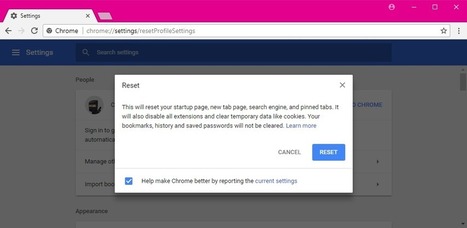
Google announced yesterday three new security features for Chrome that will help the company's browser detect and fight intrusive extensions and invasive software.
The features are part of a long-standing effort that also includes tools like the company's SafeBrowsing API.
Simpler warnings when extensions hijack settings
The first is Chrome's new ability to detect whenever an extension makes changes to the user's default settings. These include settings for the user's search engine, homepage, or proxy settings. Learn more / En savoir plus / Mehr erfahren: https://gustmees.wordpress.com/2012/05/02/get-smart-with-5-minutes-tutorialsit-securitypart-1-browsers/
|
|
Scooped by
Gust MEES
December 2, 2016 5:53 AM
|
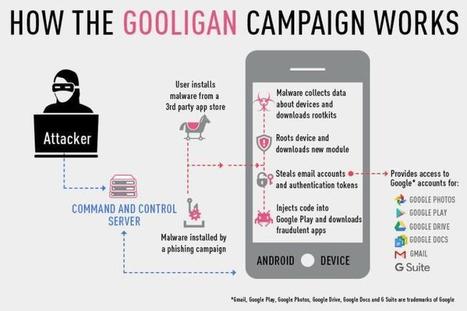
A million Google accounts have been compromised in a massive fraud campaign exploiting Android devices and Google Play.
At the heart of the campaign is a new variant of Android malware dubbed Gooligan, concealed in dozens of Android apps that exploit two unpatched flaws in Android to root infected devices.
The malware nabs email account information and authentication tokens for accessing Google accounts. The attackers use the tokens to install select apps from Google Play on an infected device to boost in-app advertising revenue. Learn more / En savoir plus / Mehr erfahren: http://www.scoop.it/t/securite-pc-et-internet/?tag=Android
|
|
Scooped by
Gust MEES
October 1, 2016 6:26 PM
|
|
|
Scooped by
Gust MEES
September 12, 2016 10:42 AM
|
|
|
Scooped by
Gust MEES
September 12, 2016 10:09 AM
|
|
|
Scooped by
Gust MEES
July 13, 2016 5:18 PM
|
|
|
Scooped by
Gust MEES
February 25, 2016 9:40 AM
|
Google and enterprise software firm Red Hat have discovered a critical security flaw affecting the Internet's Domain Name System (DNS), found in a universally used protocol. This means an attacker could use it to infect almost everything on the entire internet. With the flawed code spread far and wide, it will likely take years of effort to patch the bug.
Google and Red Hat engineers both independently discovered the DNS bug within the GNU C standard library (glibc), which has been assigned CVE-2015-7547, and then worked together to create a patch. The security vulnerability works by tricking browsers into looking up suspicious domains, which causes servers to reply with DNS names that are far too long, thus causing a buffer overflow in the victim's software.
Learn more / En savoir plus / Mehr erfahren:
http://www.scoop.it/t/securite-pc-et-internet/?tag=Linux
|
|
Scooped by
Gust MEES
November 18, 2015 4:43 AM
|
Android wird erneut von einer riesigen Sicherheitslücke geplagt. Und Einfallstor des Virus ist niemand geringerer als die Google-Chrome-App. Besucht man in Google Chrome eine manipulierte Webseite, können Angreifer die komplette Kontrolle über das Smartphone übernehmen und das komplette Gerät plattmachen.
Learn more / En savoir plus / Mehr erfahren:
http://www.scoop.it/t/securite-pc-et-internet/?tag=Android
|
|
Scooped by
Gust MEES
June 24, 2014 8:33 AM
|
|
|
Scooped by
Gust MEES
May 13, 2014 5:25 AM
|
Dieses Urteil könnte gravierende Folgen haben: Der Europäische Gerichtshof hat eine Entscheidung zum "Recht, vergessen zu werden" im Internet gefällt. Suchmaschinen können in bestimmten Fällen verpflichtet werden, Links zu persönlichen Daten zu löschen.
|
|
Scooped by
Gust MEES
October 11, 2013 10:52 AM
|
Google published some upcoming amendments to its terms of service today, revealing changes that would enable the company to feature users' names and photos in certain parts of its advertising.
The ...
|
|
Scooped by
Gust MEES
February 19, 2013 8:43 AM
|
European regulators plan to intensify their quest for precise answers from Google on privacy matters.
|
|
|
Scooped by
Gust MEES
November 18, 2017 6:36 PM
|
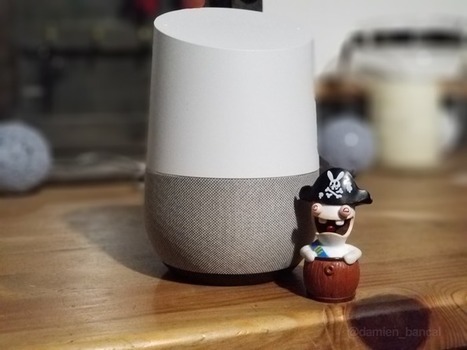
Les deux enceintes intelligentes de Google et Amazon, le Google Home et l’Amazon Echo, victimes de la faille Bluetooth BlueBorne.
Des chercheurs ont réussi à prouver que la faille Bluetooth BlueBorne impactait aussi les enceintes intelligentes Google Home et l’Amazon Echo. Révélées il y a quelques semaines, huit failles critiques de Bluetooth ont récemment étaient révélées. Elles affectent des milliards d’appareils Android, iOS, Windows et Linux. Voilà que les deux assistants des deux géants du web sont aussi impliqués dans cet énorme « merdier » numérique comme le confirme la société Armis. Learn more / En savoir plus / Mehr erfahren: https://www.scoop.it/t/securite-pc-et-internet/?&tag=BlueBorne
|
|
Scooped by
Gust MEES
September 27, 2017 8:37 AM
|
Das Bundesamt für Sicherheit in der Informationstechnik (BSI) warnt vor drei Sicherheitslücken in Googles Chrome-Browser. Auch die Open-Source-Variante Chromium soll betroffen sein.
Zwei der Schwachstellen sind als kritisch eingestuft. Sie ermöglichen es Hackern, beliebigen Code auszuführen.
Nutzern, die noch nicht auf die aktuellen Versionen (jeweils 61.0.3163.100) umgestiegen sind, wird dringend angeraten, das Browser-Update durchzuführen. Betroffen von der Schwachstelle sind Systeme mit Windows (ab Windows XP), Macintosh (Mac OS X und macOS Sierra) sowie Linux und Chrome OS. Bei Letzterem ist der Browser integraler Bestandteil.
Laut BSI ermöglichen die Lücken "einem entfernten, nicht authentifizierten Angreifer" das Ausführen von beliebigem Code. So könnte etwa ein Denial-of-Service (DoS)- Angriff durchgeführt werden.
Learn more / En savoir plus / Mehr erfahren: https://gustmees.wordpress.com/2012/05/02/get-smart-with-5-minutes-tutorialsit-securitypart-1-browsers/ https://gustmeesde.wordpress.com/2014/12/16/browser-sind-das-einfallstor-fur-malware-sind-eure-browser-up-to-date/
|
|
Scooped by
Gust MEES
November 12, 2016 12:12 PM
|
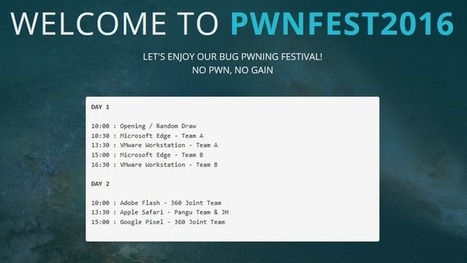
Zwei Tage lang demonstrierten Hacker in Seoul auf dem "PwnFest" diverse Schwachstellen verbreiteter Software, darunter der Browser Edge und Safari. Auch VMWare Workstations und das Google Pixel wurden geknackt.
Im Rahmen des Hacker-Events "PwnFest 2016" haben Teilnehmer am vergangenen Donnerstag jeweils gleich zweimal Sicherheitsprobleme bei Microsoft Edge unter Windows 10 (Red Stone 1) und von VMWare Workstation 12.5.1 demonstriert. Am Freitag knackte ein chinesisches Hacker-Team dann auch Googles Smartphone Pixel mit Android 7/Nougat und zeigten Sicherheitslücken in Apples Browser Safari unter macOS Sierra auf. Das zweitägige Hackerfestival PwnFest fand im Rahmen der "Power of Community"-Sicherheitskonferenz in Seoul statt. Learn more / En savoir plus / Mehr erfahren: http://www.scoop.it/t/securite-pc-et-internet
|
|
Scooped by
Gust MEES
September 12, 2016 4:05 PM
|
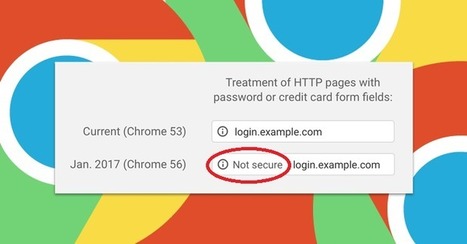
Sécurité : Google explique sur son blog qu’à partir du début 2017, son navigateur avertira les utilisateurs qui se trouvent sur une page non protégée par HTTPS et qui leur demande de s’identifier. Un nouveau moyen d’inciter les sites à migrer vers le chiffrement des connexions. Learn more / En savoir plus / Mehr erfahren: http://www.scoop.it/t/securite-pc-et-internet/?tag=HTTPS
|
|
Scooped by
Gust MEES
September 12, 2016 10:35 AM
|
|
|
Scooped by
Gust MEES
August 31, 2016 7:09 AM
|
|
|
Scooped by
Gust MEES
May 5, 2016 7:57 AM
|
|
|
Scooped by
Gust MEES
February 4, 2016 8:38 AM
|
There's likely no Internet user that hasn't, at some point, been tricked into clicking on a deceptive
|
|
Scooped by
Gust MEES
November 16, 2015 5:50 AM
|
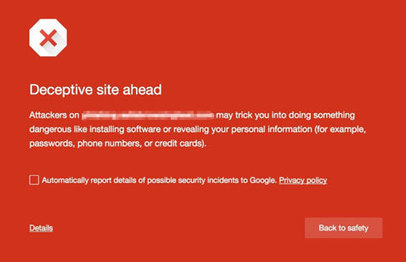
Google Chrome users will from now on be faced with a new, customized warning every time they visit a website/page that contains social engineering content...
|
|
Scooped by
Gust MEES
May 27, 2014 6:59 PM
|
|
|
Scooped by
Gust MEES
May 13, 2014 5:21 AM
|
Weitreichendes Urteil des EuGH: Der Suchmaschinenbetreiber Google kann zum Löschen von Links verpflichtet werden, selbst wenn sie auf sachlich richtige Tatsachen verweisen.
|
|
Scooped by
Gust MEES
August 8, 2013 5:44 PM
|
Pour un conférencier de la Defcon 21, la fonctionnalité "weblogin" serait corruptible, et pas qu'un peu : tout un système applicatif pourrait être compromis en exploitant la bonne faille.
|
























Learn more / En savoir plus / Mehr erfahren:
https://www.scoop.it/t/securite-pc-et-internet/?&tag=Cyberespionage
https://www.scoop.it/t/securite-pc-et-internet/?&tag=Privacy
https://gustmees.wordpress.com/2013/12/21/privacy-in-the-digital-world-shouldnt-we-talk-about-it/
https://www.scoop.it/t/securite-pc-et-internet/?&tag=tracking