 Your new post is loading...

|
Scooped by
Gust MEES
November 16, 2020 4:16 PM
|
A newly uncovered trojan malware campaign is targeting businesses and higher education in what appears to be an effort to steal usernames, passwords and other private information as well as creating a persistent backdoor onto compromised systems.
Jupyter infostealer has been detailed by cybersecurity company Morphisec who discovered it on the network of an unnamed higher education establishment in the US. It's thought the trojan has been active since May this year.
The attack primarily targets Chromium, Firefox, and Chrome browser data, but also has additional capabilities for opening up a backdoor on compromised systems, allowing attackers to execute PowerShell scripts and commands, as well as the ability to download and execute additional malware.
The Jupyter installer is disguised in a zipped file, often using Microsoft Word icons and file names that look like they need to be urgently opened, pertaining to important documents, travel details or a pay rise.
If the installer is run, it will install legitimate tools in an effort to hide the real purpose of the installation – downloading and running a malicious installer into temporary folders in the background. Learn more / En savoir plus / Mehr erfahren: https://www.scoop.it/t/securite-pc-et-internet/?&tag=Malware
|
|
Scooped by
Gust MEES
July 19, 2020 8:44 PM
|
|
|
Scooped by
Gust MEES
September 9, 2019 4:59 PM
|
|
|
Scooped by
Gust MEES
January 5, 2017 3:21 PM
|
|
|
Scooped by
Gust MEES
August 30, 2016 8:24 AM
|
Forscher von Eset weisen auf ein Android-Botnetz hin, das nicht von einem Kommandoserver, sondern über Twitter gesteuert wird. Diese von PC-Schädlingen seit mindestens 2009 bekannte Verfahren wird damit nach ihrer Einschätzung erstmals für einen Android-Trojaner verwendet.
Aufgrund des für die Koordination verwendeten Kommunikationskanals haben die Forscher den Trojaner Twitoor getauft. Ist er einmal installiert, fragt er regelmäßig ein spezielles Twitter-Konto ab, um eventuelle Befehle zu empfangen. Die Hintermänner können den Trojaner so beispielsweise anweisen, weitere bösartige Anwendungen zu installieren (in der Praxis bisher vor allem solche, die Bankdaten stehlen) oder auch, den Twitter-Kanal zu wechseln.
Learn more / En savoir plus / Mehr erfahren: http://www.scoop.it/t/securite-pc-et-internet/?tag=Android http://www.scoop.it/t/securite-pc-et-internet/?tag=Botnets http://www.scoop.it/t/21st-century-learning-and-teaching/?tag=Botnet
|
|
Scooped by
Gust MEES
March 15, 2016 5:04 PM
|
Two-factor authentication involving SMS, while used by most banks for quite some time, is not unbeatable.
|
|
Scooped by
Gust MEES
May 27, 2015 4:40 PM
|
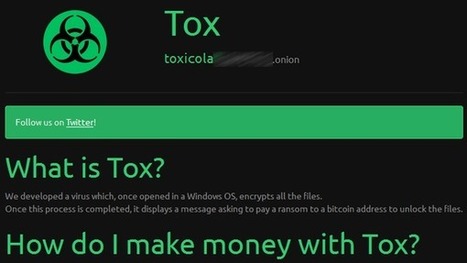
Die Einstiegshürde für angehende Online-Erpresser ist erneut gesunken: Ein Dienst im Tor-Netz erstellt nach wenigen Klicks den individuellen Erpressungs-Trojaner. Falls ein Opfer das geforderte Lösegeld zahlt, verdienen die Betreiber mit.
Die Einstiegshürde für angehende Online-Erpresser ist erneut gesunken: Ein Dienst im Tor-Netz erstellt nach wenigen Klicks den individuellen Erpressungs-Trojaner. Falls ein Opfer das geforderte Lösegeld zahlt, verdienen die Betreiber mit.
- http://www.scoop.it/t/securite-pc-et-internet/?tag=TOR
|
|
Scooped by
Gust MEES
December 10, 2014 10:00 AM
|
Backdoor tied to espionage campaign that has targeted governments in 45 countries.
Researchers have uncovered an extremely stealthy trojan for Linux systems that attackers have been using to siphon sensitive data from governments and pharmaceutical companies around the world. The previously undiscovered malware represents a missing puzzle piece tied to "Turla," a so-called advanced persistent threat (APT) disclosed in August by Kaspersky Lab and Symantec. For at least four years, the campaign targeted government institutions, embassies, military, education, research, and pharmaceutical companies in more than 45 countries. The unknown attackers—who are probably backed by a nation-state, according to Symantec—were known to have infected several hundred Windows-based computers by exploiting a variety of vulnerabilities, at least two of which were zero-day bugs. The malware was notable for its use of a rootkit that made it extremely hard to detect.
Learn more:
- http://www.scoop.it/t/securite-pc-et-internet/?tag=Linux
|
|
Scooped by
Gust MEES
February 18, 2013 4:38 PM
|
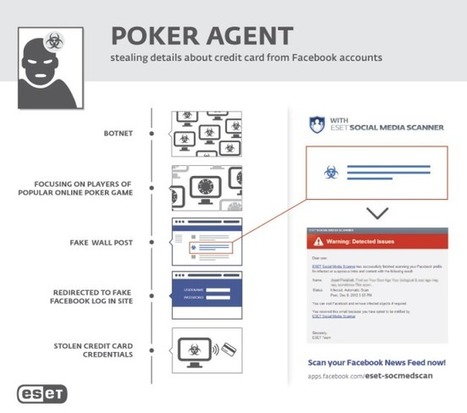
L'éditeur en sécurité ESET indique avoir découvert un cheval de Troie ciblant le réseau social Facebook : le malware, basé sur une méthode d'ingénierie sociale, aurait permis à des hackers de récupére...
|
|
|
Scooped by
Gust MEES
September 4, 2020 6:05 AM
|
Emotet ist, was das Durchschnittsalter von Trojanern angeht, ein echter Greis, der Schädling erfindet sich aber immer wieder neu. Ist er einmal auf dem System, lädt er verschiedenste Schadroutinen nach, vor denen nichts sicher ist. Mit den richtigen Schutzprogrammen und kleinen Helfern wie dem Tool EmoCheck können Sie aber gegensteuern.
Auch wer sich nicht mit Computer-Sicherheit beschäftigt, hat meist schon von Emotet gehört. Schon seit mehreren Jahren treibt die Malware ihr Unwesen, mal als Banking-Trojaner oder als Passwort-Dieb oder ganz anders, denn Emotet lädt bei Bedarf immer wieder andere Schadmodule auf infizierte Systeme.
Learn more / En savoir plus / Mehr erfahren: https://www.scoop.it/t/securite-pc-et-internet/?&tag=Malware https://www.scoop.it/t/securite-pc-et-internet/?&tag=Emotet
|
|
Scooped by
Gust MEES
December 21, 2019 7:45 PM
|
Lazarus, an advanced persistent threat (APT) group, has expanded its reach with the development and use of a Trojan designed to attack Linux systems.
The APT, suspected to hail from North Korea, has previously been connected to global cyberattacks and malware outbreaks including the infamous WannaCry rampage, the $80 million Bangladeshi bank heist, and a new campaign impacting financial institutions worldwide.
Recent reports suggest that Lazarus has become a customer of Trickbot, a criminal enterprise that is offering the state-sponsored threat actors access to infected systems alongside a collection of hacking tools.
Lazarus may be willing to purchase tools from others but may also be capable of creating its own, such as in the case of a new Remote Access Trojan (RAT) spotted by researchers from Netlab 360. Learn more / En savoir plus / Mehr erfahren: https://www.scoop.it/t/securite-pc-et-internet/?&tag=Linux
|
|
Scooped by
Gust MEES
February 10, 2017 3:30 PM
|
The Trojan tries to authenticate over different protocols with factory default credentials and, if successful, deploys the Mirai bot. Attackers have started to use Windows and Android malware to hack into embedded devices, dispelling the widely held belief that if such devices are not directly exposed to the Internet they're less vulnerable. This new Trojan found by Doctor Web, dubbed Trojan.Mirai.1, shows that attackers can also use compromised computers to target IoT devices that are not directly accessible from the internet. Infected smartphones can be used in a similar way. Researchers from Kaspersky Lab have already found an Android app designed to perform brute-force password guessing attacks against routers over the local network.
|
|
Scooped by
Gust MEES
August 31, 2016 7:09 AM
|
|
|
Scooped by
Gust MEES
April 4, 2016 4:20 AM
|
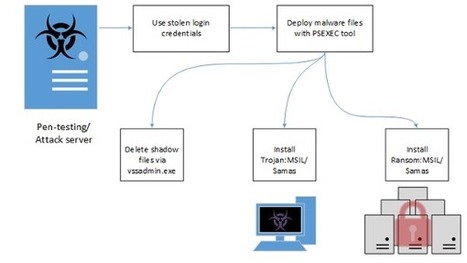
Nach einem Einbruch in ein Netz verschaffen sich die Erpresser hinter Samsa zunächst Zugriff auf so viele Systeme wie möglich. Erst dann kommt die Verschlüsselung zum Einsatz – und die Opfer bekommen gesalzene Lösegeld-Forderungen. Learn more / En savoir plus / Mehr erfahren: http://www.scoop.it/t/ict-security-tools/?tag=Ransomware
|
|
Scooped by
Gust MEES
September 14, 2015 11:34 AM
|
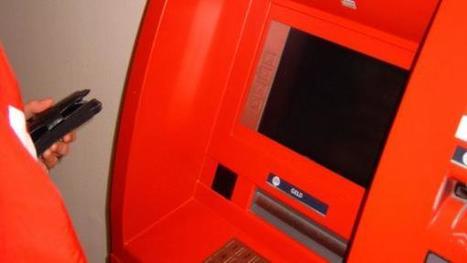
Die neue Malware-Generation für Bankautomaten Suceful liest nicht nur Daten von EC- und Kreditkarten aus, sondern zieht Karten auch ein. . Learn more / En savoir plus / Mehr erfahren: . http://www.scoop.it/t/securite-pc-et-internet
|
|
Scooped by
Gust MEES
January 10, 2015 9:31 AM
|
|
|
Scooped by
Gust MEES
September 18, 2014 10:07 AM
|
Tinba, the tiny (20 KB) banking malware with man-in-the-browser and network traffic sniffing capabilities, is back.
Needless to say, any entered information is sent to the attackers...
|
|
Scooped by
Gust MEES
May 7, 2011 3:35 PM
|
This isn’t about Mac-versus-Windows. It’s about engineering and (shady) economics.
|

















A newly uncovered trojan malware campaign is targeting businesses and higher education in what appears to be an effort to steal usernames, passwords and other private information as well as creating a persistent backdoor onto compromised systems.
Jupyter infostealer has been detailed by cybersecurity company Morphisec who discovered it on the network of an unnamed higher education establishment in the US. It's thought the trojan has been active since May this year.
The attack primarily targets Chromium, Firefox, and Chrome browser data, but also has additional capabilities for opening up a backdoor on compromised systems, allowing attackers to execute PowerShell scripts and commands, as well as the ability to download and execute additional malware.
The Jupyter installer is disguised in a zipped file, often using Microsoft Word icons and file names that look like they need to be urgently opened, pertaining to important documents, travel details or a pay rise.
If the installer is run, it will install legitimate tools in an effort to hide the real purpose of the installation – downloading and running a malicious installer into temporary folders in the background.
Learn more / En savoir plus / Mehr erfahren:
https://www.scoop.it/t/securite-pc-et-internet/?&tag=Malware