From black holes to the physics of footballs...good stuff from the Net to use in your class, brought to you courtesy of the Rondebosch Boys' High School Library (If you would like to receive a weekly newsletter of the latest items in this Scoop just mail me at library@rondebosch.com)
Step inside a spherical mirror with Michael from Vsauce.
Reflect on the oddities of reflections, from what would happen to light inside an infinite mirror, why you don’t like how you look in photos, and why you are always (and never) the same size in a mirror.
Science fans this week got their first tantalizing peek at the long-awaited sequel to Carl Sagan’s classic PBS series Cosmos. Astrophysicist Neil deGrasse Tyson, who takes Sagan’s place in the new series, traveled to Comic-Con in San Diego last week for the unveiling of this new trailer. Cosmos: A Spacetime Odyssey will begin airing on the Fox television network in the spring of 2014. As with the first Cosmos, there will be 13 episodes. According to the Fox Web site, “Cosmos: A Spacetime Odyssey will invent new modes of scientific storytelling to reveal the grandeur of the universe and re-invent celebrated elements of the legendary original series, including the Cosmic Calendar and the Ship of the Imagination. The most profound scientific concepts will be presented with stunning clarity, uniting skepticism and wonder, and weaving rigorous science with the emotional and spiritual into a transcendent experience.”
How does a transistor work? Our lives depend on this device. When I mentioned to people that I was doing a video on transistors, they would say "as in a transistor radio?" Yes! That's exactly what I mean, but it goes so much deeper than that.
Listent to plays about the lives of scientists like Alan Turing and Richard Feynman as well as events like the Scopes Monkey Trial and the development of the atomic bomb.
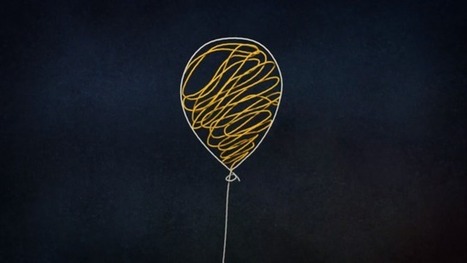
Perhaps you live in a developed nation, or a pocket of a developing nation, where internet access is a relatively cheap commodity. Count yourself lucky. Right now, 5 billion people lack access to an affordable and reliable Internet connection. Which means they lack access to critical information — medical information that can save lives; scientific information that can improve farming and educational resources that can cultivate young minds. With Project Loon, Google is launching an audacious experiment that will hopefully make a dent in this serious problem. The experiment involves putting a fleet of high-altitude balloons into the air. Powered solely by the wind and the sun, the balloons will fly high into the stratosphere, well above where commercial planes fly, and they’ll beam Internet access back to the ground ”at speeds similar to today’s 3G networks or faster,” claims Google’s main blog.
A year ago the European Union launched a campaign to attract more young women into the scientific professions. In Europe, women lag behind men in science and engineering, making up only a third of science researchers. But the video the EU made was laughable.
Along comes science journalist Kerstin Hoppenhaus to set the record straight. Hoppenhaus’s new series for the German science site SciLogs is called Significant Details: Conversations with Women in Science. The interviews are fresh, informative, and accessible.
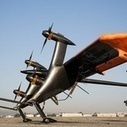
Google just bought one of the most promising airborne drones in development—it's not for surveillance, it's not for the military, and it's not for hobbyists. It's for making clean energy. It's essentially a giant, autonomous wind turbine that takes to the sky like a mechanical kite. And it may be integral to the future of wind power.
Makani Power, who we've covered extensively in the past, has been acquired by Google X, the search giant's secretive research and investment arm. Makani seems pretty pumped. The cleantech concern has for years pursued a unique goal: float kite-like wind turbines higher into the air, where they can harness the more consistent, more powerful wind that their earthbound tri-bladed brethren can't reach. Makani designed these drone kites to automatically take off and adjust themselves to the windstream to maximize energy production.
Far-flung lowtech satellite dishes have been bringing the continent up to astronomical speed.
Boredom is an under-appreciated and misunderstood tool in scientific innovation. Albert Einstein was pushing paper in a patent office when he developed his general theory of relativity, which altered the foundations of physics. In 2008 Mike Gaylard, then the associate director for radio astronomy at the Hartebeesthoek Radio Astronomy Observatory (HartRAO), was bored.
A bearing on the 26m dish was broken – 48 years of hard use tends to do that and engineers were flown in from the United States to fix it.
This left Gaylard with time on his hands. So what does an astronomer do when he can't explore the skies? Well, from the sound of it, he became a chair-bound explorer, investigating lesser-known parts of Africa with Google Earth.
AsapSCIENCE host Mitchell Moffit performs “The New Periodic Table Song,” singing the names of all the elements in order with an informational tidbit on each one.
Ten years ago Stephen Hawking made a bet with the man in the office next door at Cambridge University: South Africa's Neil Turok, the son of ANC MP Ben Turok.
The iconic scientist balked at Turok's proposal for a money wager, so they agreed on another kind of stake: bragging rights over which of them had discovered the true story of how both Creation and time began.
Their bet – which boils down a complex debate – was supposed to be settled by the Planck science satellite, which released its "spectacular" batch of data last month. Instead, the analysis of the data has left Turok fuming.
Ten Good Video Sources for Science Students and Teachers
One of the great things about teaching today is the wealth of educational videos that are available on the web. No longer do we have to flip through catalogs, order a VHS cassette, wait for it to arrive, and hope that it is as good as the catalog made it sound. Now we can quickly access and screen educational videos. In fact, there is so much available that the challenge is sifting through it all. That's why I occasionally publish lists like this one to help others find educational videos online. Here are ten good sources of science videos for students and teachers.
Water is precious on the International Space Station. CSA Astronaut Chris Hadfield demonstrates how the Water Recovery System preserves this resource to make the ISS a self-sustaining environment
And in answer to your NEXT question, yes they do :) But as Chris points out, by the time they've filtered it it's purer than a lot of the water we drink on earth. I suppose it helps not to think too hard about it....
As if to define what science is and what philosophy is weren’t hard enough, to delineate how the two fit together appears a formidable task, one that has spurred rather intense opinions. But that’s precisely what Dorion Sagan, who has previously examined the prehistoric history of sex, braves in the introduction to Cosmic Apprentice: Dispatches from the Edges of Science (public library) as he sets out to explore the intricate ways in which the two fields hang “in a kind of odd balance, watching each other, holding hands”:
PhysicsCentral, a web site run by The American Physical Society (an organization representing 48,000 physicists), has created a series of comic books designed to get kids excited about physics. If you click here, you can enjoy Nikola Tesla and the Electric Fair for free online. The 2008 comic book pits Thomas Edison against Tesla, the unsung hero of electricity and magnetism. Also on the Physics Central web site, you can enjoy four free comics from the Spectra series, which presents the adventures of a middle school superhero, who possesses all of the great powers of a laser beam.
A weekly show where knowledge junkies get their fix of trivia-tastic information. This week, Hank Green discusses 50 common science misconceptions about topics such as bats, dog years, and dinosaurs.
Rob Bell investigates how train wheels can handle bends in the tracks. What you need: Large plastics cups Empty plastic bottle Sissors Hose Gaffer tape Instr...
"At Head Squeeze, James May and his crack team of sci-geeks, maths-nerds and tech-heads provide answers to all your burning questions. From everyday curiosities to the latest mind blowing discoveries; our experts break it down for you and give their own left-field insights, sideways interpretations and bizarre, entertaining facts."
Disasters are awful. But wonderful things can come from them! Things like Spam, Twinkies, woman's suffrage, and Tabasco Sauce. On this show we uncover all the instances where there's a reason to say, "Thanks, Disaster!"
This Dicovery sponsored channel-Thanks Disaster! is a fresh and funky take on inventions-and the often adverse circumstances that gave rise to them. Watch the other episodes on the Youtube channel for more...
Nairobi-based Ushahidi, better known for its crowd-sourcing software that helps map violence, has just entered the hardware business. Sticking to their populist roots, it crowd-funded the start-up capital to produce a new type of Internet modem that’s designed by Africans, for Africans. SIMON ALLISON wants one.
Knowing the Web at large has a soft spot for Bill Nye, the marketers at Gillette very wisely recruited ‘The Science Guy‘ to discuss shaving. Shaving Superman that is.
A novel way to open discussions about materials science! Check out the Gillette Youtube channel to see what theories Jamie and Adam from Mythbusters, amongst others, have come up with to answer this intriguing question...
Architect Alastair Parvin presents a simple but provocative idea: what if, instead of architects creating buildings for those who can afford to commission them, regular citizens could design and build their own houses? The concept is at the heart of WikiHouse, an open source construction kit that means just about anyone can build a house, anywhere.
It's not a demo, more of a philosophical argument: Why did Sergey Brin and his team at Google want to build an eye-mounted camera/computer, codenamed Glass? Onstage at TED2013, Brin calls for a new way of seeing our relationship with our mobile computers -- not hunched over a screen but meeting the world heads-up.
The volume of data in our age is so vast that whole new research fields have blossomed to develop better and more efficient ways of presenting and organizing information. One such field is data visualization, which can be translated in plain English as visual representations of information.
The PBS “Off Book” series turned its attention to data visualization in a short video featuring Edward Tufte, a statistician and professor emeritus at Yale, along with three young designers on the frontiers of data visualization. Titled “The Art of Data Visualization,” the video does a good job of demonstrating how good design—from scientific visualization to pop infographics—is more important than ever.
The making of Fly Fubai Boeing 737-800 Timelaps. This is actually a commercial for the airline but it's an interesting peek into the manufacturing process.Might be useful in class?
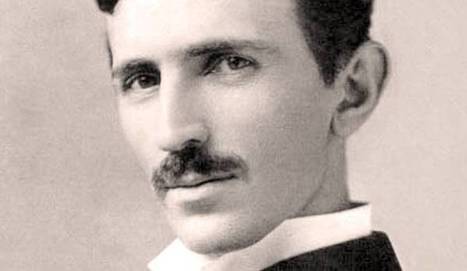
Late last week, it was announced that plans are finally properly underway to turn an old Long Island laboratory into a permanent memorial and museum to the late Serbian-American inventor Nikola Tesla. For Tesla’s supporters, it’s the culmination of a 70-year battle – since Tesla’s death – to see the appropriate commemoration of the man largely responsible for our modern electricity system, and a host of other scientific advancements for which he never received sufficient credit. By REBECCA DAVIS.
Isaac Asimov — sage of science, champion of creativity in education, visionary of the future, lover of libraries, Muppet friend — endures as one of the most visionary scientific minds in modern history. Every year, the Hayden Planetarium at the American Museum of Natural History, of which Asimov had been a tenacious supporter, hosts the Isaac Asimov Memorial Debate, inviting some of the greatest minds of our time to discuss monumental unanswered questions at the frontier of science. The 2013 installment explored the existence of nothing in a mind-bending conversation between science journalist Jim Holt, who has previously pondered why the world exists, theoretical physicist Lawrence Krauss, who has explored the science of “something” and “nothing,” Princeton astrophysics professor J. Richard Gott, NYU journalism professor Charles Seife, and Stanford physicist Eve Silverstein, moderated by none other than Neil deGrasse Tyson. The wide-ranging conversation spans such subjects as quantum mechanics, space-time, black holes, and string theory.
To get content containing either thought or leadership enter:
To get content containing both thought and leadership enter:
To get content containing the expression thought leadership enter:
You can enter several keywords and you can refine them whenever you want. Our suggestion engine uses more signals but entering a few keywords here will rapidly give you great content to curate.


 Your new post is loading...