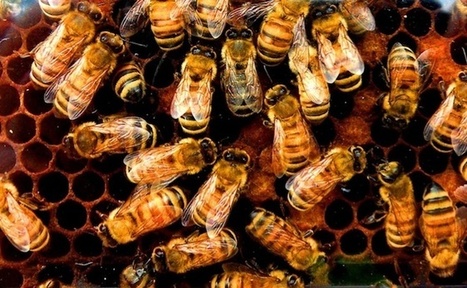

Thomas Seeley gave a talk yesterday about how honeybees collectively decide on a new home, and how they use the evidence accumulation/drift-diffusion model to make decisions! When bees are ready to start a new colony, they’ll find somewhere to hang out and swarm. Foragers will then periodically wander off to try to find a good home: they like spacious holes high up on tall trees.
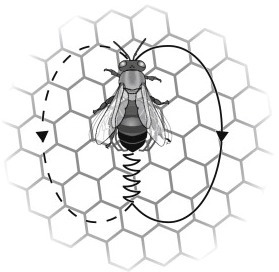
When a forager finds a home that it likes, it will report back to the swarm what its found in the form of a waggle dance. Bees will shake their little bottoms as they walk in the direction of the potential home, and the longer they shake the further away their new home is. But the job of the bee is more of that of a politician or proselytizer trying to get other bees to follow their lead to the new nest site that they found. By dancing more and more, a scout bee will impress other watchful bees to go check that site out; generally, the more the scout likes the nest, the more time and energy its willing to invest in its wagglin’.
But politics is rough and tumble. Scout bees don’t only advertise nest sites they like, they’ll actively go find the other scouts advertising other nests sites and headbutt and buzz at them. Needless to say, the more an Opposition bee gets headbutted, the less likely it is to continue advertising its own preferred site
More: http://neuroecology.wordpress.com/2013/05/30/mechanisms-of-collective-decision-making-in-bees


 Your new post is loading...