Take the next step in robotic surgery with an immersive two-day training experience combining hands-on robotic surgery, AI, telesurgery, and metaverse-based surgical education.
📍 Shanghai, China or Metaverse 📅 September 15–16, 2026 🩺 2-Day Course | 1 Day Dry Lab + 1 Day Wet Lab
👨⚕️ Trainer Introduction
Prof. Dr. Mohanad Al Ansari Board-Certified Surgeon Minimal Invasive GI Surgery | Robotic Surgical Oncology | Telesurgery CEO & Chief Surgeon, Metaverse Surgical Hospital, USA Dean of Robotic Surgery Academy, Canadian Specialist Hospital, Dubai, UAE
Zhenyu Jin Director of Clinical Training, MicroPort MedBot 10+ years of robotic surgery training experience 1000+ physicians trained
🤖 What Will You Learn?
🔹 AI & Metaverse Surgery 🔹 Toumai® Surgical System Components & Robotic Instruments 🔹 Robotic Dissection & Camera Control 🔹 Robotic Suturing 🔹 Robotic Anastomosis 🔹 Telesurgery Tips & Techniques 🔹 Avatar-Based Tele-mentoring 🔹 3D Reconstruction 🔹 Metaverse Hospital Tour
💡 Course Options
Physical Presence USD 3,000 | 2-day course Avatar Presence USD 300 | 2-day online course via the Metaverse
🎓 Certificate of Training Provided
Whether you are looking to strengthen your hands-on robotic skills or explore the future of AI-enabled, immersive and remote surgical education, this course offers an opportunity to learn, practice and connect with experts across borders.
J’y effectue actuellement mon SIR et je dois dire que les formations de chirurgie robotique proposées sont de grande qualité : l’école dispose de matériel et de robots à la pointe de la technologie (Da Vinci notamment…). Elle est également le siège de nombreux projets de recherches tout aussi passionnants et innovants !
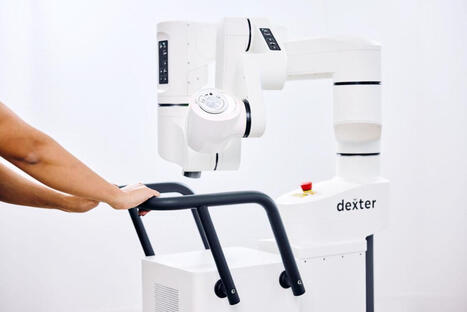
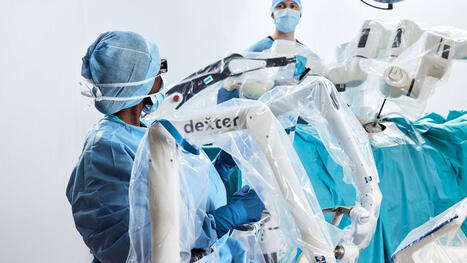
Distalmotion, the Lausanne-area medtech behind DEXTER, has advanced its compact mobile soft-tissue surgical robot through a further regulatory step. DEXTER is designed to fit into existing operating rooms and let surgeons switch between robotic and manual technique during the same procedure.
Why it matters: 🏥 Compact design lowers the cost barrier to robotic surgery 📋 Regulatory clearance is the real moat in medtech 🇨🇭 Swiss precision engineering competing directly with US incumbents
In medtech, the hardest engineering problem is often the approval pathway rather than the device.
Take the next step in robotic surgery with an immersive two-day training experience combining hands-on robotic surgery, AI, telesurgery, and metaverse-based surgical education.
📍 Shanghai, China or Metaverse 📅 September 15–16, 2026 🩺 2-Day Course | 1 Day Dry Lab + 1 Day Wet Lab
👨⚕️ Trainer Introduction
Prof. Dr. Mohanad Al Ansari Board-Certified Surgeon Minimal Invasive GI Surgery | Robotic Surgical Oncology | Telesurgery CEO & Chief Surgeon, Metaverse Surgical Hospital, USA Dean of Robotic Surgery Academy, Canadian Specialist Hospital, Dubai, UAE
Zhenyu Jin Director of Clinical Training, MicroPort MedBot 10+ years of robotic surgery training experience 1000+ physicians trained
🤖 What Will You Learn?
🔹 AI & Metaverse Surgery 🔹 Toumai® Surgical System Components & Robotic Instruments 🔹 Robotic Dissection & Camera Control 🔹 Robotic Suturing 🔹 Robotic Anastomosis 🔹 Telesurgery Tips & Techniques 🔹 Avatar-Based Tele-mentoring 🔹 3D Reconstruction 🔹 Metaverse Hospital Tour
💡 Course Options
Physical Presence USD 3,000 | 2-day course Avatar Presence USD 300 | 2-day online course via the Metaverse
🎓 Certificate of Training Provided
Whether you are looking to strengthen your hands-on robotic skills or explore the future of AI-enabled, immersive and remote surgical education, this course offers an opportunity to learn, practice and connect with experts across borders.
At the forefront of next-generation spine care is robotic-assisted surgery—a minimally invasive approach that combines robotic technology, advanced navigation systems, and real-time imaging...
MicroPort® MedBot™ Achieves First-Ever Half-Year Profitability, Expects Net Profit of RMB 28–40 Million
July 22, 2026 — Shanghai MicroPort MedBot (Group) Co., Ltd. (HKEX: 02252, “MicroPort® MedBot™”) has issued a profit alert for the first half of 2026. According to the announcement, the Company expects to record an unaudited net profit of approximately RMB 28 million to RMB 40 million for the six months ended June 30, 2026.
This marks the Company's first-ever half-year profitability since its listing, representing a significant milestone in its operational performance and high-quality development.
The Company's turnaround from a net loss to a net profit during the Reporting Period was primarily attributable to the following factors:
✅ Substantial Revenue Growth — During the Reporting Period, the Group recorded a year-on-year revenue increase of approximately 200% to 230%.
✅ Significant Improvement in Gross Profit Margin — The Group's overall gross profit margin increased by more than 15 percentage points compared with the same period last year.
✅ Continued Optimisation of Expense Control — The Group continued to strengthen expense management and resource allocation, further improving overall operating efficiency.
Robotic-assisted laparoscopic surgery has made progress in addressing many of the technical challenges associated with conventional laparoscopy. Recently, a new robotic surgical system, Carina Platform, has been developed.
Human-in-the-loop robotic systems could begin to redefine task allocation across the surgical pathway.
Future operating rooms may integrate embodied AI agents capable of workflow understanding and adaptive assistance. This could support surgeons while reshaping how responsibilities are distributed across hybrid human and machine teams.
Read more and download the article in Frontiers in Science ⬇️
Scientists from Nanyang Technological University, Singapore (NTU Singapore) have developed a tiny seed-sized robot that can navigate across soft and uneven surfaces to perform five surgical functions wirelessly, paving the way for developing robots to make surgeries and medical treatments more...
CAESAREA, Israel--(BUSINESS WIRE)--ForSight Robotics, the global pioneer in robotic eye surgery, today announced the successful completion of the world’s first fully robot-assisted cataract surgery performed in a human patient using its proprietary JASPER™ Platform. The landmark breakthrough introduces a new era of robotic precision in the most commonly performed surgical procedure in medicine, fundamentally reshaping ophthalmic care. The procedure was performed with the JASPER™ Platform by Dr.
Learning Point of the Article : This article emphasizes that robotic-assisted knee arthroplasty enhances surgical precision and implant alignment, optimal outcomes primarily depend on structured rehabilitation. Prehabilitation helps patients prepare physically and mentally for surgery, while early post-operative physiotherapy promotes faster recovery and improved mobility. Phased rehabilitation with strengthening exercises, range of motion exercises and gait training, combined with modern approaches like ERAS protocols and multimodal pain management are essential for optimal functional recovery after knee replacement. Editorial | Volume 16 | Issue 04 | JOCR April 2026 | Page 1-3 | Sagar Deshpande [1], Sachin Kale [2,3,4], Dnyanesh Patil [5], Ashok Shyam [6,7] . DOI: https://doi.org/10.13107/jocr.2026.v16.i04.7014 Authors: Sagar Deshpande [1], Sachin Kale [2,3,4], Dnyanesh Patil [5], Ashok Shyam [6,7] [1] School of Physiotherapy, DY Patil deemed to be University, Navi Mumbai, Maharashtra, India; [2] Department of Orthopedics, D Y Patil Hospital and Medical College, Navi Mumbai, Maharashtra, India, [3] Department of Orthopedics, Apollo Hospital, Navi Mumbai, Maharashtra, India, [4] Department of Orthopedics, Fortis Hospital, Navi Mumbai, Maharashtra, India, [5] School of Physiotherapy, DY Patil deemed to be University, Navi Mumbai, Maharashtra, India; [6]I ndian Orthopaedic Research Group, Thane, Maharashtra, India, [7] Department of Orthopaedics, Sancheti Institute for Orthopaedics and Rehabilitation, Pune, Maharashtra, India. Address of Correspondence: Dr. Sachin Kale, Department of Orthopaedics, Dr D Y Patil School of Medicine, Navi Mumbai, Maharashtra, India. Email: sachin.kale@dypatil.edu Article Received : 2026-01-08, Article Accepted : 2026-03-05 Introduction: Robotic-assisted knee arthroplasty (RAKA) has transformed knee reconstruction by optimizing soft-tissue balance, improving implant alignment, and surgical precision. Even though technological advancements have enhanced surgical accuracy, comprehensive rehabilitation remains the key determinant of functional success. Optimal long-term patient-reported outcomes are achieved when surgical accuracy is supported by structured rehabilitation [1,2]. The Imperative of Pre-operative Rehabilitation (“Prehabilitation”)Pre-operative rehabilitation, often known as prehabilitation, is a systematic approach that helps patients get ready for surgery both mentally and physically. It includes patient education, lifestyle changes, risk-factor optimization, and focused exercise regimens. Enhancing muscle strength, joint mobility, cardiovascular endurance, and psychological preparedness is the main goal of prehabilitation to provide the ideal physiological environment for surgery and accelerate post-operative recovery [1,2]. Growing research supports the usefulness of prehabilitation in enhancing post-operative outcomes following total knee arthroplasty. An umbrella review of pre-operative rehabilitation suggests that exercises may facilitate early functional recovery and reduce post-operative functional disability, but functional improvements are inconsistent due to varied rehabilitation protocols [2]. According to systematic reviews and meta-analyses, structured exercise-based prehabilitation programs are linked to better early functional outcomes and less post-operative pain [3,4]. Individual-tailored prehabilitation programs are most helpful when they are adapted to comorbid conditions, pain severity, and baseline functional level. Aerobic conditioning, balance and proprioceptive exercises, progressive resistance training for the quadriceps and hamstrings, and patient education on post-operative expectations, use of assistive devices, wound care, and pain management are important components. Importantly, patients who have a limited range of motion, obesity, or lower baseline function seem to gain most from tailored prehabilitation techniques [5]. Post-operative Rehabilitation: Phased and PersonalizedFollowing a RAKA, post-operative rehabilitation is a goal-oriented, phased process that starts right after surgery and lasts until functional independence is attained. Modern rehabilitation practices, which prioritize early mobilization, multimodal analgesia, and progressive functional loading, are closely aligned with the principles of enhanced recovery after surgery (ERAS) [6]. Early quadriceps activation, safe transfers, aided ambulation, and pain and edema management are the main goals of rehabilitation during the early post-operative period. Research indicates that starting physical therapy within the first 12–24 h following surgery improves functional results and shortens hospital stays when compared to delayed mobilization [7,8]. Early ambulation is particularly viable following robotic-assisted operations due to enhanced implant alignment and soft-tissue balance [8,9]. Restoring knee range of motion, strengthening periarticular muscles, enhancing neuromuscular control, and retraining gait patterns become more important as rehabilitation goes on. Robotic precision in implant location has been related with speedier recovery of knee motion, allowing physicians to advance rehabilitation procedures with more confidence while minimizing compensatory movement patterns [9]. During the intermediate and late stages of recovery, balance training, proprioceptive exercises, stair climbing activities, and cardiovascular conditioning become more crucial [5]. Post-operative recovery is greatly improved by new recent rehabilitation methods and protocols. When compared to traditional rehabilitation alone, the utilization of robotic and exoskeleton-assisted rehabilitation systems inside ERAS pathways has shown improvements in knee range of motion, functional outcomes, and shorter hospital duration [6]. Furthermore, tele-rehabilitation systems present viable ways to enhance long-term functional recovery and sustain to home-based exercise regimens. Multimodal Integration: Pain, Function, and TechnologyEffective rehabilitation requires the use of multimodal pain management techniques in addition to exercise recommendations. Modern analgesic regimens that include non-opioid systemic drugs, periarticular infiltration, and regional anesthesia promote early mobilization, lower opioid use, and increase patient involvement in rehabilitation programs [5]. Synchronizing pain management with functional advancement requires close coordination between anesthesiologists, surgeons, and rehabilitation specialists. A paradigm change in knee arthroplasty care is represented by the combination of robotic surgery and evidence-based rehabilitation. Robotic devices improve surgical accuracy, but rehabilitation makes sure that these technological advances result in significant functional outcomes, such as walking endurance, stair-climbing ability, and return to activities of daily activities [9]. Conclusion: Despite advances in the precision of robot-assisted knee arthroplasty, successful outcomes primarily depend on post-operative functional performance. While organized, structured post-operative rehabilitation guarantees long-term functional improvements; pre-operative rehabilitation maximizes physical preparedness and improves post-operative recuperation. For robotic-guided knee arthroplasty to be successful, rehabilitation should be considered a key component rather than an adjunct. Personalized care pathways and new technologies will improve results as rehabilitation science advances. Rehabilitation continues to be the vital link between surgical accuracy and patient-centered recovery in the age of robotic knee replacement. References1. Afzal W, Arif K, Rashid HM, Tariq M, Khalid J, Mohsin A, et al. Effect of pre-operative, post-operative and combined rehabilitation approaches in total knee replacement. Insights J Health Rehabil 2025;3:293-301. [Google Scholar] [PubMed]2. Zhao Y, Tian C, Tian S, Han W, Shi H, Cao M, et al. An umbrella review for preoperative rehabilitation in primary total knee arthroplasty: Quality assessment and summary of evidence. BMC Musculoskelet Disord 2025;26:630. [Google Scholar] [PubMed]3. Karimijashni M, Yoo S, Barnes K, Lessard-Dostie H, Ramsay T, Poitras S. Prehabilitation in patients at risk of poorer outcomes following total knee arthroplasty: A systematic review. J Arthroplasty 2025;40:1367-76. [Google Scholar] [PubMed]4. Zhang W, Lu X, Yang N, Zhu X, Hu H. Prehabilitation is effective in relieving pain after knee arthroplasty, but has little effect on length of stay and knee function: A meta-analysis of randomized controlled trials. Front Med (Lausanne) 2025;12:1457407. [Google Scholar] [PubMed]5. Clark NC. Prehabilitation and rehabilitation for total knee replacement surgery: Physiotherapy interventions in personalized medicine and charting a course towards optimal outcomes. Orthop Trauma 2025;39:65-73. [Google Scholar] [PubMed]6. Wang M, Tang Z, Lan Y, Lan R, Wang M, Song X, et al. Application and postoperative rehabilitation effects of HURWA, Cori, and Brainlab robots in TKA under the ERAS concept. J Robot Surg 2025;19:669. [Google Scholar] [PubMed]7. Thwin L, Chee BR, Yap YM, Tan KG. Total knee arthroplasty: Does ultra-early physical therapy improve functional outcomes and reduce length of stay? A retrospective cohort study. J Orthop Surg Res. 2024;19:288. [Google Scholar] [PubMed]8. Zhou G, Yao Y, Shen Y, You X, Zhang X, Xu Z. Early ambulation after total knee arthroplasty: A retrospective single-center study. J Orthop Surg Res. 2024;19:446. [Google Scholar] [PubMed]9. García-Sanz F, Sosa-Reina MD, Jaén-Crespo G, González-De-La-Flor Á, Villafañe JH, RoSmero-Morales C. Redefining knee arthroplasty: Does robotic assistance improve outcomes beyond alignment? An evidence-based umbrella review. J Clin Med 2025;14:2588. [Google Scholar] [PubMed] Dr. Sagar DeshpandeDr. Sachin KaleDr. Dnyanesh PatilDr. Ashok Shyam How to Cite This Article: Deshpande S, Kale S, Patil D, Shyam A. Redefining Outcomes in Robotic-Guided Knee Arthroplasty through Purposeful Rehabilitation. Journal of Orthopaedic Case Reports 2026 April, 16(04): 1-3.
Distalmotion has submitted a 510(k) application to the FDA seeking clearance to use the DEXTER robotic surgery system for sacrocolpopexy, sacrocervicopexy and endometriosis resection.
HIBA Case: Robotic Surgery Volume Grows Fivefold in 10 Months with Toumai®
On August 19, 2026, at the VIII Congreso de Salud Adecra+Cedim 2026, Dr. Gustavo García Fornari, Head of the Department of Surgery at Hospital Italiano de Buenos Aires (HIBA), delivered a presentation titled “How to Develop a Rapidly Expanding Robotic Surgery Program? The HIBA Case.” Drawing on HIBA’s experience, he shared key insights into building and scaling a robotic surgery program.
According to Dr. García Fornari, HIBA currently has two surgical robotic systems, one of which is the Toumai® Endoscopic Surgical Robotic System. During his presentation, he highlighted Toumai® and its clinical applications at HIBA.
“We increased the number of robotic surgeries from 12 to 60 per month in just 10 months. In other words, we are now performing five times as many robotic surgeries each month. And we are aiming to reach 80. However, beyond the numbers, it is essential to have a structured implementation program.”
Emphasizing the importance of a comprehensive implementation strategy, Dr. García Fornari noted:
✅ “It is not simply about purchasing a robot; it is about having a program to implement it.”
✅ He then outlined several key components of HIBA’s robotic surgery program:
✅ Building a dedicated multidisciplinary team for robotic surgery;
✅ Developing budgets and operational plans for robotic system acquisition and maintenance;
✅ Exploring payment models and negotiating with relevant healthcare stakeholders to establish a hybrid payment system;
✅ Professional training: providing systematic training for surgeons, surgical technologists, anesthesiologists, nurses, and technicians, supported by simulation and hands-on training;
✅ Certification and accreditation: newly trained robotic surgeons received MicroPort® MedBot certification;
✅ Quality and safety management: establishing standardized protocols and procedures, together with continuous monitoring and evaluation mechanisms.
HIBA’s experience demonstrates that scaling robotic surgery requires more than simply introducing a robotic system. It calls for a comprehensive program encompassing clinical applications, multidisciplinary training, operational management, and quality and safety assurance. HIBA’s experience with Toumai® offers a practical example of how leading medical institutions can develop and scale their robotic surgery capabilities.
When a surgical robot arrives at a training institute, the temptation is to write about the machine. The more interesting thing about Cornerstone Robotics going live at IRCAD-Taiwan/ AITS Taiwan is what it does to distance.
Robotic surgery has reached a mature stage, as Dr. Huang Wayne Shih-Wei Shih-Wei Huang puts it in the film, with the different platforms converging on a similar look and a similar feel — usually the sign of a technology settling into itself. What tends to follow maturity is competition, and that is where Dr. Charles Lin picks the story up: for years a single company defined this field, and there are now twenty, thirty, perhaps forty systems arriving behind it. A market that one-sided is rarely a healthy one, and it is about to stop being one-sided.
For a training institute, though, the specification that matters is not the hardware but the second console. One surgeon operating and one mentor guiding, in the same case at the same time, is the mechanism by which a young surgeon's complication rate comes down, because the teaching happens during the procedure rather than in the debrief afterwards. Over the coming year that mechanism gets tested properly: consoles will be placed in cities across Taiwan, all of them connected back to the system in Lukang, and the question under study is whether training delivered by teleoperation genuinely transfers into surgical performance.
It is a question with a cost attached, because IRCAD Taiwan is the base for minimally invasive surgery training in Asia, and being the base means surgeons fly here — this week from the Philippines — which takes both time and money, and then go home to practice alone between cases. A console at the other end of the line turns proctoring and follow-up into something continuous rather than episodic, available at any time and from any place.
None of which is the same as operating on a patient in another city. That remains an ethics and safety question and will for some time yet, but the technology itself is already here, and training does not have to wait for the rest of it to catch up.
In The Week’s “Deskilling: A Dangerous Side Effect of AI Use,” the first line beneath the image reads: “Atrophied skills have been observed across a wide array of fields, including medical and mental health.” As an organizational learning and development strategist for a large behavioral health care provider, I have had this on my radar for quite some time, but I believe it should be on yours as well. Even more, as a longtime L&D professional and computer information systems educator with professional and academic backgrounds spanning adult education, higher education, information technology and organizational learning, I find this outcome unsurprising. Of course, technology has always reshaped work. What is different today is the speed with which large language models have been introduced at scale, often without sufficient preparation, governance or thoughtful integration. Hype cycles have a way of running ahead of practice, and eventually the dust settles. The Week’s article also provided examples from each of the three primary domains in which I work: In mental health, therapists are “allowing themselves to become passive in the act of therapy,” essentially becoming a “supervisor over the AI use for therapy” while limiting their “reflexive diagnostic thinking,” according to Forbes. In technology, computer coding is increasingly being delegated to AI, shifting human developers toward integration, monitoring and higher-level analysis, according to the American Enterprise Institute. In education, many students are using AI to write essays or conduct research. Yet, as The Atlantic notes, “The term paper, for all its tedium, teaches a discipline that’s hard to reproduce in conversation: building an argument step by step, weighing evidence, organizing material, honing a voice.” Over the past three years, I have intentionally observed this unfold. I’ve followed analyses from fellow L&D professionals and from professionals across industries. Some of those conversations have lacked nuance, particularly in sectors like health care, where the context differs significantly from many commercial environments. Too often in these conversations, AI has been presented as inherently good and urgently in need of implementation without sufficient clarity about the problems being solved, the value being created or how people will adopt, integrate and sustain the change over time. For nearly my entire career, I have worked to understand both sides: the human and the technological. I have never chosen a lane. But I have always believed there is an ethical order of prioritization. One of The Week article’s most important observations is that deskilling is not inherently negative. It has occurred throughout history and has contributed to many of the advances we benefit from today. The more important question is not whether deskilling occurs, but, rather, how much is appropriate, in what contexts and with what safeguards. Those questions require systematic and systemic thinking. The article also highlights another concern I have also been raising: What happens when the technology is unavailable? When I recently discussed on LinkedIn the importance of surgeons maintaining the ability to perform procedures without robotic assistance should a system fail mid-operation, another LinkedIn user made a similar point. The same principle explains why pilots continue to practice manual landings even though commercial aviation relies heavily on automation. Automation can extend human capability, but resilience depends on preserving essential human expertise. Then there is the question of equity. At times, conversations on LinkedIn proceed as though everyone, everywhere, has equal access to the same technologies and will experience AI in the same way. They will not. Not every health care system can afford multimillion-dollar surgical robotics platforms. When I underwent surgery in 2013, the robotic system being used at Johns Hopkins Medicine was, at the time, unique within my region. Access to advanced technology varies considerably across health care organizations, communities and countries. We also tend to overlook the ongoing costs of these systems. Sometimes discussions treat AI adoption as though it is inevitable and self-sustaining. Yet these technologies depend upon continual investment in fresh knowledge and research, much of which comes from institutions that some now argue AI is replacing, including higher education and journalism. They also depend upon significant computing infrastructure, energy, water and the people who build, maintain, govern and improve these systems. Because I completed my doctoral work within a school of education and urban studies grounded in a social justice mission, equity will always be one of the lenses I bring to both research and practice. That perspective also shaped my own doctoral research. I examined how systems usability varied across regions, including rural and urban communities where differences in digital infrastructure significantly affected access and user experience. Those same infrastructure differences continue to matter in health care today. I also tried to ensure my professional experiences reflected those realities. In 2012, I accepted a significant pay cut to work in a rural community while completing my doctorate. Later, I returned to a larger suburban region outside Washington, D.C., continuing my work across different organizational settings. Experiencing multiple contexts has been important to developing a broader perspective rather than assuming one environment represents everyone. I mention this because it matters. When people make decisions that affect others, they must understand the people those decisions affect and make reasonable efforts to understand their experiences. Not everyone will have opportunities to work across as many settings as I have, but I have found one principle to be consistently true: When we neglect those whose needs are less visible, the consequences eventually extend far beyond those communities. This is why I continue to advocate for partnership, unhurried practice and thoughtful exploration before deciding what should and should not be delegated to AI. Those decisions should be considered through multiple lenses. Philosophically, we should ask questions about ethics, equity, justice, human agency, professional responsibility and what kinds of expertise we believe society ought to preserve. Practically, we should examine patient safety, workforce capability, organizational resilience, regulatory requirements, cost, infrastructure, accessibility, continuity during system failures and long-term learning. Technology has always changed what people do. The more enduring question is whether we are being equally intentional about preserving what people still need to know.
MediThinQ, a South Korea-based innovator in surgical visualization technologies, has entered into an exclusive multi-year distribution agreement with Synovis ...
The safe deployment of surgical AI depends on governance as well as technology.
Addressing bias, liability, regulatory gaps, and unequal access will be critical to ensure AI and robotics improve outcomes without reinforcing existing health disparities.
Read article by Prokar Dasgupta, Alejandro Granados, Nicholas Raison, Tom Vercauteren, and others from King’s College London, San Raffaele Hospital, Guy’s Hospital, and more ⬇️
A revolutionary leap in maxillofacial reconstructive surgery has been unveiled with the development of an integrated system that combines robot-assisted osteotomy and augmented reality (AR) guidance.This groundbreaking approach, spearheaded by a team of researchers at the Beijing Institute of Technology,...
Discover the top robotic surgery companies and healthcare stocks to watch in 2026, including leaders in AI-assisted surgical systems and minimally invasive technology.
Leading the evolution of robotic surgery through nursing excellence.
Meril introduces A.R.M.O.R. Advanced Robotic Management for Operating Room Nurses.
A first of its kind initiative designed to support nursing professionals with the knowledge, skills, and confidence required in robotic assisted surgery.
As surgical technology continues to evolve, operating room teams play a critical role in enabling seamless workflows, precision, and consistency in clinical practice.
A.R.M.O.R. reflects Meril’s continued focus on education, capability building, and advancing the future of robotic healthcare.
A tale from the early years of Intuitive - exclusivity and its ramifications in establishing robotic surgical programs in Florida. Edition 23 of My Own Devices.
Surgical robotics has evolved, expanding into a diverse ecosystem of procedure‑specific technologies — each pushing new technical requirements onto the motion systems at their core.
Ear, Nose & Throat Journal, Ahead of Print. Background:Laryngeal clefts are rare congenital aerodigestive tract anomalies that cause chronic aspiration, feeding difficulties, and recurrent respiratory infections in children. Types I to III clefts remain challenging because of limited exposure and ...
To get content containing either thought or leadership enter:
To get content containing both thought and leadership enter:
To get content containing the expression thought leadership enter:
You can enter several keywords and you can refine them whenever you want. Our suggestion engine uses more signals but entering a few keywords here will rapidly give you great content to curate.





 Your new post is loading...