


Habitat Network focuses on actions that people can take, often with a relatively small effort, to make a big impact for wildlife.
Get Started for FREE
Sign up with Facebook Sign up with X
I don't have a Facebook or a X account


 Your new post is loading... Your new post is loading...
 Scoop.it!
Habitat Network focuses on actions that people can take, often with a relatively small effort, to make a big impact for wildlife.

No comment yet.
Sign up to comment
Scoop.it!

In tropical rainforests strangler fig seeds germinate in the tree canopy and send roots downwards until they reach the soil. Then, as their roots grow they strangle the tree that originally supported their seedling stage.
The Morpho Institute's insight:
Use plant adaptations to make connections between rainforests and deciduous forests!
Scoop.it!

A lot, as it turns out. With biodiversity under threat worldwide, scientists say old-school specimen collections — including an impressive hoard of bees at York University — have a crucial role to play in research.
Scoop.it!

From
aeon

How does a spider tell a potential meal from a potential mate? The answer lies in the vibrations of its finely-tuned web
Scoop.it!
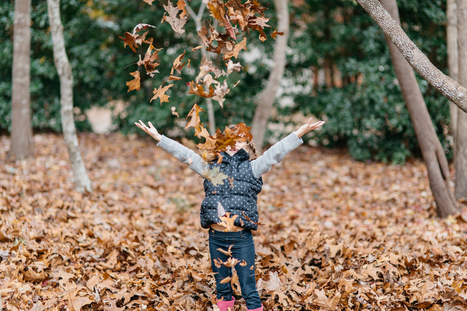
We feel better when we are outside, but sometimes we need that extra motivation to get off the couch and to get outdoors. Dr. Lawrence Rosen, M.D. shares seven science-backed reasons why we should connect our kids to nature.
Scoop.it!

From
ed
Our planet’s diverse, thriving ecosystems may seem like permanent fixtures, but they’re actually vulnerable to collapse. Jungles can become deserts, and reefs can become lifeless rocks. What makes one ecosystem strong and another weak in the face of change? Kim Preshoff details why the answer, to a large extent, is biodiversity.
Scoop.it!
Field Notes from the Future: Tracking the Movement to Connect People and Nature
Scoop.it!

From
www
Brazilian biologist Marcela Uliano da Silva is using cutting-edge DNA sequencing technology to prevent the golden mussel from destroying the Amazon River’s biodiversity.
The Morpho Institute's insight:
ATTENTION SCIENCE EDUCATORS! Looking for a role model for your students? Wondering how to bridge the gap between genetic sequencing and environmental conservation? Wondering how to connect Amazon issues to your local classroom? Here you go!
Scoop.it!
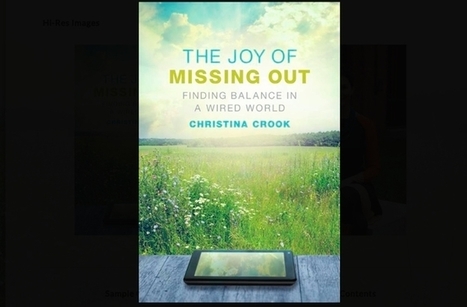
The Internet is a wonderful and important tool, but more of us need to learn how to use it as such.
Scoop.it!
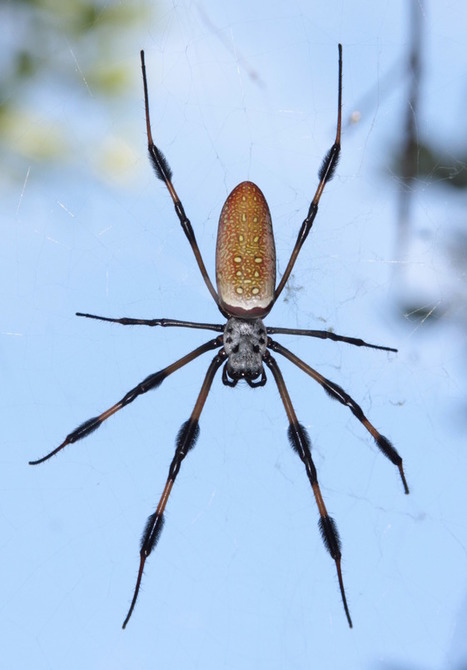
Golden orb-web spiders (Nephila clavipes) are sit-and-wait hunters that accumulate prey larders on their webs. These larders are sometimes stolen by other spiders. If prey items are removed from their webs, golden orb-web spiders search for them. They search longer when they have lost more prey items as well as when they have lost larger…
The Morpho Institute's insight:
We often see orb-web spiders during our rainforest workshops. Here's a great example to share with students of how the simple act of slowing down and making observations can lead to new questions, new discoveries, and fascinating natural history stories.
Scoop.it!

Birds in the Amazon aren’t well suited to use human-developed surroundings to their advantage. Their dependence on intact forests makes them particularly vulnerable to environmental impacts.
Scoop.it!
Same or different? Camouflage and Mimicry? Classification and Taxonomy? Here's a new resource for your classroom!
The Morpho Institute's insight:
Teaching about camouflage and mimicry and taxonomy? Here you go!
|
Scoop.it!
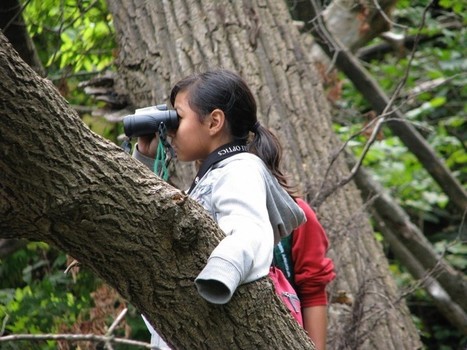
While reading the recent horrific headlines, I remembered Dr. Gail Cristopher’s powerful keynote during the 2016 Children & Nature Network International Conference in May. Dr.
Scoop.it!
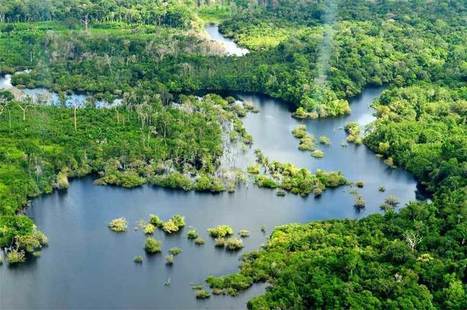
if all planned dams go ahead, only three Amazon tributaries will remain free-flowing in the basin.
Scoop.it!
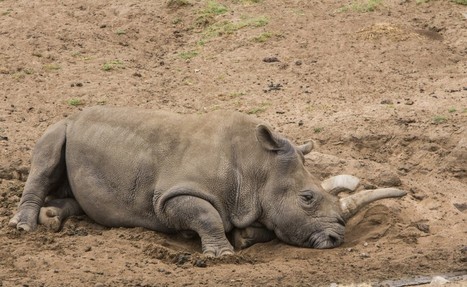
Rick Schwartz, a national spokesperson for the San Diego Zoo, responds to a conversation that started between him and parents on social media in the wake of the death of one of the last northern white rhinos left in the world.
Scoop.it!

What do you see in the picture above? Maybe snakes… or maybe not? All animals try to enhance their survival rates, and one of the most effective ways to achieve this goal is by looking similar to s...
Scoop.it!

An author is to create a new children's book aimed at reinstating 'nature words' back into children's vocabulary
Scoop.it!

As someone who used to work in outdoor sports before making a dramatic u-turn into the world of technology and kids, I find it viscerally disturbing to see young kids out in nature with their eyes glued to a screen.
Scoop.it!
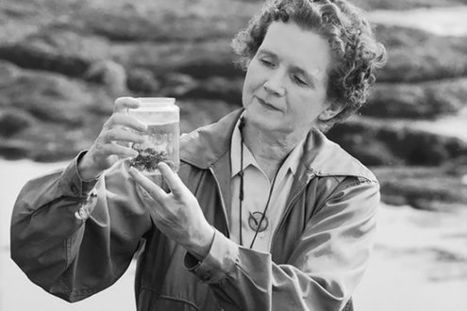
Rachel Carson’s bombshell 1962 work, ‘Silent Spring,’ inspired the formation of environmental protection groups.
Scoop.it!

From the impossibly large and showy to sharp and deadly, each of these bird beaks is superbly designed for purpose
Scoop.it!

Field Biologist is the story of 22-year-old Tyler Christensen, a talented but underemployed high school graduate from New Jersey still trying to figure out what to do with his life. Tyler’s great love is being outside, chasing birds and studying wildlife. One day he decides—brushing aside his lack of a college degree or scientific credentials—to drop everything and travel to Costa Rica to start doing his own conservation-oriented research on birds in the tropics.
The Morpho Institute's insight:
Excellent resource for "out of the box / off the beaten path" biology careers!
Scoop.it!
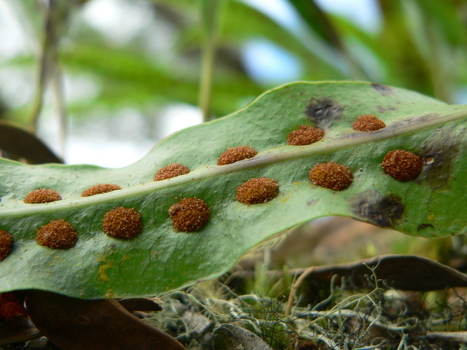
Author’s note: This is the latest post in the Wonderful Things series. You can read more about this series here.
Scoop.it!

The bulk of life in the rainforest is found the leafy layers of the canopy. But little was known about this world until relatively recently, when hobbyists, naturalists, and researchers began devising ways to access the upper levels of the forest. These efforts accelerated in the 1970s when scientists started to use mountaineering techniques and ropes to climb towering rainforest trees for long-term study and observation.
Scoop.it!
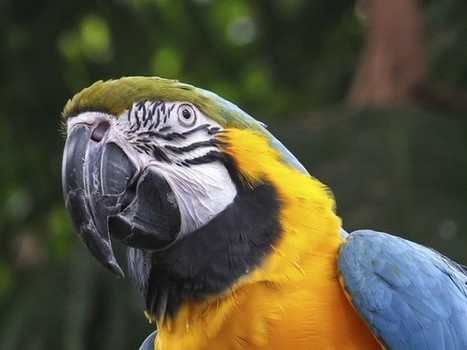
Humans and vocal birds like parrots use essentially the same genes to speak.
|




