


A thorough report on Borneo´s deforestation process - jero

 Your new post is loading...
 Scoop.it! A thorough report on Borneo´s deforestation process - jero 
No comment yet.
Sign up to comment
Scoop.it!
The Penan in the various settlements have varying degrees of familiarity and knowledge of ethnobotany. It is sad to state that for those communities that had direct contact with the outside world through logging and palm oil plantation activities, the younger generation might not be familiar and might lose their ancestral knowledge of the usage of plants for medicinal and cultural purposes. All is not lost however, if the older generation educate their children on the cultural significance of retaining their traditional ethnobotanical knowledge. The Penan elders at Long Latei’, Long Kevok, Long Lewe’ and Ba Data Bila still retain the knowledge on the usage of traditional medicinal plants but if the knowledge is not passed on, then it will slowly fade away forever. Below is a list of plants which are part of the ethnobotany of the Penan encountered in the various settlements:
Scoop.it!

TRANSMEDIA > EXAMPLE Very interesting use of facebook to "seed" a documentary and its audience, worth a look -jero
Scoop.it!

I was amazed and moved by the range of patients’ neurological experiences, and I found that I could not comprehend these sufficiently, or come to terms with them emotionally, unless I attempted to describe or transcribe them.
Scoop.it!

We are more likely to be receptive to good news than bad, and a team at UCL has gone some way to explaining why we prefer to look on the bright side...
Scoop.it!

Featureteaser: Why do we tend to guru-ize the shaman? How do we reconcile our fantasies of what the shaman should be with what is often a very different reality? In this conversation, Stephan Beyer, Stanley Krippner, and Hillary S. "Many students have used meditation not only to discover inner realms and find inner balance but also to escape. Because we are afraid of the world, afraid of living fully, afraid of relationships, afraid of work, or afraid of some aspect of what it means to be alive in the physical body, we run to meditation."
Scoop.it!

The Temple of the Way of Light - Shipibo Ayahuasca Retreat in the Amazon with Female Curanderas...
Scoop.it!
A MUST WATCH Dr. Charles Raison believes our survival as a species depends on finding better ways to deal with our enemies. But who is the real enemy? Thank you to Definition 6 for providing in-kind video editing services for TEDxAtlanta.
Journal Reference: Via Edwin Rutsch
Scoop.it!

Compare Bitcoin vs Flattr vs Ithaca Hours vs LETS vs Metacurrency vs Open Bank Project vs Payswarm vs Ripple vs Sol vs Time/bank vs Ven (Hub Culture) vs WingCash vs WIR Bank...
Scoop.it!
Unmindful use of email is probably the biggest source of infotention pollution. These tips were recommended by Media Lab director Joi Ito -- Howard
"What's the best way to train everyone around you to better e-mail habits? You guessed it: You go first. First, you say, "In order for me to make you more productive, I'm going to adopt this new policy to lighten your load…" Demonstrate a policy for a month, and if people like it, ask them to start doing it too. Use a subject line to summarize, not describe. Via Howard Rheingold

Krissie Vater Wilk's curator insight,
July 31, 2014 6:14 PM
E-mail habits start with you. Try these new habits for a month and ask people if they noticed and if they like it. Treat people how to e-mail you.
Scoop.it!

As I grow in my visual thinking work, it’s become abundantly clear that the story is 100 times more powerful than the visuals that support it (and am I going to get in trouble for saying that!) I’ve always known that visualizing crappy content is like putting lipstick on a pig, but the overwhelming importance of story, message, narrative, and arc is becoming part of my modus operandi like never before. So how does a girl get educated on story? Well, by taking the most famous seminar on story in the world – that of Robert McKee, story professor extraordinaire.
|
Scoop.it!

Malaysia’s Penan present their ideas for the preservation of their traditional forests - Indigenous Penan communities from Upper Baram, Sarawak/Malaysia, propose the “Penan Peace Park” as a model project that integrates forest protection and socio-economic development
Scoop.it!
The majestic forests are vanishing in smoke and sawdust, but there’s still hope for the island’s fabled biodiversity—if the palm oil rush can be slowed.
Scoop.it!

Save the rainforest rivers of Sarawak. A project by the Bruno Manser Foundation
Scoop.it!

GAMIFICATION > MOTIVATION Very insteresting, the research results actually go against most of today´s gamification techniques, worth a deeper look - jero
"What doesn't work is: Extrinsic rewards: extrinsic rewards (like money, or "points"...) kills intrinsic motivation. So, when you remove the rewards, the person does the activity LESS than before the extrinsic rewards were introduced. Extrinsic rewards can be helpful initially to jump start a behavior, but they should be removed promptly to help the person build the internal resilience/motivation through mindsets and know-how. Directly addressing behaviors: What we often do when we want to increase resilience is try to change the behaviors directly, without addressing mindsets or know-how (e.g. ordering the other person to try harder, or tracking the behaviors and focusing on them without any work on beliefs or strategies). Research shows that this is not nearly as effective as focusing on mindsets and strategies (which lead to the behaviors)."
Scoop.it!
Neurologist Oliver Sacks' new book is a thoughtful look at hallucinations — visual and otherwise. In this exclusive excerpt, we learn about auditory hallucinations — and that not everyone who hears voices is necessarily mentally ill.
Scoop.it!
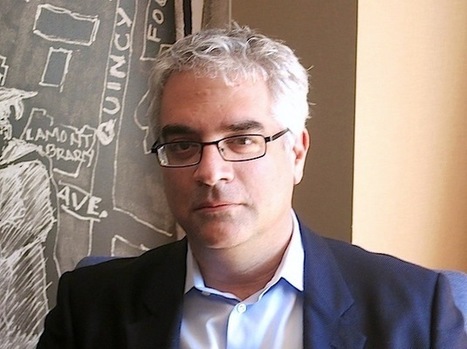
From
edge

Now, recently a paper that James and I did with Coren Apicella and Frank Marlowe appeared in Nature; it mapped the social networks of the Hadza hunter-gatherers. We had a sample of 200 people. There are only about a thousand Hadza left on the planet. They live in a very traditional way. They sleep under the stars. They don't build any dwellings. They have very few possessions. They hunt and they gather for their food. They're a pre-agricultural and natural fertility population.
Because we were interested in the kind of deep evolutionary origin of human social networks, we were animated by this question: if there's a biological origin for human social networks, and we've been making networks of a similar kind since we were very ancient—that is to say, for tens of thousands of years—it should be the case that Hadza social networks look the same as ours.
Conversely, if the structure of human social networks depended upon modern telecommunications, or the invention of cities, the network should look very different. We hit upon this idea of mapping the social networks of a hunter-gatherer population, which I don't think had ever been done before. Coren drove around 4,000 square kilometers around Lake Eyasi in Tanzania, and we created a kind of Facebook for the Hadza, a series of posters that had a photographic census of every adult Hadza. And every Hadza we could find, we asked them who their social connections were, and we mapped the networks of the Hadza. This paper was just in Nature a few months ago.
What we found was that Hadza social networks look just like ours. In every kind of way we could study these networks, mathematically, they didn't differ from ours. Our sample size in that project was 205 respondents. Which is the majority of adults who still live in the traditional way of the Hadza on the planet. Incidentally, the Hadza have a click language, and we think they are one of the oldest populations with one of the oldest lifestyles on the planet.
Scoop.it!

On Oct 29, 2012, the European Central Bank (ECB) released an official (and very nicely prepared) report called “Virtual Currency Schemes.” The 55-page report looks at several facets of what virtual currencies are, how they’re being used, and what they can do.
Scoop.it!
Cheery stuff
Scoop.it!

The Silent History could finally change how we read e-books on our iOS devices.
Scoop.it!

They’ve just revealed the first, first-person documentary (short) shot through Google Glass, and it’s from the perspective of famous fashion designer Diane von Furstenberg, during her hectic Sunday at New York Fashion Week. The most remarkable thing you’ll notice is just that it works very, very well. No doubt, it’s a selectively edited short, but the images are stable, natural and, above all, extremely personal.
Scoop.it!
Note: Script embedded in notes below and full talk will appear on personalizemedia.com Precious Alchemy or Worthless Chemistry The Perceived vs Actual Values of...
|






