Your new post is loading...

|
Scooped by
HAS-veille
June 26, 2023 2:21 AM
|
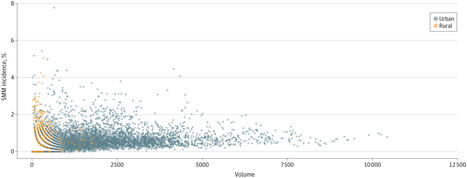
This cross-sectional study assesses associations between obstetric volume and severe maternal morbidity in rural and urban hospitals and examines whether these associations differ for low-risk and higher-risk patients.
|
|
Scooped by
HAS-veille
June 22, 2023 3:38 AM
|
This survey study estimates the relative importance of 4 quality domains in the Medicare Hospital Value-Based Purchasing program from the perspective of Medicare beneficiaries and quantifies the association of using beneficiary value weights with incentive payments for hospitals.
|
|
Scooped by
HAS-veille
June 20, 2023 2:09 AM
|
|
|
Scooped by
HAS-veille
June 19, 2023 4:36 AM
|
|
|
Scooped by
HAS-veille
June 19, 2023 2:59 AM
|
Measurement-based care (MBC) is the clinical practice of using patient-reported symptom measurement to inform treatment decisions. MBC has been shown …
|
|
Scooped by
HAS-veille
June 14, 2023 10:44 AM
|
Background Unsafe health practices are one of the leading causes of disability and even death. Competent nurses are crucial to ensure safe and high-quality healthcare services. The patient safety culture is concerned with internalizing safety beliefs, values, and attitudes, translating them into healthcare practices, and committing to maintaining an error-free health environment. A high level of competence ensures the achievement and compliance with the safety culture goal. This systematic review aims to identify the relationship between the level of nursing competence and the safety culture score and perception among nurses at their workplace. Methods Four international online databases were searched to find relevant studies published between 2018 and 2022. Peer-reviewed articles using quantitative methods, targeting nursing staff, and written in English were included. After reviewing 117 identified studies, 16 full-text studies were included. The PRISMA 2020 checklist for systematic reviews was used. Results Evaluation of the studies indicates safety culture, competency, and perception were assessed using various instruments. Safety culture was generally perceived as positive. No unique and standard tool has been developed to investigate the effect of safety competency on the perception of the safety culture in a standardized way. Conclusions Existing research provides evidence of a positive correlation between nursing competence and patient safety score. Future research is recommended to investigate ways to measure the effect of nursing competency level on safety culture in healthcare institutions.
|
|
Scooped by
HAS-veille
June 14, 2023 10:31 AM
|
Introduction:Improving medication safety during transition of care is an international healthcare priority. While existing research reveals that medication-related incidents and associated harm
|
|
Scooped by
HAS-veille
June 14, 2023 3:54 AM
|
Ruchita Balasubramanian and colleagues, estimate the incidence of hospital-associated infections resistant to antibiotics in 195 countries using point prevalence survey data from across the globe.
|
|
Scooped by
HAS-veille
June 12, 2023 2:00 AM
|
This issue brief examines the existing evidence base on how to improve diagnostic safety at intrahospital care transitions, from using data analysis tools to using structured communication frameworks.
|
|
Scooped by
HAS-veille
June 8, 2023 4:31 AM
|
|
|
Scooped by
HAS-veille
June 8, 2023 4:09 AM
|
The study by Brindle and colleagues1 elsewhere in JAMA Network Open provides novel international perspectives on modifications of the World Health Organization’s (WHO) Surgical Safety Checklist (SSC). The article describes opportunities for increasing team members’ involvement and ownershi
|
|
Scooped by
HAS-veille
June 7, 2023 3:41 AM
|
This study examines externally reported inpatient quality metrics for adult patients and estimates the cost of data collection and reporting, independent of quality-improvement efforts.
|
|
Scooped by
HAS-veille
June 5, 2023 5:46 AM
|
Vaccine-related medication errors can occur at each step of the vaccination process: prescribing, dispensing, preparation, administration, monitoring,…
|
|
|
Scooped by
HAS-veille
June 23, 2023 3:01 AM
|
Bed and chair alarms have been included in many multifaceted falls prevention interventions. None of the randomised trials of falls alarms as sole interventions have showed significant effect on falls or falls with injury. Further, use of bed and chair alarms did not change patients’ fear of falling, length of hospital stay, functional status, discharge destination or health related quality of life. The aim of this study was to explore nurses’ experiences of using bed and chair alarms. A qualitative descriptive study using semi-structured interviews with a purposive sample of 12 nurses was conducted on a 32-bed Geriatric Evaluation and Management ward in Melbourne, Australia. Participants were interviewed between 27 January and 12 March 2021.Transcribed audio-recordings of interviews were analysed using inductive thematic analysis. NVIVO 12.6 was used to manage the study data. Three major themes and four subthemes were constructed from the data: i) negative impacts of falls alarms (subthemes: noisy technology, imperfect technology), ii) juggling the safety-risk conflict, and iii) negotiating falls alarm use (subthemes: nurse decision making and falls alarm overuse). Nurses’ experience of using falls alarms was predominantly negative and there was tension between falls alarms having limited impact on patient safety and risks associated with their use. Nurses described a need to support nurse decision making related to falls alarms use in practice and policy, and a desire to be empowered to manage falls risk in other ways.
|
|
Scooped by
HAS-veille
June 21, 2023 10:29 AM
|
|
|
Scooped by
HAS-veille
June 19, 2023 9:40 AM
|
Recently, fatigue has received more attention as a workplace hazard. This scoping review focuses on fatigue in anaesthesia providers. We explore the p…
|
|
Scooped by
HAS-veille
June 19, 2023 4:27 AM
|
|
|
Scooped by
HAS-veille
June 15, 2023 4:28 AM
|
Background: Patient handoffs involve the transition of information and responsibility for care from one healthcare provider to another. They occur fre…
|
|
Scooped by
HAS-veille
June 14, 2023 10:42 AM
|
In healthcare institutions, reporting and handling of near-miss events—events that could have resulted in catastrophe but did not—are considered cruci…
|
|
Scooped by
HAS-veille
June 14, 2023 3:58 AM
|
Background Healthcare providers must understand patients’ expectations and perceptions of the care they receive to provide high-quality care. The purpose of this study is to identify and analyse different clusters of patient satisfaction with the quality of care at Finnish acute care hospitals. Methods A cross-sectional design was applied. The data were collected in 2017 from three Finnish acute care hospitals with the Revised Humane Caring Scale (RHCS) as a paper questionnaire, including six background questions and six subscales. The k-means clustering method was used to define and analyse clusters in the data. The unit of analysis was a health system encompassing inpatients and outpatients. Clusters revealed the common characteristics shared by the different groups of patients. Results A total of 1810 patients participated in the study. Patient satisfaction was categorised into four groups: dissatisfied (n = 58), moderately dissatisfied (n = 249), moderately satisfied (n = 608), and satisfied (n = 895). The scores for each subscale were significantly above average in the satisfied patient group. The dissatisfied and moderately dissatisfied patient groups reported scores for all six subscales that were clearly below the average value. The groups significantly differed in terms of hospital admission (p = .013) and living situation (p = .009). Patients representing the dissatisfied and moderately dissatisfied groups were acutely admitted more frequently than patients in other groups and were more likely to live alone than satisfied and moderately satisfied patients. Conclusion The results mostly demonstrated high levels of patient satisfaction; however, the perceptions of minority populations of dissatisfied patients should be assessed to identify shortcomings in the care provided. More attention should be paid to acutely admitted patients who are living alone and the pain and apprehension management of all patients.
|
|
Scooped by
HAS-veille
June 12, 2023 10:52 AM
|
|
|
Scooped by
HAS-veille
June 9, 2023 1:31 AM
|
|
|
Scooped by
HAS-veille
June 8, 2023 4:26 AM
|
|
|
Scooped by
HAS-veille
June 8, 2023 4:09 AM
|
This qualitative study examines the perspectives of surgical team members and administrators on surgical safety checklist modifications in hospital settings in Australia, Canada, New Zealand, the United Kingdom, and the United States.
|
|
Scooped by
HAS-veille
June 6, 2023 9:36 AM
|
While the immediate effect of financial penalties imposed by the Hospital Readmission Reduction Program (HRRP) was a decrease in 30-day hospital readm…
|



 Scoop.it!