Your new post is loading...

|
Scooped by
HAS-veille
September 22, 2023 3:35 AM
|
|
|
Scooped by
HAS-veille
September 22, 2023 3:30 AM
|
|
|
Scooped by
HAS-veille
September 21, 2023 5:51 AM
|
|
|
Scooped by
HAS-veille
September 21, 2023 5:08 AM
|
AbstractBackground. Quality activities including quality assurance (QA) and quality improvement (QI) are an integral part of safety and quality (S&Q) govern
|
|
Scooped by
HAS-veille
September 20, 2023 5:31 AM
|
Transfer notes (TNs) standardize handoffs from one inpatient unit to another to optimize patient safety. They are especially important when patients are downgraded from high acuity settings such a
|
|
Scooped by
HAS-veille
September 20, 2023 5:21 AM
|
|
|
Scooped by
HAS-veille
September 18, 2023 2:56 AM
|
Background The connection between a weak patient safety culture and adverse patient events is well known, but although most long-term care is provided outside of hospitals, the focus of patient safety culture is most commonly on inpatient care. In Sweden, more than a third of people who receive care at home have been affected by adverse events, with the majority judged to be preventable. The aim of this study was to investigate the patient safety culture among care professionals working in care at home with older people. Methods This cross-sectional study used a purposive sample of 66 municipal care workers, health care professionals, and rehabilitation staff from five municipal care units in two districts in western Sweden who provided care at home for older people and had been employed for at least six months. The participants completed the Hospital Survey on Patient Safety Culture (HSOPSC) self-report questionnaire, which assessed aspects of patient safety culture—norms, beliefs, and attitudes. Logistic regression analysis was used to test how the global ratings of Patient safety grade in the care units and Reporting of patient safety events were related to the dimensions of safety culture according to the staff’s professions and years of work experience. Results The most positively rated safety culture dimension was Teamwork within care units (82%), which indicates good cooperation with the closest co-workers. The least positively rated dimensions were Handoffs and transitions among care units (37%) and Management support (37%), which indicate weaknesses in the exchange of patient information across care units and limited support from top-level managers. The global rating of Patient safety grade was associated with Communication openness and Management support (p < 0.01 and p = 0.03, respectively). Staff with less work experience evaluated the Patient safety grade higher than those with more work experience. Conclusions This study suggests that improvements are needed in care transitions and in support from top-level managers and that awareness of patient safety should be improved in staff with less work experience. The results also highlight that an open communication climate within the care unit is important for patient safety.
|
|
Scooped by
HAS-veille
September 14, 2023 4:21 AM
|
Background Out of pocket (OOP) costs vary substantially by health condition, procedure, provider, and service location. Evidence of whether this variation is associated with indicators of healthcare quality and/or health outcomes is lacking. Methods The current review aimed to explore whether higher OOP costs translate into better healthcare quality and outcomes for patients in inpatient settings. The review also aimed to identify the population and contextual-level determinants of inpatient out-of-pocket costs. A systematic electronic search of five databases: Scopus, Medline, Psych Info, CINAHL and Embase was conducted between January 2000 to October 2022. Study procedures and reporting complied with PRISMA guidelines. The protocol is available at PROSPERO (CRD42022320763). Findings A total of nine studies were included in the final review. A variety of quality and health outcomes were examined in the included studies across a range of patient groups and specialities. The scant evidence available and substantial heterogeneity created challenges in establishing the nature of association between OOP costs and healthcare quality and outcomes. Nonetheless, the most consistent finding was no significant association between OOP cost and inpatient quality of care and outcomes. Interpretation The review findings overall suggest no beneficial effect of higher OOP costs on inpatient quality of care and health outcomes. Further work is needed to elucidate the determinants of OOP hospital costs. Funding This study was funded by Medibank Better Health Foundation.
|
|
Scooped by
HAS-veille
September 11, 2023 3:59 AM
|
AbstractBackground. Few studies have investigated interruptions to the work of professionals practicing in inpatient hospitals, and even fewer take account of t
|
|
Scooped by
HAS-veille
September 7, 2023 4:26 AM
|
Background Lean management (LM) is a continuous improvement methodology originating from manufacturing and is widely adopted in healthcare to improve processes. LM shows promising results in healthcare and research on the topic is increasing. However, it can be difficult to sustain LM over time, and an overview of facilitators or barriers that influence the sustainment of LM in a healthcare context is unavailable. Methods Prior to search, five inclusion and exclusion criteria were defined to establish suitability of identified articles for our research question. This study was based on 24 selected peer-reviewed studies that reported on the sustainment of LM in healthcare organisations, published in the last five years. Following the Preferred Reporting Items for Systemtic Reviews and Meta-Analyses (PRISMA) guidelines, all articles were scanned, retrieved for full-text and analysed thematically. Results Following thematic analysis, we identified four overarching themes: Mobilising Employees, Guiding Change Efforts, Methods, and Local Context. Key facilitators for supporting LM are fostering an improvement culture and learning culture, providing professional development opportunities, assigning more responsibilities to employees in decision making processes and appointing change agents to act as local LM leaders. Key barriers for sustaining LM include overburdening employees with responsibilities, omitting staff involvement during LM implementation, lack of patient engagement, lack of resources to engage with LM, a lack of leadership commitment and follow-up on projects, and a lack of knowledge of LM among leaders. Conclusion Overall, studies emphasise the importance of actively involving and engaging the workforce to embed LM into organisational culture. Reflecting on the origins of LM, healthcare organisations can find inspiration in the virtue of respecting people in their journey to sustain and cultivate an improvement culture. LM provides potential to change healthcare for the better and could help healthcare organisations to cope with increasing external pressures.
|
|
Scooped by
HAS-veille
September 4, 2023 4:57 AM
|
|
|
Scooped by
HAS-veille
September 1, 2023 8:42 AM
|
AbstractBackground. Quality of care is an essential aspect of geriatric rehabilitation. Usually, there are national standards for the quality of care or indicat
|
|
Scooped by
HAS-veille
August 31, 2023 8:51 AM
|
One in three patients is affected by diagnosis-related communication failures. Few valid and reliable instruments exist that measure teamwork and comm…
|
|
|
Scooped by
HAS-veille
September 22, 2023 3:34 AM
|
|
|
Scooped by
HAS-veille
September 21, 2023 7:59 AM
|
Patients’ and citizens’ perspectives and their active engagement are critical to make health systems safer and people-centred, and are key for co-designing health services and co-producing good health with healthcare professionals, and buildin
|
|
Scooped by
HAS-veille
September 21, 2023 5:39 AM
|
Background: Numerous studies have explored factors associated with diagnostic errors in neuroradiology; however, large-scale multivariable analyses are lacking. Objective: To evaluate associations of interpretation time, shift volume, care setting, day of week, and trainee participation with diagnostic errors by neuroradiologists at a large academic medical center. Conclusion: Diagnostic errors in neuroradiology were associated with longer interpretation times, higher shift volumes, and weekend interpretation. Clinical Impact: These findings should be considered when designing workflow-related interventions seeking to reduce neuroradiology interpretation errors.
|
|
Scooped by
HAS-veille
September 20, 2023 8:15 AM
|
One of the best ways to collect information about diagnostic errors is through self-reporting by patients and clinicians. Successful approaches to learn from diagnostic quality and develop strategies to reduce harm from diagnostic failure depend on two workplace characteristics: psychological safety and organizational safety culture. Both concepts are explored in this issue brief.
|
|
Scooped by
HAS-veille
September 20, 2023 5:25 AM
|
|
|
Scooped by
HAS-veille
September 20, 2023 5:11 AM
|
|
|
Scooped by
HAS-veille
September 18, 2023 2:53 AM
|
|
|
Scooped by
HAS-veille
September 14, 2023 4:05 AM
|
Builds on President Biden’s Historic Commitment to Create a Long-Term Care System Where People Can Live with Dignity
|
|
Scooped by
HAS-veille
September 8, 2023 1:45 AM
|
Whether the comfort in discussing diagnostic error differs depending on practice setting has not been previously studied. The objective of this study was to assess differences in provider willingness to discuss diagnostic error in the inpatient versus outpatient setting. A multicenter survey was sent out to 3881 providers between May and June 2018. This survey was designed to assess comfort level of discussing diagnostic error and looking at barriers to discussing diagnostic error. Forty-three percent versus 22% of inpatient versus outpatient providers (P = 0.004) were comfortable discussing short-term diagnostic error publicly. Similarly, 76% versus 60% of inpatient versus outpatient providers (P = 0.010) were comfortable discussing short-term diagnostic error privately. A higher percentage of inpatient (64%) compared with outpatient providers (46%) (P = 0.043) were comfortable discussing long-term diagnostic error privately. Forty percent versus 24% of inpatient versus outpatient providers (P = 0.018) were comfortable discussing long-term error publicly. No difference in barriers cited depending on practice setting. Inpatient providers are more comfortable discussing diagnostic error than their outpatient counterparts. More study is needed to determine the etiology of this discrepancy and to develop strategies to increase outpatient provide
|
|
Scooped by
HAS-veille
September 6, 2023 8:58 AM
|
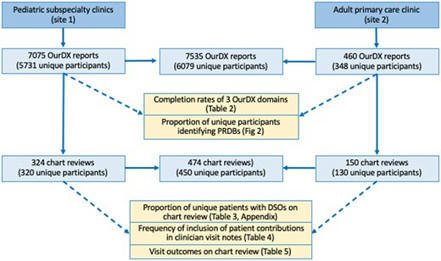
AbstractObjective. Patients and families are key partners in diagnosis, but methods to routinely engage them in diagnostic safety are lacking. Policy mandating
|
|
Scooped by
HAS-veille
September 4, 2023 3:59 AM
|
This Viewpoint explores a critical source of administrative burden and physician frustration—the explosive growth of health care quality metrics—and how improving these metrics could combat clinician burnout.
|
|
Scooped by
HAS-veille
September 1, 2023 5:16 AM
|
This issue brief explores the unique challenges of studying and improving diagnostic safety for children with respect to their overall health, access to care, and unique aspects of diagnostic testing limitations for many pediatric conditions. The issue brief will also highlight approaches to address these challenges across the care delivery spectrum: primary care offices, emergency departments (EDs), inpatient wards, and intensive care units. The brief concludes with recommendations for building capacity to advance pediatric diagnostic safety.
|


 Scoop.it!