Your new post is loading...

|
Scooped by
Lionel Reichardt / le Pharmageek
September 12, 2022 4:45 AM
|
Incorrect interpretations of health information, which increase during outbreaks and disasters, often negatively impact people’s mental health and increase vaccine hesitancy, and can delay the provision of health care, a new WHO review shows. The authors conclude that the effects of infodemics and health misinformation online can be countered by “developing legal policies, creating and promoting awareness campaigns, improving health-related content in mass media and increasing people’s digital and health literacy”.The systematic review of published studies found 31 reviews that analysed fake news, misinformation, disinformation and infodemics related to health. Misinformation was defined as false or inaccurate information deliberately intended to deceive, while disinformation also included misleading or biased information, manipulated narratives or facts, and propaganda.The authors gathered, compared and summarized this evidence in order to identify ways to address the negative effects of false health information on public health.Understanding the role of social media in spreading misinformation“Twitter, Facebook, YouTube, and Instagram are critical in disseminating the rapid and far-reaching spread of information,” the systematic review explains. The repercussions of misinformation on social media include such negative effects as “an increase in erroneous interpretation of scientific knowledge, opinion polarization, escalating fear and panic or decreased access to health care”. The increased spread of health-related misinformation in a health emergency is accelerated by easy access to online content, especially on smartphones. “During crises such as infectious disease outbreaks and disasters, the overproduction of data from multiple sources, the quality of the information and the speed at which new information is disseminated create social and health-related impacts.”The authors found that social media have been propagating poor-quality health-related information during pandemics, humanitarian crises and health emergencies at an increasing rate. They note, “Such spreading of unreliable evidence on health topics amplifies vaccine hesitancy and promotes unproven treatments.” Countering online misinformation Four studies reviewed in the paper looked at the proportion of health misinformation on social media, and found that it reached up to 51% in posts associated with vaccines, up to 28.8% in posts associated with COVID-19, and up to 60% in posts related to pandemics. Among YouTube videos about emerging infectious diseases, 20–30% were found to contain inaccurate or misleading information.Experts and health professionals are among those best placed to refute misinformation and direct users to information sources that are evidence-based. Countermeasures include awareness campaigns for patients and health-care professionals, platforms with evidence-based data, the inclusion of scientific evidence in health-related content in mass media, and efforts to improve media and health literacy.“Promoting and disseminating trustworthy health information is crucial for governments, health authorities, researchers, and clinicians to outweigh false or misleading health information disseminated in social media,” the paper states. It highlights that social media channels can also be used to counter false or misleading information, but that further studies may be required to evaluate the best format for such outreach and to determine which channels work best for different populations, geographical settings and cultural contexts.Effects of online misinformation on people’s health behaviours The systematic review found that people feel mental, social, political and/or economic distress due to misleading and false health-related content on social media during pandemics, health emergencies and humanitarian crises.However, not all effects of social media have been negative during the COVID-19 pandemic. Eight reviews reported positive outcomes, and some found that several social media platforms generated significantly improved knowledge and awareness, higher compliance with health recommendations, and more positive health-related behaviours among users compared to classic information dissemination models.The paper acknowledges the role of social media in crisis communication and management during health emergencies, but points to the need to counter the production of misinformation on these platforms. Local, national and international efforts are required, as well as additional research. “Future research should investigate the effectiveness and safety of computer-driven corrective and interventional measures against health misinformation, disinformation and fake news and tailor ways to share health-related content on social media platforms without distorted messaging.”The new paper, entitled “Infodemics and health misinformation: a systematic review of reviews”, is published in the Bulletin of the World Health Organization. Lire l'article complet sur : www.who.int
|
|
Scooped by
Lionel Reichardt / le Pharmageek
September 11, 2022 1:49 PM
|
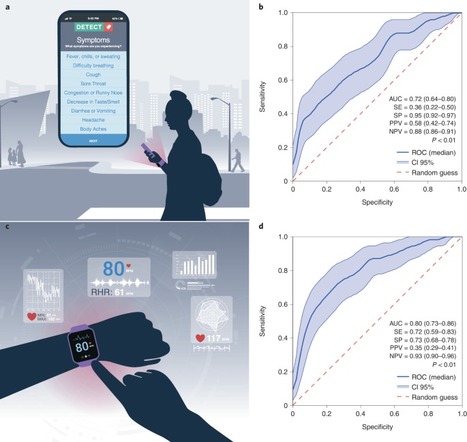
New research shows that two new mobile apps are using various artificial intelligence features to successfully detect and manage diseases such as COVID-19 and COPD. Lire l'article complet sur : healthitanalytics.com
|
|
Scooped by
Lionel Reichardt / le Pharmageek
August 22, 2022 10:37 AM
|
ABSTRACTIntroduction. Increases in C-reactive protein (CRP) are used to track the inflammatory process of COVID-19 and are associated with disease state progres Lire l'article complet sur : academic.oup.com
|
|
Scooped by
Lionel Reichardt / le Pharmageek
July 26, 2022 3:12 AM
|
At the beginning of the COVID-19 pandemic, when false information about the virus began to spread on Twitter, physicians and scientists from Northwestern Medicine and other institutions banded together to combat the deadly misinformation and disinformation and support one another when they ultimately were attacked online for doing so. Lire l'article complet sur : www.news-medical.net
|
|
Scooped by
Lionel Reichardt / le Pharmageek
July 8, 2022 12:51 AM
|
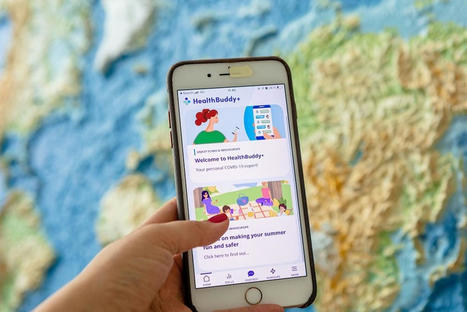
At the beginning of the COVID-19 pandemic, analog tools such as nasopharyngeal swabs for PCR tests were center stage and the major prevention tactics of masking and physical distancing were a throwback to the 1918 influenza pandemic. Overall, there has been scant regard for digital tools, particularly those based on smartphone apps, which is surprising given the ubiquity of smartphones across the globe. Smartphone apps, given accessibility in the time of physical distancing, were widely used for tracking, tracing and educating the public about COVID-19. Despite limitations, such as concerns around data privacy, data security, digital health illiteracy and structural inequities, there is ample evidence that apps are beneficial for understanding outbreak epidemiology, individual screening and contact tracing. While there were successes and failures in each category, outbreak epidemiology and individual screening were substantially enhanced by the reach of smartphone apps and accessory wearables. Continued use of apps within the digital infrastructure promises to provide an important tool for rigorous investigation of outcomes both in the ongoing outbreak and in future epidemics. An overview of apps for outbreak epidemiology, individual screening and contact tracing during the COVID-19 pandemic. Lire l'article complet sur : www.nature.com
|
|
Scooped by
Lionel Reichardt / le Pharmageek
July 8, 2022 12:11 AM
|
Our analyses illustrate the wide spectrum of disease trajectories as shown by differences
in incidence, survival, and clinical pathways. We have provided a modular analytical
framework that can be used to monitor the impact of the pandemic and generate evidence
of clinical and policy relevance using multiple EHR sources. Lire l'article complet sur : www.thelancet.com
La Cnil pointe du doigt l'utilité "marginale" de la fonctionnalité de contact tracing dans l'application TousAntiCovid. Un comble, étant donné qu'il s'agit de son objectif principal : tracer les chaînes de contamination pour les casser. En réalité, l'application est aujourd'hui principalement utilisée pour stocker le pass sanitaire.
Lire l'article complet sur : www.usine-digitale.fr
Via Rémy TESTON
|
|
Scooped by
Lionel Reichardt / le Pharmageek
June 9, 2022 2:49 AM
|
Our analyses illustrate the wide spectrum of disease trajectories as shown by differences
in incidence, survival, and clinical pathways. We have provided a modular analytical
framework that can be used to monitor the impact of the pandemic and generate evidence
of clinical and policy relevance using multiple EHR sources. Lire l'article complet sur : www.thelancet.com
|
|
Scooped by
Lionel Reichardt / le Pharmageek
June 8, 2022 1:31 AM
|
The coronavirus disease (COVID-19) pandemic has created an urgent need for coordinated mechanisms to respond to the outbreak across health sectors, and digital health solutions have been identified as promising approaches to address this challenge. Thi Lire l'article complet sur : www.ncbi.nlm.nih.gov
|
|
Scooped by
Lionel Reichardt / le Pharmageek
June 8, 2022 1:30 AM
|
As COVID-19 strained health systems around the world, many countries developed or adapted digital health tools to detect and respond to the novel coronavirus. We identified transferable lessons from an assessment of implementation factors that led to the rapid launch and scale-up of eight digital tools in low- and middle-income countries during the COVID-19 pandemic. These lessons should inform the development of digital health tools to support public health objectives such as the Sustainable Development Goals. Using the mHealth Assessment and Planning for Scale Toolkit, we assessed the implementation of eight digital tools through desk research and stakeholder interviews. Three core lessons emerged from our findings: (1) user-centered design is key to the widespread adoption of digital tools; (2) strong, country-led partnerships are essential for scaling up and sustaining digital tools; and (3) using adaptable digital tools enables implementers to focus on the content of the solution rather than the technology. Lessons learned from implementing and adapting digital tools quickly during the COVID-19 pandemic can inform the use of digital tools for additional health applications, such as bolstering primary health care, reaching vulnerable and marginalized populations, and empowering health workers with the real-time information necessary to optimize their work and improve the health of their target populations. Future efforts should focus on robust monitoring an Lire l'article complet sur : www.frontiersin.org
|
|
Scooped by
Lionel Reichardt / le Pharmageek
May 24, 2022 2:24 AM
|
Our study highlighted the necessity to improve mHealth apps' functions related to assisting health workers and the function of digital contact tracing. An effort to increase public awareness regarding the use of mHealth is also necessary to streamline the function of this innovation. Policymakers mu … Lire l'article complet sur : pubmed.ncbi.nlm.nih.gov
|
|
Scooped by
Lionel Reichardt / le Pharmageek
May 24, 2022 2:23 AM
|
BackgroundMobile health applications (mHealth apps) have been widely used for various purposes for mitigating the COVID-19 pandemic, such as self-assessment, contact tracing, disseminating information, minimizing exposure, and reducing face-to-face health consultation. The objective of this study is to systematically review COVID-19 related mHealth apps and highlight gaps to inform the development of future mHealth initiatives in Indonesia.MethodsA systematic search strategy using a PRISMA flowchart was used to identify mHealth apps available in Google Play and Apple Play stores. We searched mHealth apps using certain specific terms related to COVID-19 outbreaks. The inclusion criteria were apps-based smartphone users related to COVID-19 using local language, free of cost, available in the Google Play and Apple Play Stores, and supported by the Indonesian government. We excluded games, apps on infectious diseases unrelated to COVID-19 specifically, and apps with non-Bahasa Indonesia (Indonesian language). The selected mHealth apps were assessed based on two measures: (1) the WHO guidelines on digital health intervention and (2) the four dimensions of the mHealth technology fit framework. In addition, user feedback from experienced and non-experienced users was conducted to evaluate four dimensions of the apps.ResultsA total of 339 mHealth apps were generated from the initial search, remaining seven selected apps that met inclusion criteria. The results highlighted tha Lire l'article complet sur : www.frontiersin.org
|
|
Scooped by
Lionel Reichardt / le Pharmageek
May 23, 2022 4:27 PM
|
When covid-19 struck Europe in March 2020, hospitals were plunged into a health crisis that was still badly understood. “Doctors really didn’t have a clue how to manage these patients,” says Laure Wynants, an epidemiologist at Maastricht University in the Netherlands, who studies predictive tools. Lire l'article complet sur : www.technologyreview.com
|
|
|
Scooped by
Lionel Reichardt / le Pharmageek
September 11, 2022 2:03 PM
|
Artificial intelligence (AI) can be used to detect COVID-19 infection in people's voices by means of a mobile phone app, according to research to be presented on Monday at the European Respiratory Society International Congress in Barcelona, Spain. Lire l'article complet sur : medicalxpress.com
Des chercheurs viennent d’entraîner une intelligence artificielle à détecter les patients potentiels du Covid long. Lire l'article complet sur : www.24matins.fr
Via Rémy TESTON
|
|
Scooped by
Lionel Reichardt / le Pharmageek
August 3, 2022 3:34 AM
|
Cette IA compare les données médicales d’un patient avant et après qu’il ait eu le covid pour prédire s’il a un Covid long, avec plus de 80% de réussite. Lire l'article complet sur : www.sciencesetavenir.fr
|
|
Scooped by
Lionel Reichardt / le Pharmageek
July 26, 2022 3:12 AM
|
As of June 22, 2022, 3413 cases of monkeypox from 50 countries have been confirmed
by WHO. Accurate and timely predictions on where and how fast monkeypox might spread
are crucial to control the outbreak, and these could be provided by crowdsourced data.
Such data were essential in characterising and predicting the spread of SARS-CoV-2
during the early stages of the pandemic. Given the promise they show for emerging
infectious diseases, have crowdsourced predictions for such diseases come of age? Lire l'article complet sur : www.thelancet.com
|
|
Scooped by
Lionel Reichardt / le Pharmageek
July 8, 2022 12:17 AM
|
“Digital solutions to health risks raised by the COVID-19 infodemic” is a new WHO/Europe policy brief that calls for a whole-of-society approach to improve the public health response to the COVID-19 infodemic and ensure we are better prepared for future health emergencies. In this Q&A, we highlight the main questions that the policy brief addresses and share some of the policy considerations it proposes. 1. What is an infodemic, and why has it been so damaging during the COVID-19 pandemic?An infodemic – or information epidemic – is defined as an overabundance of information, including false or misleading information, in digital and physical environments during an emergency.This has been particularly acute during COVID-19, as false and misleading information has reduced the impact of evidence-based responses that governments and health authorities have made to curb the pandemic. Exposure to false information – both online and offline – has been linked to increased health risks as a result of harmful behaviours, such as using unproven, ineffective treatments, and not adopting recommended protective measures, including vaccination and mask-wearing. The confusion sown by the COVID-19 infodemic has also led to worsened mental health and emotional well-being, and a drop in trust in health-care authorities. 2. What are the main digital solutions that the policy brief identifies, and why are they important in the infodemic response?Social media and the internet have often been used to disseminate overabundant, false and misleading information regarding COVID-19. At the same time, they are key spaces where solutions can be found and implemented. Several digital innovations have been developed to respond to the infodemic, for example:fact-checking and false information reporting and debunking mechanisms; social listening tools (tools to track users’ reactions to pertinent topics on social media platforms) augmented by artificial intelligence (AI);monitoring programmes, multistakeholder coordination initiatives and national regulatory frameworks that respect the principles of freedom of expression; anddigital health literacy interventions to help people recognize misinformation and improve their ability to spot it (also called inoculation). 3. Who should be involved in the infodemic response?Implementing digital solutions to confront the infodemic calls for a whole-of-society approach. This means cooperating with everyone, from the public to social media platforms, the information technology sector, health policy-makers, fact-checking and civil society organizations, and United Nations organizations, among others. The shared objective is to improve the WHO European Region’s public health response to the COVID-19 infodemic and enhance preparedness for future health emergencies. 4. What is WHO doing to address the infodemic in the Region and globally?In response to the infodemic, WHO has launched a variety of initiatives at global and regional levels. In the European Region, these are embedded in the areas of risk communication and community engagement (for example, monitoring for and responding to high-risk infodemic signals through online and offline systems). The initiatives link to digital health (for example, building capacity for electronic learning among national health authorities) as well as behavioural and cultural insights.The brief outlines how WHO/Europe is bringing to life operational and policy considerations in support of and in close coordination with Member States and other subnational and international governmental and nongovernmental stakeholders.Concrete examples of these efforts include the development of digital communication strategies; mobile apps disseminating accurate health information; AI-based innovations for rumour tracking, community feedback and social listening; training, events and conferences to promote infodemic management; social listening and behavioural insights surveys; rumour-tracking mechanisms and multi-language fact-checking; and partnerships with social media and web companies. With this publication, another valuable tool is added to this list. 5. What considerations does WHO/Europe propose to help Member States improve their infodemic responses? The brief proposes a list of policy considerations for all stakeholders, including reinforcing multistakeholder networks for infodemic management; strengthening overall risk communication and community engagement; implementing continuous monitoring of online harmful and false content; improving digital literacy approaches and organizing infodemic management trainings; advocating for infodemic management; and encouraging policy changes to make online platforms safer for users. Lire l'article complet sur : www.who.int
|
|
Scooped by
Lionel Reichardt / le Pharmageek
July 8, 2022 12:10 AM
|
In this issue, Emily Pfaff and colleagues show that machine learning analysis of electronic
health records could be crucial in diagnosing patients with long COVID. This is the
latest in a plethora of studies to use big data to determine prevalence, symptoms,
or risk factors for long COVID. But is big data helping to treat patients with this
heterogeneous condition, or should we be redirecting our efforts elsewhere? Lire l'article complet sur : www.thelancet.com
|
|
Scooped by
Lionel Reichardt / le Pharmageek
July 5, 2022 12:03 AM
|
Following the success of its vaccine passport, the Digital COVID Certificate, the EU is investing more into digital health with the European Health Data Space. EU Commissioner Stella Kyriakides speaks to Smart Health about how it will change our lives. #SmartHealth Lire l'article complet sur : www.euronews.com
|
|
Scooped by
Lionel Reichardt / le Pharmageek
June 9, 2022 2:48 AM
|
The COVID-19 pandemic has demanded a huge effort to identify the risks associated
with poor outcomes. The focus has been particularly relevant in patients with immune-mediated
inflammatory diseases and those on therapies that suppress the immune system. Small
early observational studies looked worrisome, but as data from larger studies became
available a consistent picture became evident. Demographic risk factors such as age
and comorbidity are really the salient factors, with some risk from underlying disease
and a few specific therapeutic agents, such as rituximab. Lire l'article complet sur : www.thelancet.com
|
|
Scooped by
Lionel Reichardt / le Pharmageek
June 8, 2022 1:31 AM
|
In 2020, Exemplars in Global Health launched a series of short- and long-term research projects to help us understand the impact of the COVID-19 pandemic in countries and communities around the world. Lire l'article complet sur : www.exemplars.health
|
|
Scooped by
Lionel Reichardt / le Pharmageek
June 5, 2022 11:44 AM
|
Genomic epidemiological analyses enhanced understanding of HCW infections, revealing
unsuspected clusters and transmission networks. Combined analysis of all HCWs and
patients in a HCF should be conducted, supported by high rates of sequencing coverage
for all cases in the population. Established systems for integrated genomic epidemiological
investigations in healthcare settings will improve HCW safety in future pandemics. Lire l'article complet sur : www.thelancet.com
|
|
Scooped by
Lionel Reichardt / le Pharmageek
May 24, 2022 2:24 AM
|
During the COVID-19 pandemic era that began in 2020, there has been a growing trend in the literature to tackle the problem of health stress (HS) for … Lire l'article complet sur : www.sciencedirect.com
|
|
Scooped by
Lionel Reichardt / le Pharmageek
May 24, 2022 2:22 AM
|
Front Public Health. 2022 May 4;10:879695. doi: 10.3389/fpubh.2022.879695. eCollection 2022.ABSTRACTBACKGROUND: Mobile health applications (mHealth apps) Lire l'article complet sur : www.docwirenews.com
|