Your new post is loading...
Address by the President of the Republic of South Africa, His Excellency, Jacob G Zuma, on the occasion of the Budget Vote of The Presidency, National Assembly, Cape Town
24 June 2009
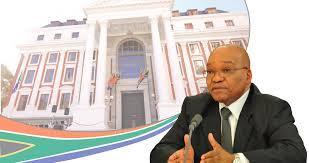
Photo of: President Jacob Zuma
Honourable Speaker,
Deputy Speaker,
Honourable Deputy President of the Republic,
Ministers and Deputy Ministers,
Honourable Members,
Esteemed guests,
Fellow South Africans,
Thank you for the opportunity afforded to The Presidency to share its programmes and plans.
The Deputy President, Honourable Kgalema Motlanthe as well as the Ministers in the Presidency will join me in outlining the focus areas of the work of the Presidency.
We will need the support of the Honourable Members of Parliament, as we strive to achieve our mission of building a Presidency and government that are responsive, interactive and effective.
This Budget Vote debate, Honourable Members, complements the discussion we had on the State of the Nation some two weeks ago.
In that address we outlined 10 priorities for government over the next five years. We made a commitment that working together we will speed up economic growth and transform the economy to create decent work and sustainable livelihoods.
We said we would introduce a massive programme to build economic and social infrastructure.
We undertook to develop and implement a comprehensive rural development strategy linked to land and agrarian reform and food security. We also said we would strengthen the skills and human resource base, and improve the health profile of all South Africans.
We said working together with all South Africans we would intensify the fight against crime and corruption. We added that we would build cohesive, caring and sustainable communities.
We also pointed out that working with Africa and the rest of the world, we would pursue African advancement and enhanced international co-operation. We would also ensure sustainable resource management and use.
This, we said, would require that we work with the people and our public servants in particular, to build a developmental state, improve public services and strengthen democratic institutions.
We have to work harder and smarter to achieve all these objectives, and we believe that the leadership of government is equal to the task. The Presidency as the nerve centre of government will strive to provide efficient oversight and support to enable national departments and all spheres of government, to perform their work.
As you are aware, we announced a reconfigured Cabinet structure last month.
The restructuring took place after intense reflection on what had worked and hadn’t worked over the past 15 years. The changes were also a product of a very extensive public engagement process.
We are fortunate in South Africa to have a highly active and very vocal population. We interacted with thousands of South Africans last year and early this year in various forums.
They told us that they wanted to see an urgent improvement in service delivery. Their views added to what our internal reviews had indicated.
They made it clear that we have very good policies; but that these will only improve people’s lives more effectively if the public service becomes more responsive, interactive and effective.
The complaints raised included amongst others, the weaknesses in local government, the poor quality of some of the public services rendered by national and provincial spheres, and the failure to respond to inquiries and complaints and to provide information.
Other complaints pointed to poor strategic planning across the three spheres of government and weak monitoring and evaluation.
It became clear to us that we had to improve the capacity of the State, and also change the culture and ethos of government in order to improve service delivery.
We have since the inauguration invested time and resources on setting up systems and to establish new government structures, based on our priorities.
The technical restructuring is very important, but a key factor is also to deal with the human angle, as the services are provided by human beings for human beings.
We must therefore improve the performance of the public service, and bring to life our “people first” or Batho Pele principles. We have to introduce, without delay, a culture of hard work, courtesy and accountability by staff in the public service.
This we will do to achieve our goal of building a government that is responsive, interactive and effective. We will come back to this issue later.
I would like to share with the House Honourable Speaker some of the reasons why we changed certain government departments or created new ones. I will cite just a few.
We had to improve the ability of The Presidency to give leadership to, and exercise oversight on government. We had to introduce a system of integrated strategic planning and the alignment of plans and programmes across all the spheres of government.
These plans will take into account the socio-economic potential of each district and metro and assist them to exploit their comparative advantages to the full.
The Ministry in the Presidency responsible for the National Planning Commission was introduced to lead this process.
We also deemed it necessary to improve the capacity for effective Monitoring and Evaluation, hence the creation of the Ministry responsible for that task in the Presidency.
As we said during the State of the Nation address, housing is not just about building houses. It is also about transforming our residential areas and building communities with closer access to work and social amenities, including sports and recreation facilities.
That informed the creation of the Ministry for Human Settlements.
The mining sector provides a strategic link to the global economy. It is also a major labour-intensive sector and has various other advantages for our economy, which is why it was made a stand-alone Ministry.
Given our Energy needs and the role of this sector in a developing economy, it is a crucial area of work for the country, which is why it needed special attention as a fully-fledged Ministry as well.
We made education a key priority over the next five years, which necessitated a renewed emphasis on this portfolio. The Basic Education Ministry will focus on adult basic education and training, as well as Primary and Secondary education.
The Higher Education Ministry focuses on tertiary, technical and vocational training as well as skills development which includes the sector education and training authorities.
The International Relations and Cooperation designation refines the mandate of the former Department of Foreign Affairs to include a focus on development co-operation, on which we want to continue investing for the good of the continent and our own region.
We divided Agriculture and Land Affairs into two Ministries and to create a Department of Agriculture, Fisheries and Forestry.
The special focus on agriculture is important to better expand agricultural production including the regulation of, and support for the commercial sector – big and small.
The fisheries sector is a critical part of the limited natural resources base of the country and is critical for food security and will require our utmost attention.
By establishing a Ministry of Rural Development and Land Affairs, we seek to ensure optimal focus on putting into action our goal of changing the face of rural areas through meaningful socio-economic development initiatives.
We are convinced that this new Ministry will contribute immensely to our drive to ensure food security and, broadly, the improvement of the quality of life of rural communities.
Combining Water and Environmental Affairs provides a consolidated approach to the environment and matters of sustainability. Besides the implementation of our strategies on the management of water resources, its functions will also include a regulatory task encompassing all environmental management matters.
We also want to focus more on improving inter-governmental relations, hence the reconfiguration of the former Department of Provincial and Local Government to Cooperative Governance and Traditional Affairs.
Given the central role of traditional leadership matters especially in rural areas, we felt it important to give this function an intensive focus.
The Deputy President will assist the President in leading efforts in engaging with traditional, religious and linguistic communities.
The functions of the Department of Public Service and Administration are being refined to include the management of personnel and related matters in the local government sphere, in line with proposed legislation on a single public service.
Meanwhile, most indicators show that there is growth in the tourism sector, and we rely on it to create many more jobs, hence the decision to create a Ministry solely for this function.
Some people are wondering why we have both the Department of Trade and Industry and that of Economic Development. Trade matters will require a strong focus to have a direct impact on industrial organisation and output.
The Economic Development portfolio will have a strong domestic focus and will address amongst others, matters of macro and micro-economic development planning. We say this very much aware that in terms of legislation, the National Treasury coordinates macro-economic policy.
The affected Ministries are working together to align work and detailed responsibilities.
Honourable Speaker, already, the new Cluster system – made up of seven as distinct from the previous five Clusters – is functional. Ministers and Directors-General are currently finalising Cluster Programmes of Action to ensure that government meets its objectives. These programmes set out concrete activities to meet each of our strategic priorities.
Attached to each activity is a time frame for the achievement of specific concrete objectives.
Honourable Members,
The last fifteen years have exposed serious gaps in inter-governmental coordination. Too often we have observed different spheres of government acting in a manner that is sometimes contradictory.
The reshaping of government cannot therefore exclude the provincial and local spheres.
The three spheres have to co-operate with one another in mutual trust, as the supreme law of our land enjoins them to do.
We are in the process of reviewing the President’s Coordinating Council in which the President meets with the Premiers to make it more effective in inter-sphere coordination.
A number of ideas are being put forward, including that of possibly including executive mayors of the Metropolitan municipalities in the PCC to improve planning and monitoring and evaluation.
There is a dedicated team of people who are overseeing the re-organisation of government.
The experience of the last few weeks demonstrates that all these changes are being handled with care and dedication.
Where legislation is required, Parliament will be requested to assist us. We are on track and are pleased with the progress made.
Honourable Speaker,
The establishment of a Ministry and corresponding department that will focus solely on issues affecting women, children and persons with disabilities means that this will be the last time this function reports to the National Assembly as part of the Budget Vote of The Presidency.
We are confident that this change will result in better – and not less – focus on these vulnerable groups.
As the Presidency, we will continue to lend this Ministry all the support. We will do so because we know that, a society in which women, children and persons with disabilities remain marginalised, cannot claim to be truly free. Minister Noluthando Mayende-Sibiya will outline the plans of the new Ministry.
Honourable Members will recall our statement that the eradication of poverty would be the cornerstone of this government’s programme of action. The Deputy President of the Republic will amongst other responsibilities lead us in championing the fight against poverty.
This will include the integration of government plans and the mobilisation of social partners. Government cannot wage this war alone.
Honourable Speaker,
As part of building a responsive, interactive and effective government, we must strengthen our partnerships with society.
We are in the process of reviewing our public and stakeholder forums such as the current Presidential Working Groups, advisory councils and izimbizo.
We also want to improve and strengthen the functioning and capacity of institutions such as NEDLAC. Our objective is to build an enduring partnership informed by the shared interests of all social partners and society at large.
This principle applies equally, if not more so, to our fight against HIV ad AIDS. The South African National Aids Council (SANAC) has been exemplary in this regard.
The Deputy President leads our efforts in this partnership, and he will outline the progress made and challenges we face.
As Leader of Government Business in Parliament, our Deputy President will be responsible for building stronger relations between the executive and the legislature as well as with political parties represented in Parliament.
The President will also prioritise the need to maintain positive and cooperative relations with the Opposition, in the spirit outlined in both the inauguration and State of the Nation addresses. Our aim is to build a more cohesive society, where all of us, irrespective of race, class or political persuasion, contribute to making South Africa succeed.
Honourable Speaker, we said in the State of the Nation address that the global recession is one of the challenges that we will need to work together on as political parties and other sectors. We are now being hit by the full force of the recession.
Many jobs have been lost. The Quarterly Employment Survey of formal sector businesses reported that the first quarter of 2009 saw the loss of 179 000 jobs.
The most affected sectors are retail and wholesale, financial, manufacturing, mining and construction.
While we know that our efforts cannot fully compensate for the impact of the crisis, we have intervened in various ways, as agreed in our framework agreement on the response to the crisis.
The IDC, the DTI, the Department of Labour and the Department of Public Works and others are working hard in response to the challenge of job losses.
Government will be making a further intervention, a final draft proposal for a training layoff scheme to our social partners early next week. The point of this scheme is to keep at least some workers in their jobs and train them during this slow period.
They will receive relevant training, benefits, and an allowance in place of their wage, for a period of time.
Compatriots,
We meet during National Youth Month, and accordingly last week, on June 16, we celebrated the 33rd Anniversary of the Soweto Uprisings and National Youth Day.
On this day we launched the National Youth Development Agency, which demonstrates our determination and commitment to deal with issues of youth development in an integrated and effective manner.
On June 16 we also underlined the critical importance of youth themselves playing an active role in addressing the challenges that they face.
We said so believing that the youth are the primary agents of their own development.
The Minister in the Presidency now responsible for youth development, Collins Chabane, will further elaborate on the various youth development interventions.
Honourable Members,
We have committed ourselves to promote effective two-way communication between citizens and The Presidency.
I must stress Honourable Members that the primary purpose of the pending President’s Hotline and the public liaison directorate is to improve service delivery.
Angigcizele Somlomo ukuthi sifuna ukwakha uhulumeni olalela maqede aphendule, oxhumanayo nabantu nowenza into ebonakalayo.
Sizokhuthaza yonke iminyango kahulumeni, izifundazwe nomasipala ukuba bavule iminyango baxhumane kangcono nabantu baxazulule izinkinga kusenesikhathi.
Abantu bathi ukuxhumana akukho kahle. Uma beshayela uhulumeni badluliselwa kubantu abaningi baze badikibale bengalutholanga usizo. Lokhu kufanele kuphele.
Sisebenzela bona abantu baseNingizimu Afrika kufanele sibaphathise okwezikhali zamaNtungwa.
The efficiency of the Presidency public liaison mechanism rests on the cooperation of the national departments and the nine Premiers’ Offices, as most enquiries and complaints relate to their work.
In this regard, the Presidency is working with Government Communications (GCIS) to establish a national liaison forum.
This forum, to comprise officials representing all government departments and Premier’s Offices, will enable Presidency public liaison personnel to obtain quick responses to enquiries and complaints from counterparts in all government offices across the spheres.
A skeleton staff complement has already begun working on the correspondence and enquiries being received.
We are already experiencing an increase in correspondence volumes, from an average of about 300 letters around April to about 700 as we speak, for the month of June alone.
Honourable Speaker, for most South Africans, government is the administrative clerk they see when they go to apply for a government document or any other service.
We wish to reiterate, therefore, that government must improve performance in frontline services and substantially reduce waiting periods, in order to enhance service delivery.
Government departments that provide services directly to the public should also clearly specify the standard of service citizens should expect, including the appropriate behaviour of officials.
They must outline the waiting periods and the quality of service, and the mechanisms of redress should those standards not be met.
We must also implement and monitor the decision that staff dealing directly with the public should wear name tags to ensure a more personal connection with the public, and to enable members of the public to provide their names in the event of compliments or complaints.
These are just some of the improvements we can implement in order to make the lives of South Africans less stressful and costly.
We must emphasise Honourable Speaker that we are also aware of the difficulties under which some of the public servants work especially health care workers, the police and others who work long hours under difficult conditions. We are committed to improving their working environment.
Honourable Members,
We outlined most of our international plans in the State of the Nation address, and others were outlined by the Minister of International Relations and Cooperation in that department’s budget vote debate. We will touch on just a few of these.
South Africa will continue to participate in international forums and to deepen our relations with regions and nations of the world.
Our intention is to advance the implementation of the New Partnership for Africa’s Development, improve the regional climate for growth and development, as well as to place the developmental requirements of the continent on the global agenda.
We will continue to promote developmental partnerships with other countries of the continent. We will also prioritise regional integration.
We will play our role in strengthening the African Union and its structures and to promote the implementation of the African Peer Review Mechanism.
We will continue to assist in peacekeeping operations and in the reconstruction and development of the African continent. We will promote the entrenchment of democratic forms of government and the respect for human rights on the African continent and other parts of the world.
Within Southern Africa, we plan to play an active role in efforts aimed at strengthening the Southern African Development Community.
As the current Chair of SADC, we will continue to support the Inclusive Government in Zimbabwe and render whatever assistance our capacity allows.
We urge countries of the developed North to join the continent in assisting the people of Zimbabwe to lift themselves out of the socio-economic difficulties they face.
We will also play our role in supporting the SADC-appointed Facilitator in Madagascar, former President Joaquim Chissano and his team. A sustainable solution needs to be found to resolve the impasse in that country.
Further afield, it is in South Africa’s interest to ensure that the current momentum within the G-20 is maintained and that it does not only focus on efforts to mitigate the current global crisis.
All of us know that the undemocratic and inequitable nature of the institutions and systems of global economic governance forms part of the real underlying causes of this crisis.
We will continue to work with countries and organisations of the developing South to deal with these and other global matters. For us, the strategic partnership with India, Brazil and China constitutes a critical pillar of our international relations.
As such, we see it as very important that the IBSA Agreements and Action Plans are implemented.
Honourable Members,
The past few days have demonstrated our passion for football as well as our track record as good hosts. We gave our word as a people that the 2009 FIFA Confederations Cup would be a huge success.
Working together as a nation and as a continent, we have delivered. The tournament is going exceptionally well. As in all dress rehearsals, we have learnt valuable lessons. And we are certain that the 2010 Soccer World Cup will be even more successful.
The Deputy President, as Chairperson of the 2010 Inter-Ministerial Committee, will lead our efforts towards making this initiative one that the world will not forget for many years to come.
May I take this opportunity to wish Bafana Bafana well in the game with Brazil tomorrow night. The nation will be behind them.
As good hosts, let us also support all other games and all other teams until the end of the tournament.
Honourable Speaker, let me emphasise that we want to work with all political parties and all sectors of society to successfully fight poverty and to build a prosperous South Africa whose people, black and white, live in harmony.
We also want to work with all political parties, all sectors and all our public servants to build a government is responsive, interactive and effective.
Masibambisane sakhe uhulumeni olalela maqede aphendule, oxhumanayo nabantu, nowenza into ebonakalayo.
Working together we shall do more to meet our mandate.
Let me use this opportunity to thank the Deputy President and the Ministers in the Presidency, the Director General, Advisors, senior management as well as all the staff for their support.
We have made a good start and we are looking forward to excellent team-work in The Presidency as we perform our tasks at the apex of our system of government.
It is my honour to commend the Budget of The Presidency for 2009/2010 to this august House.
I thank you.
Print Email
Opening address by His Excellency President JG Zuma at the World Economic Forum on Africa, Cape Town
10 June 2009
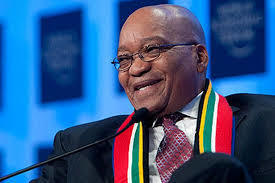
Photo of: President Jacob Zuma
Prof Klaus Schwab, WEF Co-chairs and fellow panelists,
His Excellency President Paul Kagame of Rwanda,
His Excellency President Rupiah Banda of Zambia,
His Excellency Prime Minister Pakalitha Mosilili of Lesotho,
His Excellency Prime Minister Raila Amolo Odinga of Kenya,
Honourable Deputy Prime Minister Arthur Mutambara of Zimbabwe,
Ministers and Deputy Ministers,
Members of the diplomatic corps,
Distinguished captains of industry,
Distinguished participants,
We wish to extend a warm welcome to all distinguished delegates to this session of the World Economic Forum on Africa.
We are honoured to host you and appreciate that you took time to attend this session in our country, and in this beautiful city of Cape Town.
Over the next few days, our continent will gain from the collective wisdom of the more than 800 economic and political leaders gathered at this forum.
We are humbled by the presence of my colleagues the Heads of State and Government, so soon after honouring us with their presence during the Presidential inauguration on the 9th of May.
We are saddened by the news of the passing on of His Excellency Omar Bongo Ondimba of Gabon.
His contribution to peace in the continent is well known. We extend our deepest condolences to the family and the Gabonese people.
Ladies and gentlemen, we meet during a difficult period socially and economically.
The impact of the global economic downturn is being felt in every economy worldwide.
While in many parts of the developed countries scores are losing their jobs, rich governments are able to respond with stimulus packages and deploy existing social welfare systems.
For most African countries, that are still highly indebted and dependent on aid for their revenues, the continuation of the current crisis will mean increased starvation, poverty and child mortality.
We must cushion our people against the impact of the crisis as best we can, but we also need to respond in the spirit of planning for a recovery.
Africa has its own mechanisms of responding to the crisis, as do other regions of the world. No region will respond in the same way as others.
We view the economic downturn as providing both challenges and opportunities for the continent and the developing world in general.
One of the critical lessons for the world from the crisis is the need for a transformed global financial system.
In addition, several recent meetings of the African Union have called for a comprehensive reform of the governance of the global financial system and the Bretton Woods Institutions, the IMF and the World Bank.
This will reflect the changing economic realities and challenges and provide a voice and representation for emerging and developing countries.
Another point raised by the developing world constantly is protectionism.
Concern has been raised by our African Trade Ministers at the growing protectionist measures being taken in developed countries.
This includes the crowding out of credit through the huge bailout packages, and adopting protectionist trade measures.
African agriculture has suffered for decades from the huge subsidies provided to developed country agriculture.
We all do understand that all economies become inward looking during difficult economic times. However we can avoid shutting out other markets.
In this regard, we support African Trade Ministers in their call for a conclusion of the Doha Development Round based on its development mandate.
In planning for the upturn, we must take the view that Africa is amongst the new engines of global growth.
The continent has the opportunity to diversify markets and products, including building the requisite infrastructure and systems for intra-Africa trade as well as South-South trade.
Africa is not without its own resources. Pixley ka Isaka Seme, scholar and leader of the African National Congress pointed out as early as 1906 that:
“The African is not a proletarian in the world of science and art. He has precious creations of his own, of ivory, of copper and of gold, fine, plated willow-ware and weapons of superior workmanship”.
Africa can build on its human resources, its young and growing population.
The crisis provides an opportunity to alleviate the effects of the so-called ‘brain-drain,’ by attracting the Diaspora back home to reconstructing the continent.
Many African economic emigrants have now discovered that the grass is not necessarily greener on the other side, and will hopefully come home soon to assist with planning for the recovery.
The continent is also rich in natural resources, including agriculture land.
We have also demonstrated our commitment to move forward through institutions that foster good governance such as the African Peer Review Mechanism.
We also have the New Partnership for Africa’s Development (NEPAD) as a vehicle for successful socio-economic development partnerships.
Another key element of working for sustainable economic growth and development in Africa is building peace and stability in every corner of the continent.
The formation of the African Union in 2002 created the institutional basis for a united and coherent approach to the advancement of peace, democracy and development.
The establishment of the various organs of the AU has provided further means to promote multilateral, peaceful and sustainable solutions to crisis.
African efforts continue with a view to find and consolidate lasting solutions in Zimbabwe, Darfur, eastern DRC, Madagascar and other parts of the continent.
We urge the international community to support these African efforts materially and in other forms.
Chairperson, we welcome the steps and commitments that have been taken globally already.
For example in London the G20 agreed to take steps to increase the voice and representation of developing countries in the functioning of these institutions.
It also undertook to maintain their Overseas Development Assistance pledges and commitments to meeting the Millennium Development targets, to refrain from increasing financial and trade protectionism and to conclude the Doha Round.
There were also major commitments to extend financing facilities for developing countries.
We must carefully monitor delivery on all these commitments.
Like all countries, South Africa has set in motion our own response mechanisms.
A core element of our response to the crisis is the expansion of a public works programme that will provide job opportunities to around four million people over the next five years.
We are investing R787 billion in infrastructure. We are also looking at training layoffs, finding alternatives to retrenchment and the provision of financing facilities for industries in distress.
A vital element in our efforts to mitigate the impact of the economic crisis is our social grants. At present more than 13 million people receive social grants to alleviate poverty.
Another step in our country’s revitalisation is the implementation of a rural development strategy.
This involves the intensification of our land reform programme, and efforts to stimulate agricultural development to improve food security.
One of our biggest infrastructure investment projects is in the 2010 FIFA Soccer World Cup. Hosting the World Cup has led to the creation of over 400,000 job opportunities.
The construction industry has been invigorated, while the hospitality industry is booming.
We are therefore extremely pleased that we will get an opportunity tomorrow, as part of the programme of WEF Africa, to visit the Greenpoint Stadium, one of the venues for the 2010 FIFA World Cup.
This will no doubt inspire participants to return next year to join in celebrating the first ever African Soccer World Cup.
I wish all participants a very successful Forum, and once again, a warm welcome to South Africa to our international guests.
I thank you.
Print Email
Address by His Excellency JG Zuma, President of the Republic of South Africa, at the Presidential Golf Challenge prize-giving ceremony and dinner, Lord Charles Hotel, Somerset West
04 June 2009
Photo of: President Jacob Zuma
Programme Director, Professor Mollo,
Minister of Public Service & Administration, Mr Richard Baloyi,
CEO of Metropolitan, Mr Matlakala,
Distinguished guests,
Good evening to you all,
It’s a pleasure to join you tonight on a lighter note, having completed the heady business of the State of the Nation.
I am delighted to be part of this Golf Day Challenge this year as the President of the Republic.
Since 2002 you have been hosting these Golf Challenges fundraising events for the benefit of many good causes.
As we have seen sport is a great unifier in our country. Now if only our success on the rugby field could be emulated by Bafana Bafana, we may just keep the World Cup longer than 2010.
Speaking of soccer, in just ten days time we kick off the Confederations Cup, the dress rehearsal for the 2010 FIFA World Cup.
I hope that you will join me in attending the Confederations Cup as we watch the world’s best footballing nations battle it out on our shores.
This comes just weeks after watching the world’s best cricketers in the IPL. These tournaments highlight once again the great strides we have made as a country.
This is a measure of our leadership’s vision and the world’s faith in the South African miracle that continues to grow from strength to strength.
Besides the more obvious spin-offs such as stadia, infrastructure and transport development, hosting the 2010 World Cup has already created over 400 000 jobs, with the hospitality and construction industries being major beneficiaries. This despite the challenging economic times we find ourselves in.
While I am sure that we have all enjoyed the day’s play, our entertainment does have some serious benefits for the disadvantaged. Our enjoyment here sees us ensuring that we recommit ourselves to our mandate of delivering a better life for all.
Last week we marked Child Protection Week, the aim being to highlight that the care and safety of our children remains uppermost in our thoughts. With this in mind the beneficiaries of today’s golf is the Jacob Zuma Education Trust.
While the world we live in poses numerous challenges for the youth, those growing up in rural areas face a particularly difficult time. With limited access to education, their hope of breaking the cycle of poverty many of them find themselves in, is diminished. This year marks the fourteenth year of existence of the Education Trust.
Thus far we have given bursaries to over 20 000 children from primary school level all the way up to university-level. We have thus far produced 65 graduates.
These changes have a ripple effect on the lives of the rural poor, uplifting them one at a time from a life of one condemned to poverty to one full of hope. A good education is the first step in accessing socio-economic benefits.
One of our key priorities over the next five years is education.
The key to unlocking potential here lies with our teachers and principals. To improve school management, formal training will be a pre-condition for promoting teachers to become principals or heads of department, I said this yesterday in my address and I repeat it again here today. And to bring our educators into the 21st century we will be introducing the Teacher Laptop Initiative.
This initiative is part of a critical strategy aimed at enhancing the use of information and communication technology in learning.
The initiative aims to ensure that each teacher owns and uses a laptop, by providing them with a monthly allowance that covers the cost of the laptop and connectivity. The ICT package will consist of appropriate hardware and software as well as internet connectivity, all with prescribed minimum specifications.
Teachers participating in this scheme will be required to utilize their laptop in their teaching as well as for administrative duties.
A monthly allowance of R130 will be paid to educators as a contribution towards these costs. The project will be phased in over a two-year period starting from the 1st of July 2009. I am sure that this will work greatly towards motivating our educators to improve the standard of teaching and learning in our schools.
It is great to see all of you using this occasion to give something back. Being a citizen is not only about rights, it is also about responsibility.
It is about making a contribution to make our country a better place for us and our children. I hope that this does not mark the end of your efforts.
We all need to ask ourselves what more we can do to improve the lives of those less fortunate than ourselves. This country has flourished because millions of South Africans have chosen a life full of hope, rather than one of despair.
Thanks to the efforts of all South Africans we find ourselves on the fairway. We can see the green ahead of us, the better life for which our people have long struggled.
To remain on course, to keep out of the rough, we need to remain focused and committed. The global economy may be testing us with swirling winds and driving rain, but we remain determined to keep away from any water traps and bunkers that may lie in our path.
In a year’s time we will host the greatest footballing spectacle the world has ever seen. I hope you continue to join me in ensuring that we work together towards building a better future for all.
I thank you.
Ngiyabonga.
Print Email
Address by the President of South Africa, His Excellency Mr Jacob Zuma, at the opening of the Pan Africa Mall, Alexandra, Johannesburg
24 May 2009
Photo of: President Jacob Zuma
The Premier of Gauteng, Nomvula Mokonyane,
Deputy Minister of Arts and Culture and Provincial Chairperson of the ANC, Paul Mashatile,
MEC for Local Government and Housing, Kgaogelo Lekgoro,
Mayor of the City of Joburg, Amos Masondo,
Pan African Development Company head, Mr Tebogo Mogashoa,
The community of Alexandra,
Ladies and gentlemen,
No township personifies the resilient spirit of our people like Alexandra!
It is therefore inspiring for us to be in Alex today. This township is home to many leaders of the ANC.
We can count the country’s Deputy President Kgalema Motlanthe, the late former ANC secretary general Alfred Nzo, ANC stalwart Florence Mophosho and the late ANC Treasurer General Thomas Nkobi to name just a few. You have therefore given this country talent and expertise as the people of Alex!
This township became well-known for the Alexandra Bus Boycott of 1957 and many other actions of resistance against the Apartheid State. Alex must now be known for development and progress.
We have always argued that economic development and economic facilities should not be the sole preserve of previously whites only suburbs.
The opening of the Pan Africa Mall, which is part of the Presidential Alexandra Renewal Project, is a step forward in achieving our goals of bringing development to where our people are.
We said during the elections that we believe that ‘working together we can do more.’ The opening of this mall is ample evidence of this. As you have heard of the partnership that has emerged during this project.
The launch of this mall today is a result of the partnership between the Gauteng government, the City of Joburg and the Pan African Development Company. It has thus come about as a result of the efforts of all three spheres of government as well as the private sector and the community.
Earlier today I visited Soweto’s first major shopping centre, the Maponya Mall.
We were able to pay tribute to the pioneering spirit of Richard Maponya who has laid the shown the way for all our businesspeople that it is prudent to invest in our townships. Slowly but surely we are changing the face of townships in our country.
The Alex Mall will serve as a catalyst for further growth and development. It will provide a quality, shopping environment and hosts the first fully integrated shopping mall and taxi facility.
Let this centre serve as an example of what we can achieve by working together. This centre will create employment opportunities and will assist in ensuring that consumer spend remains within the local economy, bringing with it all the associated financial, social and employment benefits to the residents of Alex.
As you would be aware, the Pan Africa Shopping Centre forms part of the Presidential Alexandra Renewal Project. The project is a massive initiative aimed at improving living conditions and upgrading human capacity, including environmental development, human skills, housing and infrastructure programmes.
The Alexandra Renewal Project entails working with the Greater Alexandra community, non-governmental organizations, the private sector and community-based organisations. This project has been extended by the Premier to run until 2010.
Thus far the Project has had a number of successes. Efforts have primarily focused on providing housing and basic infrastructure.
The construction of houses, Ekukhanyisweni Primary School and the River Park Library are but a few of the completed projects.
Our townships need to have proper shopping facilities, proper roads, electricity, water and sanitation, quality schools and clinics, affordable public transport and all basic services that are taken for granted in historically white areas. We will not rest until that happens.
As we launch this project on the eve of Africa Day, we hope that the opening of the aptly named Pan Africa Mall will go someway towards strengthening the bonds of friendship between South Africans and their brothers and sisters from around the continent.
We highly appreciate this initiative and we hope that the business sector can grow on this.
Ladies and Gentlemen, It is an honour and privilege to declare the Pan Africa Mall open.
I thank you.
Print Email
Address by the President of the Republic of South Africa, His Excellency Mr Jacob Zuma at the closing ceremony of the DLF IPL T20
24 May 2009
Photo of: President Jacob Zuma
Chairman and Commissioner of the DLF IPL T20, Mr Lalit Modi
CEO of Cricket South Africa, Mr Gerald Majola
President of Cricket South Africa, Mr Mtutuzeli Nyoka,
Chairman and Managing Director of Sahara Computers, Mr Atul Kumar Gupta
Celebrity owners of the T20 teams,
Cricketers and cricket lovers across the world,
Good evening, Sanibonani, Namaste,
Congratulations to the winning team, the Deccan Chargers.
It has been a great pleasure to be part of the excitement of the DLF IPL T20 that has gripped our country over the last five weeks.
A few months ago only a handful of South Africans had heard of the Kolkata Knight Riders, the Deccan Chargers or the Delhi Daredevils.
Today they are household names across the country. In little more than a month the Twenty 20 cricket series has worked its way into the hearts of South Africans and become a firm favourite. We now understand why the series has brought India to a halt whenever a match is on.
On the behalf of the Government and people of South Africa I would like to thank the organizers of the tournament for showing faith in South Africa.
We had to host the tournament at short notice. However, in a little more than three weeks the logistical challenges of preparing eight stadiums at short notice, booking hotel rooms, and laying on extra flights into South Africa were met.
To those who made this possible, both from South Africa and India, my heartfelt congratulations on a job well done. This displays, once again, our country’s ability to host tournaments of this magnitude. The infrastructure, the transport, the accommodation, was in place and the safety of our guests was well secured. Roll on 2010.
In addition the IPL has revitalized our economy with over R1 billion being spent.
Our country has benefitted from the advertising spend, the tourism potential and global exposure that the month-long tournament has brought. We would not be amiss to hosting the tournament again should the need arise.
And many South Africans appreciated the presence of their Bollywood heroes and heroines.
Thank you to Shah Rukh Khan, Preity Zinta and Shilpa Shetty among others for making the trip to our country. I’m sure you’ll agree that this is indeed a beautiful country and I’m sure that you will be back.
To the international cricketers who have set the country alight with their magnificent display of cricketing skill, a big thank you.
We are not forgetting the millions of fans both in South Africa, India and across the world who have made this series a success, thank you too.
In three weeks time we host the dress rehearsal to the FIFA 2010 World Cup. The 14th of June marks the start of the 2009 FIFA Confederations Cup.
The Confederations Cup will see some of the world’s best soccer-loving nations converge on South Africa for a two-week feast of football.
Included in the line-up are World Champions Italy, as well as Brazil, Spain and Egypt. The successful hosting of the DLF IPL reaffirms our confidence to host another successful international tournament.
We urge our international guests not to rush back home just yet; there is a lot of fun and excitement coming up in this beautiful country!
Thank you once again to the organizers of this tournament. The heat was definitely on!
I have the unpleasant task of declaring this exciting tournament closed! Well done to everyone!
I thank you!
Transcript of the Questions and Answers session following the media briefing on the announcement of Cabinet members by President Jacob Zuma
10 May 2009
Photo of: President Jacob Zuma
Question
Mr President, what reaction do you anticipate from the financial markets following the change of Minister? Can we expect any major changes of economic policy?
Answer
Well, I cannot predict the markets and I am not certain there are people who can easily do so. I think the markets react on a number of issues that happen in the world, not just cabinet appointments depending on how the markets feel and what is the movement. I would imagine that also, I don’t think that someone can say because of those concerns countries have finance ministers for ever. I don’t think so. I think markets are aware of this – change comes at some point. I am sure, if you wanted my prediction, that the markets will react very positively, very normally. There is not going to be any mishap. But as I said, who can predict the markets?
As you have heard, we are looking at the national plan in the first instance. We are also looking at the establishment of the Ministry of Economic Affairs which is going to have an emphasis on policy. I think it will not be correct to pre-empt these matters because these are matters we are going to put on the table and debate – policies will then be formulated. I think I am going to be jumping the gun if I answered this question categorically. As you know, in matters of this nature issues are put on the table and a discussion is had following which final correct conclusions are made. I am sure that by making these kinds of changes we are in fact creating a platform on which these debates can be had and agreement sought.
Question
Mr President, in terms of ensuring that there is synergy in the three spheres of government – last week we saw some provinces announcing their executive councils and when I look at the changes, the realignment of provinces may be a problem because there have already been appointments – how will you deal with this? Secondly, how will you ensure there is no confusion in terms of the transition as we saw last year – how will you deal with the entry of the Deputy President?
Answer
Of course you will realise that some provinces have moved ahead. They have not necessarily waited and that is because of differences in the constitution – what different of spheres of government do. I think the very fact that we have introduced the issue means that not this time as we have been moving in, but we are going to engage on the issues including, for example, the issue of the national plan. We believe that every sphere of government should talk to the national plan in whatever they do so that we do not do many things in one country that amount to different things in different directions. So, I think this is going to arise as we move forward – ie. the interaction of different spheres of government begin to take place taking into account what is happening right now.
On the second matter, I am sure you are not necessarily saying that the issue is going to be arising all the time wherein you need to take decisions about the Deputy President but if it repeated itself I am sure the ANC will know what to do. We will take the right decision because even at that point we took the correct decision. I think what people should have taken into account is respect to the authority in the ANC that you couldn’t, if you did not have a President at that point in time, move away and look for someone else when there is a Deputy President to the President of the ANC if the President of the ANC was not the one to take the position. So we are not talking about moving away and looking for someone else. We are talking about really dealing with the authority as it stands which reflects the confidence of the people because to become a Deputy President of the ANC means you are the number 2 of the ANC and you couldn’t disagree with what the ANC says and take just an ordinary NEC member. I think that would call for more questions than what we did. So, I don’t think that situation will arise but in life we cannot say that will not arise and if they did, the ANC will always take the correct decision at the right time.
Question
Mr President, is the Ministry of International Relations the same as the Ministry of Foreign Affairs? The choice of Minister seems quite strange given her background. I do know that she was the High Commissioner in India but besides that she has maintained a fairly low profile. She has been an MEC in Limpopo and has not had much exposure in terms of Foreign Affairs. Also, what has Barbara Hogan done to not be reappointed? The choice of Health Minister has been an MEC of Education – could you explain your choice?
Answer
Yes, the Department of International Relations is the same of that of Foreign Affairs. I don’t know why the choice of Minister is strange – it may be strange in your mind of course. I have no quarrel with that but to us the choice is not strange and if I answered you I would be agreeing with you that this is a strange choice. The choice is not strange. I think it is your view that the choice is strange. This is a cadre of the movement, a leader of the movement who has been in the province, in the NEC for quite a while and the ANC knows the strengths of this particular comrade and her work in the international affairs arena. She has been involved with international affairs even when she was not an ambassador. She has never left the arena. So to us, the choice is not strange.
I am sure that both comrade Barbara Hogan and comrade Motsoaledi is the same thing. These are capable comrades who are here to be deployed to deal with matters we believe should be given very strong focus – I think people will agree that Public Enterprises requires very strong focus so we will take a cadre we believe can deal with that as well as Health. Motsoaledi is a well known doctor who has handled this Department at a provincial level in the past – he is a very energetic and able comrade so I don’t think you should be very worried because you will then have to answer questions about each and every appointment that has been made.
Question
Mr President, one of the criticisms that was made about Trevor Manuel was that he was too powerful as Minister of Finance. You have now made him the Minister of the National Planning Commission without economic planning. Was that a way of limiting his power?
Answer
No, by taking away as you put it economic power from Manuel, this is not a way of limiting his power. I think Comrade Trevor Manuel is being given a new structure, a very powerful structure that is going to work out a national plan of government. I am not certain how that structure is not powerful to any comrade. So, it is not. The word powerful person – I think a glance at Finance Ministers around the world will tell you they are generally stronger because they deal with the budget. There is nothing extraordinary about Comrade Trevor. You can go to any country – Finance Ministers by virtue of their task are very powerful. I know there is a lot of talk. You should not confuse your own talk with ours because that is what you always put across. We believe that Comrade Trevor has the experience – if you wanted a Comrade or a Minister to really participate in the drawing up of the National Plan you would say that Manuel is one because his very handling of the finances has empowered him to understand government very well. If you want to have a plan you will not go to someone you are not certain of. I think Manuel understands government very well and therefore he has been given that task. There is nothing else besides he has been given a task to undertake. He is very effective and we believe that Trevor Manuel will execute his new mandate with flying colours and that is what we want.
Question
Mr President, I wonder if you could elaborate on the thinking behind changing the name of the Department of Foreign Affairs to International Relations and the Ministry of Police? In terms of splitting the Department of Environmental Affairs and coupling it with that of water – where will that leave the decisions over mining?
Answer
Well, changing of names – in the first instance they were given names – what were the reasons? Change is change and at times change comes about. If we said Foreign Affairs is Foreign Affairs we understood what it meant. And if we are saying it is now international relations there is nothing wrong with it unless you are saying there is something wrong with this name compared to the first one. Someone might say that this one talks to what foreign affairs is all about – foreign relations and co-operation. That is what it is. So, I don’t think it raises any anxiety. With the police, it is as good as we said with Safety and Security – what informed us? We wanted safety and security but basically that means policing. What we have done is returned to policing which is a standard thing throughout the world – policing is policing. So we now have a Minister of Police. So, there is nothing extraordinary. We wanted to return to that standard name that is used generally for this department.
Question
Mr President, can you explain your decision to appoint Peter Mulder as the Deputy Minister of Agriculture?
Answer
Well, Pieter Mulder is a South African who belongs to a certain political party and we said all the time in the ANC that we are very embracive in terms of co-operating with other political parties. This is not the first time we have had other political parties working with us. I don’t think there was ever a question that was asked – in fact, not one political party but quite a few. The same reasons apply here. And I am sure that those appointments that were made by the former President Thabo Mbeki – not because it was Thabo Mbeki doing it on his own but because it was the approach of the ANC in terms of how to co-operate as an organisation with other political parties. This is a similar situation that has informed this appointment and I think it is good for the country.
Question
Mr President, you have mentioned empowering Deputy Ministers and the Deputy President – how soon will this happen? You also mentioned that civil servants should not be concerned but a change of leadership always implies some conflict. Will you ask your Ministers to not let personalities get in the way?
Answer
The issue of Ministers, Deputy Ministers and DGs, let me say that when I say civil servants should not worry, I think it is important to say it because changes and adjustments always brings anxiety to those who are part of the structures. I was making the point that we will deal with this matter responsibly. The issue of the Ministers and Deputy Ministers – I am sure part of the reasons Collins would have said there is some work done is probably because of the experience that sometimes, not always, that this happens sometimes merely as the result of personality clashes. To avoid this there will be a need to work out specific tasks that some Ministers and Deputy Ministers will have to undertake so that there isn’t a situation that there is Deputy Minister that is not very certain about what he or she is doing. This is question of helping to make the situation better. Experience always helps us to do things differently. I would not like there to be the impression that there is a constant war between Ministers and Deputy Ministers.
Question
Mr President, who makes economic policy – the Minister of Economic Planning or the Planning Commission? Could you explain to us the process of how you assembled your cabinet – I understand there were very extensive discussions and consultations?
Answer
We said the Planning Commission deals with the National Plan – not with only one thing – the national plan that is all encompassing so that the country has a national plan that guides government in whatever sphere. That commission must produce a policy that this is what we will do nationally. It is not going to exclude economic matters. Why should it because it is dealing with everything but we are saying the economic ministry is very specialised and will deal with economics. That is the difference. This is where economic policy will be generated. This is informed by the fact that at times economic activities take place in different departments and you end up with many forms of economic policies and at times people may say different things because there is a different priority at that time.
On the second matter, that process is an internal ANC process. I am sure you were really trying your luck. It is an internal process and a very important one. Consultation was there. I think it is important to consult.
Question
Mr President, you have consistently outlined the challenges and priorities facing you – now that you are in government, what will be the first thing you will tackle?
Answer
I don’t think I should say that the first thing I will do is drink my rooibos tea because I don’t think you could say that. We are in the process of establishing a new administration after elections. I think that will be the major thing – how can we assist in settling this, making it move. I think that the first thing we, together with the heads of department will do, is to supervise this process, to ensure this process takes off appropriately and according to plan. If we singled out one thing then I would say my rooibos tea, honey and lemon.
Issued by The Presidency
Private Bag X1000
Pretoria
0001
10 May 2009
Address by His Excellency Mr Jacob Zuma on the occasion of his Inauguration as fourth President of the Republic of South Africa
09 May 2009
Photo of: President Jacob Zuma
Your Majesties,
Your Royal Highnesses,
Your Excellencies Heads of State and Government and Leaders and Members of delegations,
Chairpersons of the African Union and the African Commission,
Esteemed Members of the Order of Mapungubwe, our icon the Hon Nelson Mandela, and the Hon Thabo Mbeki,
Your Excellencies, Ambassadors and High Commissioners
Speaker of the National Assembly, Max Sisulu,
Chief Justice, Pius Langa
Members of the Diplomatic corps,
Mama Albertina Sisulu and all veterans of our struggle,
Distinguished guests, ladies and gentlemen,
On this day, a decade and a half ago, Nelson Rolihlahla Mandela was formally elected as the first President of a democratic South Africa.
At that moment a new nation was born, a nation founded on the fundamental principles of human dignity and equal rights for all.
A nation founded on the promise that ‘never, never and never again’ would this land experience the oppression of one by another.
Today, a decade and a half later, we gather here to reaffirm the promise of that great day.
We gather here determined to renew that most solemn undertaking, to build a society in which all people are freed from the shackles of discrimination, exploitation, want and disease.
We gather here determined that the struggles and sacrifices of our people over many decades shall not be in vain.
Instead, they shall inspire us to complete the task for which so much blood was shed, and so much hardship endured. This is a moment of renewal.
When Madiba took the oath of office on the 10th of May 1994, it was one of the greatest historic moments of our country, Africa and the African diaspora.
Madiba healed our wounds and established the rainbow nation very firmly.
He set us on the path of nation building and prosperity and made us a respected member of the world community of nations. He taught us that all South Africans have equal claim to this country, and that there can be no lasting peace unless all of us, black and white, learned to live together in harmony and peace.
He made reconciliation the central theme of his term of office.
We will not deviate from that nation-building task. Thank you Madiba, for showing us the way.
I would also like to acknowledge the former second Deputy President of the democratic republic, the Hon FW de Klerk, who worked with Madiba in the resolution of the apartheid conflict, and participated in shaping a new South Africa.
Your Excellencies, Ladies and gentlemen,
In June 1999, former President Mbeki came to this very podium to take the oath of office, as the second President of the Republic. He took the country forward as a true statesman.
He made a remarkable contribution towards strengthening our democracy, and laid a firm foundation for economic growth and development.
He made our country an integral part of the continent and worked tirelessly for an African rebirth. Through his leadership, South Africa’s stature grew in the continent and globally.
In his last address to the nation as Head of State in September last year, he demonstrated his patriotism, and put the interests of the country above his personal interests.
Thank you Zizi for demonstrating a character that the ANC had always embodied since 1912.
Your Excellencies, ladies and gentleman, the nation is equally indebted to my friend, comrade and brother, President Kgalema Motlanthe.
He came into office during a period of great anxiety, and brought about calm, stability and certainty. He has led us in a very capable manner and the transition has become remarkably smooth and well managed.
On behalf of the nation, let me express our sincerest gratitude to President Motlanthe for patriotic service to the nation. Motlanthe! Bakone! Mmadiboka, seboka, dikgomo lebatho!
Today, as I take this solemn Oath of Office as the Fourth President of the Republic of South Africa, I do so deeply conscious of the responsibilities that you, the people of our country are entrusting in me.
I commit myself to the service of our nation with dedication, commitment, discipline, integrity, hard work and passion.
There is a lot to be done. More than 11,6 million South Africans voted for the ANC, based on the programme put before them.
We are now called upon to implement our Manifesto. The dreams and hopes of all the people of our country must be fulfilled. There is no place for complacency, no place for cynicism, no place for excuses.
Everything we do must contribute in a direct and meaningful way to the improvement of the lives of our people.
Your Majesties, Your Royal Highnesses, Your Excellencies,
We make a commitment here and now, before the eyes of the world, that:
For as long as there are South Africans who die from preventable disease;
For as long as there are workers who struggle to feed their families;
For as long as there are communities without clean water, decent shelter or proper sanitation;
For as long as there are rural dwellers unable to make a decent living from the land on which they live;
For as long as there are women who are subjected to discrimination, exploitation or abuse;
For as long as there are children who do not have the means nor the opportunity to receive a decent education;
For as long as there are people who are unable to find work,
we shall not rest, and we dare not falter.
As we apply ourselves to these and other tasks, we must acknowledge that we find ourselves in difficult economic times.
Jobs are being lost in every economy across the world. We will not be spared the negative impact, and are beginning to feel the pinch.
However, the foundations of our economy are strong and we will need to continue to build on them.
This will require more hard work than ever before.
To achieve all our goals, we must hold ourselves to the highest standards of service, probity and integrity. Together we must build a society that prizes excellence and rewards effort, which shuns laziness and incompetence.
We must build a society that draws on the capabilities, energy and promise of all its people.
Fellow South Africans, this is indeed a moment of renewal.
It is an opportunity to rediscover, that which binds us together as a nation.
The unity of our nation should be a priority for all sectors of our society.
We are a people of vastly different experiences, of divergent interests, with widely different views.
Yet we share a common desire for a better life, and to live in peace and harmony.
We share a common conviction that never shall we return to a time of division and strife.
From this common purpose we must forge a partnership for reconstruction, development and progress.
In this partnership there is a place for all South Africans, black and white.
It is a partnership founded on principles of mutual respect and the unfettered expression of different views. We do not seek conformity.
We seek a vibrant, dynamic partnership that is enriched by democratic debate that values diverse views and accommodates dissent.
Therefore, we need to make real the fundamental right of all South Africans to freely express themselves, to protest, to organise, and to practice their faith.
We must defend the freedom of the media, as we seek to promote within it a greater diversity of voices and perspectives.
We must deepen the practice of participatory democracy in all spheres of public life.
We must strengthen the democratic institutions of state, and continually enhance their capacity to serve the people.
We must safeguard the independence and integrity of those institutions tasked with the defence of democracy, and that must act as a check on the abuse of power.
Compatriots, today, we enter a new era in the history of our nation, imbued with a resolve to do everything within our means to build a better life for all our people.
Today, we renew our struggle to forge a nation that is at peace with itself and the world.
As we rejoice in being surrounded by our friends from all over the world, we reiterate our gratitude for the sterling contribution of the international community to our struggle for freedom.
We single out the African continent, for refusing to rest until the southern tip of Africa was free.
We recommit ourselves to continue to be an active member of the international community.
We will continue to use multilateral and bilateral forums and relations to take forward the goals of eradicating global poverty, strengthening peace and security and to promote democracy.
We will promote international friendship and cooperation through amongst others the 2010 FIFA World Cup. South Africa will deliver a world class event that will forever change the perceptions of the international community, and also ensure a lasting legacy for the people of Africa.
Fellow South Africans, let us move forward decisively, together.
Let us build a nation that remains forever mindful of its history, of those who have sacrificed so much, and the many who put down their lives so we can be here today.
A nation filled with the laughter and joy of children.
A nation filled with a hope born of the knowledge that if we work together, we will achieve our dreams.
Your Majesties, Your Royal Highnesses, Your Excellencies, distinguished guests, thank you for gracing this occasion today.
I thank you.
Issued by The Presidency
Union Buildings.
Various Presidential Buildings in South Africa
Offices Residences
History
Former Heads of State, Former Heads of Government and Former Governors-General and their Deputies
Governor-General
The Union of South Africa was promulgated on 31 May 1910 after negotiations, which excluded black South Africans. The Union entailed the amalgamation of the four colonies in southern Africa (Orange Free State, Tranvaal, Natal and the Cape Colony) into a single political entity, which was itself a self-governing Dominion in the British Empire. The government of the Union was therefore subject to the Head of State of the British Empire, i.e. the King of England (at that time) who was represented in South Africa by an appointed Governor-General to whom the Prime Minister of the Union (the elected Head of Government of the Union) accounted. The Governor-General also represented the government of Britain as High Commissioner, i.e. (In these twin positions, his responsibilities also extended to the then Basutoland (now Lesotho), Bechuanaland (Botswana) and Swaziland.
State Presidents of the Republic
Following a racially-based referendum which excluded black people, South Africa was declared a Republic on 31 May 1961 and under international pressure withdrew from the Commonwealth of Nations (which had replaced the British Empire). With the onset of the Republic, the Office of the Governor-General was abolished and the position of State President was created as the figurative head of state (a situation which remained from until 1983 when under the Tricameral Parliament, the position became substantive and effectively displaced the significance of the Prime Minister. The position of Prime Minister was eventually abolished in 1984).
Prime Ministers
The position of a Prime Minister was established in 1910, with the formation of the Union of South Africa. This position was the highest elected political office in the Union. It was abolished in 1984 by State President Willem De Klerk, when, under the Tricameral Parliament (established in 1983) the political significance of the position of the State President was increased and the position of Prime Minister became more and more superfluous.
Presidents of the Republic
Prior to the first non-racial elections in April 1994, South Africa adopted an interim constitution which provided for the position of President. The 1994 interim constitution finally gave way to the final constitution in 1996 which retained the position of President.
Governors-General
- 17 July 1943 - 1 January 1946: Nicolaas Jacobus de Wet
- 1 January 1946 - 1 January 1951: Gideon Brand van Zyl
- 1 January 1951 - 25 November 1959: Ernest George Jansen
- 26 November 1959 - 7 December 1959: Charles Robberts Swart
State Presidents of the Republic
- 31 May 1961 - 1 June 1967: Charles Robberts Swart
- 1 June 1967 - 10 April 1968: Jozua Francois Naude
- 10 April 1968 - 9 April 1975: Jacobus Johannes ('Jim') Fouché
- 19 April 1975 - 21 August 1978: Nicolaas Johannes Diederichs
- 21 August 1978 - 10 October 1978: Marais Viljoen
- 10 October 1978 - 4 June 1979: Balthazar Johannes (BJ) Vorster
- 4 June 1979 - 3 September 1984: Marais Viljoen
- 3 September 1984 - 15 August 1989: Pieter Willem (PW) Botha
- 15 August 1989 - 10 May 1994: Frederik Willem (FW) de Klerk
Presidents of the Republic
- 25 September 2008 - 9 May 2009: Kgalema Motlanthe
- 16 June 1999 - 24 September 2008: Thabo Mvuyelwa Mbeki
- 10 May 1994 - 16 June 1999: Nelson Rolihlahla Mandela
Prime Ministers
- 5 September 1939 - 4 June 1948: Jan Christiaan Smuts
- 4 June 1948 - 30 November 1954: Daniel Francois (DF) Malan
- 30 November 1954 - 24 August 1958: Johannes Gerhardus Strijdom
- 2 September 1958 - 6 September 1966: Hendrik Frensch (HF) Verwoerd
- 13 September 1966 - 29 September 1978: Balthazar Johannes (BJ) Vorster
- 29 September 1978 - 14 September 1984: Pieter Willem (PW) Botha
Deputy Presidents of the Republic
Vice State President
- 1 January 1981 - 14 September 1984: Alwyn Schlebusch
Deputy Presidents
- 13 May 1994 - 16 June 1999: Thabo Mbeki (1st Executive deputy President)
- 13 May 1994 - 30 June 1996: Frederik Willem (FW) de Klerk (2nd Executive deputy President)
- 17 June 1999 - 14 June 2005: Jacob Zuma
- 23 June 2005 - 24 September 2008: Phumzile Mlambo-Ngcuka
- 5 September 2008 - : Baleka Mbete
Ministers in the Presidency
- 17 June 1999 - 24 September 2008: Essop Goolam Pahad
- 26 September 2008 - : Dr Manto Tshabalala-Msimang
Print Email
Mandate and Core business
The Constitution requires that all spheres of government work together and participate in the development of programmes to redress poverty, underdevelopment, marginalisation of people and communities, and other legacies of apartheid and discrimination.
It is clear that the implementation of the strategic agenda of government and national priorities requires an effective national government, as well as the smooth functioning and careful synchronisation of the three spheres of government.
The President is elected by Parliament immediately after a national election to form such a government. In turn, the government strategic agenda is derived from the electoral mandate of the ruling party. It is the implementation and achievement of this strategic agenda which then forms the substance and focus of The Presidency.
The Presidency, in ensuring that the President is able to exercise both his/her executive and head of state authority, plays a key role in the achievement of the above, and it is this task which then informs The Presidency’s mandate.
In this light: The Presidency exists to “ensure that the President is able to execute his/her constitutional obligation to promote unity and to do that which will enhance the Republic.”
As the apex institution in government, the aim of The Presidency is “to facilitate a common programme towards the achievement of the electoral mandate and the enhanced integrity of state - through considered planning, co-ordination, oversight, mobilisation and support to this end.”
Vision
Excellence in governance for a better life for all.
Mission
To realise the strategic agenda of government and the enhanced integrity of state by:
- Ensuring coherence in planning, co-ordination, policy development and implementation
- Performance monitoring and evaluation to promote a culture of accountability across the spheres of government
- Communicating progress against the priorities of government
- Mobilising the nation towards a common vision
Culture
The government’s Batho Pele (‘People First’) initiative aims to get public servants to be service-orientated, to strive for excellence in service delivery, to commit to continuous service delivery improvement. As a way of delivering services and to place citizens at the centre of public service planning, the organisational culture that The Presidency strives for encompasses both the ethos of Batho Pele, as well as the ideals enunciated in the Constitution.
The Presidency further commits itself to the following specific value framework, in line with the President’s personal commitment:
- Dedication – to be resolute, selfless, purposeful and steadfast in all we do.
- Commitment – to persevere as we seek to fulfil our duties and responsibilities.
- Discipline – to exercise self-control and to work with decorum.
- Integrity – professionalism, a commitment to ethics, and focus on justice and fairness, accountability.
- Passion - personal growth, energy, purpose.
- Service Excellence - results orientation, cost effective, superior performance, customer satisfaction.
Strategic Objectives
In order to ensure enhanced service delivery to the people of South Africa, The Presidency will seek to strengthen its management and leadership capacity, to enable it:
- To enhance policy development, co-ordination and integrated strategic planning across all spheres of government;
- To facilitate effective communication between The Presidency and its stakeholders;
- To monitor and evaluate the implementation of government policies and programmes;
- To promote nation building and social cohesion and a partnership with the people towards the collective achievement of a common identity and caring society;
- To continue to facilitate initiatives for building a better Africa and a better world;
- To ensure the effective and efficient management of The Presidency and its programmes.
|
Keynote address delivered by the President of the Republic, His Excellency, Jacob Zuma, at the 33rd Anniversary of the Soweto Student Uprising and the National Youth Day, Hunterfield Stadium, Katlehong, Ekurhuleni
16 June 2009
Photo of: President Jacob Zuma
Programme Director;
Minister in the Presidency responsible for youth development, Mr Collins Chabane;
Ministers and Deputy Ministers;
Premier of Gauteng,
Ms Nomvula Mokonyane and all MEC’s present;
Executive Mayor of Ekurhuleni,
Councillor Ntombi Mekgwe;
Chairperson of the National Youth Development Agency, Andile Lungisa and all Board Members;
Members of various youth formations;
Distinguished guests;
Mphakathi wase-Kathlehong,
Siyanibingelela nonke, Ndi Matsheloni, Dumelang!
33 years ago today, the young people of our country made untold sacrifices so that we could be free. Some gave up the relative comfort of home and went to foreign lands, while others ended up languishing in prison, in pursuit of liberation.
Today we correctly celebrate that resounding voice of young people, which refused to be silenced in the face of bullets and torture.
It is appropriate that we commemorate Youth Day under the appropriate theme: “Celebrating a Vibrant Youth Voice”.
The South African youth have never been silent, and have always been active participants in the life of this nation. They have always been actively involved in aspects, political, social and economic.
This year we mark Youth Month on a very high note, due to the unprecedented participation of the youth in the 2009 national general elections.
Our youth defied sceptics and came out in millions to exercise their democratic right to vote, and to choose the parties of their choice. Many voted for the first time. We congratulate all 18 year olds on beginning a very important journey as new adult citizens of this country.
Through the 2009 elections, our youth demonstrated that it is “cool” to vote and to participate in the democratic processes of the country. You have made us very optimistic about the future.
We trust that this youth activism will not end with the elections, but will translate to a youth that contributes constructively to the national debate, to national service and other patriotic tasks.
In celebrating the vibrancy of our youth, we acknowledge with pride that you have not strayed away from the tradition of the patriotic and heroic June 16 Youth Generation.
On this day, we also celebrate the voice of young people who since the democratic breakthrough of 1994 have taken advantage of our democracy and opportunities it created.
Many young people have succeeded in many fields as professionals, entrepreneurs and role models working towards the creation of a better South Africa for all.
Others continue to contribute to the well being of others in various ways through voluntary work and other means.
On this day, we also reaffirm that we have heard the voice of youth in distress.
We are aware of unemployed youth, those in conflict with the law; those living in abject poverty and many who seek assistance in various ways in our townships and rural villages, to enable them to achieve their true potential in life.
As government, we have a responsibility to create an environment where our young people can extricate themselves from poverty and build successful lives.
Youth development is therefore a critical focus area for our government. We are therefore pleased to mark the 33rd National Youth Day, with the launch of the National Youth Development Agency, which will usher in a new era in youth development.
We acknowledge the contribution of the Umsobomvu Youth Fund as well as the National Youth Commission, out of whose merger the Agency has been formed.
The Agency will be charged with the implementation of the National Youth Policy of 2009-2014, which was adopted earlier this year.
The Agency has a lot of work to do. It has to develop an Integrated Youth Development Plan and Strategy without delay. It must initiate, design, co-ordinate, evaluate and monitor all programmes aimed at integrating the youth into the economy and society in general.
We expect the Agency to initiate programmes directed at poverty alleviation, urban and rural development and the combating of crime, substance abuse and social decay amongst youth.
This means that the Agency will work with various government departments that work in these areas, to improve the quality of life of our young people.
As you are aware, we have prioritised education over the next five years. Therefore, the creation of an environment which supports learning, skills development, and economic participation of the youth will be one of the primary tasks of the Agency.
We also expect the Agency to assist in promoting youth participation in democratic processes, community and civic decision-making and development at all levels. Already the seeds of this have been sown with the recent elections.
Our youth will need to participate in programmes to promote our culture and heritage, promotion of the Constitution and the national symbols and various other mechanisms that will cement pride in being a South African.
Most importantly, the Agency will need to take forward the programmes that address youth poverty and unemployment, through linking up unemployed youth graduates with economic opportunities.
The Agency, supported by all of us, must also strengthen efforts to expand the National Youth Service Programme and support young entrepreneurs.
Most importantly, the agency’s response to the challenge of youth development should take into account our government’s priorities in education, health, rural development, the fight against crime as well as the creation of decent work opportunities.
We have taken a position that all our youth must have access to education up to tertiary level. We urge the Agency to assist government in promoting that all young people stay in school until they finish matric.
The formation of the Department of Higher Education is also aimed at putting a particular focus on the acceleration of skills development of young people in higher education.
Two days ago, on 14 June 2009, the inaugural match for the Confederations Cup kicked-off at the Ellis Park Stadium between Bafana Bafana and Iraq.
We applaud many young men and women who have offered their services as volunteers to ensure that the country stages a safer and successful tournament.
This selfless character attests to the patriotism of our youth on matters of national interest.
Our country needs an active cadre of young people who participate in processes that contribute towards making South Africa a better country.
I therefore appeal that the youth be part of our programmes in rural development, poverty alleviation and crime prevention as these are a core component of youth development.
Next month we will be celebrating the 91st Birthday of Nelson Mandela, who remains a beacon of hope and inspiration to the youth.
I thank you.
ISSUED BY THE PRESIDENCY ON 16 JUNE 2009
Address by President Jacob Zuma in response to the debate on the State of the Nation Address
09 June 2009
Photo of: President Jacob Zuma
Speaker of the National Assembly,
The Honourable Prime Minister of Kenya, Mr Raila Odinga,
Ministers and Deputy Ministers,
Honourable Members,
One of the most wonderful things about being a South African is our very progressive Constitution.
It allows a multiparty constitutional democracy, which enables the government of the day to benefit from the views and opinions of many political parties. This enriches the work of government.
In the Presidential Inauguration address we called for a partnership for reconstruction, development and progress.
We believe we moved one step closer to that goal during the debate on the State of the Nation Address, which was our first interaction since the inauguration.
The debate has been both instructive and encouraging. It has demonstrated that all parties in this House without exception are earnest in their commitment to this country and to harmonious relations amongst its people.
Regardless of our differences as political parties, I believe that we have a common goal, which is to make South Africa a great country. We take all contributions to the debate in that spirit.
We have noted too, Honourable Speaker, that this House will seriously hold the Executive accountable. As Hon Thaba Mufamadi said, this will be a “strong activist Parliament”.
As the national executive, we welcome increased oversight to assist us in achieving our target of effective and efficient government. We will work harder and smarter and the South African people will be the beneficiaries of this constructive robust role of Parliament.
There will always be moments when we have no choice but to work together for the common good of our nation.
It is when we are able to work together in that manner, that South Africa will be more united and prosperous.
When opening the debate, the Chief Whip of the Majority Party, the Honourable Mathole Motshekga, reminded us to focus on that which makes us human.
He referred to the call by former ANC President, Rev ZR Mahabane, for “the recovery of the humanity of all people”.
That has been a guiding tenet of the ANC for the many decades of its existence. It will be a central feature of our shared efforts over the term of this government, because we know that working together we can do more to build a great South Africa.
Decent work and a steadily improving quality of life are essential for the recovery of the humanity of all our people.
So too is empowerment through access to quality education and skills development. Safe water, affordable energy, decent shelter, and cohesive, secure and vibrant communities are similarly all important for the recovery of this humanity.
To be treated with respect and dignity, by one’s fellow citizens, and by those who have the responsibility of providing a public service, is important for the recovery of our humanity.
Central to this recovery of our humanity is also the need for access to economic opportunities and to earn a living. That is why we are determined to lessen the impact of the economic dowturn on the most vulnerable.
Honourable Members, we agree with a number of speakers about the seriousness of the global economic crisis.
We can draw some encouragement from the fact that as South Africans we have not experienced the worst effects of the global downturn, due to the prudent macro-economic policies that had been followed.
From the Ready to Govern document of the early 1990s, the pursuit of our objectives has always been based on the maintenance of a stable macroeconomic environment. This is not going to change.
The Honourable Kenneth Meshoe has raised a concern, whether or not we would have sufficient funds to bail out companies in distress during the downturn.
You will be pleased Hon Meshoe to hear that there is no intention on our part to utilise the fiscus for general company bail-outs.
As we indicated, we are working with development finance institutions such as the Industrial Development Corporation to identify such companies and, where appropriate, mobilise assistance.
The Hon Ryan Coetzee is correct in saying that the steps we take now must not undermine our ability to take advantage of the upturn.
It is also important for us to ensure that the interventions we make do not distract us from our longer-term socio-economic objectives.
We must also keep the productive capacity of our economy intact so that it can respond in a timeous fashion to the revival in demand as the global economy recovers.
It is important that our manufacturing, agriculture and mining sectors are ready for the recovery. That means we must do our best to retain skills and labour.
Honourable Patricia de Lille summed up what should be our approach as a nation to this problem when she said:
“The global recession means that we need a plan around which all South Africans can rally, a plan that can tap into our collective patriotism, skills and wisdom, and bring us together as a nation”.
Honourable Members, a number of speakers made reference to the targets we have set with respect to the second phase of the Expanded Public Works Programme.
I reiterate that we intend to create about 500,000 work opportunities this year, as part of our goal of creating about 4 million such opportunities by the end of this five-year term.
Let me emphasise that these measures are not a substitute for the permanent jobs that must be created and sustained in the economy.
The key sectors of the Expanded Public Works Programme are as follows:
Firstly, the infrastructure sector programme. Key programmes are road construction, water reticulation, sewerage and waste water management.
The second programme is the social sector, aimed at creating work opportunities through the provision of public social services.
The key programmes in this sector include the Home and Community Based Care programme which entails provision of care and support for those infected and affected by HIV and AIDS, as well as personnel required for the expansion of the Early Childhood Development programme.
The third EPWP intervention is in the environment and culture sectors. Programmes include Working for Water, Working on Fire and Land Care. New initiatives on waste management, including the Food for Waste Programme, will be expanded.
This is one of the measures that government has put in place to alleviate poverty and provide income, work experience and skills development to many who are unemployed.
The Minister of Public Works, Hon Geoff Doidge, will provide more information during the department’s budget speech.
Honourable Members, as part of the war against poverty, Government has also committed itself to specific goals concerning the development of a comprehensive social security system.
The new system seeks to ensure access to social security as provided for in Section 27 of the Constitution.
We are working on reforms in the areas of retirement provision; national health insurance; unemployment insurance; compensation for injuries and diseases on duty; and road accident insurance.
Honourable Bantu Holomisa, we have noted your emphasis on the need to deliver quality services in the rural areas. We are fully committed to change the face of rural areas.
We must heed the clarion call of the Minister of Rural Development and Land Reform, Hon Gugile Nkwinti, who said “phezukomkhono”, “vukuzenzele”, “siyazondla”, imploring all to swing to action to make the Comprehensive Rural Development Programme a reality.
There has been a lot of interest in our new national Planning process. In the coming two months, the Presidency should have completed work on the systems and structures to deal with this matter.
This will form the basis of a Green Paper for public discussion in Parliament and by the nation at large, as explained by the Minister in the Presidency responsible for National Planning, Hon Trevor Manuel.
We are also encouraged by the universal support for the monitoring and evaluation system.
It should be emphasised though, as also pointed out by the Honourable Matladi of the UCDP, that the monitoring and evaluation system will not be aimed at punishment. This is not a trap- and-catch exercise. The intention is to improve service delivery.
The Monitoring and Evaluation system will include an early warning system to assist us, working with the affected Departments, to ensure that urgent corrective action is taken when weaknesses are identified.
There are no super Ministries, but just colleagues who will be working together to find new ways of doing things more effectively.
The Honourable uMntwana wakwaPhindangene, Inkosi Mangosuthu Buthelezi raised various critical issues.
Shenge also raised issues related to the elections. Our confidence in the Independent Electoral Commission is unwavering. The men and women of the IEC have never been found wanting with regards to delivering free and fair elections.
This includes their handling of complaints when problems were brought to their attention.
I also wish to thank uMntwana for his counsel on the economic situation. I continue to hold uMntwana in very high regard. He is a tried and accomplished elder statesman of our nation.
The IFP and the ANC have come a long way.
Working together under extremely difficult conditions we managed to bring about peace and stability nationally, and in particular in KwaZulu-Natal.
We must respect the will of the electorate, and work together to improve the lives of our people, especially the poorest of the poor.
We fully agree with Hon Dr Pieter Mulder that the public service belongs to all South Africans, and it should serve all South Africans, regardless of party political affiliation.
We have also noted the comments of the Hon Dene Smuts on the judiciary.
Amongst the key principles in the Constitution is that of the separation of powers between the legislature, the executive and the judiciary, with appropriate checks and balances to ensure accountability, responsiveness and openness.
When we speak about the pace of transformation in the judiciary, Honourable Members, it is not because we want to infringe on its independence, which we uphold and will always defend.
The transformation of the judiciary entails amongst others having a court system that the people of South Africa have confidence in.
Obviously as part of this, we need to ensure that judicial officers reflect the demographics of our country. If the numbers of women and Black people acting as attorneys or advocates are low, we cannot avoid looking for the obstacles that hamper their representation.
The transformation of the judiciary is however more than just a question of the composition of the Bench.
It is also about ensuring an integrated, accessible and affordable court system; it is about judicial training and ensuring that we have judicial officers who are steeped in and reflect the progressive values of our constitution.
It is about ensuring that all people have access to justice both in the criminal and the civil courts.
I would like to assure Honourable Smuts and the House that when the President exercises his powers when it comes to the appointment of judicial officers, in terms of the Constitution, he will act in the best interests of the country.
Honourable Members, we noted the call by the Minister of Police, the Honourable Nathi Mthethwa, to the youth to join the fight against crime.
This being Youth Month, we trust that the youth will join the Minister and government in this national duty. We agree with the Minister that we should all be part of the effort to “reclaim our peace, security and comfort”.
In my address, I stated our concern at the deterioration of the quality of health care, aggravated by the steady increase in the burden of disease in the past decade and a half.
The AIDS epidemic is among the conditions chiefly responsible for the latter. The Hon Sandy Kalyan feels I should have said more about HIV and AIDS.
The Honourable Member has been outspoken for years about health care in our country, and her concern is well known.
Government is firmly committed to the full implementation of the AIDS plan, which offers a comprehensive response to this grave epidemic.
Importantly, the targets described in this plan are not merely government targets.
They were set together with our social partners after extensive consultation. The targets require a properly functioning public health care system to which all our people have access.
That is why we have emphasised our plans to construct and rehabilitate public health care facilities, improve management and other systems, and address with urgency the working conditions and remuneration of health professionals.
This includes finalising all matters relating to the Occupation Specific Dispensation, particularly proposals to address all the remaining categories.
We are pleased that all the parties share our commitment to education. We have started to step up our efforts aimed at providing resources and skills to our schools.
For example, to bring our educators into the 21st century we intend to introduce a Teacher Laptop Initiative. The project will be phased in over a two-year period starting from the 1st of July 2009.
Our aim is to ensure that by 2012, every teacher has access to a laptop computer and the Internet.
I am sure that this will contribute immensely towards motivating our educators to improve the standard of teaching and learning in our schools.
The Hon Narend Singh underscores the point that we must act now to ensure our natural resources are protected for future generations.
We will strengthen our capacity to investigate and prosecute environmental crimes, enforcing a zero tolerance approach to illegal and unsustainable exploitation of resources.
A critical starting point is to ensure that all organs of state themselves comply with environmental legislation.
Honourable Members, our arts, culture and heritage define our national identity.
During the election campaign I had the opportunity to engage with our creative arts fraternity.
I was informed of the challenges faced by artists, and they requested government to intervene to transform the industry.
After the State of the Nation address, I received an email from Eugene Mthethwa of the popular kwaito music group Trompies.
He expressed disappointment that I emphasised sport as a unifying force, to the exclusion of arts and culture in my address. I would like to assure Eugene and all in the creative industries sector that we remain fully committed to supporting the development of our country’s arts and culture.
Music, including kwaito helps us to bridge barriers and is one of the most unifying elements of our arts and culture.
Kwaito may have started as a township art form, but today attracts a steady flow of young people from across the racial divide.
We reiterate also that the artists must organise themselves without any delay, so that government can interact with them as an organised formation. The Department of Arts and Culture is planning to meet with the artists soon to take these matters forward.
Honourable Speaker, some of the speakers lamented the lack of extensive detail in the State of the Nation Address on these issues.
Naturally, a State of the Nation Address immediately after an election deals with the translation of the election mandate into a five-year government programme.
As such it becomes almost impossible to go into detail on each issue. As I indicated last Wednesday, the Medium Term Strategic Framework and the detailed programme of action will be published.
In addition, the relevant Ministers will elaborate these issues during their Budget votes this month.
Honourable Members, I cannot ignore the fact that our country is abuzz with the forthcoming kick-off of the Confederations Cup on Sunday.
The growing confidence within Bafana Bafana and the arrival of visiting teams has added to the soccer mood all over the country!
We welcome all our visitors and wish them an excellent stay in our country. A warm welcome to FIFA Secretary General, Jerome Valcke and Danny Jordaan, CEO of the Local Organising Committee, our special guests who have brought the Confederations Cup trophy which is on display in Parliament today. It should inspire all of u to fill the stadiums!
May the best team win. Of course no one can blame us for believing that that team should be Bafana Bafana! Let us all go out and support the beautiful game.
Ladies and gentlemen, let me reiterate that the debate on the State of the Nation Address has made me optimistic that it is possible for us to find issues on which we can interact constructively as elected representatives.
It has reminded us of the need to recover our humanity, which transcends political differences. I am convinced that we are going to work very well together as parties represented in parliament.
Our view is that we are now gravitating towards identifying national interest issues. Unity, reconciliation, constructive and decent engagement, and tolerance are emerging as common issues that we all feel strongly about.
The recession and 2010 FIFA World Cup are some of the issues that are beginning to bring us together.
It is not an easy period given the economic climate. We are given strength by the warm words of many colleagues in the Opposition Benches.
Honourable Athol Trollip remarked that it is not the best time to become a President due to the recession.
But perhaps we should hope that this adversity will draw out the best in all of us.
Thank you to all for the words of encouragement.
Working together we can and will do more to build a great South Africa!
I thank you.
Print Email
State of the Nation Address by His Excellency, JG Zuma, President of the Republic of South Africa; Joint Sitting of Parliament, Cape Town
03 June 2009
Photo of: President Jacob Zuma
Honourable Speaker;
Chairperson of the National Council of Provinces;
Deputy Speaker of the National Assembly and Deputy Chairperson of the NCOP;
Deputy President of the Republic, Kgalema Motlanthe
Former President of the Republic, Thabo Mbeki,
Our icon, the First President of a democratic South Africa, Isithwalandwe Nelson Rolihlahla Mandela,
Former Deputy Presidents,
Distinguished Premiers and Speakers of our Provinces;
Esteemed members of the Judiciary;
Chairperson of SALGA, mayors and leaders in our system of local government;
Chairperson of the National House of Traditional Leaders and our honoured traditional leaders;
Heads of Chapter 9 Institutions;
Governor of the Reserve Bank,
Religious leaders,
Directors-General and other leaders of the public service;
President of the Pan African Parliament, Honourable Idriss Endele Moussa,
Your Excellencies Ambassadors and High Commissioners;
Distinguished guests, comrades and friends;
Fellow South Africans,
Dumelang, Abusheni, Molweni,
On the 22nd of April, millions of South Africans went out to cast their votes. They exercised their democratic right spurred on by the desire to change their lives for the better.
In their overwhelming numbers, they confirmed that working together we can do more to fight poverty and build a better life for all.
They were encouraged by the vision of an inclusive society, a South Africa that belongs to all, a nation united in its diversity, a people working together for the greater good of all.
We are humbled by this decisive electoral mandate given by the people of our country, who have chosen their government in a most convincing manner.
Honourable Members,
Our nation has over the past few years gone through very challenging times.
It is thanks to the fact that we have a strong and fully functional constitutional democratic system, with solid institutions, that we overcame these difficulties smoothly and with dignity.
Today’s occasion is a celebration of what makes this democracy work. It is also a celebration of our culture of continuity and collective responsibility.
This is evidenced by the presence here of our icon Madiba, who laid the foundation for the country’s achievements, and that of former President Thabo Mbeki, who built on that foundation.
The continuity is also evident in the fact that former President Kgalema Motlanthe is now the Deputy President of the Republic, after a seamless transition, making us a unique country in many respects.
Fellow South Africans,
As you would be aware, the fight against poverty remains the cornerstone of our government’s focus.
On the 9th of May, during the Presidential inauguration, we made a commitment to our people and the world that:
“For as long as there are South Africans who die from preventable disease;
For as long as there are workers who struggle to feed their families and who battle to find work;
For as long as there are communities without clean water, decent shelter or proper sanitation;
For as long as there are rural dwellers unable to make a decent living from the land on which they live;
For as long as there are women who are subjected to discrimination, exploitation or abuse;
For as long as there are children who do not have the means nor the opportunity to receive a decent education;
We shall not rest, and we dare not falter, in our drive to eradicate poverty".
In pursuit of these goals, our government has identified 10 priority areas, which form part of our Medium Term Strategic Framework for 2009 to 2014.
The programme is being introduced under difficult economic conditions.
The past year has seen the global economy enter a period of crisis unprecedented in recent decades.
While South Africa has not been affected to the extent that a number of other countries have, its effects are now being clearly seen in our economy. We have entered a recession.
It is more important now than ever that we work in partnership on a common programme to respond to this crisis.
We take as our starting point the framework for South Africa''s response to the international economic crisis, concluded by government, labour and business in February this year. We must act now to minimise the impact of this downturn on those most vulnerable.
We have begun to act to reduce job losses. There is an agreement in principle between government and the social partners on the introduction of a training layoff.
Workers who would ordinarily be facing retrenchment due to economic difficulty would be kept in employment, for a period of time and re-skilled.
Discussion on the practical detail is continuing between the social partners and the institutions that would be affected by such an initiative, including the Sector Education and Training Authorities.
We will support the work of the Commission for Conciliation Mediation and Arbitration (CCMA) to assist employers and workers to find alternatives to retrenchments through the relevant legal process.
To date, CCMA commissioners have saved over four thousand jobs through facilitation processes, and provided ongoing advice and support to retrenched workers.
The Industrial Development Corporation has developed a programme to fund companies in distress. We will also ensure that government buys more goods and services locally, without undermining our global competitiveness or pushing up costs beyond acceptable levels.
Building on the successes of our industrial policy interventions, a scaled up Industrial Policy Action Plan will be developed.
The lead sectors already identified are automobile, chemicals, metal fabrication, tourism, clothing and textiles as well as forestry. In addition, attention will also be paid to services, light manufacturing and construction amongst others, in the quest to create decent jobs.
As part of Phase 2 of the Expanded Public Works Programme, the Community Work Programme will be fast-tracked.
It offers a minimum level of regular work to those who need it, while improving the quality of life in communities.
The economic downturn will affect the pace at which our country is able to address the social and economic challenges it faces. But it will not alter the direction of our development.
The policy priorities that we have identified, and the plans that we placed before the electorate, remain at the core of the programme of this government.
Laat ons mekaar se hande vat, en saam oplossings vind in die gees van n Suid Afrikaanse gemeenskap. Die tyd het gekom om harder te werk.
Ons regering gaan vorentoe kyk, nie agtertoe nie!
The steps outlined in our Medium Term Strategic Framework had to take into account the constraints posed by the economic crisis. The downturn should not cause us to change these plans. Instead it should urge us to implement these with speed and determination.
The Framework focuses on 10 priorities.
We make a commitment that working together we will speed up economic growth and transform the economy to create decent work and sustainable livelihoods.
We will introduce a massive programme to build economic and social infrastructure. We will develop and implement a comprehensive rural development strategy linked to land and agrarian reform and food security.
We will strengthen the skills and human resource base. We will improve the health profile of all South Africans.
Working together with all South Africans, we will intensify the fight against crime and corruption. We will build cohesive, caring and sustainable communities.
Working with Africa and the rest of the world, we will pursue African advancement and enhanced international co-operation.
We will ensure sustainable resource management and use.
And, working with the people and supported by our public servants, we will build a developmental state, improve public services and strengthen democratic institutions.
It is my pleasure and honour to highlight the key elements of our programme of action.
The creation of decent work will be at the centre of our economic policies and will influence our investment attraction and job-creation initiatives.
In line with our undertakings, we have to forge ahead to promote a more inclusive economy.
In this regard, we will utilise state levers such as procurement, licensing and financial support to assist small
medium enterprises as well as to promote the implementation of Broad-Based Black Economic Empowerment and affirmative action policies.
The implementation will be done in recognition of the need to correct the imbalances of the past.
The transformation will be undertaken in support of women, youth and people with disabilities.
We will reduce the regulatory burden on small businesses. The matter of being stifled by regulations has been raised by the sector several times.
In another intervention to create an enabling environment for investment, government will move towards a single integrated business registration system.
This will improve customer service and reduce the cost of doing business in South Africa.
Another important element of our drive to create job opportunities is the Expanded Public Works Programme (EPWP). The initial target of one million jobs has been achieved.
The second phase of the programme aims to create about four million job opportunities by 2014.
Between now and December 2009, we plan to create about 500 000 job opportunities.
While creating an environment for jobs and business opportunities, government recognises that some citizens will continue to require state social assistance. Social grants remain the most effective form of poverty alleviation. As of 31 March 2009, more than 13 million people received social grants, more than 8 million of whom are children.
We are mindful of the need to link the social grants to jobs or economic activity in order to encourage self-reliance amongst the able-bodied.
Most importantly during this period, neighbours should assist each other.
Jwale ke nako yakopano. Are thusaneng jwale ka baahisane.
Are dumalaneng hore ho sebane le ngwana ya tla robalang ka tlala hobane batswadi bahae bafeletswe ke mosebetsi. Hare ka kopana ra sebetsa kaofela re ka etsa ho feta mo.
Distinguished guests, as part of the second strategic priority we will continue with our programme to build economic and social infrastructure.
The newly-formed Infrastructure Development Cluster of government will ensure that the planned R787 billion infrastructure expenditure as provided for in the budget earlier this year is properly planned for and executed.
This funding includes allocations for the school building programme, public transport including the bus rapid transit system, housing, water and sanitation.
One of the biggest infrastructure investment projects is in the 2010 FIFA Soccer World Cup. We have, as government and the nation at large, pledged that the World Cup will leave a proud legacy from which our children and our communities will benefit for many years to come.
We are on track to meet all our obligations and are determined to give the world the best World Cup ever.
We are putting all systems in place to make the Confederations Cup, which kicks off on the 14th of June, a huge success.
In April this year, I gave an undertaking to the taxi industry leadership to defer negotiations relating to the operation of the Bus Integrated Rapid Transit system until after the elections.
We undertook to allow more time to deal properly with the concerns of the industry. On the 11th of June the Minister of Transport will resume discussions with the industry.
The meeting will kick-start a series of engagements with the stakeholders affected by the BRT system. We are confident that unresolved issues will be dealt with to the satisfaction of all parties.
This will include the important issue of how all stakeholders will benefit from the initiative.
Honourable Members,
Another development which should boost the World Cup is the roll-out of the digital broadcasting infrastructure and signal distribution transmitters.
Overall, we will ensure that the cost of telecommunications is reduced through the projects under way to expand broadband capacity.
We have to ensure that we do not leave rural areas behind in these exciting developments.
As part of social infrastructure development we will provide suitably located and affordable housing and decent human settlements.
We will proceed from the understanding that human settlement is not just about building houses.
It is about transforming our cities and towns and building cohesive, sustainable and caring communities with closer access to work and social amenities, including sports and recreation facilities.
In this spirit, we will work with Parliament to speed up the processing of the Land Use Management Bill.
Working together with our people in the rural areas, we will ensure a comprehensive rural development strategy linked to land and agrarian reform and food security, as our third priority.
I would like to use this opportunity to extend our condolences to the family of the Deputy Minister of Agriculture, Dirk du Toit, who passed away this week. His contribution will be sorely missed.
Abantu basemakhaya nabo banelungelo lokuba nogesi namanzi, izindlu zangasese ezigijima amanzi, imigwaqo, izindawo zokuqeda isizungu nezemidlalo kanye nezindawo zokuthenga eziphucukile njengasemadolobheni.
Nabo banelungelo lokusizwa kwezolimo ukuze bazitshalele imifino nokunye, bafuye nemfuyo bakwazi ukuziphilisa.
Sizimisele ukuwuqala lomkhankaso wokwakha izingqalasizinda ezindaweni zasemakhaya. Uma sibambisene nezakhamizi, amakhosi, amakhansela nezinduna siyokwazi ukuwusheshisa lomsebenzi.
Sicela abahlala ezindaweni zasemakhaya baqale balungiselele ukutshela uhulumeni ukuthi yiziphi izinto abazidinga ngokushesha.
Uma sisebenza ngokubambisana sizokwenza okuningi.
Hon. Speaker and Chairperson,
While having drawn the necessary lessons from earlier rural development initiatives, we have chosen the Greater Giyani Local Municipality in Limpopo as the first of the pilot projects for the campaign. Out of these projects will emerge lessons for the whole country.
In addition, we will work on the targeted renewal of rural towns, through grants such as the Neighbourhood Development Grant programme. In this way, areas around the towns will benefit from the economic boost.
With all these interventions, we are poised to change the face of rural areas in our country.
Compatriots,
Education will be a key priority for the next five years. We want our teachers, learners and parents to work with government to turn our schools into thriving centres of excellence.
The Early Childhood Development programme will be stepped up, with the aim of ensuring universal access to Grade R and doubling the number of 0-4 year old children by 2014.
We reiterate our non-negotiables. Teachers should be in school, in class, on time, teaching, with no neglect of duty and no abuse of pupils! The children should be in class, on time, learning, be respectful of their teachers and each other, and do their homework.
To improve school management, formal training will be a pre-condition for promoting teachers to become principals or heads of department.
I will meet school principals to share our vision on the revival of our education system.
Fellow South Africans,
We will increase our efforts to encourage all pupils to complete their secondary education.
The target is to increase enrolment rates in secondary schools to 95 per cent by 2014. We are also looking at innovative measures to bring back into the system pupils who dropped out of school, and to provide support.
Honourable Members, we are very concerned about reports of teachers who sexually harass and abuse children, particularly girls.
We will ensure that the Guidelines on Sexual Harassment and Violence in Public Schools are widely disseminated, and that learners and teachers are familiar with and observe them.
We will take very serious, and very decisive, action against any teachers who abuse their authority and power by entering into sexual relationships with children.
To promote lifelong learning, the Adult Basic Education and Training Kha ri Gude programme will be intensified.
Compatriots, Honourable Members,
We have to ensure that training and skills development initiatives in the country respond to the requirements of the economy.
The Further Education and Training sector with its 50 colleges and 160 campuses nationally will be the primary site for skills development training.
We will improve the access to higher education of children from poor families and ensure a sustainable funding structure for universities.
Fellow South Africans,
We are seriously concerned about the deterioration of the quality of health care, aggravated by the steady increase in the burden of disease in the past decade and a half.
We have set ourselves the goals of further reducing inequalities in health care provision, to boost human resource capacity, revitalise hospitals and clinics and step up the fight against the scourge of HIV and AIDS, TB and other diseases.
We must work together to improve the implementation of the Comprehensive Plan for the Treatment, Management and Care of HIV and AIDS so as to reduce the rate of new HIV infections by 50% by the year 2011.
We want to reach 80% of those in need of ARV treatment also by 2011.
We will introduce a National Health Insurance scheme in a phased and incremental manner. In order to initiate the NHI, the urgent rehabilitation of public hospitals will be undertaken through Public-Private Partnerships.
We are also paying urgent attention to the issues of remuneration of health professionals to remove uncertainty in our health services.
Working together let us do more to promote quality health care, in line with the United Nations Millennium Development Goals to halve poverty by 2014.
Fellow citizens,
Together we must do more to fight crime. Our aim is to establish a transformed, integrated, modernised, properly-resourced and well-managed criminal justice system.
It is also critically important to improve the efficiency of the courts and the performance of prosecutors and to enhance detective, forensic and intelligence services. This work has started in earnest, and it will be undertaken with new energy and vigour.
Among the immediate targets is to ensure that we increase the number of prosecutors and Legal Aid Board personnel. We will do the same with police detectives.
We changed the name of the relevant Ministry from Safety and Security to Police to emphasise that we want real operational energy in police work. This will contribute to the reduction of serious and violent crimes by the set target of 7% to 10% per annum.
The most serious attention will also be given to combating organised crime, as well as crimes against women and children.
Honourable Speaker and Chairperson,
While appreciating the investment of the private sector in the security industry, we will improve the regulation of this industry.
Amongst other key initiatives, we will start the process of setting up a Border Management Agency; we shall intensify our efforts against cyber crime and identity theft, and improve systems in our jails to reduce repeat offending.
Compatriots,
I wish to underline our support for the continued transformation of the judiciary.
The transformation should address key issues such as the enhancement of judicial independence, entrenching internal systems of judicial accountability as well as ensuring full access to justice by all.
The success of the democratic system as a whole depends on good relations of mutual respect and a spirit of partnership among the Executive, the Legislature and the Judiciary. This is very important for our constitutional democracy.
Honourable Speaker and Chairperson,
We have repeatedly stated our commitment to fight corruption in the public service.
We will pay particular attention to combating corruption and fraud in procurement and tender processes, application for drivers’ licences, social grants, IDs, and theft of police case dockets.
Let me emphasise that we all have a role to play in this war against crime.
We must actively participate in Community Policing Forums. We must stop buying stolen goods, which encourages crime.
We must report crime and assist the police with information to catch wrongdoers. In this way, we will move forward towards a crime-free society.
Honourable Members, since 1994 we have sought to create a united cohesive society out of our fragmented past. We are called upon to continue this mission of promoting unity in diversity and to develop a shared value system, based on the spirit of community solidarity and a caring society.
Our shared value system should encourage us to become active citizens in the renewal of our country. We must build a common national identity and patriotism.
We must develop a common attachment to our country, our Constitution and the national symbols. In this spirit, we will promote the National Anthem and our country’s flag and all other national symbols.
Our children, from an early age, must be taught to pay allegiance to the Constitution and the national symbols, and know what it means to be South African citizens.
We will ensure a common national approach to the changing of geographic and place names. This must provide an opportunity to involve all South Africans in forging an inclusive national identity, to deepen our understanding of our history and heritage.
Sport is a powerful nation-building tool. Working together we must support all our national teams from Bafana Bafana to the Proteas and the Springboks; from Banyana Banyana to Paralympians.
Our teams can only do well with our support.
Allow me to use this opportunity to congratulate our national teams for their performances in the past week, indeed in pulling off a hatrick.
The country’s women’s netball team has done us proud by winning the Tri-Nations Netball Challenge. Congratulations to the Sevens Springboks who have become the IRB Sevens World Series Champions - and not forgetting the Blue Bulls who have won the Super 14 finals in a convincing fashion!
We take this opportunity to wish the Springboks well in the upcoming series against the British and Irish Lions.
It is clear that we need to invest on a large scale in sports development. We will speed up the revival of school sport and ensure that it forms part of the school curriculum. In addition we will ensure that the provision of sport facilities in poorer communities receives priority.
Hon. Speaker and Chairperson,
We have committed ourselves over the years to contribute to building a better Africa and a better world.
The main goal of government for the medium term is to ensure that our foreign relations contribute to the creation of an environment conducive to sustainable economic growth and development.
To this effect, we will continue to prioritise the African continent by strengthening the African Union and its structures, and give special focus to the implementation of the New Partnership for Africa’s Development.
Equally important, and closer to home, is the strengthening of regional integration with particular emphasis on improving the political and economic integration of SADC, towards the AU goal of a Union government. We will establish a South African Development Partnership Agency to promote developmental partnerships with other countries on the continent.
South Africa will continue to assist in the reconstruction and development of the African continent especially in post-conflict situations. We will continue to encourage a peaceful and sustainable settlement to the Israeli-Palestinian conflict based on the two- state solution.
We will support the peace efforts of the African Union and the United Nations on the African continent, including in the Saharawi Arab Republic and Darfur in Sudan.
As the Chairperson of SADC and Facilitator, we will participate in promoting inclusive government until free and fair elections are held in Zimbabwe.
The plight of the Zimbabwean people has had a negative impact on the SADC region, especially South Africa. We call upon all peace-loving countries in the world to support the inclusive government to achieve economic recovery.
We will support efforts of the SADC region to resolve the situation in Madagascar.
Allow me, distinguished guests, to pay tribute to the SA National Defence Force for their sterling role in peace building in the continent.
Through continental and regional bodies, we will work towards the entrenchment of democracy and the respect for human rights on the African continent.
We will contribute to the strengthening of South-South relations and pursue mutually beneficial agreements with key countries of the South.
We will continue to enhance relations with the developed North including the G8, and our strategic partnership with the European Union.
We will continue to play an active role in ensuring the conclusion of the WTO Doha Development round of negotiations.
Honourable Speaker and Chairperson,
South Africa, being a dry country requires urgent action to mitigate adverse environmental changes and to ensure the provision of water to citizens.
Amongst various programmes, we will implement the Water for Growth and Development strategy, which will strengthen water management. We will continue to improve our energy efficiency and reliance on renewable energy.
Honourable Members,
A developmental state requires the improvement of public services and strengthening of democratic institutions.
We have established two Ministries in the Presidency to strengthen both strategic planning as well as performance monitoring and evaluation.
To ensure delivery on our commitments, we will hold Cabinet Ministers accountable through performance instruments, using established targets and output measures, starting in July.
We will also involve State-Owned Enterprises and Development Finance Institutions in the government planning processes and improve the monitoring and evaluation of their performance.
Honourable Members, fellow South Africans,
To ensure that all three spheres - local, provincial and national - improve service delivery, we will speed up the establishment of a single Public Service.
This administration will insist on putting people first in service delivery. We will ensure courteous and efficient service from front-counter staff in the provision of services in all government departments.
In this era of renewal, we will move towards a more interactive government.
To lead by example, work has begun on the establishment of a public liaison capacity in the Presidency.
In addition to receiving letters and emails from the public, we will also establish a hotline for easier access.
Staff will handle each public inquiry as if it was the only one, following it through all the channels until it receives the attention it deserves.
Honourable Speaker and Chairperson,
The National Youth Development Agency, formed through the merger of Umsobomvu Youth Fund and the National Youth Commission will be launched on June 16 in Ekurhuleni.
The institutions are being merged to enhance service and development opportunities provided to the youth.
The Agency will link up unemployed young graduates with economic opportunities; strengthen efforts to expand the National Youth Service Programme and support young entrepreneurs.
Speaker and Chairperson, Distinguished Guests,
Next month our beloved Madiba will turn 91. People all over the world still continue to clamour for his presence and for him to address their crises.
His values and his example of dedication to the service of humanity is a shining example in today’s troubled world.
An international campaign has been initiated by the Nelson Mandela Foundation and related organisations, called Mandela Day, which sums up what Tata stands for.
Mandela Day will be celebrated on the 18th of July each year. It will give people in South Africa and all over the world the opportunity to do something good to help others.
Madiba was politically active for 67 years, and on Mandela Day people all over the world, in the workplace, at home and in schools, will be called upon to spend at least 67 minutes of their time doing something useful within their communities, especially among the less fortunate.
Let us wholeheartedly support Mandela Day and encourage the world to join us in this wonderful campaign.
Honourable Speaker and Chairperson Fellow South Africans,
We have presented to the nation our programme for the next five years. Attached to each commitment we make is a detailed project plan, with targets and critical milestones.
This information will in due course be made public. Indeed as citizens we should at the same time ask ourselves what is it that we can do on our own to help promote this national programme.
To be a citizen is not only about rights, it is also about responsibility, to make a contribution to make ours a better country.
We also expect to work well with Opposition parties in Parliament, in the spirit of putting the country first.
In addition, Madiba taught us well that this country belongs to all, black and white. Working for reconciliation and unity will remain important as we move forward.
Since the implementation of our programme will take place in the face of the economic downturn, we will have to act prudently - no wastage, no rollovers of funds - every cent must be spent wisely and fruitfully. We must cut our cloth according to our size.
Fellow South Africans, working together we can do more to realise our common vision of a better and more prosperous nation!
This is the partnership we are calling for.
I thank you!
Print Email
Address by the President of the Republic of South Africa, His Excellency Mr Jacob Zuma, at the graduation ceremony of the Faculty of Arts of the University of Zululand, King Bhekuzulu Hall, KwaDlangezwa, Empangeni
23 May 2009
Photo of: President Jacob Zuma
The Rector and Vice Chancellor, Prof Gumbi,
Chairperson of Council, Mr BM Ntuli
Deans of faculties and all other members of the academic community,
Our Guest Speaker, the Honorable Deputy Minister of Correctional Services, Hlengiwe Buhle Mkhize
President of Convocation, Advocate Chamane
Leadership of the SRC
Traditional Leaders,
Religious Leaders,
Business Leaders,
Community of Dlangezwe
Graduates’ families and friends,
Graduates,
Good morning to all of you all.
A graduation ceremony takes place after a lot of hard work and sacrifice. You deserve our praises and good wishes on coming this far.
I take this opportunity to congratulate both the academics and the students on your accomplishments. Of course none of this would have been possible without the support of the proud parents I see here sitting before me.
A big thank you for recognizing the role of education in the upliftment of our children and our communities. Without your support this graduation would not have been possible today.
The Faculty of Arts is the largest at the University of Zululand, with the highest number of enrolled students and the highest student to staff ratio.
The 18 departments of the Faculty of Arts cover a wide range of fields from language and linguistics to social sciences and the humanities.
The importance of the Faculty of Arts is best summarized by the words of Steve Bantu Biko who stated that; “We believe that in the long run, the special contribution to the world by Africans will be giving the world a more human face”.
The Arts and social sciences give academia a more human face in my view. We urge you therefore to use your skills to build bridges between our diverse cultures, and people that live in this country.
Most importantly, we urge you to use your skills to make our country a better place.
Whilst we have done exceptionally well since 1994, we have to work much harder and do better in the next five years to improve the lives of our people.
Ladies and gentlemen, next year marks the fiftieth anniversary of this institution. I hope that you are planning a huge celebration given the successes of the institution.
The anniversary of an institution of this nature reminds us of the need to work harder to encourage more students from working class and poor communities to acquire higher education.
This will require that we improve the National Student Financial Aid Scheme amongst other interventions.
The anniversary is also a reminder of the need for us to create the type of academic institutions that will help us to further the goals of a developmental state.
Universities and further education and training colleges should assist us to create the skills we need to grow our economy.
At the moment, the national skills pool required for industrial development and sustainable competitiveness leaves much to be desired.
We need to focus on producing technical skills in the categories of artisans, technicians, technologists, engineers, scientists, and technology management.
Universities must also be alive to the reality that the changing nature of work has resulted in the downsizing of corporate companies. Advances in technology have changed the way of doing business and the moves towards outsourcing.
Higher education must therefore help us to respond to these changes to prevent job losses.
As we work to transform our tertiary institutions, we would also like to encourage that our campuses be turned into thriving marketplaces of ideas, and centers of excellence.
We want to see our people cultivate a culture of tolerance of opposing views, and an understanding and appreciation of the existence of people from other countries in South Africa.
In that vein, on Monday, the continent marks Africa Day. In 2008, this period was marked by the horrific attacks on our brothers and sisters from other parts of the continent and even South African citizens. These attacks had a criminal element in them.
The painful and shocking incidents displayed intolerance of the highest order. There can be no justification for the kinds of attacks that took place, and we condemn them to this day.
We are aware that there were underlying problems to these attacks. The socio-economic development programmes we are to undertake as part of the programme of action of the new administration should assist to a great extent to resolve these challenges.
We need to deal with issues of competition for resources, and the reluctance to accept the reasons that force people to flee their countries and come to South Africa.
We must promote a more cosmopolitan atmosphere in our country, and ensure that we never, ever experience the painful occurrences of May 2008.
Our campuses are excellent centers for campaigns to promote an African renewal and understanding, as there are many students from the continent. Let the youth lead the way in building a better Africa and a better world.
Let me remind you of the priorities of government
Education
Health
Fight against crime
Rural development and job creation
Of the above-mentioned five priorities two of them have seen 2 new ministries established so that these are not just slogans but that they make real and necessary impact to the people of this country.
One has had its department split into two departments, i.e Basic Education and Higher Education and Training. A change of name for one, from safety and Security to the department of Police.
Let me once again; thank this university for the support given to me during my challenges. You stood firm when many found it difficult to do so.
Ladies and gentlemen, graduates and families let me once again extend my hearty congratulations.
We wish you all the best in your careers and the road ahead.
I thank you
Print Email
Address by President Jacob Zuma, at the graduation ceremony of the Faculties of Commerce, Admin and Law, and Science and Agriculture of the University of Zululand, Empangeni
22 May 2009
Photo of: President Jacob Zuma
The Rector and Vice Chancellor, Prof Gumbi
Chairperson of Council, Mr B M Ntuli
Deputy Speaker of the KwaZulu-Natal Legislature Mr Mtholephi
Mthimkhulu and all MPLs present
Deans and all other members of the academic community
Presidents of convocation and the Student Representative Council (SRC)
The guest speaker, Mr Don Mkhwanazi
Graduates and their families and friends
Ladies and gentlemen
Good morning to you all.
I am delighted to be here during this joyous celebration. Last month millions of you voted into power our fourth democratically elected government. We have decided to make hard work, excellence, and achievement a cornerstone of our new administration.
I am therefore honoured to have this graduation, which is a celebration of hard work, as my first public engagement since the inauguration and the announcement of our new Cabinet.
As the Chancellor of the University of Zululand, I have the privilege of praising parents, students and the academia for their hard work, patience, and the sacrifice that has culminated in this graduation ceremony today.
Your achievements bear testimony to your courage, your tenacity and your spirit. Your achievements make us optimistic about the future, given our objectives and plans for this country. South Africa is positioning itself as a developmental state, meaning that key state institutions are geared towards economic and social enlistment.
The effectiveness of this will depend on whether or not we are able to achieve economic development and improved standards of living for the poor.
To achieve those goals, we need education and skills development to be at the centre of our national plans.
When we say we want to halve unemployment and poverty, and substantially reduce and eventually eradicate social and economic inequalities, we rely on you, our graduates, to help us achieve those goals.
You are our soldiers on the frontline of the battle against poverty and unemployment. We also encourage you to expand your horizons and look beyond your current fields of study or workplace. You must view yourselves as important players in the bigger scheme of building a successful and prosperous country. Unless we make a visible impact on the lives of the poor, we cannot call ourselves truly developmental.
To become truly developmental and to improve our policymaking and implementation, we have reconfigured the structure of government. We merged certain government departments and created new ones in other areas.
This was all with good reason.
As you are aware, the former Department of Education has been split into the Department of Basic Education and the Department of Higher Education and Training.
Those who live in rural areas know that the dream of a better education remains elusive in many areas, as resources are still skewed in favour of urban areas.
Issued by: The Presidency
22 May 2009
Print Email
Statement by President Jacob Zuma on the appointment of the new cabinet
10 May 2009
Photo of: President Jacob Zuma
Members of the media,
Good afternoon and thank you for joining us.
We have since the launch of the ANC Manifesto indicated the type of new administration we envisaged in terms of size, shape and political focus.
We went into an intensive process through the ANC’s National Executive Committee to discuss the type of government structure that would best serve our goals. We wanted a structure that would enable us to achieve visible and tangible socio-economic development within the next five years.
It should be a structure which would enable us to effectively implement our policies.
The structure of Cabinet and national departments has therefore been re-organised to achieve better alignment between the structure, our electoral mandate as per our election Manifesto, and the developmental challenges that need to receive immediate attention from government.
In summary, some of the changes in the structure of government are the following:
Following extensive research on international models on how governments in other parts of the world plan and monitor performance, we have decided to establish a National Planning Commission which will be based in the Presidency.
The NPC will be responsible for strategic planning for the country to ensure one National Plan to which all spheres of government would adhere.
This would enable us to take a more comprehensive view of socio-economic development in the country.
We have also created a monitoring and evaluation competency in the Presidency, to monitor and evaluate the performance of government in all three spheres.
There will therefore be two Ministers in the Presidency, one responsible for the NPC and the other for Monitoring and Evaluation as well as administration in the Presidency.
Other changes are the following:
The Department of Minerals and Energy will be split into two separate departments of Mining and of Energy, each with a Minister
The Department of Education will be split into separate Ministries, one for Basic Education and the other for Higher Education and Training.
The Department of Housing will be called the Department of Human Settlements to take on a more holistic focus
There will be a new department of Rural Development and Land Affairs, which are part of our key priorities for the next five years
The Department of Water affairs and Forestry becomes the Department of Water and Environmental Affairs.
A new Department of Economic Development has been established to focus on economic policymaking. The implementation functions will remain with the Department of Trade and Industry
A new department of Tourism has been created
Agriculture becomes Agriculture, Fisheries and Forestry
The Department of Provincial and Local Government becomes Cooperative Governance and Traditional Affairs.
A new Ministry has been created for Women, Youth, Children and People with Disability, to emphasise the need for equity and access to development opportunities for the vulnerable groups in our society.
The Cabinet that will fulfill our objectives is composed as follows:
The Deputy President of the Republic of South Africa will be Mr Kgalema Petros Motlanthe.
The rest of Cabinet in alphabetical order is as follows:
1. Agriculture, Forestry and Fisheries
Minister: Tina Joemat-Peterson
Deputy Minister: Dr Pieter Mulder
2. Arts and Culture
Minister: Lulu Xingwana
Deputy Minister: Paul Mashatile
3. Basic Education
Minister: Angie Motshekga
Deputy Minister: Enver Surty
4. Communications
Minister: Siphiwe Nyanda
Deputy Minister: Dina Pule
5. Cooperative Governance and Traditional Affairs
Minister: Sicelo Shiceka
Deputy Minister: Yunus Carrim
6. Correctional Services
Minister: Nosiviwe Mapisa-Nqakula
Deputy Minister: Hlengiwe Mkhize
7. Defence and Military Veterans
Minister: Lindiwe Sisulu
Deputy Minister: Thabang Makwetla
8. Economic Development
Minister: Ebrahim Patel
Deputy Minister: Gwen Mahlangu-Nkabinde
9. Energy
Minister: Dipuo Peters
10. Finance
Minister: Pravin Gordhan
Deputy Minister: Nhlanhla Nene
11. Health
Minister: Dr Aaron Motsoaledi
Deputy Minister: Dr Molefi Sefularo
12. Higher Education and Training
Minister: Dr Blade Nzimande
13. Home Affairs
Minister: Dr Nkosazana Dlamini-Zuma
Deputy Minister: Malusi Gigaba
14. Human Settlements
Minister: Tokyo Sexwale
Deputy Minister: Zou Kota
15. International Relations and Cooperation
Minister: Maite Nkoana-Mashabane
Deputy Minister (1): Ebrahim Ismail Ebrahim
Deputy Minister (2): Sue van der Merwe
16. Justice and Constitutional Development
Minister: Jeff Radebe
Deputy Minister: Andries Nel
17. Labour
Minister: Membathisi Mdladlana
18. Mining
Minister: Susan Shabangu
19. Police
Minister: Nathi Mthethwa
Deputy Minister: Fikile Mbalula
20. Public Enterprises
Minister: Barbara Hogan
Deputy Minister: Enoch Godongwana
21. Public Service and Administration
Minister: Richard Baloyi
Deputy Minister: Roy Padayachie
22. Public Works
Minister: Geoff Doidge
Deputy Minister: Hendrietta Bogopane-Zulu
23. Rural Development and Land Reform
Minister: Gugile Nkwinti
Deputy Minister: Dr Joe Phaahla
24. Science and Technology
Minister: Naledi Pandor
Deputy Minister: Derek Hanekom
25. Social Development
Minister: Edna Molewa
Deputy Minister: Bathabile Dlamini
26. Sport and Recreation
Minister: Makhenkesi Stofile
Deputy Minister: Gert Oosthuizen
27. State Security
Minister: Siyabonga Cwele
28. Minister in The Presidency (1)
National Planning Commission: Trevor Manuel
29. Minister in The Presidency (2)
Performance Monitoring and Evaluation as well as Administration in the Presidency: Collins Chabane
30. Tourism
Minister: Marthinus van Schalkwyk
Deputy: Thozile Xasa
31. Trade and Industry
Minister: Rob Davies
Deputy Minister (1): Thandi Tobias
Deputy Minister (2): Maria Ntuli
32. Transport
Minister: Sbusiso Joel Ndebele
Deputy Minister: Jeremy Cronin
33. Water and Environmental Affairs
Minister: Buyelwa Sonjica
Deputy Minister: Rejoice Mabhudafhasi
34. Women, Youth, Children and People with Disabilities
Minister: Noluthando Mayende-Sibiya
We stated clearly during the campaign that we want an efficient, caring and effective administration, which will be accessible and responsive to the needs of the people.
We reiterate that we will not tolerate laziness and incompetence, and that we will emphasise excellence and achievement from the Cabinet and the public service.
With these objectives in mind, I am confident that the new structure of government will enable the state machinery to speed up service delivery.
Civil servants will not lose their jobs as a result of these changes. This is a matter of principle in terms of the country’s labour relations dispensation.
I however want to stress to our public servants that the era of hard work has begun. Public servants who do their work diligently and efficiently have nothing to worry about.
I wish the new team all the best with their responsibilities.
We request the South African public and all key sectors of our society to support them in their national service.
Let me also take this opportunity to wish all South African mothers well on Mother’s Day today.
Mothers are the backbones of our families, communities and our nation.
We truly appreciate their role in our society, in both the public sphere and within families.
I thank you.
Print Email
Response to The Presidency Budget Vote Debate by President Jacob Zuma, National Assembly, Cape Town
Photo of: President Jacob Zuma
Deputy Speaker,
Honourable Deputy President,
Honourable Members,
Thank you, Deputy Speaker, for the opportunity to respond to the vibrant debate on the Presidency Budget Vote which took place yesterday.
I would like to touch on a few points raised by Honourable Members.
BRICS BANK
The Honourable Lekota asked where South Africa would obtain the money to pay our contribution to the capitalisation of the BRICS Development Bank. The capital contributions to the New Development Bank will come from the fiscus.
These capital contributions are similar to the ones we make to other multilateral institutions such as the African Development Bank and the World Bank, where we are members.
Initially, South Africa’s contribution is in the form of paid-in capital of 150 million U S Dollars. This amount is part of the schedule of instalments agreed to among all members.
The Bank will have authorised capital of 100 billion US dollars with 50 billion US dollars subscribed. All countries will contribute equal capital to the Bank.
It is important to note that the benefits of participating in the New Development Bank by far outweigh the costs of establishing it.
The Bank will complement existing sources of financing to cater for the ever increasing development needs in areas of energy, rail and road, and other economic infrastructure.
SILOAM HOSPITAL
Honourable Malema said we had misled the people of Vhembe that we would build a hospital and that the promise of water to the people of Giyani had also not materialised.
Actually, work has begun on the two key projects.
The redevelopment of Siloam Hospital in Vhembe is being implemented in two stages, namely new staff housing and a 350-bed new district hospital.
The tender process has begun and it is anticipated that construction will begin in August 2015, and the project will take 30 months to complete.
The estimated cost is 750 million rand. The commissioning of the new hospital is scheduled to be completed by April 2018.
Tenders for the building of the staff housing units closed on 11 July 2014. The estimated cost of construction is 140 million rand.
GIYANI WATER SUPPLY
Giyani Town in Limpopo is water stressed as a result of lack of proper maintenance of the infrastructures including boreholes, reticulation pipeline, stand pipes, water treatments works, and booster pump stations.
The Mopani District Municipality is refurbishing the Giyani Water Works at a cost of 20 million rand.
Work is expected to be completed by September 2014.
LAND OWNED BY FOREIGNERS
Honourable Filtane and Honourable Godi raised concern about the ownership of land by foreigners.
The Green Paper on Land Reform, sets out a new Land Tenure System, namely a 4-tier system of which foreign land ownership is the 3rd tier.
In this regard, Government proposes no ownership of land by foreign nationals as a principle. We also propose to convert current foreign ownership into a long term lease after the land audit has been finalized.
To give effect to these proposals, the Department of Rural Development and Land Reform is currently drafting the Regulation of Land Holdings Bill which seeks, amongst other things, to regulate land ownership by foreigners.
PAYMENT OF SCHOLAR TRANSPORT FOR SCHOOL CHILDREN IN MPUMALANGA
Honourable Filtane alleged that government had not paid a bill of 400 million rand to the Mpumalanga Scholar Transport Organisation leading to children walking 10 kilometres to school.
The Mpumalanga provincial government has denied the existence of 400 million worth of invoices.
The provincial government says all service providers were called in by the Premier after the claims of non-payment. All invoices were submitted and verified and all legitimate invoices were paid in full. It appears that one out of the 111 contractors had not paid his sub-contractors.
YOUTH MINISTRY
Honourable Shenge raised the need for a youth ministry. In fact, we do have a youth ministry. As indicated, the youth development function falls within the portfolio of the Minister in the Presidency responsible for Planning, Monitoring and Evaluation, assisted by the Deputy Minister in the Presidency responsible for Planning, Monitoring and Evaluation.
What we shall do differently now as stated, is to expand the function of the Department beyond oversight on the NYDA to championing the socio-economic development and empowerment of the youth across government.
Deputy Minister Buti Manamela gave an overview of what the Ministry will address.
Members of the House will be able to engage from time to time on these issues in this House.
WE HAVE A GOOD STORY TO TELL
The Deputy President, Ministers and the Deputy Ministers outlined eloquently all the indisputable achievements of the ANC government.
These are the achievements that enable us to boldly state that we have a good story to tell and that South Africa is a much better place to live in now than it was before 1994.
Honourable Maimane and his family are therefore very fortunate to be living in a free South Africa, a freedom that was attained through the blood, sweat and tears of many selfless freedom fighters, in a liberation struggle that was led by the ANC.
Through the hard work of the ANC government, young people are assured a better life.
Millions more South Africans have access to houses, water, sanitation, electricity, houses, free health care, social grants for the poor, unemployment insurance, better schools and many more services thanks to the hard work of the ANC government working with the poor.
Minister Patel shared with this house the statistics indicating that even the Western Cape was better managed under an ANC government. Facts speak for themselves.
Honourable Maimane and his family are better off in South Africa today because the ANC is running this country.
The very fact that Honourable Maimane is in Parliament today leading the Opposition, is due to the opportunities that freedom and democracy brought to young people in this country, thanks to the ANC.
So Honourable Maimane, enjoy the freedom brought to you by the ANC, with our full compliments, or step aside.
THE ISRAELI-PALESTINIAN CONFLICT
I am pleased that as parties we agree in the main on the Israeli-Palestinian question, that the violence must end and that there can be no military solution except negotiations.
I am sending two special envoys to the Middle East. They are the former Minister of Social Development and former High Commissioner to the United Kingdom, Dr Zola Skweyiya and the former Deputy Minister of Foreign Affairs, Mr Aziz Pahad.
We are concerned about the plight of women and children in Palestine. In this regard, South Africa will make a financial contribution of one million US dollars towards humanitarian assistance.
We strongly urge both Israel and Hamas to work towards a ceasefire agreement, which will be the basis for the resumption of negotiations towards a permanent resolution to the conflict – a two-state solution of a viable Palestine existing side-by-side and in peace with Israel.
BUILDING THE SOUL OF THE NATION
I spoke about the need to build the soul and identity of our nation. That task should not be taken lightly.
The Honourable Chief Whip of the Majority Party reminded us of the sterling political achievements of our country.
These include our vibrant multiparty parliamentary system, election processes that are declared free and fair, a strong sense of constitutionalism supported by Chapter 9 institutions, various mechanisms of accountability, a functioning public service and platforms where the public participate in government.
We can thus state boldly that 20 years on, our democracy is in very good health. We are a successful State, built on a strong foundation of human rights, equality and freedoms.
Moving further, we should now work on building the fibre of our nation.
We should make it our responsibility as leaders to teach our children and the youth, basic human values of respect and tolerance.
We also need to cultivate basic values of community service, selflessness, hard work, integrity and ethics as part of our nation building programmes. This is not the task of government alone.
It is the responsibility of every leader in our country, in whatever field.
When our children are asked to recite the preamble to the Constitution and fly the national flag, it is part of building a new citizen who will understand the history of this country, where we come from and where are going as a nation.
It is a citizen who will understand the basic values that are expected to be espoused by a South African citizen. That is what building a new nation and a new national identity would entail.
It is an important investment in the future of our country.
Sifuna ukwakha isizwe esinenhlonipho, ukubekezelelana, nokwazi ukuthi umuntu kufanele aziphathe kanjani.
Kufanele amaqembu ezombusazwe akufundise lokhu kumalungu awo ukuze sibambisane ekwakheni isizwe esinesithunzi.
I would like to thank all Honourable Members for participating in the debate and for supporting the work of the Presidency.
Together let us move South Africa forward.
I thank you.
Print Email
Organogram of The Presidency
Historical and Political Context
1. Introduction
When the African National Congress (ANC) won the first national non-racial elections in April 1994 in a landslide victory, it enabled Nelson Rolihlahla Mandela to become the first president of a non-racial, non-sexist and democratic South Africa.
When the ANC won the second democratic election in 1999, President Thabo Mbeki succeeded President Mandela to become the second president of a non-racial South Africa. He remained as President for a second term after the ANC again won the elections of 2004 until September 2008, when he was recalled by the ruling party (ANC). President Mbeki was succeeded by President Kgalema Motlanthe on 25 September 2008. Jacob Zuma, who was inaugurated as President of South Africa on 9 May 2009, is the fourth President of the democratic South Africa, following the ANC's victory in the 2009 elections.
The democratic order that was ushered in South Africa was a result of political settlement between the ANC and other liberation forces on the one hand, and the apartheid regime on the other. The main agenda for this negotiated settlement was the abolition of apartheid and its replacement by a new constitutional democracy marked by values, ideals and principles that recognized our humanity and sought to reconcile the nation.
When the new, democratic government first took power following the 1994 elections, South Africa was characterized by centuries of state-reinforced divisions expressed through unrelenting political oppression on the one hand, and resistance on the other; social and racial discrimination which permeated throughout general society; severe economic exploitation; inequalities and disparities which counted among the greatest on earth; a racialised state apparatus, a largely bankrupt state and an economy characterized by capital flight, and on the brink of an economic melt-down.
2. Reconstruction and the Developmental State
Thus the task of the newly elected democratic government in South Africa was to focus on the agenda of reconstruction and development within the context of real constraints, but also great social need and political pressure. Within these competing tensions the agenda of government, defined broadly as that of the developmental state, required an approach, which, while acknowledging the need for fundamental transformation of society and the state, necessarily had to be obtained systematically but incrementally.
Through the Izimbizo programme, officials from all spheres of our governance system are required to meet regularly with their constituencies to examine the performance of government. Imbizo is a form of interactive governance, which offers the general citizenry direct interaction with The President, The Deputy President, and all other spheres of government. In this way ordinary South Africans can bring to the attention of their leaders concerns, complaints and suggestions about how service delivery can be improved.
The present government has also encouraged a vibrant civic culture through campaigns of civic volunteerism and the popularizing of organs of local government and civic affairs such as Local Council Ward Committees, Schools Governing Bodies, Community Crime-fighting forums and other Community-based Organisations. State-craft and the construction of the democratic state have been at the core of governance.
3. National Reconciliation and Social Reconstruction
The Truth and Reconciliation Commission allowed for an open, honest and transparent process where former perpetrators of human rights and their victims could face each other in a spirit of forgiveness. By trading forgiveness for the truth, as a society, South Africans have been able to make a historic break with the past and overcome the dilemma - of all post-war societies - of incriminations and revenge stretching eternally into the future. The TRC has made an important contribution towards the rebuilding of the South African nation and fostering an ethos of national reconciliation.
Arising from this process was the notion of symbolic reparations to the whole of apartheid society, which had suffered incalculable harm and damage. These are in the main memorials and monuments and other forms of symbolic reparations, which reflect the country's collective history.
4. International and Continental Environment
Steadfast in its belief that it is possible and a historic necessity to build an alternative, better world, a world of peace in which all nations share the fruits of the earth, the South African government has untiringly championed the cause of human solidarity and fairness in international relations.
Thus, in its foreign relations stance it has supported attempts at strengthening international institutions of governance and strived for multilateralism and a rules-based international order. While throwing its weight behind the international fight against the retrograde forces of terrorism, the government has also eschewed war as a means of executing foreign policy or as a means to achieve a better world.
Central to government's own sense of well being and relative prosperity is the realization that South Africa could never prosper for long on a continent trapped in continued civil strife, conflict, instability, poverty, under-development, illiteracy, and the oppression of women. Thus it has, in conjunction with other political leadership on our continent, made a contribution towards the reconstituting of continental bodies, structures and institutions such as the African Union and its constituent organs. In this manner it has sought to shift the political and developmental path irreversibly towards reconstruction and development. Through the New Partnership for Africa's Development (NEPAD)1 , government has committed the country and asked for the commitment of the North, to a partnership of mutual accountability among and between governments and between them and the private sector and civil society, to solve the social, economic and political problems of the continent.
The government of democratic South Africa has thus placed much emphasis on contributing to negotiations, peace-keeping and peace-monitoring on the African continent and elsewhere in the world.
However, while peace is a requirement for eradicating poverty in the world and ensuring food security and sustainable development, it is government's fundamental belief that these are only achievable with global commitment by leading nations to the principle of fair international trade and other matters that make global interaction among nation fairer.
Footnote
Link to: http://www.nepad.org/
With the dawn of democracy in 1994, and the adoption of a new final constitution in1996, a provision was made for an Office of the President, which later became known as The Presidency. Under previous dispensations, the head of government in South Africa were Prime Ministers and State Presidents.
As the executive manager of government The Presidency is at the apex of the system of government in the Republic of South Africa. The Presidency is situated in the Union Buildings, Pretoria, and has another subsidiary office in Tuynhuys, Cape Town.
The Presidency's key role in the executive management and co-ordination of Government lies in its responsibility to organize governance. In this regard, a key aim is the facilitation of an integrated and co-ordinated approach to governance. This is being achieved through creative, cross-sectoral thinking on policy issues and the enhancement of the alignment of sectoral priorities with the national strategic policy framework and other Government priorities.
The Presidency comprises of four political principals: The President, who is the Head of State and Government, The Deputy President, who is the Leader of Government Business (in Parliament), the Minister of the National Planning Commission and the Minister of Performance, Monitoring and Evaluation as well as Administration.
The Presidency has three structures which support governance operations directly: they are the Cabinet Office; Policy Co-ordination and Advisory Services (PCAS); and Legal and Executive Services.
The Cabinet Office provides administrative support to Cabinet. It implements administrative systems and processes to ensure the overall optimal functioning of the Cabinet and its committees. It also facilitates the management of decision-making processes of the Cabinet and its Committees.
PCAS comprises a Deputy Director-General and five Chief Directorates, which support policy processes developed by respective clusters of Directors-General.
The Legal and Executive Services unit of The Presidency provides legal advice to The President, Deputy President, the Minister, as well as The Presidency as a whole, and is responsible for all litigation involving the political principals.
|