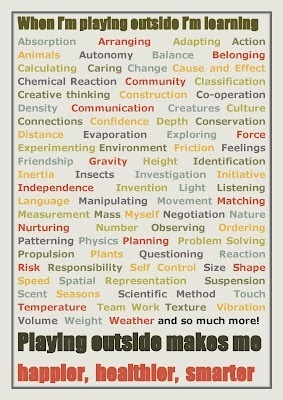
How humor, laughter, and play can be powerful tools in building and maintaining successful relationships.
Via Jennifer Hoffmaster Christian, Fuller Life Family Therapy


 Your new post is loading...
 Your new post is loading...
Your new post is loading...
 Scoop.it!
How humor, laughter, and play can be powerful tools in building and maintaining successful relationships. Via Jennifer Hoffmaster Christian, Fuller Life Family Therapy 

Jennifer Hoffmaster Christian's curator insight,
July 23, 2013 7:18 PM
Fun and healing ways to increase intimacy in relationships with humor.
Sign up to comment
Scoop.it!
A 40-part email course for those who want to discover and express their creativity through spiritual practices.
Scoop.it!

From
blog

Brother David Steindl-Rast explains why gratitude is the key to happiness, and shares some tips for embodying the quality in life Via Jennifer Hoffmaster Christian
Scoop.it!

I watched my son-in-law play with my grandchildren, wrestle with my grandchildren. And he, like a truly professional wrestler, filled with feigned fury, holding them all the while lightly, essional wrestler, filled with feigned fury, holding them all the while lightly, keeping them safe in his strong arms, always leaving them room.
Dr. Amy Fuller's insight:
"This how I like to play with everything, with everyone. Leaving room. Leaving play between us. Play in the touch, in the reach. Connecting loosely, holding loosely. Because it is the play that we leave between each other, the play between, that the truth of us reveals itself to us. Not in the holding. Not in the letting go. But in the keeping safe. It’s a fine art, this playing between."
Scoop.it!

Five tips for how parents can start fun conversations at home about empathy

Dr. Amy Fuller's curator insight,
July 29, 2013 1:33 PM
These suggestions are playful and engaging ways to be empathetic with kids with games like "walk in my shoes" and role playing games. from StartEmpathy.org
Scoop.it!

"Music, dance, painting and other forms of art have shown to have an incredibly significant and positive effect on both children and adults. Art therapy has been used to awaken the senses of underprivileged children through both the viewing and creating of art.Through their artistic endeavors, they subconsciously associate themselves with their past. The memories come more freely since they are not elicited by direct objects, but indirect thought instead. Due to many past experiences many children begin to develop nervousness, anxiety, sleeping excessive or too little, a lack of verbal, social and language skills. Many times depending on the color within a piece, or may be some other quality of the artwork, different emotions can be evoked by the observer unknowingly. Awakening of the senses through experimentation with the different types of art these children experience an untapped emotional world within themselves and with this association with their own inner being, they are able to show increased abilities in their cognitive, motor and social skills." | via Edudemic Via Todd Reimer, Jen Thompson
Scoop.it!
From
www
Ron Gutman reviews a raft of studies about smiling, and reveals some surprising results. Did you know your smile can be a predictor of how long you'll live -- and that a simple smile has a measurable effect on your overall well-being?
Scoop.it!

People feel less pain after a good belly laugh, most likely because of the release of naturally-occuring endorphins, research suggests. Via Kate Crisp
Scoop.it!

Want much more than coping? You can discover new initiatives through comedy, because a lighthearted attitude often brings eureka moments of unexpected inspiration. Even a fake smile can lower your stress! Research shows that with humor the brain increases activity in your anterior cingulated cortex, in preparation for problem solving. Via Jennifer Hoffmaster Christian
Dr. Amy Fuller's insight:
excellent!
Jennifer Hoffmaster Christian's curator insight,
July 10, 2013 1:10 PM
Laughter really is the best medicine for relationships, learning, flexibility, building trust, and health. Cool.
Scoop.it!

PLAY is the language every child knows and is vital for children’s development. How about Adults? Is play just as important for adults as for children? It is important for adults to incorporate play in their everyday lifestyle, so as to reduce stress and maintain social, emotional and physical well being.
Dr. Amy Fuller's insight:
Just like Peter Pan forget himself, we often forget to play. This article talks a bit about playing as adults. Have fun!
Scoop.it!

Dr. Amy Fuller's insight:
Deep thoughts about play...quoted on the spiritual practice of play on spirituality and practice. Enjoy! AmyFullerPhD FullerLife Playfulness
Scoop.it!

We experience the alternative every time we play together. It doesn't matter what we play. It's in the "playing together" part that the world as it could be, the world as it should be is revealed. ...
Dr. Amy Fuller's insight:
We experience it as fun, exciting, memorable. But, because it’s a game, we don’t see it as anything else. There we were, together, sharing community, freedom, health, joy, excellence, actually playing together, and playing particularly well. And five minutes before, we were sharing something else entirely: alienation, isolation, mistrust, anonymity, anxiety. from DeepFun by Bernard DeKoven When we bring a sense of playfulness to any scenario we are creating a potential alternate reality with the power to alter the relational experience, even with ourselves. A bit of humor, from a gentle smile to raw scarcasm, can shift the energy of the room in a moment. Playfulness is healing for parenting, marriage and friendship. Those of us earning a living by promoting "mental health" (no longer called mental illness) spend a lot of time talking and thinking about wellness. Playing well in our lives bridges the concept of wellness to a whole new level. Thanks Bernard DeKoven!
Scoop.it!

"Play can be the long-sought bridge back to that deep emotional bond between parent and child. Play, with all its exuberance and delighted togetherness, can ease the stress of parenting. Playful Parenting is a way to enter a child's world, on the child's terms, in order to foster closeness, confidence, and connection." -- Lawrence Cohen, Playful Parenting* Via Kids Ahoy
Dr. Amy Fuller's insight:
"Children need to play. It's their work. All mammals play; it's their way of learning skills they'll need when they're full-grown, from finding food to getting along with others. It's also the way small humans process their emotions." Dr. Markham offers great ideas for connecting with kids in a creative and playful way to deepen relational connectedness. Brilliant! Amy Fuller PhD
Jennifer Hoffmaster Christian's curator insight,
July 10, 2013 9:59 AM
What a joy. Children and parents bond through play and children also learn great skills like empathy, self-calming, and trust. Cool! |
Scoop.it!

Imagination and fantasy can bring joy to life when utilized in appropriate balance with the gravity of daily life. Many are afraid to use imagination in their lives because of the risk of becoming enveloped in a world that is not based in reality. When creating a life change, this is the most powerful place one can be. If you can’t see the life you want to live, if you can’t smell it, feel it with all your being and taste it’s sweetness on your tongue, it is not achievable. Via Bobby Dillard
Scoop.it!

The brain is divided into two major hemispheres called the right and left hemispheres. The right brain is thought to process information through creative imagery. The left brain is the analytical side that controls verbal and ... Via Jen Thompson
Dr. Amy Fuller's insight:
Music heals our brain!
Scoop.it!

Laughter is a universal language that brings people together. Shared laughter breaks down barriers, builds trust, and creates connection. Laughter has the power to de-escalate conflict and bring about creative and flexible solutions to challenges. When we laugh, dopamine is released and opens up pathways in the brain that help us discover novel solutions. According to Ellen Weber and Jeane Segal, “humor and playful communication strengthen our relationships by triggering positive feelings and fostering emotional connection. Read the Full Article on the Fuller LIfe Blog Via Jennifer Hoffmaster Christian
Dr. Amy Fuller's insight:
It's hard to laugh and be upset in the same moment. If we find something humorous, we find ourselves to be different. Jennifer has quite eloquently explained exactly how good laughing is for our bodies, minds, hearts and souls. Love it! Amy Fuller PhD Read the Full Article on the Fuller LIfe Blog
Jennifer Hoffmaster Christian's curator insight,
July 30, 2013 11:11 AM
Laughter is some of the best medicine for physical health, mental health, and relationships. Take a minute to add laughter to your day!
Scoop.it!

Learn how to harness the powerful health benefits of laughter and humor. Humor is infectious. The sound of roaring laughter is far more contagious than any cough, sniffle, or sneeze. When laughter is shared, it binds people together and increases happiness and intimacy. Laughter also triggers healthy physical changes in the body. Humor and laughter strengthen your immune system, boost your energy, diminish pain, and protect you from the damaging effects of stress. Best of all, this priceless medicine is fun, free, and easy to use
Dr. Amy Fuller's insight:
TY Jennifer Christian and @4afullerlife!
Scoop.it!

What are the cognitive benefits of play? Read what scientific studies reveal about play and the developing brain.
Scoop.it!
Just a little reminder that every second on earth is an opportunity to live life to its fullest. Brought to you by Volkswagen.
Dr. Amy Fuller's insight:
A delightful 30 second video of people laughing from young to old. It will definetly make you smile if not chuckle yourself.
Scoop.it!

Can art heal all wounds? Medical researchers are trying to quantify the role art plays in making medical progress.
Dr. Amy Fuller's insight:
very touching video about how creative expression of art helps kids coping with cancer treatment.
Scoop.it!

Why do we like to listen to tunes when we exercise? Psychologist Tom Stafford searches for answers within our brains, not the muscles we are exercising.
Dr. Amy Fuller's insight:
Just like playing, music makes almost everything that requires a bit of movtivation easier.
Scoop.it!


Douglas Eby's curator insight,
July 13, 2013 4:21 PM
For more from Scott Barry Kaufman related to his new book “Ungifted: Intelligence Redefined” see my post Don’t You Have To Be “Gifted and Talented” To Be Creative?
Scoop.it!
A 9 year old boy who built an elaborate cardboard arcade in his dad's used auto parts store is about to have the best day of his life. Via Kids Ahoy, Jennifer Hoffmaster Christian
Jennifer Hoffmaster Christian's curator insight,
July 11, 2013 8:52 PM
I can't stop smiling after seeing this... and crying. Made my day!
Scoop.it!

"Laughter and laughing is like a muscle that needs to be moved and flexed and worked out to build up so you can keep using it. It is true that people can lose their sense of humor."
Dr. Amy Fuller's insight:
Laughter is the best medicine. This illustration is so realistic...if we could access our sense of humor when we are in the frantic state of feeling like we lost something it would help bring our human brain back online and solve a lot of relationship issues.
|