Since the dawn of agriculture, plant pathogens and pests have been a scourge of humanity. Yet we have come a long way since the Romans attempted to mitigate the effects of plant disease by worshipping and honoring the god Robigus. Books in the Middle Ages by Islamic and European scholars described various plant diseases and even proposed particular disease management strategies. Surprisingly, the causes of plant diseases remained a matter of debate over a long period. It took Henri-Louis Duhamel du Monceau's elegant demonstration in his 1728 “Explication Physique” paper that a “contagious” fungus was responsible for a saffron crocus disease to usher in an era of documented scientific inquiry. Confusion and debate about the exact nature of the causal agents of plant diseases continued until the 19th century, which not only saw the first detailed analyses of plant pathogens but also provided much-needed insight into the mechanisms of plant disease. An example of this is Anton de Bary's demonstration that a “fungus” is a cause, not a consequence, of plant disease. This coming of age of plant pathology was timely. In the 19th century, severe plant disease epidemics hit Europe and caused economic and social upheaval. These epidemics were not only widely covered in the press but also recognized as serious political issues by governments. Many of the diseases, including late blight of potato, powdery and downy mildew of grapevine, as well as phylloxera, were due to exotic introductions from the Americas and elsewhere. These and subsequent epidemics motivated scientific investigations into crop breeding and plant disease management that developed into modern plant pathology science over the 20th century.
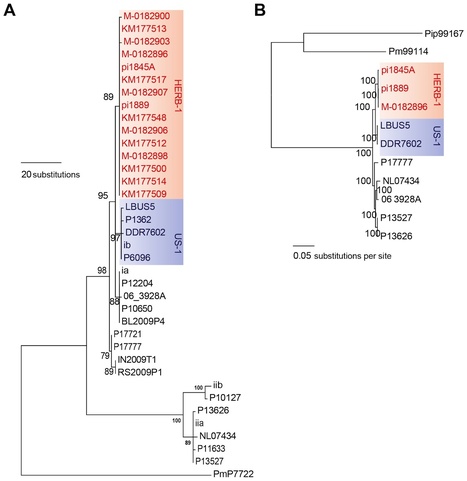
Nowadays, our understanding of plant pathogens and the diseases they cause greatly benefits from molecular genetics and genomics. All aspects of plant pathology, from population biology and epidemiology to mechanistic research, are impacted. The polymerase chain reaction (PCR) first enabled access to plant pathogen DNA sequences from historical specimens deposited in herbaria. Historical records in combination with herbarium specimens have turned out to provide powerful tools for understanding the course of past plant epidemics. Recently, thanks to new developments in DNA sequencing technology, it has become possible to reconstruct the genomes of plant pathogens in herbaria. In this article, we first summarize how whole genome analysis of ancient DNA has been recently used to reconstruct the 19th-century potato-blight epidemic that rapidly spread throughout Europe and triggered the Irish potato famine. We then discuss the exciting prospects offered by the emergence of the discipline of ancient plant pathogen genomics.
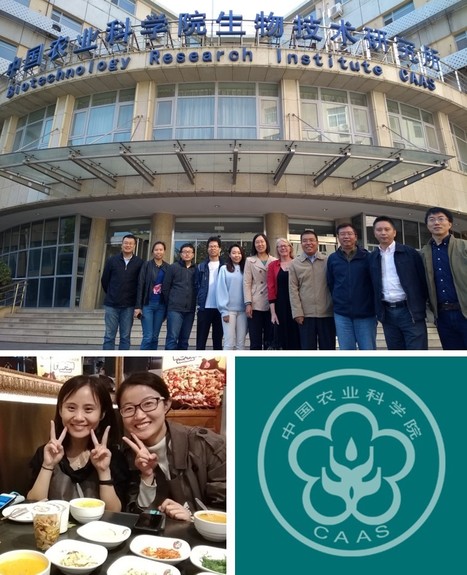
The best part of plant science is the plant scientists. I had an amazing visit today to CAAS, full of young and energetic PIs and students. Special thanks to Fan and Xiangxiang my tour guides! @ASPB @ThePlantCell
This resource provides a set of videos and a practical investigation aimed at supporting working scientifically in the classroom and relating science to real world experiences.
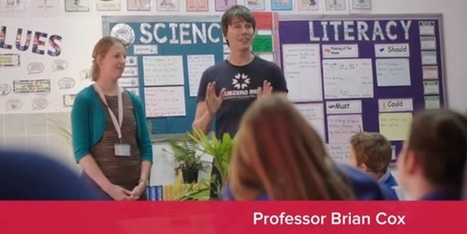
In the first video Professor Brian Cox joins a teacher to find out how to set up and run an investigation to find out if plants need soil to grow. Children try to germinate and grow plants from a seed using a variety of different materials instead of soil.
Further videos show Brian Cox visiting an Industrial farm to find out about how they grow vegetables in a building and meeting a researcher looking at soil health.
A written resource, provided by Science and Plants at Schools, (SAPS), guides teachers in running the investigation in class. This resource has been provided by the Royal Society.
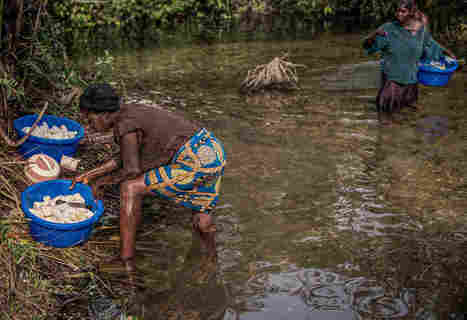
Some African countries have long witnessed mysterious outbreaks of paralysis. Affected regions are poor and conflict-ridden, where people's main food is a bitter, poisonous variety of cassava.
Excellent opportunity for someone excited by plant science research! Located near Washington DC at Society headquarters (Rockville, Maryland).
The Education Coordinator is responsible for implementing the Society’s education and outreach activities, as well as for administrative support and coordination of correspondence, communication activities, and development of education-related projects.
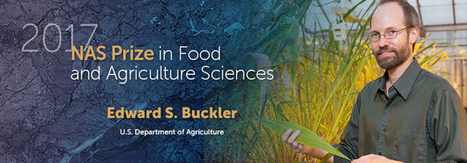
Edward S. Buckler, Research Geneticist, USDA-ARS and Adjunct Professor, Plant Breeding and Genetics at the Institute for Genomic Diversity, Cornell University, will receive the 2017 NAS Prize in Food and Agriculture Sciences, the first time this prize is being awarded.
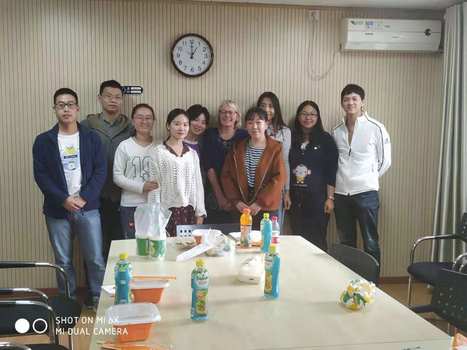
I spent a wonderful day visiting with the plant scientists at Tsinghua University, Beijing. Lunch with some graduate students was a highlight! Thanks for hosting me!
Most people are confused about what GMOs are and how they are beneficial to people. People think that GMOs are deadly, but science has proven that they are no more dangerous than no GMOs. Most criticizes against GMOs that are actually valid are actually criticisms of the agriculture and pesticides industries, not the science of genetically modified organisms. Without GMOs, many people would not be able to produce crops and they would not be able to feed families. Examples would be in Hawaii, where the papaya industry was almost wiped out by a disease, but GMOs that were resistant to the disease were created and now the industry prospers.
Cool chemistry: Structural metabolomics for community ecology, MS imaging of Kranz anatomy, Real-time phloem unloading, Metabolic gene clustering, Pollen chemistry as a driver of host shifts in bees .... and more!
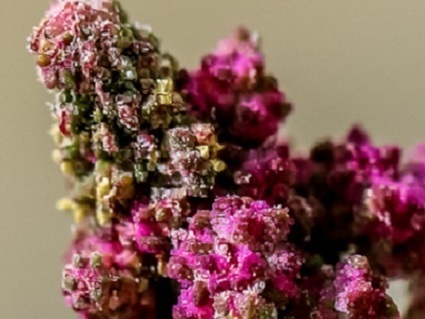
The sequencing of a high-quality quinoa genome by a KAUST-led team supports global food security and the production of crops to feed millions of people
The November-December 2016 special issue of Current Plant Biology is out now and available free of charge. With this issue, focused on “Genomic resources and databases”, Current Plant Biology celebrates the successful completion of its third year.
Call for papers: Upcoming special issue on plant development This special issue will focus on the mechanisms that govern plant development including the differentiation of the plant cells, tissues and organ. The articles may include reviews, research articles, resources/databases and perspectives.
To get content containing either thought or leadership enter:
To get content containing both thought and leadership enter:
To get content containing the expression thought leadership enter:
You can enter several keywords and you can refine them whenever you want. Our suggestion engine uses more signals but entering a few keywords here will rapidly give you great content to curate.




 Your new post is loading...










Good overview for students - very accessible and interesting!