 Your new post is loading...

|
Scooped by
Philippe J DEWOST
June 5, 2014 2:07 AM
|
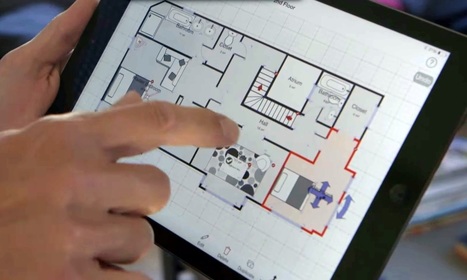
The app, which debuted in 2011, now allows users to create a floor plan for a home in as little as 15 minutes by tapping into their mobile device’s accelerometer, gyroscope, compass and camera, said Pierre Gaubil, Sensopia’s co-founder and CEO. To build a floor plan, users stand in a central spot in each room and rotate, tagging each corner of the room and noting the location of doorways. The app also allows users to overlay features like electrical outlets, furniture, and home accessories like fans and mirrors on the floor plans. Plans can then be shared via the Web or through files formats like JPEG, PDF or DXF, a file format used by computer-aided design (CAD) applications. Before the latest update, less than half of MagicPlan’s users were able to create a floor plan because they lacked the patience or were unable to follow instructions, Gaubil said. In addition to making the app easier to use, Sensopia also made it more tolerant of user error.
|
|
Scooped by
Philippe J DEWOST
May 9, 2014 1:32 PM
|
Now that Nokia is out of the smartphone game, many of its key staff are undoubtedly considering their options. Senior Lumia engineer Ari Partinen, who Nokia calls "(our) own camera expert" has just made his choice, and it's not Microsoft. He tweeted that he'll be "starting a new chapter in Cupertino," then confirmed that his new boss is indeed Tim Cook.
|
|
Scooped by
Philippe J DEWOST
April 22, 2014 9:03 AM
|
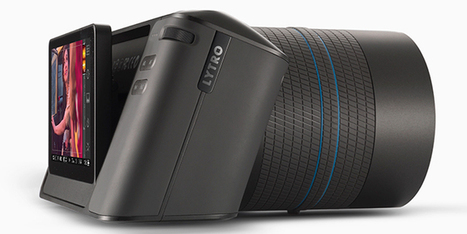
With the Illum, Lytro is targeting a more specialized market. In addition to the 8X (30 – 250mm) zoom lens, it has a constant f/2.0 aperture, 1/4000 shutter, and a four-inch backside touchscreen display. According to the company, the new sensor can capture 40 million light rays (Lytro doesn’t list megapixels) to the original’s 11 million. Its desktop processing software works with traditional products, like Adobe’s Photoshop and Apple’s Lightroom. Photographers can use the camera’s software to refocus pictures after the fact, generate 3-D images, adjust the depth of field, and create tilt shifts. It will be available in July for $1,500. Beyond its lens and bigger sensor, there are other ways the Illum surpasses Lytro’s original model. For example, because it’s such a different concept than most photographers are accustomed to, the camera has built-in software that color codes the display with depth information. It effectively previews the depth range you’ll have to work with once you shoot a photo. This, Lytro says, is to help photographers start to think in three dimensions. Afterwards, photographers can export the images to traditional formats, or thanks to WebGL, publish them online in ways that let people interact with them and manipulate them later.
|
|
Scooped by
Philippe J DEWOST
March 29, 2014 5:07 AM
|
In 2012, two Canadian teenagers, Mathew Ho and Asad Muhammad, successfully sent a Lego mini figure up into space using a weather balloon as the vehicle. To document the event from liftoff to crash-land, they rigged a basic Canon point-and-shoot camera to continuously snap photos. While it sounds like a complicated science project, it’s actually something many have successfully accomplished (Ho and Muhammad just made theirs unique by sending the little Lego guy with it and, oh, they’re teens). And hacking the camera might actually be the easy part, thanks to an open-source firmware update. .../... Like CHDK, Magic Lantern is open-source software for Canon DSLRS, with an emphasis on enhancing video production (Magic Lantern’s creators don’t like to refer to it as a hack but a separate program that complements the camera’s software, but you get the idea). The supported DSLRs are the ones that can handle video capture, like the EOS 5D Mark II, 60D, Rebel T1i, etc., with future support for the 7D, 5D Mark III, and more. Essentially, it gives these DSLRs many of the similar advanced features that are found in more expensive video cameras. But unlike CHDK, Magic Lantern is geared more toward advanced users, in particular those who use Canon DSLRs to create movies (although later updates have added features that benefit photographers too). Magic Lantern was originally created to add audio controls to the EOS 5D Mark II, which Canon didn’t provide. Over time, Magic Lantern evolved, adding a ton of extra features. If you own one of the supported cameras and you dabble a bit with video, however, it doesn’t hurt to try out Magic Lantern’s features, as it’s not difficult to install and it runs independently on the memory card. Once set up, pushing the camera’s Delete button will bring up the extra menus. Magic Lantern’s benefits are many, but some of the notable ones include manual fine-tuning of audio; tools for exposure and focusing; HDR video; bracketing; zebra patterns; and an intervalometer for shooting time lapse and astrophotography. As we’ve mentioned, Magic Lantern is best for more advanced users who’ve gotten to know the ins and outs of their Canon DSLR.
|
|
Scooped by
Philippe J DEWOST
March 21, 2014 3:50 AM
|
Orsay, Paris, March 20, 2014 — KALRAY, the designer and exclusive provider of the low power, high performance MPPA MANYCOREprocessor, today announced the demonstration at CCBN 2014 of its unique low power live Ultra HD HEVC (4K) encoder running on the KALRAY MPPA MANYCORE processor. The demonstration will be streaming DivX HEVC UltraHD (4K) video to a 4K TV set. The MPPA-256 , KALRAY’s first MPPA® MANYCORE processor coming with 256 cores on a single chip, will be used for a demonstration at CCBN 2014, being held in Beijing, China (Mar 20-22). The MPPA-256 processor demonstrates a complete Ultra HD HEVC live encoding based on DivX HEVC UltraHD video.
|
|
Scooped by
Philippe J DEWOST
March 15, 2014 2:18 PM
|
Old website designed in 1996 for my Grandfather is back online, in its 1996 web flavor, but it is definitely back. Enjoy the history, the pictures, and the QuickTimeVR panoramas. In memoriam Michel HUET my grandfather (12 Sept 1910 - 18 Feb 2004) who inspired this site 18 years ago.
|
|
Scooped by
Philippe J DEWOST
March 8, 2014 1:47 PM
|
The Faroudja Enterprises founders have realized that their experience in video technology is applicable to video compression. The company designs pre-processors and post-processors, used before and after compression coding/decoding, to achieve a lower bit rate and better image quality with existing codecs. THE COMPANY DOES NOT PERFORM COMPRESSION CODING OR DECODING. THE COMPANY DESIGNS PRE-PROCESSORS TO BE USED BEFORE COMPRESSION CODING, AND POST-PROCESSORS TO BE USED AFTER DECODING. A better image quality at the same bit rate may be chosen, or if desirable, a 35% to 50% bit rate reduction for the same image quality as before may be obtained. In any case, compression artifacts are reduced or eliminated. Significant results have already been achieved: 2 patents have been granted, and 3 more are in the works. The processes are suited to a wide range of video, from teleconferencing and videophones, to Standard Definition, High Definition and Ultra High Definition applications.
|
|
Scooped by
Philippe J DEWOST
March 3, 2014 3:20 PM
|
Canon EOS60D + 70-200 f/4 L - Serre Chevalier Valley, French Alps
|
|
Scooped by
Philippe J DEWOST
February 23, 2014 1:37 PM
|
Panasonic Ultra HD 4K Television 58AX800U will ship with such decoder IP. "We are extremely pleased to see that ViXS had the vision to predict this impending market growth and has invested their technical expertise to deliver chipset technology that can support the Ultra HD 4K market this year." said Yuki Kusumi, Director of TV Business Division at Panasonic. The decoder IP called 'Sabre' is optimized for SoC implementations. Stress and syntax test streams from the ISO, IEC, and Allegro, as well as real-world streams (supplied by customers), have helped ensure standard compliance. The design is now in production with multiple OEM's.
|
|
Scooped by
Philippe J DEWOST
January 28, 2014 6:23 PM
|
L'opus 2014 de nos voeux familiaux est enfin prêt ! Season's greetings are there in HD video...
|
|
Scooped by
Philippe J DEWOST
January 17, 2014 2:16 AM
|
Hint 1: this is not an ad for Orange Hint 2: the above picture is computer generated and part of a larger series
|
|
Scooped by
Philippe J DEWOST
November 5, 2013 1:53 PM
|
It is with a heavy heart we announce that Everpix will be shutting down in the coming weeks. We started this company two years ago with the goals of solving the photo mess and designing better ways for people to enjoy their memories. We are very proud of the work we've done—from the cutting-edge semantic analysis and syncing technology, right down to every pixel on our website and mobile apps. We are grateful to our investors for giving us the opportunity to grow this project. But more importantly, we are so very thankful to the folks who supported us with subscriptions and feedback. You guys are the best.
|
|
Scooped by
Philippe J DEWOST
October 4, 2013 8:39 PM
|
DxO Labs has released version 8.3.2 of its Optics Pro RAW conversion and image correction software, adding support for the Canon EOS 70D and the Sony Cyber-shot DSC-RX1R.
|
|
|
Scooped by
Philippe J DEWOST
May 30, 2014 4:45 AM
|
Our brains have developed incredible tactics and coping mechanisms to help us make sense of the complex world around us. But some parts of our highly adaptive minds aren't perfect and can be exposed through carefully crafted illusions.
|
|
Scooped by
Philippe J DEWOST
April 24, 2014 5:28 AM
|
The very first video on YouTube was uploaded on April 23, 2005, by Jawed Karim, one of YouTube's founders, and there's no chance the video would've gone viral today.
|
|
Rescooped by
Philippe J DEWOST
from Video Breakthroughs
March 29, 2014 5:13 AM
|
New major release: - Live HDS muxer - string validation in ffprobe - support for decoding through VDPAU in ffmpeg (the -hwaccel option) - stereoscopic 3d metadata handling - WebP encoding via libwebp - ATRAC3+ decoder - OpenGL device - Support DNx444 - libx265 encoder [...]
Via Nicolas Weil
|
|
Rescooped by
Philippe J DEWOST
from Video Breakthroughs
March 27, 2014 9:58 AM
|
For the last two years, I have been working to extend the capabilities to of the Origin Server for Window Azure Media Services. In January of 2013, Windows Azure Media Services (WAMS) became generally available as a Platform as a Service (PaaS) on Windows Azure, Microsoft’s cloud computing platform. Just over a year later, it would stream the largest live sporting event in history – millions of concurrent users and over 10,000 hours of unique content over the 16-day Sochi Winter Olympic Games. This article describes the capabilities of Microsoft’s origin server, as well as the evolution of the product in the last two years to meet today’s demanding streaming media space.
Via Nicolas Weil
|
|
Scooped by
Philippe J DEWOST
March 17, 2014 11:24 AM
|
A desktop app called Popcorn Time launched last week gaining considerable attention for presenting pirated streaming movies in a clean and easy to use format. It was essentially a Netflix for pirated movies. By Friday, it was taken down. The anonymous team of developers wrote a blog post proclaiming their motivation was 'we need to move on with our lives'. Now, Torrentfreak reported that a team of developers called YTS resurrected the project and officially relaunched it Sunday.
|
|
Scooped by
Philippe J DEWOST
March 11, 2014 10:18 AM
|
A worker pulls a passenger cart over a wooden bridge, Mount Fuji's snowy peak rising in the background. Men wear long dark robes as they catch fish from traditional Japanese boats, and women dive for pearls in the river. Looking at these photos of rural Japan, it's hard to believe they were only taken 100 years ago ...
|
|
Scooped by
Philippe J DEWOST
March 6, 2014 7:58 AM
|
In the past few years, Getty Images found that its content was “incredibly used” in this manner online, says Peters. “And it’s not used with a watermark; instead it’s typically found on one of our valid licensing customers’ websites or through an image search. What we’re finding is that the vast majority of infringement in this space happen with self publishers who typically don’t know anything about copyright and licensing, and who simply don’t have any budget to support their content needs.” To solve this problem, Getty Images has chosen an unconventional strategy. “We’re launching the ability to embed our images freely for non-commercial use online,” Peters explains. In essence, anyone will be able to visit Getty Images’ library of content, select an image and copy an embed HTML code to use that image on their own websites. Getty Images will serve the image in a embedded player – very much like YouTube currently does with its videos – which will include the full copyright information and a link back to the image’s dedicated licensing page on the Getty Images website. More than 35 million images from Getty Images’ news, sports, entertainment and stock collections, as well as its archives, will be available for embedding from 06 March.
|
|
Scooped by
Philippe J DEWOST
February 27, 2014 2:36 AM
|
Beginning in the mid-1850s, Paris experienced a grand transformation. At the orders of Napoleon III, old, narrow streets made way for wide boulevards, thousands of gas lamps lit the streets at night, and a host of other public projects thoroughly modernized the city. Charles Marville, a photographer employed by the city, was charged with documenting those changes. “The random, organic city, the city built by successive generations on top of itself, was pushed back and de-emphasized. The standardized city we see today was replaced,” said Jeff Rosenheim, curator of “Charles Marville: Photographer of Paris,” now on display at the Metropolitan Museum of Art in New York.
|
|
Rescooped by
Philippe J DEWOST
from Video Breakthroughs
February 1, 2014 10:19 AM
|
InAiR turns your TV into a Minority Report-like experience, with layers of Web content, inline with the programs you're watching. InAiR brings you the world's first Augmented TV experience With InAir plugged in, your TV becomes an Augmented Television. You can turn any ordinary television into a new and wonderful medium, filled with rich and dynamic information from the Web. InAiR uses your TV screen and layers in additional content from the Web and social media.
Via Nicolas Weil
|
|
Scooped by
Philippe J DEWOST
January 23, 2014 2:08 AM
|
Google's VP9 video codec is getting a major boost today. While Mozilla, Google's own Chrome browser and a few video players like FFmpeg started supporting VP9..
|
|
Scooped by
Philippe J DEWOST
November 28, 2013 4:05 PM
|
Researchers at MIT Media Lab have developed a $500 "nano-camera" that can operate at the speed of light. According to the researchers, potential applications of the 3D camera include collision-avoidance, gesture-recognition, medical imaging, motion-tracking and interactive gaming.
The team which developed the inexpensive "nano-camera" comprises Ramesh Raskar, Achuta Kadambi, Refael Whyte, Ayush Bhandari, and Christopher Barsi at MIT, and Adrian Dorrington and Lee Streeter from the University of Waikato in New Zealand. The nano-camera uses the "Time of Flight" method to measure scenes, a method also used by Microsoft for its new Kinect sensor that ships with the Xbox One. With this Time of Flight, the location of objects is calculated by how long it takes for transmitted light to reflect off a surface and return to the sensor. However, unlike conventional Time of Flight cameras, the new camera will produce accurate measurements even in fog or rain, and can also correctly locate translucent objects.
|
|
Scooped by
Philippe J DEWOST
October 19, 2013 5:16 AM
|
Model maker/collector and photographer Michael Paul Smith is a master at recreating incredibly accurate outdoor scenes using his extensive die-cast model car collection and forced perspective. Mixing up miniature cars, detail items and buildings into a scene whose backdrop is the real world, he shoots the gorgeous miniature vistas of the town he has created and named “Elgin Park” — and he does it all with a cheap point-and-shoot. Elgin Park is some 25 years in the making, as are Smith’s modeling and diorama photography skills. In an extensive interview with Fstoppers, he describes his tools, his process and the minute attention to detail that creating these scenes requires. Ironically, Smith has diagnosed himself as “math challenged,” so when it comes to properly framing the forced perspective, he simply eyeballs it. Years of experience have led to an uncanny ability to do this right on the first shot, but if he doesn’t, he simply goes up and unceremoniously drags his table/models into the correct spot.
|














I've used the app a few times over the past 4 years and each time I must admit that 1/ the app has constantly progressed and 2/ it is a smart use of your smartphone.