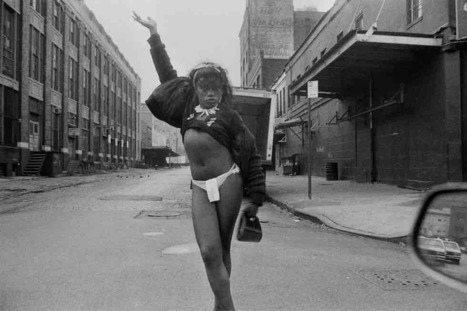
Ancien directeur de l'agence Magnum, devenu célèbre pour ses portraits de onze présidents des États-Unis, ou de stars du cinéma, l'Américain Elliott Erwitt, né à Paris en 1928, s'est aussi distingué par des choix plus politiques ou humanistes, non sans un certain humour. Portrait sensible d'un des plus grands photographes du siècle passé, au regard toujours aiguisé. Il a beau figurer parmi les photographes incontournables du XXe siècle, avec certains de ses clichés devenus iconiques, Elliott Erwitt, à plus de 90 ans, demeure toujours insatiable. Le travail reste sa motivation quotidienne et composer un plan ou orchestrer la sortie de son prochain livre l'occupe presque dix heures par jour. C'est cette passion incandescente pour la "prochaine image" à saisir, cet esprit toujours en marche, que ce film, réalisé par son assistante Adriana Lopez Sanfeliu, se propose d'accompagner, non sans une tendresse manifeste. Ironie libre Ancien directeur de l'agence Magnum, devenu célèbre pour ses portraits de onze présidents des États-Unis ou de stars du cinéma, cet Américain, né à Paris en 1928, s'est aussi distingué par des choix plus politiques (la ségrégation raciale, le Che) ou humanistes (les enfants, les chiens et leurs maîtres), non sans un certain humour. "Je mets beaucoup de sérieux à ne pas être sérieux", a-t-il avoué lors d'une rare interview accordée à un journaliste de télévision. Une ironie douce, souvent adressée à lui-même, que parvient à capter Adriana Lopez Sanfeliu en suivant le quotidien de son mentor. Portrait sensible, libre, son film rare – Elliott Erwitt n’aime pas être regardé – fait de la lenteur de son vieux personnage un motif récurrent, et aussi un motif d'étonnement, tant la force qu'il dégage derrière son appareil impressionne. "Le succès, c'est la liberté de pouvoir faire ce qu'on veut à tout moment." Elliott Erwitt - Silence Sounds Good Documentaire d'Adriana Lopez Sanfeliu (France, 2019, 1h02mn) Disponible jusqu'au 03/09/2021
In 1839, Hippolyte Bayard invented photography. And nobody cared. People usually associate the birth of photography with Louis Daguerre’s Daguerréotype. ... But there were actually multiple inventors of photography, and one of them was an amateur French tinkerer named Hippolyte Bayard. ...
Elle est la doyenne de la photographie humaniste française. Sabine Weiss, mise à l'honneur à Arles cette année, a immortalisé aussi bien les puissants que les pauvres, les célébrités que les anonymes, témoignant du quotidien d'une époque disparue.
Riffing on the depiction of women across the history of art, Carlota Guerrero’s own take on the ‘divine feminine’ that unfolds across the pages of her first monograph is a strong and sensual one...
Deux figures majeures de la photographie japonaise, Daido Moriyama et Shomei Tomatsu, sont exposées à la Maison européenne de la photographie à Paris, jusqu'au 24 octobre 2021. Leurs 400 œuvres nous plongent au cœur de Tokyo et de ses habitants. Des regards sur le réel qui ont influencé toute une génération de photographes.
A une époque où s'inventait le photojournalisme, Gerda Taro photographiait la tragédie de la guerre d'Espagne. Elle créait une œuvre pionnière, avant de perdre la vie, à la veille de ses 27 ans. De l'Allemagne hitlérienne, aux combats désespérés de la République espagnole, en passant par la bohème parisienne de l'entre-deux-guerres, sa courte vie a traversé toute la grande histoire de la première partie du XXe siècle. Ses photographies expriment la folie des hommes, la douleur de la guerre mais aussi l'idéal de fraternité et l'espoir d'un monde meilleur. Compagne de Robert Capa, son nom, disparu de la mémoire collective, a récemment resurgi des limbes de l'oubli. En partenariat avec le Journal des Femmes.
1967. Stephen Shames a tout juste 20 ans lorsqu'il rencontre Bobby Seale, le fondateur des Black Panthers, qui lui demande alors de documenter le quotidien du mouvement et l'introduit auprès de ses figures les plus fortes : Huey P. Newton, Angela Davis, Kathleen et Eldridge Cleaver ou encore Fred Hampton et Stokely Carmichael. Pendant sept ans, Stephen Shames devient le photographe officiel de l'organisation politique.[...] i-D l’a rencontré pour parler de résistance, de l’importance du témoignage photographique et de la maman de 2Pac.
Comment résumer en quelques minutes une œuvre aussi riche que celle de Sarah Moon ? Ce coffret édité chez Delpire regroupe 5 livres et je ne pouvais pas tout condenser en 5 minutes. J’ai donc décidé de lui consacrer deux épisodes. Ce premier sera consacré à la partie en noir et blanc, essentiellement les 3 premiers volumes, et le prochain portera sur les photographies en couleur. // How to summarize in a few minutes a work as rich as that of Sarah Moon? This box set published by Delpire includes 5 books and I could not condense everything in 5 minutes. So I decided to devote two episodes to it. This first will be devoted to the black and white part, essentially the first 3 volumes, and the next will focus on color photographs.
Mike Brodie spent four years embedded in the train rider subculture of the United States. In a rare interview, the photographer talks about the images he created during this time, and what it’s really like to live life on the train tracks
In 1961, Life magazine photographed systemic poverty in Brazil. One Brazilian magazine responded with a similar report — featuring photos of New York City. Subscribe and turn on notifications (�) so you don't miss any videos: http://goo.gl/0bsAjO Life magazine, then the most popular general interest weekly in the United States, announced in 1961 that it wanted to help win the Cold War. Communist revolutionary Fidel Castro had taken control of Cuba two years earlier, making nearby Latin American countries the newest battleground over economic influence between the capitalist US and communist Soviet Union. The magazine wanted to promote President John F. Kennedy’s new “Alliance for Progress” financial aid program, which planned to use financial incentives to encourage Latin American countries to resist communism and fall under US influence. As part of its new mission, Life sent photographer Gordon Parks to Rio de Janeiro, Brazil, to report on systemic poverty there. His resulting photo essay, and in particular his main subject, 12-year-old Flavio da Silva, was hugely popular in the US. Life’s readers, moved by the photos of Flavio and his story of struggling with severe asthma, mailed in thousands in donations to “save him.” The leading pediatric asthma hospital in the US, in Denver, Colorado, offered to treat him for free. A follow-up cover story by Life, titled “Flavio’s Rescue,” celebrated American generosity. But Brazilian media saw the photo essay as a negative, stereotypical view of Brazil. Brazilian magazine O Cruzeiro — a weekly publication that, like Life, featured photographic essays — decided to respond to Life’s report. O Cruzeiro sent one of its photographers, Henri Ballot, to New York. There, he photographed a family of Puerto Rican immigrants living in a poor area of Manhattan, and O Cruzeiro printed the photos in a layout that directly copied Life’s. When examined side by side, the two photo essays — and the international feud they kicked off — tell a story of sensationalism, and propaganda. Ultimately, US intervention in Latin American in the 1960s didn’t work out as Kennedy hoped. The Alliance for Progress sent Latin American countries billions of dollars in financial aid, but it didn’t end up benefiting the people living in the region, and by the 1970s was considered a failure. Like the two photo essays, the initiative was more about propaganda than it was about addressing the root causes of poverty. The Flávio Story, co-published by Steidl Books and The Gordon Parks Foundation: https://steidl.de/Books/The-Flavio-Story-0306263147.html Darkroom is a history and photography series that anchors each episode around a single image. Analyzing what the photo shows (or doesn't show) provides context that helps unravel a wider story. Watch previous episodes here: https://www.youtube.com/playlist?list=PLJ8cMiYb3G5ce8J4P5j5qOEtYR94Z3DQs Note: The headline on this piece has been updated. Previous headline: These photos sparked an international magazine feud Vox.com is a news website that helps you cut through the noise and understand what's really driving the events in the headlines. Check out http://www.vox.com. Watch our full video catalog: http://goo.gl/IZONyE Follow Vox on Facebook: http://goo.gl/U2g06o Or Twitter: http://goo.gl/XFrZ5H
Jeune révolutionnaire communiste, fleuron de l’avant-garde photographique, reporter, correspondante de guerre, dirigeante d’hôtel puis membre d’une communauté tibétaine, la vie de la photographe allemande Germaine Krull (1897-1985) est aussi dynamique que les photographies d’architectures métalliques qui ont fait sa renommée et lui ont valu le statut de symbole de la photographie moderniste française dans les années 1920.
Since moving from in front of the lens to behind it, Ming Smith has forged a groundbreaking career around her lyrical, loving images of African American life, drawn together in this new monograph...
Le nord de l’Angleterre et ses banlieues ouvrières. Ou l’inspiration d’un des plus grands photographes contemporains, ayant choisi comme thème de prédilection la vie, sa beauté banale, son authenticité : Martin Parr. Sous l’ère thatchérienne, la douceur d’une lumière blafarde transcende la réalité de la condition humaine, de cette « working class » post-industrielle baignée de couleurs criardes. L’enfant du sud de Londres devient le chroniqueur d’un Nord figé dans la crise.
Pour sa toute troisième carte blanche, notre invité de la semaine, le photographe français Corentin Fohlen, pousse un coup de gueule sur le nombre de structures grandissantes qui font de la photographie un juteux business sur le dos… des photographes. Combien de prix, de bourses, de concours et de festivals exigent des frais de participation toujours plus importants ? Aujourd’hui la vigilance est de mise, car il faut parfois fouiller loin dans les règlements pour trouver des conditions parfaitement abusives. Payer pour soumettre un dossier, payer pour exposer, droits de représentation non versés, financer son exposition… Le moment n’est-il pas […]
In this series of introspective portraits taken during lockdown, a young photographer opens up before the lens, exploring her dual heritage with honesty and intimacy
To get content containing either thought or leadership enter:
To get content containing both thought and leadership enter:
To get content containing the expression thought leadership enter:
You can enter several keywords and you can refine them whenever you want. Our suggestion engine uses more signals but entering a few keywords here will rapidly give you great content to curate.


 Your new post is loading...