E-SANTÉ : COMPRENDRE. RELIER. TRANSFORMER.
315.6K views |
+6 today

Une veille sur la santé numérique en France et à l’international : politiques publiques, données, infrastructures, IA, services et usages. Études, rapports et retours de terrain sélectionnés par Lionel Reichardt, Pharmageek, pour comprendre les transformations et éclairer les décisions.
Curated by
Lionel Reichardt / le Pharmageek
ESSAI
 Your new post is loading...
 Scoop.it! 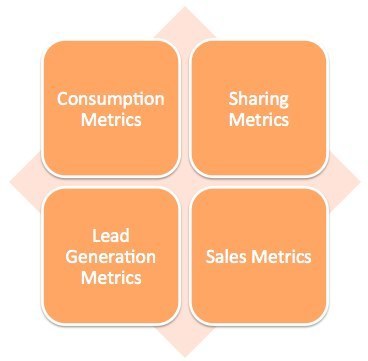
Titre original: The 4 Types of Content Metrics That Matter, publié par Jay Baer sur www.convinceandconvert.com. Dans son article, Jay nous livre les 4 types d’indicateurs qui permettent selon lui d’analyser les performances d’un contenu. Précision : cet article est rédigé en français. Via Alexandre Kuhn 
Scoop.it!
The European Medicines Agency has today begun publishing suspected side effect reports for medicines authorised in the European Economic Area (EEA) on a new public website: www.adrreports.eu. The reports come directly from the European Union (EU) medicines safety database EudraVigilance, and are one of the many types of data used by regulators to monitor the benefits and risks of a medicine once authorised. The launch of the new website is part of the Agency’s continuing efforts to ensure EU regulatory processes are transparent and open and is a key step in the implementation of the EudraVigilance access policy. The information published today relates to approximately 650 medicines and active substances authorised through the centralised procedure, which is managed by the Agency. Information on the website is presented in the form of a single report per medicine or active substance. Each report pulls together the total number of individual suspected side effect reports submitted to EudraVigilance by Member States and marketing authorisation holders. These aggregated data can be viewed by age group, sex, type of suspected side effect and by outcome. Within a year the Agency aims to additionally publish suspected side effect reports for common drug substances used in nationally authorised medicines. Side-effect reporting is a key element in ensuring the detection of new or changing safety issues, and the Agency continues to further strengthen its work with partners and stakeholders across Europe to ensure a robust system for safety signal detection. In June, the Agency will launch the website in the remaining 22 official EU languages. Via EVELYNE PIERRON
Scoop.it!

Retrouvez l'Université d'été de la e-santé, les 4, 5 et 6 Juillet 2012 à Castres, en présence de 500 acteurs du domaine : professionnels de santé, industriels ...
Scoop.it!
Les pharmaciens s'engagent contre le diabèteWK-Pharma.frPour cette opération d'envergure, l'AFD a conclu un accord avec les représentants de la profession (FSPF, USPO et Ordre) afin que tous les pharmaciens s'impliquent dans cette campagne de...
Scoop.it!

Excerpted from article: "One of the most important aspects of increasing online conversions (particularly for B2B focused sites) is speaking to prospects at all stages in the buying cycle.
Here are four proven content assets and incentives to reach business buyers at all stages in their purchasing process.
1. White Papers & Webinars: They are great for B2B prospects at the very beginning of their buying cycle. Prospects at this stage know they have a problem and are trying to figure out the best way to fix it. They are in research mode. Done correctly, White Papers and Webinars will provide helpful information, answer the prospects questions and position your company as a thought leader in your field.
2. Case Studies: They are an excellent way to bridge the gap between business buyers engaged in general research and those who are looking for a specific solution. Case studies have the unique opportunity of doing both.
3. Assessments & Audits: They should be used for B2B prospects who are beyond the initial research stage and have already determined that they need to make a change or need help. These assets are customized to specifically address a prospect’s particular situation.
4. Demos & Free Trials: They are a great way to overcome any of the last reservation about commitment or unknowns. The prospect has a chance to test the waters, experience first-hand how your products or services help them."
Read full article: http://j.mp/KLePhO Via Giuseppe Mauriello
Scoop.it!

L'Usine NouvelleLe danois Lundbeck mise sur le japonais OtsukaL'Usine NouvelleEtre "la seule entreprise pharmaceutique au monde" exclusivement dédiée au développement de traitements des troubles du système nerveux central ne suffit plus.
Scoop.it!

FRANCE 24Un site internet européen sur les effets secondaires des médicamentsFRANCE 24L'Agence européenne du médicament (Ema) a annoncé jeudi le lancement d'un site internet d'information sur les effets secondaires des médicaments dans un souci de...
Scoop.it!

Medical device inventor, investor, and electronics engineer Mir Imran once told me “problems don’t care about technology.” As it turns out, many innovators and entrepreneurs tend to be so enamored by technology that they neglect to spend sufficient time understanding the market needs that their products are meant to address.
This tendency is rather widespread in the domain of mobile health (or insert "digital health," "connected health" or any other nomenclature you prefer), which, if you listen to some accounts, is a field set to explode in importance. I agree that the time is ripe for transformation in medicine, which hasn't been revolutionized by electronics nearly as dramatically as many consumer industries. But the pace of change might be disappointing to those who are most enthusiastic about the prospects of a short-term mobile revolution. And not just because of expense of investing in it and the fact that regulation tends to slow down the introduction of new technology...
For a product to find success in the marketplace, not only does it need to be easy enough to use that it is unobtrusive, but the user must be inspired enough to use it to fix their problem.
On a related note, a recent piece by device designer Stuart Karten explains that “technology must come together with meaning to be successful.” Only products that “connect with people’s values and mindsets—their ceremonies, behaviors, rituals, motivations, and preferences” are truly successful, he explains.
Via nrip, dbtmobile
Scoop.it!

Business ImmoBouchara Recordati prend 3 000 m2 dans le Wilson à Puteaux (92)Business ImmoBouchara Recordati, laboratoire pharmaceutique, a pris à bail 3 000 m⊃2; de bureaux dans l'immeuble Wilson à Puteaux (92), pour un loyer de 380 € HT HC sur une...
Scoop.it!

This is an article exploring how issues around drug compliance could manifest in the use of health apps and how pharma companies can learn from this. Read further.. Via Appature Inc.
Scoop.it!

A peine plus d'un médecin généraliste sur dix (12%) déclare envoyer par voie électronique les demandes d'analyses aux différents laboratoires,... Via santemoinschere.com
|
Scoop.it!

While medicine changes slowly with the adoption of new technology, younger physicians are taking more initiative in affecting positive changes in the arena.
They are indeed the connected generation and use technology by choice in all facets of life. It is part of their fabric. Those entering the field of medicine would logically desire and expect to carry that over to their professional lives. However, there are multiple barriers to the continuity of this facet of their personal lives to their professional ones as they embark on what is perceived as an otherwise high-tech journey into the healthcare world.
What are found are EHRs which are often not intuitive, high pressurized short patient visits involving complex medical issues and a system in which connectivity is an adversarial roadblock among commercial technology companies rather than an opportunity for better patient care. Young physicians are met with teachers and mentors experiencing burnout (it is estimated that 75% of all physicians today experience burnout) and bitterness fueled by regulatory pressures and the resulting decreased face time with patients. Via nrip
Scoop.it!

Le laboratoire Janssen a lancé une application iPhone consacrée à l’hépatite C : C Time.
Cette application permet au patient de suivre son traitement contre l’hépatite C.
Scoop.it!
Le Serious Game Blog. Le Serious Game vu par GENIOUS Interactive, concepteur et producteur de Serious Games.
Scoop.it!

Philippe Lamoureux, Directeur Général du Leem intervenait ce matin en ouverture de la "17e Conférence annuelle Les Echos" sur le thème : « Mutations de l’industrie pharmaceutique : Quels nouveaux modèles économiques ?
Scoop.it!

Most Americans don’t use Twitter. But about half who do use it every day.
Of 2,253 U.S. online adults surveyed in a recent Pew study, 15% said they use Twitter. Among the same population, 8% said they use the service on a typical day day.
Scoop.it!

Michael Spitz (@spitzstrategy), SVP, Zemoga, considers possible futures for mobile health and speculates as to what the pharma and healthcare industries may look like a century from now.
Scoop.it!

Cette réorganisation en France concernerait l'ensemble des activités de visite médicale, de marketing/vente, de distribution pharmaceutique, les fonctions globales basées à Lyon, et les fonctions supports.
Scoop.it!

La dernière étude menée par Markess International »L'optimisation de la relation client à l'ère du marketing digital et des réseaux sociaux » nous indique quelques enseignements majeurs, notamment l'importance ...
Scoop.it!

From
frenchweb

+ 14,4% pour la publicité online en Europe en 2011, Multiplication par 4 du trafic Internet d’ici 2016… Zoom sur deux nouvelles études.
Scoop.it!

Industrie pharma: une croissance marquée des dépenses promotionnelles au Brésil et en Chine. Publié le Jeudi 31 mai 2012. Cegedim Strategic Data ... Publicité: les investissements de la pharma en presse médicale en baisse de 4% sur 12 mois ....
Scoop.it!
The strategy used by Google to decide which pages are relevant for a search query can also be used to determine which proteins in a patient's cancer are relevant for the disease progression. Via HealthRx Corporation
Scoop.it!
|