Pharma Will Spend How Much Advertising Online?


Une veille sur la santé numérique en France et à l’international : politiques publiques, données, infrastructures, IA, services et usages. Études, rapports et retours de terrain sélectionnés par Lionel Reichardt, Pharmageek, pour comprendre les transformations et éclairer les décisions.
 Your new post is loading...
 Scoop.it! Pharma Will Spend How Much Advertising Online? 
No comment yet.
Sign up to comment
Scoop.it!

The world has gone social media crazy. The phenomenon has lent a strong culture toward sharing material, gathering useful data and creating greater engagement.
Via Gilles Jourquin
Scoop.it!

A new report by NEHI identifies emerging technologies that have the potential to lower costs associated with chronic disease, while improving health care access and quality.
Scoop.it!

LaDépêche.frDonnées personnelles : les médecins, meilleurs garants de la ...LaDépêche.frPrès des trois-quarts des Français (72%) font confiance aux médecins généralistes pour garder leurs données personnelles.et plus encore »...
Scoop.it!
“La réussite du CloudPACS est la preuve que celle de l’eSanté dans sa globalité doit passer par des développements centrés sur les utilisateurs - les professionnels de santé et les bénéficiaires - les patients - et avancer par étape” a déclaré...
Scoop.it!

[Infographie] Les différentes étapes de préparation et d'optimisation d'une campagne Adwords http://t.co/NRBgmHS9... Via FredColantonio
Scoop.it!

Agnès Buzyn, présidente de l’Institut national du cancer (INCa), répond aux questions du Mag. Interview sur le DCC Dossier Communicant de cancérologie . Le dossier communicant de cancérologie (DCC) est un outil proposé aux patients atteints d’un cancer. Centré sur la personne malade, il est dédié au partage des informations entre les acteurs de la cancérologie, en particulier les médecins traitants, pour favoriser leur coordination et permettre la continuité de la prise en charge des patients atteints de cancer pendant et après la phase aiguë du traitement.
Scoop.it!

LaDépêche.frUne campagne pour redorer le blason des médicamentsLaDépêche.frAlors que les scandales du Mediator et des implants PIP ont terni l'image des médicaments et des dispositifs médicaux, L.Une websérie sur les traitements thérapeutiques avant...
Scoop.it!

Le syndicat professionnel des entreprises du médicament lance une websérie animée sur les méthodes parfois « loufoques » qui existaient dans le traitement des grandes maladies, avant l’apparition du médicament.
Scoop.it!
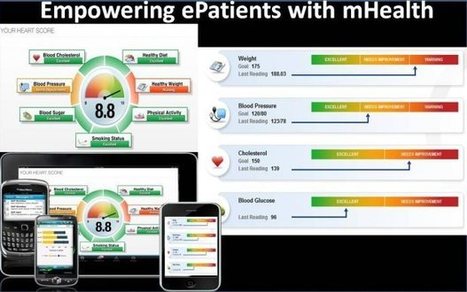
“Despite demand and the obvious potential benefits of mHealth, rapid adoption is not occurring.” ~ David Levy, MD, Global Healthcare Leader mHealth Via Marie Ennis-O'Connor
Scoop.it!

Today's Internet provides unprecedented access to health information, both empowering and endangering today’s connected patient.
Via Alex Butler
Scoop.it!

Pharma’s use of digital media is posing questions that can’t yet be answered, says the new ABPI president Deepak Khanna.
Speaking to InPharm, Khanna said: “It’s very early days in pharma’s use of digital and for any heavily regulated industry, I think it is going to become a challenge to figure out how you’re going to actually implement a digital plan.
“So for the pharma industry and also for healthcare providers, there’s going to be a lot of unknowns, and I’m not sure if we have the answers yet about how we can help regulate this space.”
But Khanna added that the use of digital is key for pharma, and agreed that it should be used to engage with patients and doctors.
“I think patients want to be more informed than ever about their healthcare,” he said.
“These digital spaces are venues that patients and other stakeholders use to update themselves on their information, and we have to be in there in the right way to make sure that people that want information can have access to it.
“But just how we regulate it is something that we are going to have to work through.”
[AS: And they never will. How could they?
Are we approaching the endgame for the industry's regulatory framework?
They're certainly doing a great job of eroding their authority and influence.]
|
Scoop.it!
La Fédération des établissements hospitaliers et d'aide à la personne privés non lucratifs (FEHAP) demande dans un co...
Scoop.it!
Scoop.it!

United Healthcare and Aetna empower customers with online tools that estimate the cost and quality of medical care.
Scoop.it!

Why Your Doctor Doesn’t Want You Using iPhone And iPad Health Apps http://t.co/wEqHv3yS...
Scoop.it!
A l'occasion de la publication de son premier «Observatoire des biotechnologies santé en France », le Leem organise une conférence de presse - mercredi 27 juin 2012 à 9h30 Eurosites George V – Cercle Galliera - 28 avenue George V – 75008 Paris...
Scoop.it!

“A good scalpel makes a better surgeon. Good communication makes a better doctor.” - Dr. Josh Umbehr
It’s clear the days of the “do more, bill more” model of reimbursement are numbered. While there are many unknowns regarding the future model, one thing is couldn’t be more — highly effective communication will separate the winners from the losers.
The improvement in the depth and breadth of communication seen in the consumer Internet and in the consumerization of the enterprise (iPhones, Yammer, etc.) is just beginning to fully impact healthcare.
With healthcare representing nearly 20% of the economy, it is inevitable that communications will be a key driver as the tectonic shifts in healthcare shake out. Ushered in will be an array of new technology players similar to consumer and enterprise arenas disrupting ineffective and expensive communication methods of the past.
“I don’t think you can overstate the importance of communication in clinical care. Even with devices, robotics, genomics and personalized care, it all rests, and depends on, clear communication.”- Dr. Wendy Sue Swanson
Via nrip
Scoop.it!

'If you consider yourself a discerning web surfer, how do you feel knowing inaccurate health information is so readily available to those who aren’t Google-fluent?
Have you ever headed that risk off at the pass by performing medical searches for your loved ones? How do you imagine your doctor would react?'
[AS: Of course, unreliable and just downright dangerous is also just as readily available to those who do possess as degree of fluency in search and consider themselves 'health literate' -- not a very accurate yardstick, admitedly.]
Scoop.it!

Dan Stipe writes:
'Rather than making everything into a game, is there a way to get people to be intrinsically motivated to change their behavior in ways that allows them to stay healthier longer? This is a very tough problem.
“Gamification” is just a baby step toward a solution.'
Scoop.it!
Les fonctions critiques d’informatique médicale doivent faire l’objet d’une autorisation de mise sur le marché, tout comme les médicaments.
Scoop.it!

Musique, vidéo, actualités, communication, travail... pourquoi, quand, où et comment sont utilisés les terminaux mobiles ?
Scoop.it!

The healthcare industry is using social media to get the word out, “engage and educate” followers, and start a digital dialogue to connect and collaborate more effectively with their co...
Via Marie Ennis-O'Connor, Pharmacomptoir / Corinne Thuderoz
Scoop.it!

A list of the top blogs in the Diabetes category based on 20+ different factors including RSS membership, Number of incoming links, social media, monthly visits.
Via Ginny Dillon
|