Your new post is loading...
‘While paradoxically, the consumer actively engages much less with [a] brand when they begin to rely upon an application for a particular service[...] we need to learn to see this as a marketing positive. They may clock off from the often tiresome active engagements via our website, but don’t mistake this cold shift in engagement for a drop in loyalty.’ The title of the Michael Bayler article from which this post is derived is arresting, but the argument it articulates is less compelling, and the conclusion is wide of the mark from my point of view. Why sound this apologia for the collapse of the precepts of marketing? Why look for ‘marketing positives’ in social environments that are innately hostile to the concepts of ‘marketing’ as they developed in offline contexts? Why not accept that the social web is a postmarketing environment rather than repeatedly trying to reformulate maxims that are antithetical to the expectations and etiquettes of social in every way imaginable? Why enter social environments in such a deterministic manner, and one which would appear designed to make companies unpopular? What fideism supports the leap of faith underpinning the expectation that ‘loyalty’ to a brand (the etiology of which is never adequately defined) should be eroded in settings where attempts to influence directly have corrosive effects? The reason that I found the title interesting in the first place, however, is that it conjures images of the tightrope that healthcare will need to tread in the future: informed by Big Data, but facilitated by networks that may become more focused as ties strengthen, relationships develop, and new matrices of trust, influence and authority emerge. If you do not sit in the middle of these matrices, you will always remain on their margins, struggling to gain purchase, and losing your grip. The social web is paradox: burgeoning volumetrically, yet contracting in terms of engagement opportunities for new entrants as communities coalesce.
Via Tiffany Jésus
In the early days of the 20th century, department store magnate John Wanamaker famously said, “I know that half of my advertising doesn’t work. The problem is that I don’t know which half.”
Via Alex Butler, Giovanna Marsico

|
Scooped by
Lionel Reichardt / le Pharmageek
August 21, 2012 2:49 AM
|
La deuxième campagne annuelle #GetFit utilise Twitter, l'application HealthyShare de GE sur Facebook et Sina Weibo pour promouvoir la prévention du cancer par des styles de vie plus sains
GE Healthcare inaugure une campagne de sensibilisation et de prévention du cancer portée par les réseaux sociaux
GE Healthcare a lancé aujourd'hui un concours mondial sur plusieurs plates-formes de médias sociaux ? Twitter, Facebook et Sina Weibo ? afin de sensibiliser le public à la prévention du cancer. Au cours des six prochaines semaines, la campagne « #GetFit » de GE Healthcare encouragera des personnes du monde entier à partager leurs activités de santé et de remise en forme personnelles et à décrire ce qu'elles font pour réduire leur risque de développer un cancer, une des premières causes de mortalité.
Selon l'Organisation Mondiale de la Santé (OMS), près de 30 % des cancers pourraient être évités grâce par l'adoption d'un style de vie sain et la pratique régulière d'une activité physique. Pour la deuxième année, la campagne #GetFit ? dont l'objectif consiste à diffuser un message positif dans le monde entier ? invite les participants à partager leurs méthodes pour rester en forme et garder la ligne. La campagne utilise la puissance du savoir collectif, portée par les réseaux de médias sociaux, pour promouvoir des styles de vie plus sains.
Philosys, a company based in New York City, received European CE Mark approval for its Gmate SMART glucose meter, an iPhone/iPad attachment that is the world’s smallest glucometer. The meter uses the iOS device via the headset jack as the interface to display results and track readings. It would seem that the same glucometer should also be compatible with other smartphones as long as an appropriate app is developed. Philosys is currently looking to partner with cell phone firms to help distribute the Gmate SMART and hopes to have it’s device available to European customers by the end of the year.
Via Chatu Jayadewa
|
|
Rescooped by
Lionel Reichardt / le Pharmageek
from Pharma Hub
August 20, 2012 9:40 AM
|
Apps that can assess data like blood glucose levels, diet and drug regimen — and can be reimbursed by insurance — will soon be prescribed by doctors to help treat patients.
Via Richard Meyer, Philippe Marchal
|
|
Scooped by
Lionel Reichardt / le Pharmageek
August 20, 2012 2:41 AM
|
Les applications santé disponibles sur smartphones sont nombreuses, mais paradoxalement peu téléchargées. C’est ce que montrent les chiffres américains du Pew Internet and American Life Project, rapportées par le Washington Post.
Qui a dit que le mobile, cela ne servait à rien? Médiamétrie comptabilisait en 2011 environ 18 millions de mobinautes en France. Les dépenses.
Via dbtmobile
|
|
Rescooped by
Lionel Reichardt / le Pharmageek
from E-Health
August 19, 2012 1:58 AM
|
Aux Etats-Unis, une loi appelée « HITECH » encourage, à l’aide de puissants incitants, la généralisation des dossiers électroniques et d’autres moyens permettant d’améliorer la gestion des soins de santé.
Via dbtmobile, Henri Lefèvre
|
|
Scooped by
Lionel Reichardt / le Pharmageek
August 18, 2012 1:34 AM
|
In spite of this seeming plethora of handy apps, there are still a few I have yet to encounter and would like to see created.
|
|
Scooped by
Lionel Reichardt / le Pharmageek
August 17, 2012 10:43 AM
|
Version FeminaUn site pour tout savoir des médicamentsVersion Femina85 % des Français pratiquent l'automédication (d'après un sondage Opinion Way, 2010). Et si certains pensent en maitriser toutes les subtilités, ce comportement demeure risqué.
When thinking about who uses medical and health apps, the baby boomer generation is usually not top of mind, however we may be underestimating how receptive this segment of the population might be. A recent blog post from amednews, titled “Baby boomers trust physicians’ recommendations on medical apps” provides a better sense of how baby boomers may interact with mobile health technology. Some interesting data points about baby boomers referenced in the blog include: 71% would be willing to pay for an app 36% would spend $1 to $2 on an app 35% would spend up to $10 49% have downloaded six or more apps 28% have downloaded between one and five apps 15% have been diagnosed with heart disease 7% have been diagnosed with diabetes 2% have been diagnosed with heart disease and diabetes 60% are most likely to use an app recommended by a doctor 18% are most likely to use an app recommended by a family member 5% are most likely to use an app recommended by a friend
Via nrip
Think Science Now is a community of Pfizer colleagues who provide fresh and topical commentary about new ways to prevent, treat and cure diseases in order to bring hope to millions of people worldwide. To date, we remain the only large pharmaceutical company empowering our colleagues, those closest to the science, to use social media to talk about the innovative work they are doing.
Via Substance Active
|
|
Scooped by
Lionel Reichardt / le Pharmageek
August 16, 2012 2:52 AM
|
|
|
|
Rescooped by
Lionel Reichardt / le Pharmageek
from Pharma Hub
August 21, 2012 4:08 PM
|
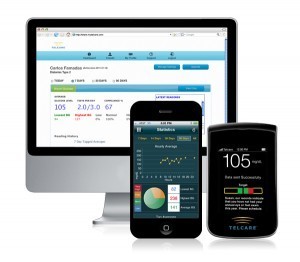
Telcare provides a comprehensive diabetes solution consisting of a wireless glucose meter with two-way messaging that transmits to an FDA-cleared care management server, along with a suite of iPhone and Android apps to enable family members to follow the progress of loved ones with diabetes. Through Sequoia’s investment, the company will seek to aggressively accelerate market share to realize their vision of becoming the global leader in wireless “mHealth” solutions for people with diabetes and other chronic illnesses. The Telcare platform is currently being implemented by health insurers and employers who currently care for more than 1 million people with diabetes.”
Via Philippe Marchal
from iMedicalApps: Cardiio has launched their first, much anticipated, biosensor that uses an iPhone or iPad camera to provide touch free heart rate measurements and related health predictions. The app, priced at $4.99, ...
Via uri goren
|
|
Scooped by
Lionel Reichardt / le Pharmageek
August 20, 2012 3:59 PM
|
On ne compte plus les dizaines de milliers de blogs, wikis et forums (certains se sont déchaînés cet été sur la blouse à l’hôpital) et probablement un bon millier de sites internet spécialisés web santé (Doctissimo, Tasanté.com, Monpharmacien.com, Atoute.org (pour une version « Médecine 2.0 ») ; plus récemment Docteurclic ou Infos-medicaments.com lancés en Juillet 2012) qui permettent d’échanger sur des sujets médicaux et d’une manière générale de s’informer en santé. Les sites institutionnels également particulièrement bien construits (notamment www.has-sante.fr; www.ansm.fr; www.ameli.fr) contribuent largement aux statistiques actuelles de consultation d’informations médicales sur internet, à savoir près de deux patients sur cinq disent ne plus pouvoir se passer du net pour obtenir une information médicale, un conseil en santé.
If you are lucky enough to work in healthcare in whatever capacity, you have been given a unique opportunity to play a part in delivering on your employer’s promise to improve human health a...
Via rob halkes
Ce livret propose une analyse des médicaments les plus utilisés en gériatrie par classe psychothérapeutique.
Le livret du médicament est destiné à aider les professionnels de santé à mieux prendre en compte le risque iatrogénique lors de leurs prescriptions chez les sujets âgés.
Il s'inscrit dans l'ensemble des actions menées par le groupe Korian pour l'amélioration des prises en charge en établissements SSR, EHPAD et psychiatrie. Le contenu a été rédigé à partir de la littérature, et ensuite étudié et validé par différents médecins et pharmaciens en commission du médicament, et par différentes équipes universitaires. La coordination de l'ouvrage a été réalisée par le Dr François BERTIN-HUGAULT, Directeur médical du groupe Korian et le Dr Paul VERA, médecin généraliste audois, coordonnateur à l'EHPAD Korian Frontenac (Bram, Sud), que nous remercions vivement.
Via EVELYNE PIERRON
"Although there are many apps to improve patient-centred care through enhancing the doctor-patient relationship, the healthcare industry needs to understand that it is patients themselves who can manage and improve their own quality of health at home."
Via Giovanna Marsico
IndiYaz A Jones? Bayer Cartoons For Sales Reps // Pharmalot
Via uri goren
|
|
Scooped by
Lionel Reichardt / le Pharmageek
August 17, 2012 10:44 AM
|
Pharmacie: Pierre Fabre compte doubler son chiffre d'affaires d'ici à ...La CroixLe laboratoire pharmaceutique français Pierre Fabre compte doubler son chiffre d'affaires d'ici à 2020, notamment grâce à un accroissement de son activité à l'international,...
Time-pressured GPs in the UK are refusing to see pharmaceutical sales reps and turning to online channels to conduct product research, according to a new study. Doctors.net.uk surveyed more than 1,000 GPs in April this year and found 52 per cent of GPs did not see any pharmaceutical sales representatives in a typical week, while 26 per cent only saw one pharma sales rep during that period. Nearly a quarter (23 per cent) of the GPs surveyed said they preferred to find their own product information via “independent online resources”.
Via Tom Hall, Nikos Papaioannou
A recent study links tablettoting reps with a greater prescribing impact, while other data suggest direct marketing tops all other forms of promotional outreach.
Via Parag Vora
Pharma companies are buying the popular tablets by the thousands, doling them out to sales reps and executives alike.
Via Nikos Papaioannou
|