


adobe presente 10 tendances digital marketing deuxieme semestre 2012...
Via Nathalie LAMRI
Via Nathalie LAMRI


Une veille sur la santé numérique en France et à l’international : politiques publiques, données, infrastructures, IA, services et usages. Études, rapports et retours de terrain sélectionnés par Lionel Reichardt, Pharmageek, pour comprendre les transformations et éclairer les décisions.
 Your new post is loading...
 Scoop.it!
adobe presente 10 tendances digital marketing deuxieme semestre 2012...
Via Nathalie LAMRI 
No comment yet.
Sign up to comment
Scoop.it!

Des chercheurs des célèbres universités américaines du MIT et de Harvard ont développé une application iPhone permettant de mesurer son rythme cardiaque sans contact : Cardiio. Présentation. Cette ...
Via Tiffany Jésus, IDS Santé, Agathe Quignot
Scoop.it!

The pharmaceutical industry is going through a time of dramatic change. Once confident in the long-standing blockbuster business model, the tough economic climate and the looming patent cliffs are causing traditional pharmaceutical companies to explore new areas of business. The fast-growing e-health sector, in particular, is proving attractive to businesses in need of a new lease of life. Via Parag Vora
Scoop.it!

Health 2.0. iHealth Cloud. Health iLab. Innovation et créativité dans la médecine de remplacement. Santé 2.0. Les TIC Santé et l'éthique santé. Atelier e-santé. In Memoriam Pr. Emmanuel Andronikof, Mathematician, and ...
Via Agathe Quignot
Scoop.it!

Profitant des quelque 70 millions de dollars levés en mai dernier, Evernote, une start-up qui développe un service de prise de notes, de stockage et de synchronisation de documents dans le Cloud, a profité de sa conférence Evernote Trunk...
Scoop.it!
Impliquer l'individu par le jeu pour résoudre les problèmes de la vie quotidienne, c'est le principe de la gamification. Décryptage d'un phénomène montant, avec Gabe Zichermann, l'organisateur du GSummit.
Scoop.it!

TSince the beginning, IBM also mentioned that Watson could be a useful tool for the healthcare industry, especially when it comes to making diagnoses. (The company also formed a research partnership with Nuance last year to help prepare Watson for health care purposes.) Going mobile would further Watson’s usefulness for doctors and patients alike.
Via Alex Butler
Scoop.it!
AstraZeneca announced that Pascal Soriot has been appointed as the company’s Chief Executive Officer. Pascal Soriot will take on his new responsibilities and join the AstraZeneca PLC Board as an Executive Director on 1 October 2012. Simon Lowth will remain as AstraZeneca's Interim Chief Executive Officer until Pascal Soriot joins. At that point, Simon Lowth will resume his responsibilities as Chief Financial Officer and will continue to serve as an Executive Director on the AstraZeneca PLC Board.
Prior to his commercial career, Pascal Soriot practiced as a veterinarian. He holds an MBA with a major in finance from HEC Paris. Via Thibaud Guymard
Scoop.it!

Journal du net
Cinq arguments pour obtenir une tablette au travail D après une étude du cabinet Forrester, les entreprises devraient s'accaparer un tiers des 375 millions de tablettes qui s'écouleront en 2012 dans le monde. Via dbtmobile
Scoop.it!

Dès lors qu’il s’agit de référencement, le netlinking constitue une pratique SEO incontournable. Certaines techniques de netlinking ont été abusivement utilisées avant d’être récemment pénalisées par Google Penguin. Via Arobasenet
Scoop.it!

Having been online, blogging and doing other social media, it has become increasingly clear to me that I need to be there—and that more doctors need to be there with me.
The main reason? Because that’s where the patients are.
We need more doctors and other health professionals writing good content, but getting online doesn’t necessarily mean writing. It could mean finding good websites and sharing them. It could mean commenting when we see something that we agree with—or don’t. It could mean engaging in one of the many conversations going on in social media about health.
It seems like most of the conversation about doctors being online involves concern about ethics and professionalism. I admit that I’ve seen some stuff on Facebook and Twitter that has made me cringe, and clearly it’s not a good idea to give specific medical advice online (nothing can replace a good history and physical examination). But this is all manageable.
Dr. Katherine Chretien did a study of Tweets sent by doctors and found that only 3% might be considered unprofessional, and less than one percent had any private patient information. Overall, these are small numbers. As my doctor-blogger colleague Wendy Sue Swanson says, we are way worse on elevators than we are online. It’s easy enough to come up with guidelines and education to help doctors navigate the online space ethically, professionally and safely. Another doctor-blogger friend of mine, Bryan Vartabedian, who writes a great blog called 33 Charts, has some really good ideas about this, including a recent post about how he handles online questions from patients.
Via nrip, Parag Vora
|
Scoop.it!

The world's largest internet and mobile user population, expected to hit 700 million by 2015, is also rapidly expanding its professional information and knowledge segments. In the Chinese healthcare field in particular, digitization of information and healthcare IT are poised to become increasingly important as the Chinese Ministry of Health plans to invest 800 billion Yuan (about 126 billion USD) in health system reform.
Wolters Kluwer has an important position in the Chinese healthcare market offering high quality, innovative solutions for healthcare professionals through information products and services including UpToDate, Lippincott Williams & Wilkins, Ovid, and, most recently, through a joint venture with Medicom, leading China drug information provider. Medicom now offers the most robust suite of Chinese drug information products in use by hospitals in China.
Wolters Kluwer CEO Nancy McKinstry opened the seminar. According to McKinstry, "This seminar gives us an excellent opportunity to meet with the next generation of healthcare professionals. The medical students in this classroom will have an excellent opportunity to learn about innovations in the way health information is disseminated and applied to improve healthcare outcomes for doctors, hospitals, and patients. We also learn from their ideas and great enthusiasm to improve healthcare in China."
Professor Guan Yuanzhi, Dean of Medical Education, Peking Union Medical College, discussed recent changes in medical education at PUMC. Susan Driscoll, President & CEO, Wolters Kluwer Health, Professional & Education, shared her insights on the digitization of medical education and practice in the U.S. Dr. Zhang Lei spoke about medical education in the networked era and the role of social media. Andrew Richardson, VP Business Development and General Manager Europe, Wolters Kluwer Medical Research, discussed how mobile technology is transforming the healthcare industry and user behaviors in terms of content. Li Tiantian, founder of the largest online academic portal for physicians and life science professionals, DXY.com, looked at the topic of how to use social media in improving academic achievement. Via Parag Vora, dbtmobile
Scoop.it!

Michel Laforcade et Philippe Calmette ont été aujourd'hui nommés en Conseil des ministres respectivement directeur général de l'ARS Aquitaine et directeur général de l'ARS.
Via Xavier Bouhet
Scoop.it!
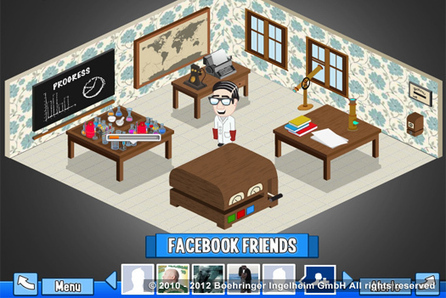
John Pugh, Director of Digital for Boehringer Ingelheim, talks about driving innovation in his large organization with the forthcoming game Syrum Via Alex Butler, Pharmacomptoir / Corinne Thuderoz
Scoop.it!

This is an article about how access to information has evolved the nature of the physician-patient relationship.
Via Parag Vora
Scoop.it!

I’ve been trying to deal with symptom checkers for a long time now. I remember it started with Medgle, then the others came and of course, by the time, these symptom checkers became better an... (Symptom Checkers?
Scoop.it!

RT @mattgill1966: The seven worst mistakes of pharma launch (and secrets to avoid them) | eyeforpharma http://t.co/V425k8sn #e4p via @eyeforpharma...
Scoop.it!

Comment raconter l’histoire d’Internet chronologiquement et de manière ludique? C’est ce qu’a fait Grovo, une plateforme d’éducation à l’internet, en créant une timeline Facebook pointant chaque date importante de l’histoire du web.
Scoop.it!
Deux acteurs majeurs du secteur de la santé, l'Agence des systèmes d'information partagés de santé et le Conseil national de l’ordre des médecins réclament une loi sur le secret professionnel ...
Scoop.it!

The Purchase Funnel Has Changed. Can You Dance?
Via halhol
Scoop.it!

Venture investment has tripled since last year in the digital health category. The growth in funding has been fueled and in turn encourages different health offerings, creating a more diverse and dynamic environment.
Legislation, startup entries and mobile apps have all been indicators that the digital health sector has been growing quickly. Another factor has underscored this development - private financings in the sector have more than tripled in the first half of 2012. Digital health investments "grew to $499 million in 46 transactions during the first half of the year, compared to just $156 million in 19 transactions for the same period in 2011,” a 317 percent jump, according to Burrill & Company (PDF). Venture investors are responding to the attention that the segment is receiving, an area that seeks to improve healthcare costs, access and delivery by developing information, wireless and healthcare technologies.
Increased funding of digital health projects reflect “a growing awareness of the transformative power these technologies are bringing to healthcare,” says G. Steven Burrill, CEO of global financial services firm Burrill & Company. As Burrill further explains, the area attracts both “traditional technology and life sciences investors,” who recognize that this tech can reduce cost, as well as improve and personalize care. This activity extends past VCs, however, as shown by the Rock Health funding database. Their figures show $675 million in digital health funding over this same time period when tracking more investment companies, and sees four main themes in investment within the field: Physician Tools, Sensors, Home Health and Data.
A wider variety of offerings has revealed diverse interests within the field. The digital health sector is becoming more complex, as apps and startups are answering different types of needs. Physician tools aid doctors in a variety of contexts - DocuTAP manages workflow for urgent care practices, drchrono puts health records in the cloud, Tigertext creates a mobile messaging network and HalfPenny connects and integrates healthcare. Sensors extend patient monitoring for better efficacy, diagnosis and response with devices from BodyMedia, AliveCor and FitBit. Home health creates web-based software (Kinnser) or improves patient engagement (Innovatient Solutions). Data/Analytics compares costs and services for employees with Castlight Health, or addresses industrial-scale data analytics needs with GNS Healthcare.
Scoop.it!

Dans un rapport inédit sur "le coût du dossier médical personnel" que s'est procuré Le Monde, la Cour des comptes critique la défaillance de stratégie et l'absence de pilotage de la part de l'Etat, le manque d'une évaluation rigoureuse de son utilité et l'insuffisance grave de suivi financier. Selon Le Monde (page 22), elle estime que le DMP a déjà coûté au moins 210 millions d'euros de 2005 à 2011. En ajoutant le coût des dossiers informatisés des patients dans les hôpitaux, la facture atteindrait un demi-milliard d'euros ! Via Paris Healthcare Week
Scoop.it!

This morning I received a press invitation from Boehringer Ingelheim for the beta launch of its Facebook game, Syrum. The game is the first of its kind to be developed by a pharmaceutical company. Syrum’s website is already up for people to view but the game won’t be officially launched until September. Via Alexandre DUBOIS
|





