


A couple of French medical experts have some really nasty things to say about Big Pharma in a book they were commissioned to write after the scandal in France over the weight-loss drug Mediator, which was tied to hundreds of deaths there.


Une veille sur la santé numérique en France et à l’international : politiques publiques, données, infrastructures, IA, services et usages. Études, rapports et retours de terrain sélectionnés par Lionel Reichardt, Pharmageek, pour comprendre les transformations et éclairer les décisions.
 Your new post is loading...
 Scoop.it!
A couple of French medical experts have some really nasty things to say about Big Pharma in a book they were commissioned to write after the scandal in France over the weight-loss drug Mediator, which was tied to hundreds of deaths there.

No comment yet.
Sign up to comment
Scoop.it!

RT @lenstarnes: Incredulous programme 4 'World Health Summit'. No digital, social media or ePatient streams http://t.co/qlVT7b9B @World ...
Scoop.it!

Le laboratoire Biogen Idec lance un nouveau site internet d’informations dédié à la sclérose en plaques : La Sep Bouge. Ce nouveau site web, La Sep Bouge, a pour objectif d’apporter des info...
Scoop.it!

Bernard Debré : "Les laboratoires savent à quoi s'en tenir avec nous"L'Usine NouvelleL'Usine Nouvelle - Y-a-t-il quelques laboratoires pharmaceutiques en particulier qui vous semblent être de mauvais élèves, voire plus producteurs de médicaments...
Scoop.it!

Les 1ères Assises régionales de l’e-santé se dérouleront les 12 et 13 octobre 2012 à Strasbourg. Présentation. Organisées à l’initiative d’Alsace e-santé et avec le soutien de l’ARS Alsace et de l...
Scoop.it!

Les nouvelles technologies au service de la médecine ont permis d'ouvir un nouvel horizon : l'eSanté, une façon différente d'exercer la médecine.
Via Hervé Denudt
Scoop.it!

Le trafic Internet en provenance des smartphones est en pleine croissance. Mais les mobinautes achètent-ils en ligne ? Et si oui, sous quel système d'exploitation ? iOS ou Android ?
Scoop.it!

Le salon E-Commerce Paris ouvrira ses portes demain matin. Avec ses 500 exposants, son cycle de 350 conférences et ses 30.000 visiteurs attendus, ce salon se révèle incontournable pour maîtriser tous les métiers et savoir-faire du secteur.
Scoop.it!

Boehringer-Lilly tap into behavioural change for online diabetes programme - Part of the partners' Tradjenta marketing, My Well Planner offers personalised educational resources. Via Philippe Marchal
Scoop.it!

Les comptes de l'Assurance maladie ne sont pas toujours déficitaires ! 10 millions d'assurés ont crée un compte sur le site ameli.fr.
Via Pharmacomptoir / Corinne Thuderoz
Scoop.it!
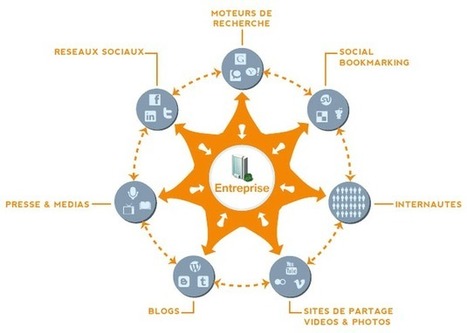
Le traditionnel schéma émission d’un message (pub, communiqué, jeu, tweet …) => mesure du résultat est cassé. Le Web l’a ... 10
Scoop.it!
LaDépêche.frUn monde virtuel pour apprendre à gérer l'asthmeLaDépêche.frAstraZeneca, en collaboration avec l'association Asthme & Allergies, propose une plateforme interactive permettant à chacun de s'informer sur la maladie et d'apprendre à la...
Via Xavier Bouhet
Scoop.it!
L’Association du Syndrome de Lowe met en ligne son nouveau site internet L’Association du Syndrome de Lowe vient de mettre en ligne son nouveau site Internet : http://www.syndrome-lowe.org. Cet espace de communication va permettre à l’association de mieux faire connaître le syndrome de Lowe, maladie rare parmi les plus rares, et de parfaire l’accompagnement des familles adhérentes. L’ASL espère ainsi sensibiliser à sa cause le grand public, les professionnels de santé, les mécènes et de futurs adhérents.
|
Scoop.it!
La Commission des comptes de la sécurité sociale (CCSS) se réunira lundi 1er octobre, en amont de la présentation du PLFSS 2013 au conseil des ministres du 10 octobre et de la discussion...
Scoop.it!

Dans un communiqué, l’Assurance Maladie indique avoir franchi le cap des 10 millions d’assurés ayant créé leur compte sur ameli.fr.
Scoop.it!
RT @Callimedia: Des outils de communication medecins-patients sur iPad : http://t.co/fBhTncHM #esanté #healtl20fr #doctors20...
Scoop.it!

Je ne suis pas sûre qu'il y aura beaucoup de posts en français sur la conférence Medicine 2.0 qui s'est tenue à la prestigieuse Harvard Medical School cette année. J'y ai croisé quelques Européens mais aucun Français à ...
Scoop.it!

Bricolage, pharmacie, accessoires auto, informatique, mobilier, produits culturels... Quels sont les sites leaders de chaque catégorie ? Réponses avec le Top 500 de l'e-commerce américain réalisé par "Internet Retailer".
Scoop.it!

Les news Médicaments Philippe Even, ancien doyen de la faculté de médecine et Paris et président de l'Institut Necker, et Bernard Debré, urologue et député UMP de Paris, n'y vont pas par quatre che...
Via EVELYNE PIERRON
Scoop.it!
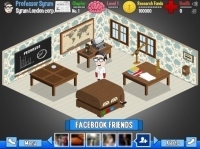
Yesterday, Boehringer launched a social game for pharma which is going to be a milestone in the history of pharma’s role in improving social media. Here is Syrum.
Via Denise Silber
Scoop.it!
PayPal annonce 10 milliards de dollars de transactions mobiles d'ici la fin de l'année. Un chiffre qui montre le dynamisme du marché du paiement mobile.
Scoop.it!
Scoop.it!
A Len Starnes (@lenstarnes) presentation first given earlier this month in Istanbul.
[AS: The emphasis here is: no evolution of social across the enterprise, no socially-enabled MLM.
'5 or 10 years away' may as well be 'never' bearing in mind the recent emergence of social business and the platforms that currently enable it.]
Scoop.it!

Susannah Fox (@SusannahFox) writes:
'My schedule only allowed me to attend Day One of the fantastically rich Medicine 2.0 Congress being held this weekend in Boston. I thought I’d share my impressions and notes in case they spark inspiration for other people, as each presenter and hallway conversation did for me.
When I arrived at 7:30am, there was no line at the registration desk, so I grabbed my badge (created in the brilliant style of last year’s, as designed by Larry Chu) and started chatting with people.
I had a wonderful talk with a medical librarian working the National Library of Medicine table (sadly, I didn’t get her name). She told me that one of the most useful Pew Internet data points is this one, from a 2009 report:
Now thinking about all the sources you turn to when you need information or assistance in dealing with health or medical issues, please tell me if you use any of the following sources…”
86% of all adults ask a health professional, such as a doctor.
Gunther Eysenbach, founder of Medicine 2.0, opened the event right on time at 8am, as he said, “because I’m German.” I believe that the organizer deeply influences the personality of a conference. In this case, it is an academic conference, welcoming of researchers, clinicians, patients, and entrepreneurs (roughly in that order). There is also a sense of humor and adventure at Medicine 2.0, which are also aspects of Gunther’s personality (ask me some day about the time he dropped into John Lester‘s Second Life demo as a half-naked avatar).
Jamie Heywood’s keynote was perhaps the 30th speech I’ve seen him deliver and, as always, it was an inspiring indictment of the status quo in medicine. If you haven’t seen him tell the story of PatientLikeMe’s founding, his TEDMED talk is a good introduction. You could still see the fire in his eyes yesterday as he described fighting for his brother’s life, but now he’s banked the coals and is in for the longer fight of saving health care. Hopefully his talk was captured on video and will be released soon.
I stayed in the auditorium for the next installment of the PatientsLikeMe show — Paul Wicks, director of research and development, who joked that Jamie gave the 30,000-foot view and he, Paul, would give the 6 foot 2 view. It also was an enlightening talk, tuned just right for this audience, with insights about how to scale research that asks so much from participants. Here’s my capture of one key “how-to” slide:
Centralize, Rationalize, Simplify More consistent navigation (w/funnelytics)
lab tests
She closed with a poem she wrote: “To Learn / listen well / to impressions / voiced by patients / first”
At 9:45am I went to a session entitled “Building virtual communities and social networking applications for patients and consumers.” My phone was dead so I couldn’t tweet, but there sat Gonzalo Bacigalupe (@bacigalupe, pictured with Susannah Fox above) in the front row, a health geek scribe who was not letting anything get past him, so I rested my fingers.
Colleen Young (@Colleen_Young), manager of the Virtual Hospice community, presented her lessons on “How to Build and Sustain a Thriving Online Health Community.” She has promised to upload her slides, so I’ll link to them later, but here are a few notes I took:
“The irony is not lost on us that we are building a thriving community for the dying.”
[Read Susannah Fox's full article by clicking on the title link above.]
Scoop.it!

Robert Scoble sums up in the latest Gillmorgang group chat about why he thinks NFC is a technology looking for a problem: “customers don’t care about NFC yet, there’s not a starbu...
“customers don’t care about NFC yet, there’s not a starbucks you can buy things with NFC on your phone yet but they do see that there’s this $100 airplay thing that they can go get for $100 and then go home and play pictures and video and spotify on their TV…
Today it’s easier to say here’s a camera phone app. and put it on a smartphone than include some extra feature in the BOM. Not got a smartphone? Then look to emerging markets where M-Pesa’s already significantly bigger than PayPal (and has never needed NFC).
Of course it makes sense for transit systems
This assumed thinking is flawed but seems to be based on what outsiders observe to be big success stories. Those in the know realise projects like London’s Oyster system have only happened because of the completely uncompetitive and uncontestable markets that they’ve been implemented within. If you know the insider story you realise why it’s not going to work when it comes to consumers with choice and differing brand affinities.
The extra potential for connected smartphones to be terminals rather than just tokens is also limited eg. my Oyster card won’t tell me to take a different route whereas my American Airlines Passbook app will give me directions to a changed time/departure gate etc. Via nrip
|





