


Drug companies try to steer patients away from generics and toward medications that cost insurers more.


Une veille sur la santé numérique en France et à l’international : politiques publiques, données, infrastructures, IA, services et usages. Études, rapports et retours de terrain sélectionnés par Lionel Reichardt, Pharmageek, pour comprendre les transformations et éclairer les décisions.
 Your new post is loading...
 Scoop.it! Drug companies try to steer patients away from generics and toward medications that cost insurers more. 
No comment yet.
Sign up to comment
Scoop.it!

In Part 1 of our series we introduced the idea of a minimalistic private social network for doctors and pharma sales representatives. In Part 2 of the series, we look closer at private social networking for pharma sales by examining the alternatives, the strategic groups and why and when reps trade up or down for a face-to-face meeting. Pharmas are like most companies: They define their industry similarly, focusing on being the best. Look at accepted strategic groups of doctors and market segments e.g. oncology Focus on the same buyer groups – e.g influencers (doctors and thought leaders) Define the scope of products similarly e.g. oncology therapeutics, supportive care and in-vitro diagnostics. Accept the functional/emotional orientation of their buyers e.g. high-tech oncologists and low-tech general practitioners Focus on the same point in time and current competitive threats in formulating strategy; e.g. Polish and Swedish regulation prohibiting visits to doctors during business hours. Via Jean-François Gouhier
Scoop.it!
Ces dernières années, on a pu voir de nombreuses marques françaises s’initier ou se perfectionner à l’art de la production de contenu. En passant du statut de "marchand" à celui d’éditeur, elles espèrent, avec raison, améliorer la perception qu’ont les consommateurs de la marque et de ses produits, mais aussi augmenter leur engagement. Via Arobasenet
Scoop.it!

Les ÉchosUn plan d'économies centré sur les médicamentsLes ÉchosLe projet de loi fait à nouveau peser sur les entreprises du médicament l'essentiel des économies, alors que le médicament ne représente que 15 % des dépenses », a critiqué le Leem,...
Scoop.it!

RMC.frMarisol Touraine : « Nous sommes les champions d'Europe de la ...RMC.frParmi ces réformes, Marisol Touraine veut pousser les Français à moins consommer de médicaments.
Scoop.it!

A new Mayo Clinic study confirms the use of smartphones medical images to evaluate stroke patients in remote locations through telemedicine.
Via Kirrina
Scoop.it!
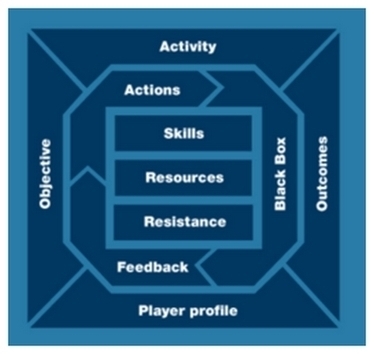
Gamification, the use of game play mechanics for non-game applications,...
Via Gilles Jourquin
Scoop.it!

MedCity NewsA social media strategist's rap on how pharma can improve its image (video)MedCity NewsSilja Jouquet's Ode to Pharma was part of the PechaKulcha segment at the recent e-Patient Connections conference.
Scoop.it!

The CLM Revolution Still Needs The Human Touch | eyeforpharma http://t.co/zD13xued #sales #pharma #hcsm...
Scoop.it!
Budget Sécu : une progression identique entre la ville et l'hôpital http://t.co/ghCmVgkN...
Scoop.it!

Le gouvernement mise gros sur la meilleure collaboration entre médecins de ville et hôpital. Mais il prévoit aussi des prélèvements supplémentaires.
Via Xavier Bouhet
Scoop.it!
Marisol Touraine, ministre des affaires sociales et de la santé, et Jérôme Cahuzac, ministre délégué chargé du budget, ont présidé ce jour la Commission des comptes de la sécurité sociale portant sur les prévisions 2012 et 2013. Ils ont présenté à cette occasion le contenu du projet de loi de financement de la sécurité sociale (PLFSS) pour 2013.
Via Cabinet Bidault - Transaction Pharmaceutique
Scoop.it!

Healthcare Technology...
Via uri goren
|
Scoop.it!

CalHealth Inc., based in Irvine, is getting ready to launch the MD Mouse by the end of the year. The product will be able to measure blood pressure by having a person’s finger slide inside a cuff that folds out from the middle section of the mouse. The mouse also comes with a personal health record such that the reading is automatically entered into it. The device also has the potential to connect the data to a provider in preparation for a day when physicians and other healthcare providers can receive and share information from patients easily.
Scoop.it!

Scoop.it!

The idea of widespread use of uninterrupted, untethered, wireless patient monitoring devices came one step closer to reality when the Federal Communications Commission released a final rule on Sept. 11 outlining its plan for allocating wireless spectrum for medical body area networks, or MBANs.
Via Richard Meyer
Scoop.it!

L'Usine NouvelleSécurité sociale : l'industrie pharmaceutique mettra encore la main à ...L'Usine NouvelleUn coût qui avait conduit des praticiens hospitaliers à prescrire à la place l'anticancéreux Avastin du laboratoire suisse Roche (30 à 50 euros...
Scoop.it!

Il convient dès lors de prendre le temps de réaliser l'étude des mots-clés en amont de tout projet, avant même de débuter le travail d'optimisation proprement dit. Pour cela, différentes méthodologies existent, à l'image de ...
Via Coraline DE GARCIA, Agathe Quignot
Scoop.it!

Every 50 years, there is a revolution in healthcare based on the trends of the era. In the 1870s, healthcare was revolutionized by the germ theory of disease and promotion of public health efforts. In the 1920s, the discovery of penicillin propelled forward the use of medication as treatment for disease. In the 1970s, use of the randomized controlled trial (RCT) ushered in an era of evidence-based medicine. As we approach the 2020’s, the trend toward big data, tools and systemization of care will revolutionize the way hospitals and physicians work and, most importantly, the way patients are treated.
Big data refers to a set of information and data so large and complex that it becomes difficult to process using conventional database management tools. At issue is how to access, distribute and utilize this vast amount of “unstructured” data. For patients, clinicians and hospitals that have massive amounts of clinical content in electronic health records (EHRs) that remains unused, the implications can be rising mortality rates and out-of-control medical costs.
Let’s consider the current vanguard of data-driven healthcare in hospitals. At the best institutions, doctors and nurses are going room to room each day to mark down which patients meet which quality metrics and whether they’re addressed. The result is a manually-entered, cumbersome flow chart that can, at best, address a handful of the hundreds of known quality measures and use limited data to address these. With a condition like deep-vein thrombosis for example, hospital staff relies on manual calculations to assess the risk of a patient. The problem is, if not treated properly, mortality rates rise. The real tragedy is that the information needed to properly assess the patient’s risk and determine treatment is available in the clinician’s notes, but without the proper tools the knowledge remains unavailable and hence, unused. Via nrip
Scoop.it!

See research performed by MD Mindset on iPad ownership, professional use and pharmaceutical rep use in physician detailing.
Via Nikos Papaioannou
Scoop.it!

Découvrez les dernières nouveautés de l'Internet santé francophone au cours du mois de septembre 2012. Nouveaux sites, contenus et campagnes web Nouvelle campagne web pour sensibiliser sur l'infection à chlamydia ...
Scoop.it!

Want to Create Brand Loyalty? Think Beyond Multichannel Marketing and Innovate!
Scoop.it!

Though the Food and Drug Administration is developing regulations for mobile medical apps, at least one member of Congress believes the federal agency is not currently equipped to handle the rapid pace of innovation in mobile technology.Rep. Mike Honda (D-Calif.), whose district covers much of Silicon Valley, is preparing to introduce legislation that would address this perceived shortcoming by establishing an Office of Mobile Health within the FDA. The office, according to Kaiser Health News, would make recommendations to FDA regulators on issues related to mobile health apps. The planned legislation, reportedly known as the Healthcare Innovation and Marketplace Technologies Act (HIMTA), also would set up a support program within the Department of Health and Human Services to help mobile health technology developers follow HIPAA privacy standards as they design new apps. “Currently, our healthcare system works against small-to-large startup entrepreneurs with a multitude of barriers to entry,” Honda says in a statement. “Why have the principles of Silicon Valley, which I represent – competition, innovation, and entrepreneurship – not fully manifested themselves in the healthcare information technology space? This bill gets us closer to that space.” Predictably, in this divided political climate, opinions of the forthcoming bill are mixed. Andrew Rosenthal, chief strategy officer for Massive Health, a startup developer of consumer health apps, tells Kaiser Health News that he is hopeful an FDA Office of Mobile Health could help smaller companies like his navigate the “confusing” and often expensive regulatory process. However, Joel White, executive director of the Health IT Now Coalition, a group of major corporations and the conservative U.S. Chamber of Commerce, would prefer a new agency that works outside the bureaucratic FDA framework so as not to discourage innovation. Kaiser Health News reports that the bill would be introduced “later this month,” though September ends Sunday. As of Thursday afternoon, no bill had been introduced. Honda’s media spokesman was not immediately available for comment. Via dbtmobile
Scoop.it!

Sécu: déficit du régime général pour 2013 autour de 11 milliards d ...Le Nouvel ObservateurLe dispositif "tiers payant contre génériques" a été renforcé par l'assurance-maladie en accord avec les pharmaciens qui n'accordent pas le tiers payant aux...
Via Xavier Bouhet
Scoop.it!

Texte extrèmement intéressant, dont je vous propose la conclusion ici... mais n'oubliez pas de lire le reste : Via BeerBergman, Gryka A
|




