


From
visual


Une veille sur la santé numérique en France et à l’international : politiques publiques, données, infrastructures, IA, services et usages. Études, rapports et retours de terrain sélectionnés par Lionel Reichardt, Pharmageek, pour comprendre les transformations et éclairer les décisions.
 Your new post is loading...
 Scoop.it! 
Scoop.it!

Décidément, il est beaucoup question d’évaluation ces derniers temps (enfin… dans la « blogosphère » santé et sur Twitter en tous cas). Via Giuseppe Fattori
Scoop.it!

Now that the shake-up at Happtique has called into question their future as a consumer-facing health app curator, it didn’t take long for another company to step up. Via Olivier Delannoy, eMedToday

eMedToday's curator insight,
May 30, 2013 9:54 PM
Another approach to app curation. Appears to be a sournd approach
"Whereas both Apple and Android only break apps into two categories, the often confusing “health” and “medical,” HealthTap breaks apps into doctor or consumer categories as well as 30 granular categories including calorie counters, period trackers, vaccine reminders, and pregnancy apps. They are tagged with the same tagging system as HealthTap’s Q&A platform, so consumers can move between the two.
Doctors on the HealthTap network have access to an interface where they can scroll through a list of apps and either recommend them or not, and then optionally write a review to explain their choice. Their reviews won’t enter the system until they’ve written at least 30 and those 30 have been looked over by a specially chosen group of physicians in the system that HealthTap refers to as a “medical review board”. After that, doctors will be able to review apps on their own."
Scoop.it!

Researchers found that doctors-in-training are now devoting only about 12 percent of their time at the patient’s bedside, far less than in previous generations, instead spending almost half their days in front of a computer screen documenting their... Via Philippe Loizon
Scoop.it!

Panel one at Velocity discussed the implications for pharma of collaborative working, big data and a scientific approach to advertising that were outlined in the previous presenttaions.
The speakers Kai Gait, Lee Henshaw, Michael Plimsoll and Tom Hulme were joined by Faisal Ahmed, James Read, Tim Ringrose, Andrew Widger and Tim Davies. Via Alex Butler
Scoop.it!
Not many physicians have heard of content marketing. But it’s a new way to keep current patients engaged and to attract new patients. Content marketing involves the creation and sharing of content for the purpose of acquiring customers. It is the art of communicating with customers and prospects without selling. “Instead of pitching your products or services, you are delivering information that makes your buyer more intelligent. The essence of this content strategy is the belief that if we, as businesses, deliver consistent, ongoing valuable information to buyers, they ultimately reward us with their business and loyalty.” According to the Content Marketing Institute, content marketing works. Companies like Proctor and Gamble, Microsoft, Cisco Systems, and John Deere have embraced this new way to attract customers. Small businesses and independent entrepreneurs are also using it. “Consumers have simply shut off the traditional world of marketing. They own a DVR to skip television advertising, often ignore magazine advertising, and now have become so adept at online “surfing” that they can take in online information without a care for banners or buttons (making them irrelevant).”
Scoop.it!

Dominique Godefroy's curator insight,
May 30, 2013 8:46 AM
L’ASIP Santé publie aujourd’hui son rapport d’activité pour l’année 2012.
DMP, CPS, Labellisation des logiciels de maisons de santé, audit des systèmes d’information de veille sanitaire et de prise en charge en urgence par les SAMU… ce document fournit un inventaire très complet des travaux menés par l’agence en 2012, ainsi qu’un aperçu de ses perspectives pour l’avenir.
Scoop.it!

Alors que la France dispose de l’une des plus grandes bases de données de santé au monde, ces informations détenues par l’assurance maladie sont utilisées au compte-gouttes. Via VALWIN, Hi_Camille_
Scoop.it!
La m-santé a déjà prouvé les bénéfices qu'elle pouvait apporter dans les pays émergents. Une étude PwC s'intéresse quant à elle aux avantages qu'elle pourrait offrir au Brésil et au Mexique Via Cecile Chelim
Scoop.it!

In some of our mash-ups, we talked about implantable technologies that are being used for health monitoring.
eMedToday's curator insight,
May 30, 2013 7:45 AM
This is a big deal technology
"The greatest benefit of this technology is that it could help patients avoid needless x-rays and allow doctors to monitor post-surgery complications in a less invasive way" This could save massive amounts in healthcare costs
Scoop.it!

Nutrino, the world's first virtual nutritionist
|
Scoop.it!

La HAS est une autorité publique indépendante qui contribue à la régulation du système de santé par la qualité. Via VALWIN
Scoop.it!

At DigiPharm 2012 we spoke to various people in the industry to find out what they thought the next big thing in digital for pharma is. This vBook includes insights from: Shona Davies, Global Unbranded Portals CoE Project Leader, MSD Andy Burke,... Via Ricard Robledo
Scoop.it!
Past and future development for pharma edetailing, to leverage return on sales. A core issue to Pharma's new commercial conduct.
Scoop.it!
Lionel Reichardt / le Pharmageek's insight:
Intéressant mouvement dans le quantifiedself..
Scoop.it!

Analytics, DataMining, Big Data... les buzz word se suivent, nous imposant à nous adapter, Via Alexandre Loyer
Scoop.it!
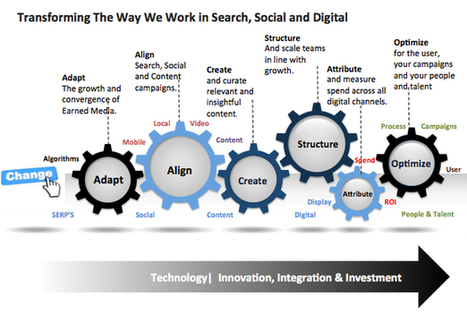
It is not so much a revolution but a rapid evolution and transformation. The growth of digital media, the convergence of paid, owned and earned media practices and the rapid growth and adoption of mobile and video have fueled change in the way we work in 2013. If you add to this equation the technological changes and innovation and the catalyst that is social media and content marketing it becomes apparent that dealing and adapting to change is a digital marketing necessity rather than the option that it used to be.
Via Alex Butler
Scoop.it!

Innovative apps powered by proprietary data can help target treatments and predict the course of illnesses. A McKinsey Quarterly article. Via Anneliz Hannan
Scoop.it!

Le numérique prend ses marques dans le secteur de la santé. Quels bénéfices peuvent en attendre les patients, les professionnels de santé et l’économi... Via Rémy TESTON, e-santé bourgogne
Scoop.it!

Kaiser Health News Via eMedToday
eMedToday's curator insight,
May 30, 2013 7:02 AM
These is interesting trend on how doctors are re-organzing how they do business one example
"Dr. Thomas Bellavia transformed his traditional medical practice in Hasbrouck Heights, N.J., into a so-called medical home where patients are seen by teams of doctors and nurses. He says it has paid off in better, more coordinated care for his patients and healthier income for the nurse practitioners and physicians in his group"
Scoop.it!
eMedToday's curator insight,
May 30, 2013 7:43 AM
summary:
"The sales representatives that give the most value to doctors cover psychiatry, oncology, paediatrics and ophthalmology, results from an exclusive poll for PharmaTimes show."
Scoop.it!

Proteus’s Digital Health Feedback System is designed to provide actionable information that can improve patient care and self-health management
|






Nice chart.
Why are mobile devcies a revolution. Read. Simple and impressive