


Les équipements médicaux présenteraient de vraies failles de cyber-sécurité qui pourraient mettre les patients en danger.
Via Emmanuel Capitaine


Une veille sur la santé numérique en France et à l’international : politiques publiques, données, infrastructures, IA, services et usages. Études, rapports et retours de terrain sélectionnés par Lionel Reichardt, Pharmageek, pour comprendre les transformations et éclairer les décisions.
 Your new post is loading...
 Scoop.it! Les équipements médicaux présenteraient de vraies failles de cyber-sécurité qui pourraient mettre les patients en danger. Via Emmanuel Capitaine 
No comment yet.
Sign up to comment
Scoop.it!

For the past few years San Francisco-based Sessions has been developing a direct-to-consumer, mobile-enabled program for inactivity and nutrition. Sessions, which was a member of digital health accelerator Rock Health’s second class in 2012, is currently enrolling about 80 people on a rolling basis for a randomized control trial of its coaching program at the Mayo Clinic. Sessions first did an internal pilot at Mayo last year, which apparently went well enough to lead to the RCT opportunity. Via Giuseppe Fattori
Scoop.it!

eMedToday's curator insight,
June 14, 2013 9:06 PM
Take away:
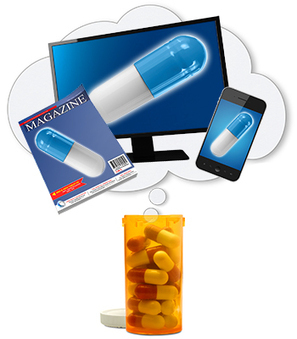
Sampling programs have long been an important part of pharmaceutical brand management. But pharmaceutical organizations have realized the need for alternative ways to supply physicians with samples in the face of restricted access and declining sales force staffing.
One approach that has gained momentum is physician E-sampling - a program that enables physicians to order and manage prescription samples online.
Scoop.it!
From
www

Drug companies spend $25 billion a year in the U.S. promoting prescription medications, including a growing amount spent of direct-to-consumer advertising. Via Philippe Marchal
Scoop.it!

On Thursday at the 2nd annual Digital Health Summer Summit, WellDoc heralded the launch of BlueStar. The healthcare behavioral science and technology company Via Philippe Loizon
Scoop.it!
The Quantified Self has been covered in many global publications recently, but most people still don't know what it is. In this guide, you'll learn everything y Via Cecile Chelim
Scoop.it!

Voici une infographie intéressante réalisée par SlickText sur le marketing digital et ses grands enjeux, à savoir le social, le mobile et évidemment le contenu. La convergence des trois sera probablement l’un des axes forts des futures stratégies Web. Via Jérôme Gast
Scoop.it!

Pèse-personnes WiFi, bracelets-podomètres qui calculent notre activité physique… nous entrons dans l’ère de la santé connectée et des coachs numériques. Plus qu’un effet de mode, il s’agit d’une véritable tendance de fond. Via Pharmacomptoir / Corinne Thuderoz
Scoop.it!

Un nouveau site web pour accompagner les professionnels de santé utilisant l’imagerie médicale a été lancé : Diagnologic.com. Présentation. Via Emmanuel Capitaine
Scoop.it!

Today, with advanced social intelligence, accurately mapping patient journeys has never been easier, more accurate or powerful. Via Dean Berg
Scoop.it!
Scoop.it!
There's an awesome study that was just published in JAMA Internal Medicine, Appropriate Use of Myocardial Perfusion Imaging in a Veteran Population: Profit Motives and Professional Liability Concerns“: Via Clay Schluchter
|
Scoop.it!

Azagame est un Serious Games pour l'aide et le diagnostic médical de la maladie d'alzheimer et les pathologies associées : AzaGAME. viaAzaGAME : un outil d’aide au diagnostic médical sur l’évolutio... Via nathalie Bissot-Campos
Scoop.it!

The study, dubbed the Healthcare Marketers Trends Report, surveyed more than 200 qualified executives from a range of medical fields and asked about a number of topics including marketing budgets and the many ... Via eMedToday
eMedToday's curator insight,
June 14, 2013 8:52 PM
Even though the article is on reducing budgets there is one great quote.
"The era of Big Pharma, and marketing of the magic of a pill, is gone," Kate Cronin, global managing director at Ogilvy CommonHealth Public Relations, told the news source. "Now it's about everything that surrounds a pill, including services, disease awareness, education and prevention."
eMedToday's curator insight,
June 14, 2013 8:55 PM
Pharma are being pushed for cost reduction.
The quote is so true. The Big Pill is gone and Pharmas need to create new ways to engage doctors and patients and that way is e detailiing
Scoop.it!

Les news Santé La formation en ligne et le e-learning sont utilisés par les médecins depuis des années pour mettre à jour leurs connaissances. Les serious games, un nouveau moyen de formation, est...
Scoop.it!

A survey of 1400 doctors reveals the top five ways they are using tablets and smartphones in their clinical practices.
In a clinical work setting, doctors who have electronic health records said they use their smartphones in clinical settings every day to:
Send and receive emails (65 percent);
Use apps (51 percent);
Instant messaging (50 percent);
Researching information about medications (35 percent);
Communicating with other physicians (32 percent).
But switch “smartphones” to “tablets” and you get this response:
Send and receive e-mails (52.4 percent);
Accessing electronic health records (50.6 percent);
Accessing diagnostic information (41.7 percent);
Research information about medication (33.3 percent);
Staying up to date with medical journals and papers (29.8 percent).
Among the other findings were
A little more than 60 percent access electronic medical records through their device’s browser rather than thru the vendor’s app.
One-third of EHR users and one-quarter of non-EHR users use a tablet device in their medical practice.
More than 70 percent of tablet users who access EHR through them have a password.
About 32 percent have a device tracker app installed on their tablet and the ability to remotely wipe all data on their tablet if lost or stolen (31 percent).
EHR users spend 25 hours on their tablet each week, with a greater amount of time spent on business (59%) than for personal reasons (41 percent).
Via nrip
Scoop.it!

Quoi ? DETEC’T est une application qui recherche sur des forums et réseaux sociaux les messages d’internautes relatifs à un médicament, les analyse et en extrait des informations sur les effets secondaires évoqués.
... Via Isabelle Delignière-Léglise, dbtmobile, Pharmacomptoir / Corinne Thuderoz, EVELYNE PIERRON
Scoop.it!

There is endless technology for ordering a burrito, turning off the air conditioning or turning on a security system from a cellphone. So why can't healthcare be this simple across the board? Via Sam Stern
Scoop.it!

Figure1 is a free iOS app (Android to come) debuting today at the Apple app store that hopes to be a “crowdsourced medical image library that healthcare pr Via Olivier Delannoy
Scoop.it!

The new vision for health care isn’t just about access, quality and affordability. It’s also about social and financial inclusion. That was one of the key messages presented at last week’s Ashoka Future Forum, an event that brought together more than 400 innovators, entrepreneurs, philanthropists, and members of the media to discuss potential solutions to pressing social challenges. Michel Nischan, a leader in the sustainable food movement and a panelist in a session about “health for all” as the new norm, said that health care systems often treat patients as numbers instead of as people who would live better with the right resources. That statement was echoed today by President Barack Obama: “Quality care is not something that should be a privilege. It should be a right.” With opportunities, and expectations, for better global health outcomes in mind, meet the six finalists in Ashoka Changemakers’ “Transforming Health Systems: Gamechanging Business Models” competition. These finalists were chosen by the competition’s expert panel of judges from more than 260 entries for their potential to “disrupt and transform health systems so that real value for patients, families, and communities are placed at the center of care.” Scaling proven mobile maternal health e-vouchers in Western Kenya
Changamka Microhealth is a social enterprise partnering with the Kenyan Ministry of Health. Its mission is to increase access to maternal health services. Changamka Microhealth uses mobile phones—a tool “at the center of everyone’s life in Kenya,” according to founder and Ashoka Fellow Samuel Agutu—to deliver health financing to people on the fringes or outside the Kenyan health care system … estimated to be about 90 percent of the population. The project offers e-vouchers to aid low-income expectant mothers receive care as well as a microinsurance product that allows any mobile phone user to accumulate savings to cover health care costs. “Using mobile technology for health care savings, distribution and payments will, in less than five years, provide inclusion to millions currently outside the health care and health insurance space,” all while reducing administrative costs by as much as 50 percent, Agutu said. Registries for ALL: Reg4ALL – Genetic Alliance Genetic Alliance, founded by Ashoka Fellow Sharon Terry, is the world’s first participant-controlled, cross-disease health registry. It gives users the power to decide how, and with whom, they share their health information. “This is the first time that everyone, regardless of health or disease state, can contribute their health information, get instant feedback on how they compare to others and still be in control of who sees and uses their information,” Terry said. “The market opportunity is astounding. Every article on Big Data, every policy body, every medical research project is looking for this solution—’How can we share the clinical data of millions of individuals and still respect their diverse wishes?’ “This solution will be applicable from everything to clinical trials to registries to electronic data exchange—a world that is exploding with opportunity.”
Genetic Alliance has completed a fully functional beta version and are now looking to integrate the registry with large clinical systems. Improving Access to Oral Healthcare – Sarrell Dental & Eye Centers Sarrell Dental is a nonprofit organization that provides quality dental and eye care to children in underserved communities, while minimizing the cost to the United States’ main public health insurance program—Medicaid. “Initially, the dental center lacked both dentists and patients, and it struggled to stay open even two days a week,” Vice President of Governmental Affairs Joshua Jones said. “In early 2005, Dr. Warren Sarrell recruited Jeffrey Parker, a retired businessman and former CEO of many multi-national companies, to serve as the organization’s CEO. Since then, under Parker’s leadership, the organization has seen 30 consecutive quarters of revenue growth, and one clinic has expanded to fourteen—five of which now also offer optical services.” In addition to Sarrell’s 14 brick-and-mortar health care centers, the nonprofit also operates a mobile dental bus to reach people in rural areas of Alabama, where it’s estimated that more than 60 percent of children have not seen a dentist. A WaterFirst health model - Healthpoint Services India Pvt. Ltd Healthpoint Services was established to provide in rural Indian villages with clean drinking water, medicine (through a licensed pharmacy), more than 80 comprehensive diagnostic tools, and access to qualified medical technicians via two-way telemedicine services. Healthpoint Services’ scalable and sustainable business model delivers preventive health care for just $1.60 per month per household. This trusted social enterprise, with 140 active water centers, offers affordable health care services to about 300 households every day. Because the water units typically become cash-flow positive within six months of operation, Healthpoint Services expects to build an additional 20 units per month, which will expand their reach to more than three million Indians in the next two years. Although clean, potable water is the major selling point, the company is piloting sales for health commodities like sanitary pads, condoms and nutritional supplements for pregnant women, in addition to health services for vaccinations, eye care, and the management of diabetes and hypertension. Health “Kiosks” for Kenya Slums – Access Afya U.S.-based Access Afya, co-founded by CEO Melissa Menke and Director Duncan Goldie-Scot, is building a network of high-tech, paperless health centers in Kenya’s slums. At Access Afya’s pilot mini-clinic, registered nurses create (and update) electronic medical records for every patient and use SMS to send appointment reminders, medication instructions and to follow-up on referrals to larger health facilities and specialists. In addition, health practitioners counsel patients on comprehensive wellness—”we want them in our clinic less, but want patients to be loyal, lifetime customers”—and offer products like clean cookstoves and water purifiers. “We bring care directly to the doorsteps of the people that need it most—no one else is looking at quality private sector health care for the base of the pyramid,” Menke said. ”People should take notice because we are already gaining traction: more than 500 patients from the Nairobi slums have paid us for health services in our first six months.” MeraDoctor – MeraDoctor MeraDoctor is delivering unlimited medical advice from licensed MMBS doctors to low-income families across India by telephone. The service is accessible 24 hours per day, seven days per week, and 365 days per year. Membership to MeraDoctor costs less than a nickel per day. The service’s doctors are put through a rigorous training program so that they ask callers the right questions and understand symptoms. To date, MeraDoctor physicians have addressed more than 400 ailments over the phone, recommending that callers visit doctors or specialists in-person when appropriate, and deliver names of medicines by SMS. If MeraDoctor misses a call, an assistant will register the caller as a patient and transfer them to a doctor as soon as possible. Refunds are available for unsatisfied customers. “We are trying to change the way people think about medical care,” MeraDoctor manager Malika Anand said. “No more mystery, no more unnecessary waiting, no more being at the mercy of uncaring providers. Think of us as holding your hand every step of the way as you navigate your health and wellness.”
Via Chatu Jayadewa
Scoop.it!

Fujitsu dévoile son smartphone à destination des séniors et des non technophiles. Fujitsu arrive sur le marché français avec le Stylistic S01, il s'agit d'un téléphone pour les non-technophiles dans la... Via Cecile Chelim
|






