|
Scooped by
Lionel Reichardt / le Pharmageek
October 2, 2013 3:41 AM
|


No comment yet.
Sign up to comment


Une veille sur la santé numérique en France et à l’international : politiques publiques, données, infrastructures, IA, services et usages. Études, rapports et retours de terrain sélectionnés par Lionel Reichardt, Pharmageek, pour comprendre les transformations et éclairer les décisions.
 Your new post is loading...
 Scoop.it! No comment yet.
Sign up to comment
Scoop.it!
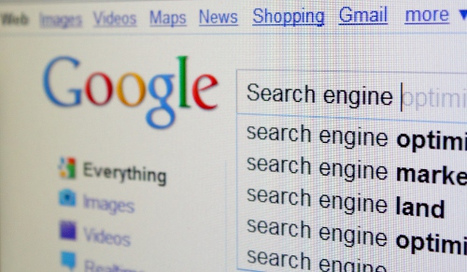
Learn how to answer questions your digital health prospects have... and make Google a non-factor. Via Sam Stern
Scoop.it!

76 % des généralistes possèdent un smartphone, et un médecin sur cinq est inscrit à un réseau social comme Facebook ou Twitter.
Scoop.it!

It seems that the average consumer uses social media for everything today. One can track an entire family history through online records, speak to clients all over the world through video conferencing services, and even access one’s bank account and bills with the click of a button. Given that people are turning to the Internet and social media sites more than ever, it only makes sense that health care companies have a presence on these services so that they, too, can better connect with their clients. Via Plus91, Giuseppe Fattori
Scoop.it!
Mémento speps 2ème édition - septembre 2013
Scoop.it!

In June 2013, CMI/Compas conducted its inaugural Media VitalsTM study to assess the varying key factors of physician engagement across 21 specialties, enabling strategy teams to leverage data about... Via Nikos Papaioannou
Scoop.it!

SANTÉ - Le recours généralisé aux téléphones portables pour suivre les patients permettrait d'économiser 11,5 milliards d'euros de dépenses de santé en France d'ici 2017, et 99 milliards dans l'Uni... Via Esposito Christelle
Scoop.it!

Midi Libre Cancer : la e-santé aide au diagnostic grâce à une application Midi Libre Développé avec l'unité clinique d'oncologie génétique du centre Léon Bérard de Lyon, basé sur les recommandations de la Haute autorité de santé et de l'Institut... Via Mélanie Toussaint, Géraldine GOULINET FITE
Scoop.it!

As mobile health advocates clamor for scientific proof to support their emerging field, Johns Hopkins University has introduced mHealth Evidence, an online reference tool designed to help researchers quickly locate literature demonstrating the feasibility, usability and efficacy of mobile technologies in healthcare. Via ehealthgr
Scoop.it!
What innovations lie in store for health care in 2013? Two visionaries driving innovation in the industry, Daniel Kraft, of the FutureMed Program, and Esther Dyson, of EDventure Holdings, discuss new technologies and innovations in health care in a discussion with The Economist's Charlotte Howard, at The Economist's World in 2013 Festival on December 8th 2012. Via ehealthgr

Cheslea Goodman's curator insight,
October 14, 2013 8:07 AM
Great predictions about the future of healthcare.
Scoop.it!

"It’s 2 a.m. You wake up to discover your 3-year-old daughter has a high fever. What do you do? Today, your options are limited. You can call the pediatrician only to reach the answering servic... Via Philippe Loizon, Gilles Jourquin, eMedToday
Scoop.it!

Premier site français d’information en continu sur les technologies de l’information et de la communication (TIC, NTIC) dans la santé - TIC santé Via Matthieu Boyer

's comment September 28, 2013 7:46 AM
Mat Beca's comment, Today, 1:46 PM
A suivre de près! J'espère seulement qu'ils vont arrêter de tapper autant sur les nouveaux médicaments. On se tire une balle dans le pied en anéantissant la recherche Française...
Scoop.it!

Le nouvel algorithme de Google, baptisé « Hummingbird », s’éloigne de la logique de mots-clefs et s’ouvre aux requêtes en langage... Via Francis Gaunand, Philippe Trebaul
|
Scoop.it!

Boehringer Ingelheim's social media presence took on a bigger stage last week with the announcement that the drug maker had teamed up with Spanish-language media outlet Univision to create a health and education campaign that will be integrated into the show Sábado Gigante (Giant Saturday). The program is the longest-running variety show in TV history, according the Guinness Book of Worlds Records. Boehringer notes that it is also a top show in 42 countries. The launch comes almost at the midpoint of Hispanic/Latino Heritage Month, which the Centers for Disease Control notes runs from September 15 through October 15. Hispanics are among a group of populations, which includes African-Americans and Pacific Islanders, which has a high risk of type two diabetes. The collaboration is a competitive dance/exercise segment called Ritmo Dieta, in which 10 contestants (one is diabetic) participate in a 13-week dance competition to lose weight and live healthier. Dance-induced weight loss has been a hallmark of the UK import show Dancing with the Stars. The 2011 season featuring actress Kirstie Alley and the 2007 run with singer Marie Osmond had entertainment outlets talking as much about their respective weight losses during the series run as they did the competition itself.
Scoop.it!
Novartis tops leaderboard at PM Society Digital Media Awards Via Josepf J Haslam
Scoop.it!

Pharmaceutical companies’ search for ways to trim costs on research and development is leading them to try out some alternative technologies to achieve that. Organ-on-a-chip, aka human-on-a-chip, fits that description. Sanofi US is collaborating with Hurel, a biotechnology startup with a platform that replicates the human liver using living cells. It will fund studies to assess the utility of Hurel’s organ-on-a-chip platform for pre-clinical drug development, according to a company statement. Hurel sees the liver as ideal for assessing a drug’s toxicity in pre-clinical trials. The results of the study will be published in at least one co-authored, peer-reviewed scientific publications. Marc Bonnefoi, Head of Sanofi’s North America R&D hub said:”Our partnership with Hurel is an opportunity to leverage an innovative new life sciences technology to accelerate drug development and impact the lives of patients.” The initial phase of this new R&D collaboration with Sanofi will aim to validate Hurel’s human liver on a chip in a series of experiments that take place in the pre-clinical phase. It will evaluate toxicology, drug metabolism and pharmacokinetics to assess how the body absorbs and distributes a drug through different organs. Via nrip
Scoop.it!

By Rory Stanton, Consumer Analyst Via eMedToday

eMedToday's curator insight,
October 2, 2013 1:13 AM
In fact, only 55% of online consumers reported that they can find all the health and medical information that they need on the Internet. The flood of health apps, websites, portals, health communities, and health news sites has created a bit of “information overload”, and patients need decision support tools to help determine what all this information means in the context of improving and managing their own health
And
Consumer traffic to pharmaceutical corporate websites is low because usability is typically low.
Scoop.it!

I started this project to try to determine what wearable tracking device was best to change one’s habits. The market is still fragmented. Via JP DOUMENG
Scoop.it!
Les copies de médicaments biologiques, un marché balbutiant Via Mélanie Toussaint
Scoop.it!
Orange Healthcare, entité dédiée à la stratégie santé du groupe France Télécom Orange, concentre son expertise autour de trois domaines d’intervention : les services pour les professionnels de santé, les services de télésanté et les services de... Via Pharmacomptoir / Corinne Thuderoz
Scoop.it!
Scoop.it!

Gamification has become an increasingly important element within the training industry, one that can often mean the difference between success and failure. In recent years, looking critically at th... Via Ana Cristina Pratas, Gilles Jourquin, Giuseppe Fattori

Chip Peters's curator insight,
October 2, 2013 8:41 AM
An excellent article - provides foundational insight into the trend sweeping the industry.
Scoop.it!

“Mobile health is projected to be a 26 billion dollar industry by 2017. But the industry means more than just big businesses.” Via eMedToday
Scoop.it!

|