E-SANTÉ : COMPRENDRE. RELIER. TRANSFORMER.
316.0K views | +117 today
E-SANTÉ : COMPRENDRE. RELIER. TRANSFORMER.

Une veille sur la santé numérique en France et à l’international : politiques publiques, données, infrastructures, IA, services et usages. Études, rapports et retours de terrain sélectionnés par Lionel Reichardt, Pharmageek, pour comprendre les transformations et éclairer les décisions.

ESSAI
Your new post is loading...
Scooped by Lionel Reichardt / le Pharmageek
November 21, 2013 1:03 PM
Scoop.it!

Big data can improve health outcomes

Big data can improve health outcomes | E-SANTÉ : COMPRENDRE. RELIER. TRANSFORMER. | Scoop.it

Earlier this month the Personal Genome Project UK (PGP-UK) was launched in an effort to find 100,000 volunteers willing to allow their DNA information to be added to a new publicly accessible database. Volunteers are being asked to waive their privacy rights in return for what the programme operators say would be their "valuable and lasting contribution to science".


The PGP-UK initiative was one example of the attempt to improve the accessibility of health information to scientific researchers and added that growing the amount of data available and improving the tools for analysing the information would have health benefits.

No comment yet.
Rescooped by Lionel Reichardt / le Pharmageek from industrie pharmaceutique e-sante m-sante
November 21, 2013 12:53 PM
Scoop.it!

Quand l’e-santé diminue le besoin de consultation physique

Selon un nouveau rapport du Johns Hopkins Bloomberg School of Public Health, l’utilisation croissante des technologies de l’information en santé et des applications mobiles médicales pourrait influencer sur la demande future en médecins.

Via Hélène Introvigne
No comment yet.
Rescooped by Lionel Reichardt / le Pharmageek from Healthstartup.eu
November 21, 2013 12:45 PM
Scoop.it!

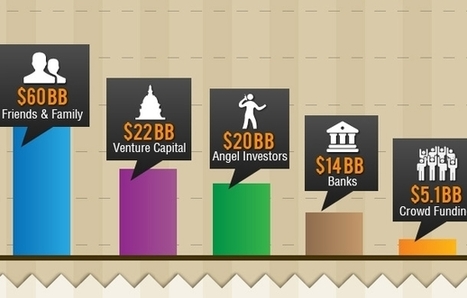
Where Startup Funding Really Comes From (Infographic)

Where Startup Funding Really Comes From (Infographic) | E-SANTÉ : COMPRENDRE. RELIER. TRANSFORMER. | Scoop.it

VCs and angel investors get a lot of attention, but personal loans and credit, followed by investments from friends and family, are the top funding sources...


Via Bart Collet
No comment yet.
Rescooped by Lionel Reichardt / le Pharmageek from Digital Health
November 21, 2013 12:38 PM
Scoop.it!

Checking up on Dr. Google: How the search giant has tackled health and wellness | mobihealthnews

Checking up on Dr. Google: How the search giant has tackled health and wellness | mobihealthnews | E-SANTÉ : COMPRENDRE. RELIER. TRANSFORMER. | Scoop.it

Google made big news recently when it announced Google Calico, a new venture that would apply “some longer term, moonshot thinking around healthcare and biotechnology,” putting the minds at Google toward the problems of aging and illness.

Calico is far from Google’s first venture into health or wellness, however. The company’s (ultimately failed) PHR venture Google Health was one high profile example, as were 3D anatomy-viewer Google Body and Google Flu Trends. The company has always had a background participation in activity tracking, debuting an Android app called MyTracks in 2009, and incorporating passive activity tracking into first Google Now and then the Android OS in general. And perhaps most importantly, Google has introduced health-related features into its original core offering: search. As well it should, since Pew data indicates that eight in 10 health inquiries start at a search engine like Google.


Via Marc Phippen
No comment yet.
Rescooped by Lionel Reichardt / le Pharmageek from Digitized Health
November 21, 2013 12:34 PM
Scoop.it!

mHealth Debate Puts Congress on Opposite Side of FDA

mHealth Debate Puts Congress on Opposite Side of FDA | E-SANTÉ : COMPRENDRE. RELIER. TRANSFORMER. | Scoop.it

The FDA is in the middle of a disagreement with Congress. The issue at hand? mHealth regulation. Specifically, the debate boils down to whether mobile health-related software should be regulated as a medical device would ordinarily be.


Via Emmanuel Capitaine
No comment yet.
Scooped by Lionel Reichardt / le Pharmageek
November 21, 2013 12:29 PM
Scoop.it!

Big data is here. How to separate signal from n...

Big data is here. How to separate signal from n... | E-SANTÉ : COMPRENDRE. RELIER. TRANSFORMER. | Scoop.it

“Deloitte identifies the six key trends in the healthcare industry that will impact big data healthcare analytics. Move from hindsight to insight. (Big data is here. How to separate signal from noise?”

No comment yet.
Rescooped by Lionel Reichardt / le Pharmageek from Pharma Hub
November 21, 2013 11:03 AM
Scoop.it!

Propeller Keeps Asthmatics Out Of The ER By Harnessing The Internet Of Things

Propeller Keeps Asthmatics Out Of The ER By Harnessing The Internet Of Things | E-SANTÉ : COMPRENDRE. RELIER. TRANSFORMER. | Scoop.it
An inhaler with a sensor on top beams data to doctors that helps reduce emergency room visits and lowers health care costs.

Via Philippe Marchal
No comment yet.
Rescooped by Lionel Reichardt / le Pharmageek from Santé-pharma : digital, mobile & réseaux sociaux
November 21, 2013 10:55 AM
Scoop.it!

Bon usage, observance, des défis pour la eSanté

Bon usage, observance, des défis pour la eSanté | E-SANTÉ : COMPRENDRE. RELIER. TRANSFORMER. | Scoop.it
Utiliser les médicaments à bon escient, « respecter les doses prescrites », s’il paraît évident que le suivi à la lettre d’un traitement est la clé d’une prise en charge optimale de la maladie, dan...

Via Isabelle Delignière-Léglise
No comment yet.
Scooped by Lionel Reichardt / le Pharmageek
November 20, 2013 9:07 AM
Scoop.it!

HEALTH 2.0 EUROPE … UN RESUME EN TWEETS & PICS DE LA DEUXIEME JOURNEE - #hcsmeufr #health2eu

HEALTH 2.0 EUROPE … UN RESUME EN TWEETS & PICS DE LA DEUXIEME JOURNEE - #hcsmeufr #health2eu | E-SANTÉ : COMPRENDRE. RELIER. TRANSFORMER. | Scoop.it
No comment yet.
Scooped by Lionel Reichardt / le Pharmageek
November 20, 2013 9:04 AM
Scoop.it!

HEALTH 2.0 EUROPE ... UN RESUME EN TWEETS & PICS DE LA PREMIERE JOURNEE - #hcsmeufr #health2eu

HEALTH 2.0 EUROPE ... UN RESUME EN TWEETS & PICS DE LA PREMIERE JOURNEE - #hcsmeufr #health2eu | E-SANTÉ : COMPRENDRE. RELIER. TRANSFORMER. | Scoop.it
No comment yet.
Rescooped by Lionel Reichardt / le Pharmageek from Mobile Health: How Mobile Phones Support Health Care
November 20, 2013 6:58 AM
Scoop.it!

#mhealth : Health-Care Apps That Doctors Use

#mhealth : Health-Care Apps That Doctors Use | E-SANTÉ : COMPRENDRE. RELIER. TRANSFORMER. | Scoop.it

By Jeanne WhalenNov. 17, 2013 4:07 p.m. ET

Cardiologist Eric Topol says he knew medicine had reached a turning point when patients started emailing him the results of do-it-yourself electrocardiograms.

With the help of a smartphone, a software application and a portable device that reads a person's heart rhythm, anyone can get an instant EKG reading on their phone screen.

"I am getting emails from people saying, 'I'm in atrial fibrillation—what do I do?' " Dr. Topol says, referring to a type of irregular heartbeat. "Whoa! The first time I saw that in the subject line of an email, I said, the world has really changed."

Mobile apps for smartphones and tablets are changing the way doctors and patients approach health care. Many are designed for the doctors themselves, ranging from handy databases about drugs and diseases to sophisticated monitors that read a person's blood pressure, glucose levels or asthma symptoms. Others are for the patients—at their doctor's recommendation—to gather diagnostic data, for example, or simply to help coordinate care, giving patients an easy way to keep track of their conditions and treatments.

Doctors say many of the apps are useful time savers, and have the potential to make health care more efficient by speeding diagnosis, improving patient monitoring and reducing unnecessary visits to a physician or hospital. Still, the field has a way to go, doctors add, particularly when it comes to making good use of all the patient data being generated.

Enlarge Image

Epocrates has a visual guide to drugs. Epocrates

Here are some of the apps doctors are talking about most. Some are free; others cost several hundred dollars for a year's subscription. Those that combine an app and a wireless monitor cost from $80 to $200.

EPOCRATES One of the oldest and most established medical apps, Epocrates gives doctors basic information about drugs, the right dosing for adults and children, and warnings about harmful interactions. It has replaced many a copy of the Physician's Desk Reference.

Made by Epocrates Inc., a unit of Athenahealth Inc., ATHN -5.00% Watertown, Mass.

Enlarge Image

UpToDate illustrates bypass surgery. UpToDate

UPTODATE This app provides reference material doctors can consult when making treatment decisions. David Bates, an internist at Brigham and Women's Hospital in Boston, says he has used it recently to look up treatment approaches for patients who have failed to respond to existing hypertension therapies, and for information on the drug combinations needed to treat a bacterial infection called H. pylori.

Made by Wolters Kluwer WTKWY -0.04% NV, the Netherlands.

ISABEL Every doctor needs help reaching diagnoses. Here, doctors enter symptoms, and the app lists possible diagnoses as well as medications that could cause the symptoms.

The app was developed by the parents of Isabel Maude, a 3-year-old British girl who died in 1999 after being misdiagnosed. Robert Wachter, professor and associate chairman of the department of medicine at the University of California, San Francisco, says he's intrigued by Isabel and similar diagnostic tools. But Dr. Wachter also believes the apps aren't finely tuned enough to recognize that some symptoms are more important than others in reaching a diagnosis.

"It's part of what I trained 20 years to do—to tell which [symptoms] are irrelevant and which ones are important," he says. "That's really hard to say to a computer."

Jason Maude, chief executive officer of Isabel Healthcare Ltd., says the tool "is not to replace the doctor but to be an adjunct. The tool comes up with list of possibilities, and it's then the doctor's job to work out the probabilities."

Made by Isabel Healthcare, Haselemere, England.

Enlarge Image

AliveCor's heart app. AliveCor

ALIVECOR This portable heart monitor and app—one of the programs that opened Dr. Topol's eyes—runs on a patient's smartphone to produce electrocardiograms. Patients place their fingers over the monitor's sensors, which wirelessly communicate with the phone to produce the EKG.

Dr. Topol, director of the Scripps Translational Science Institute in La Jolla, Calif., says he recommends this or similar apps to patients who have irregular heart rhythms. Very often, he says, the main benefit is in reassuring patients that everything is fine.

Made by AliveCor Inc., San Francisco.

IHEALTH WIRELESS PULSE OXIMETER People with trouble sleeping can use this app to record their blood-oxygen level during the night—data that can help a doctor diagnose whether they have sleep apnea.

Sleep apnea is caused by the abnormal narrowing or blockage of the airways that allow air to flow into the lungs, which causes sudden drops in oxygen in the blood. Obese people often suffer from the problem because excessive fat tissue can thicken and narrow the wall of the windpipe.

To use the app, patients go to bed wearing a fingertip sensor, which wirelessly links to the phone and keeps track of their blood oxygen levels. Dr. Topol says he advises obese patients who have sleeping problems to use this and similar monitors, which he says are better than many expensive sleep studies conducted at hospitals.

Made by iHealth Lab Inc., Mountain View, Calif.

Enlarge Image

ResolutionMD views X-rays and more. ResolutionMD

RESOLUTIONMD Doctors can look at X-rays and other images on a smartphone or tablet when they use this app. Some doctors say the app is handy for viewing images as soon as they're available, no matter where the doctor happens to be.

But Neville Bamji, a gastroenterologist at Mount Sinai Hospital in New York, says the image resolution of such apps isn't yet good enough to be used to make a diagnosis.

"I don't think I'd make any diagnostic decisions based on an iPhone image. I'd be really worried if my doctor were doing that," he says.

Made by Calgary Scientific, Calgary, Alberta.

Enlarge Image

CellScope's Oto helps peer in the ear. CellScope

CELLSCOPE OTO: A smartphone becomes an otoscope, the instrument doctors use to look into the ear, thanks to this app and optical device. Doctors say it's useful for recording videos of a child's ear and then showing the images to family members to explain their diagnosis.

Jessica Kaplan, a pediatrician in San Francisco, says that can help cut down on unnecessary use of antibiotics. When parents see an image of a child's ear at an initial visit and again at a follow-up appointment, they realize "Oh, wow, we didn't need antibiotics," says Dr. Kaplan, who says she has used the CellScope Oto in her practice for about six months.

Developed by CellScope Inc., San Francisco.

Enlarge Image

IScrub tracks hand-washing. iScrub

ISCRUB This infection-control app collects and rapidly displays data on whether hospital staff are being scrupulous about washing their hands. Most hospitals have unofficial observers of whether doctors, nurses and other staff are following hand-hygiene guidelines. Many are not.

The app gives observers a way to send their observations via a wireless device to a central database, where the results can be calculated and shared with all staff the same day.

"If you see the data one month later, it doesn't change behavior," says Philip Polgreen, an infectious-disease physician at the University of Iowa medical school who helped develop the app. But if people see the information by the end of their shift, they tend to take it more seriously, he says.

The app can chart one hospital ward against another, or one hospital against another, to compare compliance. About 20 U.S. hospitals use it.

Made by the University of Iowa, with support from GOJO Industries Inc., the maker of Purell hand sanitizer.

BREAST CANCER DIAGNOSIS GUIDE Using this app, breast-cancer patients enter and track details of their disease and treatment, from the size of the tumor to the presence or absence of estrogen receptors.

Enlarge Image

Marisa Weiss, an oncologist in Philadelphia and founder of Breastcancer.org, a patient support group that developed the app, says it helps patients grapple with the flood of information when first diagnosed. It also helps them stay on top of details as they consult various doctors, from surgeons to radiation oncologists.

Made by Breastcancer.org, Ardmore, Pa.

CLINICAM Increasingly, doctors are using their phones to take photos of a patient's condition—such as a rash or wound—and to upload the images to the patient's electronic medical record. One problem: That could violate health-care privacy laws if the doctor leaves the photo on his or her personal phone.

CliniCam, a new app developed for use at Brigham and Women's Hospital, sends such photos directly to the patient's electronic medical record without storing them on the phone.

"Pictures are often exceptionally helpful," says David Bates, an internist at the hospital who has tried the app. "It is much easier to describe things like skin lesions, rashes and wounds with pictures than with words," he says. The app holds particular promise for plastic surgeons, who use photos routinely, he adds.

Developer Adam Landman, also a doctor at Brigham and Women's Hospital, says the app is designed specifically to work with the medical records system at his hospital. Making the app more widely usable is a long-term goal, he says.

Made by developers at Brigham and Women's Hospital, Boston.

Ms. Whalen is a Wall Street Journal staff reporter in London. She can be reached at jeanne.whalen@wsj.com.


Via dbtmobile
No comment yet.
Rescooped by Lionel Reichardt / le Pharmageek from Social Media and Technology in Healthcare
November 20, 2013 6:56 AM
Scoop.it!

Crowdsourced health studies

Crowd Sourced Health Care Studies:Implications for PharmaDavid Lee Scher, MD, FACC, FHRSDigitalhealthconsultants.com

Via Marie Ennis-O'Connor, Family Doctor
No comment yet.
Rescooped by Lionel Reichardt / le Pharmageek from M-Health
November 20, 2013 6:53 AM
Scoop.it!

La téléprésence adoptée par les médecins des hôpitaux américains

La téléprésence adoptée par les médecins des hôpitaux américains | E-SANTÉ : COMPRENDRE. RELIER. TRANSFORMER. | Scoop.it
La téléprésence par les robots est en train de révolutionner les pratiques de la médecine, en particulier grâce au Beam.

Via L'Université d'été de la e-santé
No comment yet.
Rescooped by Lionel Reichardt / le Pharmageek from mHealth marketing
November 21, 2013 1:02 PM
Scoop.it!

How mHealth Public Relations Firms Boost Your Brand

How mHealth Public Relations Firms Boost Your Brand | E-SANTÉ : COMPRENDRE. RELIER. TRANSFORMER. | Scoop.it
Discover the 7 ways PR can help boost your Mobile Health brand and help you drive more sales.

Via Sam Stern
No comment yet.
Rescooped by Lionel Reichardt / le Pharmageek from Pharma: Trends in e-detailing
November 21, 2013 12:51 PM
Scoop.it!

The Pill is Not the Point

The Pill is Not the Point: Has Pharma Finally Figured out Social Media?

Via eMedToday
eMedToday's curator insight, November 20, 2013 8:01 PM

So, how does an industry like pharma, which suffers from an image problem (only 56% as of this year of consumers trust drug companies, according to Edelman), take advantage of a vital marketing tool such as social media and its extraordinary capabilities for connecting with customers and creating a brand presence?

The answer? Forget the drug.  It’s about education, stupid. And, pharma marketers believe the timing couldn’t be better given the onset of Obamacare and the immediate need of consumers for information and guidance when it comes to their personal healthcare

eMedToday's curator insight, November 20, 2013 8:10 PM

The key issue Pharma do not really understand is that in e detailing it is not about the pill anymore but about helping the doctor.

Rescooped by Lionel Reichardt / le Pharmageek from Le numérique au service de la santé à domicile et de l’autonomie
November 21, 2013 12:39 PM
Scoop.it!

La e-santé, prochain sujet à l’examen pour nos médecins et infirmiers

La e-santé, prochain sujet à l’examen pour nos médecins et infirmiers | E-SANTÉ : COMPRENDRE. RELIER. TRANSFORMER. | Scoop.it
Dans une récente tribune, Laurent Chambaud directeur de l’Ecole des hautes études en santé publique (EHESP), qui forme les futurs cadres de santé et du médico-social, indiquait la nécessité d’intégrer les nouvelles technologies de santé dans la...

Via France Silver Eco
No comment yet.
Rescooped by Lionel Reichardt / le Pharmageek from Digital et santé
November 21, 2013 12:37 PM
Scoop.it!

Un contexte financier propice aux applications médicales, à tempérer

Un contexte financier propice aux applications médicales, à tempérer | E-SANTÉ : COMPRENDRE. RELIER. TRANSFORMER. | Scoop.it

L'apparition du secteur des outils digitaux au sein de l'industrie médicale a généré un investissement très important, encore faut-il replacer cet engouement dans les tendances du marché.

Il existe désormais près de 97 000 applications médicales et ce, sans compter les nombreuses plates-formes et objets connectés existants ou qui devraient très prochainement entrer sur le marché. Ce seraient ainsi, depuis 2006, près de 7 milliards de dollars qui ont été investis dans le secteur de la santé digitale. Chiffre impressionnant qui s'incarne dans la profusion de startup et de produits, chiffre qu'on ne peut cependant que mettre en relation avec le peu de pénétration de ceux-ci auprès des institutions médicales. Comment alors assurer le retour d'un investissement dans ce secteur aujourd'hui? C'est à cette question que se sont attelés de nombreux experts et investisseurs à l'occasion du Health 2.0 qui se tenait à Londres depuis dimanche dernier.


Via Agathe Quignot
No comment yet.
Rescooped by Lionel Reichardt / le Pharmageek from Hospitals: Trends in Branding and Marketing
November 21, 2013 12:30 PM
Scoop.it!

Programmed ways to wellness - Independent Online

Programmed ways to wellness - Independent Online | E-SANTÉ : COMPRENDRE. RELIER. TRANSFORMER. | Scoop.it

“Independent Online Programmed ways to wellness Independent Online Medical scheme industry roleplayers have always been polarised in their views on these entities, with some saying managed care is essential and others berating the spending on...”


Via eMedToday
No comment yet.
Scooped by Lionel Reichardt / le Pharmageek
November 21, 2013 12:28 PM
Scoop.it!

Popup Clinic: simple, free health testing solution

Popup Clinic: simple, free health testing solution | E-SANTÉ : COMPRENDRE. RELIER. TRANSFORMER. | Scoop.it

Popup Clinic is a simple, free, health testing solution, centred around people and funded by the private sector.

No comment yet.
Rescooped by Lionel Reichardt / le Pharmageek from Veille Pharma
November 21, 2013 11:01 AM
Scoop.it!

Présentation des données oncologiques de Janssen au congrès annuel 2013 de l'American Society of Hematology (ASH)

Présentation des données oncologiques de Janssen au congrès annuel 2013 de l'American Society of Hematology (ASH) | E-SANTÉ : COMPRENDRE. RELIER. TRANSFORMER. | Scoop.it
Les résultats mettent en relief l'intérêt croissant que porte la société à l'hématologie, avec des médicaments comme l'ibrutinib, le siltuximab, le daratumumab, VELCADE® et DACOGEN® Remarque : le présent co...

Via Alexandre DUBOIS
No comment yet.
Rescooped by Lionel Reichardt / le Pharmageek from Healthcare & Social Media
November 21, 2013 10:55 AM
Scoop.it!

The 6 Biggest Innovations in Health Care Technology in 2013 [INFOGRAPHIC]

The 6 Biggest Innovations in Health Care Technology in 2013 [INFOGRAPHIC] | E-SANTÉ : COMPRENDRE. RELIER. TRANSFORMER. | Scoop.it
This year we’ve witnessed amazing innovations in technology with everything from wearable tech like Google Glass or Nike+ to the recent introduction of Coin, one card that stores all your...

Via Philippe Loizon, Pharmacomptoir / Corinne Thuderoz
No comment yet.
Scooped by Lionel Reichardt / le Pharmageek
November 20, 2013 9:06 AM
Scoop.it!

Popular Epocrates medical app used by Physicians has wrong data, should be removed from App Store

Popular Epocrates medical app used by Physicians has wrong data, should be removed from App Store | E-SANTÉ : COMPRENDRE. RELIER. TRANSFORMER. | Scoop.it
Epocrates recently released Bugs + Drugs app, however problems with the app mean that iMedicalApps cannot recommend it
No comment yet.
Scooped by Lionel Reichardt / le Pharmageek
November 20, 2013 6:59 AM
Scoop.it!

Takeaways from The #DigitalHealth Conference 2013

I recently attended and moderated at my first Digital Health Conference in New York, hosted by the New York e Health Collaborative. I was impressed with the quality of the speakers but more impress...
No comment yet.
Rescooped by Lionel Reichardt / le Pharmageek from E-Pochondriac
November 20, 2013 6:57 AM
Scoop.it!

Cegedim launching own doctors social network

Cegedim launching own doctors social network | E-SANTÉ : COMPRENDRE. RELIER. TRANSFORMER. | Scoop.it
by Christiane Truelove (chris.truelove@ubm.com)
Cegedim Relationship Management is casting its lot in the online doctor social community category in the United States with its own offering, Docnet.

Via uri goren
No comment yet.
Rescooped by Lionel Reichardt / le Pharmageek from Health Care Social Media And Digital Health
November 20, 2013 6:55 AM
Scoop.it!

Leveraging Mobile Health Technolog for Patient Recruitment An Emerging Opportunity


Via Marie Ennis-O'Connor
eMedToday's curator insight, November 20, 2013 7:51 PM

Mobile phones are great way to do surveys.