
E-SANTÉ : COMPRENDRE. RELIER. TRANSFORMER.
315.6K views |
+4 today


Une veille sur la santé numérique en France et à l’international : politiques publiques, données, infrastructures, IA, services et usages. Études, rapports et retours de terrain sélectionnés par Lionel Reichardt, Pharmageek, pour comprendre les transformations et éclairer les décisions.
Curated by
Lionel Reichardt / le Pharmageek
ESSAI
 Your new post is loading...
 Scoop.it! 
Bruxelles, le mardi 21 janvier 2014 – Poussées par de nombreux scandales, les autorités sanitaires de plusieurs pays européens, dont la France et l’Union européenne elle-même ont récemment mis en place des réformes de leur système de... Via Pharmacomptoir / Corinne Thuderoz 
Scoop.it!

ERP software system in Pharmaceutical Industry - Best solution from eresource ERP. Pharmaceutical-specific ERP (Enterprise Resource Planning) software system is the most effective way to identify and track every single raw material. Via Clara Hamelin
Scoop.it!

In a world frantically scrambling to adapt to the changing digital landscape, how has healthcare fared? Has the Internet and social media helped or hindered its development? Should the public turn to the Internet for medical advice? I enlisted the help of some leading voices in the field to unravel these questions and shed some much needed light on the topic.
Information technologies have already prompted a massive shift in the way medical information is accessed, with its capacity to transfer important knowledge from health professionals to the wider public. Social media, in particular, is a perfect vehicle for this. As the tentacles of social media permeate into everyday life, doctors and healthcare organisations alike can leverage this power to circulate valuable information about health problems as well as self-care and prevention techniques.
As Lee Aase, Director at Mayo Clinic Social Media, confirms: “By engaging in public, knowledgeable professionals can offer help and insights on a scale that was previously impossible. And by bringing their science-based perspective they can hopefully counter some of the bad information that has been so harmful to public health” “The Journal of Internet Medical Research have suggested that 60% of adults used the internet to find health information” It’s exactly this ‘bad information’ that makes searching online for medical advice fraught with dangers. For the more Internet savvy, this may not pose a problem, but, for the less educated, and the elderly, finding credible information on the web may be a troublesome task. The reality is that anyone can publish on the internet, regardless of quality, which means that you could be confronted with information that is conflicting, confusing, or quite simply wrong.
From a runny nose to something more serious like a suspicious lump, people are heading to the web more and more; but, with more than 70,000 websites disseminating medical information, where should you visit?
According to Dr. Sarah Jarvis, clinical consultant at Patient.co.uk, your doctor can advise you on trusted sites to visit. Here in the UK, sites which have been awarded The Information Standard by the NHS, are particularly useful as medical resources:
"Patient.co.uk is fully accredited, and all the articles on the site are written by GPs, for GPs and their patients. They also provide full references to back up their content. Of the 11 million people who access the information onsite every month, almost a million are GPs and practice nurses – a ringing endorsement of the quality of the information." However, can even the most reputable sites compare to the value of a face-to-face appointment with your GP? Dr. Leana Wen, physician and author of When Doctor’s Don’t Listen believes that the Internet should only be used to accompany a visit to the doctors: "Don't use the Internet to make your diagnosis, but rather use it to formulate better questions to ask your doctor. Internet search engines can't replace seeing your doctor, because symptoms alone don't make your diagnosis--your history and physical exam do."
This is true; the benefits of a physical diagnosis cannot be completely replaced by a search online. However, the Internet and social media have other abilities that can improve healthcare, namely it’s capacity to bring patients with similar diseases together. Through Twitter chats and Facebook groups, like-minded patients can connect with one another for mutual support and knowledge sharing. Introducing trained medical professionals into these conversations will undoubtedly make these discussions more helpful.
“Doctors should always exercise caution when using Twitter as it can often lead to a conflict of interest, but as long as it’s used in responsible manner, Twitter can be the perfect platform to educate the public on a wide range of health issues.”Healthexpress Chief medical Advisor, Dr. Hilary Jones Facebook is particularly good at grouping patients together. In one simple click, you can become an active member of a community alongside others with similar interests. These groups supply valuable opportunities to talk to one another while offering important information on breakthrough studies, news and advice for a specific condition, all of which will feature on a daily newsfeed.
A perfect example of a successful social media campaign can be observed with Diabetes.co.uk, a community website which has successfully built a global network to help people with diabetes worldwide. As well as promoting awareness for Diabetes, their social media platforms unite people with similar worries so they can share their stories and seek support.
In fact, the benefits of an extended support network on a persons health has been confirmed by several studies. Researchers from California carried out a large-scale study in 1979, which concluded that people with relatively low levels of social interaction died earlier than those with strong social networks.
By using social media, people are more likely to partake in social interaction and support. The possibilities have moved beyond the restraints of face-to-face contacts to an unlimited pool of people with shared interests and concerns. As Medical Expert for NBC and regular on air guest for Fox News, Dr. Kevin Campbell testifies, "Support groups are extremely valuable for patients--social media allows for patients from geographically diverse regions to interact in real time without even leaving their own homes." “Social media connects. Social Media informs both patients and doctors. It enhances knowledge. It facilities communication. In healthcare, is there anything more powerful than knowledge and human connection?”Dr.John Mandrola, cardiologist As well as improving doctor/patient relationships, Dr. Campbell believes that social media can develop relationships within doctors’ circles themselves. Doctors can now consult each other from anywhere in the world, meaning that ideas can be more easily disseminated, thus improving research and patient care.
However, many healthcare institutions are worried that the use of social media by their doctors may compromise patient privacy while threatening a doctor’s professional reputations. This has lead to many organisations devising their own guidelines for their doctors. Dr. John Mandrola, a cardiac electro physiologist and regular Twitter user, has created his own ‘Rules for Doctors on Social Media.’
There may be some risks to consider when integrating social media into a healthcare model, but the overwhelming power of social media as a tool to educate and distribute medical information cannot be ignored. If social media is to revolutionize healthcare and improve public health on a global level, health professionals must be actively involved in the process to guarantee that the information is completely reliable. With a community of doctors and specialists already discussing ethical problems and how to overcome these obstacles, the future of social media in healthcare is in good hands.
Via Plus91, Celine Sportisse

Anthony Carnesecca's curator insight,
January 24, 2014 2:40 AM
This article brings up an interesting point about whether vital areas of our lives, such as medicine and health, should fully utilize social media platforms to advocate and push for consumers to act in certain ways.
Scoop.it!
FirstWord Pharma - Gain Access to the Information You Need Track the Companies, Products, and Regulatory Areas of Most Interest to You (The drugs that will shape 2014 - from @fwpharma - http://t.co/UnIGOIAUu5)...
Scoop.it!

Innovation dans les NTIC pour la santé, équipements et technologies de pointe : à la Mayo Clinic, un gigantesque centre de soins américain, les patients bénéficient d’une médecine d’excellence, quels que soient leurs revenus. Via Herve Ansanay
Scoop.it!
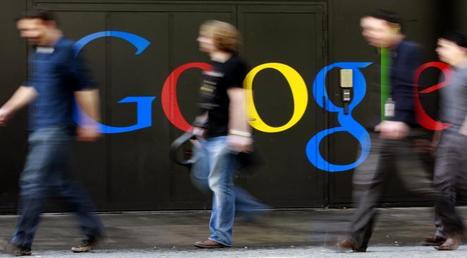
Après les Google Glass, après le rachat de la start-up à l'origine du thermostat intelligent Nest, Google se lance dans la lentille intelligente.
Scoop.it!

John Nosta, the digital health guru wrote an important piece in his Forbes column about the issue of connectivity in healthcare and he asked me to contribute to that with my thoughts on the topic: ...
Scoop.it!

Accéder rapidement à de nombreuses images du corps humain relatives à un domaine médical .Planches anatomiques et illustrations de diabétologie par Natom Images (RT @natomimages: Illustrez ou expliquez la #maladie du #diabète avec nos...
Scoop.it!

Figaro Santé Quand Internet révèle les épidémies Figaro Santé Google, Twitter et autres «data brokers», qui commercialisent des bases de données, participent désormais pleinement à la veille épidémiologique. Via Oriane Guez
Scoop.it!
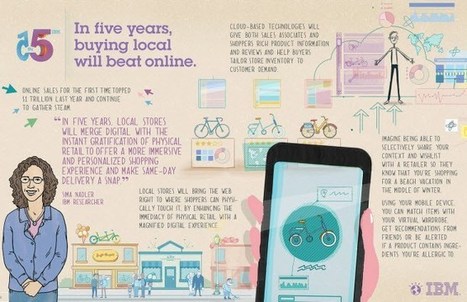
IBM's predictions all involve big data and using computing to glean intelligence from vast systems. We discuss them with IBM's research boss. Via Alex Butler, David Dellamonica

Suzen Pettit's curator insight,
December 17, 2013 9:31 AM
It is important for any business to know where innovation is taking their market. This article is a great source to prepare you for the business world ahead. 
John Royle's curator insight,
March 26, 2015 12:20 PM
This is an interesting article about IBM's future over the next 5 years and explains the we learn will change in the future. It says teaching will become more customised based on compiled data about the student.
Scoop.it!

Les Bulletins Electroniques des Ambassades de France - un service ADIT
Scoop.it!
Should we turn to the Internet for medical advice? Is social media improving public health? HealthExpress spoke to some experts to unravel these questions.
|
Scoop.it!

Scoop.it!

“Article 19 (article R.4127-19 du code de la santé publique) La médecine ne doit pas être pratiquée comme un commerce.”
Scoop.it!

ccording to the latest IMS report on social media Wikipedia is the leading single source of healthcare information for patients and healthcare professionals. Wikipedia is used throughout the entire patient journey, not just at the point of treatment initiation or change in therapy and the correlation between Wikipedia use and medicine use can be identified for a large number of disease areas. Facebook who?
Via Alex Butler
Scoop.it!

Pharmafile.com is a leading portal for the pharmaceutical industry, providing industry professionals with pharma news, jobs, events, and service company listings.
Scoop.it!

La bataille de chiffres concernant le coût réel du DMP reprend de plus belle. La Cour des comptes avait évalué, en juillet 2012, que ce projet pharaonique aurait plombé les comptes publics d'un demi-milliard d'euros.
Scoop.it!

Valérie Sauterey est ingénieure, et directrice du centre e-santé à Toulouse, dont la vocation est d’accompagner et accélérer le développement de projets en lien avec ce secteur. Valérie Sauterey donne la définition de la e-santé et revient sur des exemples emblématiques de technologies utilisées, par exemple les produits permettant la détection de fuite ou de fugue de patients atteints d’Alzheimer. Valérie Sauterey évoque également la complexité de la réglementation dans le secteur, et le modèle économique de la e-santé. Via Hervé Denudt, Hélène Introvigne
Scoop.it!

Rockville, MD (PRWEB) January 14, 2014 -- Agreement combines data from GRS’ patient-centered digital technologies with the Center for Drug Evaluation and Research’s (CDER’s) clinical research guidance to create the Electronic Health Data Initiative...
Scoop.it!
Brain Cancer Community Sites, FaceBook Groups and Forums (Brain Cancer Community Sites, FaceBook Groups and Forums http://t.co/PlGBPXOMAI http://t.co/2agWjP79QS)...
Scoop.it!

What are the best online health services on the market? Please take a look at our initial suggestions and complete the survey to help us build a definitive index.
Scoop.it!

Alors même qu'elle possède les atouts pour être l'un des leaders mondiaux de l'e-santé, la France a du mal à faire entrer son système de santé dans l'ère du numérique. Via Philippe Loizon, Pharmacomptoir / Corinne Thuderoz
Scoop.it!

DTC marketers need to go beyond standard product health sites and focus on the journey that online patients take to determine which health care treatments are best for them. The FDA has eased social media marketing guidelines for 3rd party sites and frankly DTC marketers should be meeting to determine how they can leverage the draft guidelines to increase conversion. It’s important to understand that a very small percentage of consumers see a DTC TV ad and run to their doctor to ask for an RX. Today interest in prescription drugs usually means spending time online to research the product and learn about side effects which could hinder quality of life. Last year we followed consumers online, via a funded study, as they learned about prescription drugs and various health conditions. The top-line key findings were: Read more: http://worldofdtcmarketing.com/the-digital-health-journey/focus-on-patients/ Via Parag Vora
|







See page 31: "Most CEO's see the need to change the customer facing parts of thier business" !
What would CEO's of the health industry think? If different, why woudl they think so, if not, what are their concrete plans to approach this change.. ?