

Via Olivier Delannoy


Une veille sur la santé numérique en France et à l’international : politiques publiques, données, infrastructures, IA, services et usages. Études, rapports et retours de terrain sélectionnés par Lionel Reichardt, Pharmageek, pour comprendre les transformations et éclairer les décisions.
 Your new post is loading...
 Scoop.it! 
No comment yet.
Sign up to comment
Scoop.it!

Smartphones and digital technology have become essential tools in our personal and professional lives. So it’s a natural next step that these technologies are being used to improve health care, too. Mina S. Sedrak, M.D., M.S., an oncologist in the Department of Medical Oncology & Therapeutics Research at City of Hope, shared his high-tech vision for the future of cancer care. NEW COMMUNICATION LANDSCAPEIt’s clear that our communication landscape has shifted in the last decade. From the evolution of email and listservs to blogs and social networking sites, modern society has embraced a digital, connected way of life. “The rapid pace of new electronic and mobile health technologies has opened up enormous opportunities for participative communication,” said Sedrak – “a type of communication that enables users to interact, create, write and exchange information with each other.” Unlike traditional modes of communication such as radio or print media that provide one-way transfer of knowledge, these new tools offer the opportunity to connect with larger audience and allow them to generate, share and discuss ideas and content in unprecedented ways. Mina S. Sedrak, M.D., M.S. Sixty-nine percent of American adults report using some type of social media site today, which is up from 5 percent in 2005. “Cancer patients and their loved ones are increasingly using social media to interact with each other and with oncology professionals, form communities, and receive and obtain credible information about their health or that of their loved ones,” Sedrak said. “But how the public communicates about a complex topic such as cancer on sites like Twitter or Facebook remains unclear, and whether there is value or direct application from these new modes of communication to influence the public’s knowledge, health behaviors and outcomes is unknown.” SOCIAL NETWORKS AND CLINICAL TRIALSHow could a smartphone improve cancer care? Sedrak pointed to clinical trials as one great example. Clinical trials are essential for testing new cancer therapies, turning scientific discoveries into new and better treatments. “Only 3 or 4 percent of adult cancer patients participate annually in therapeutic clinical trials,” Sedrak said. However, studies show that when the public is better educated about a medical condition, patients are more likely to enroll in clinical trials. Sedrak hopes to learn more about how people share information related to cancers and clinical trials on sites like Twitter. Then health care organizations and health advocacy groups can craft their messages to deliver accurate information to people who could benefit, he added. WEARABLE TECHNOLOGYSedrak also sees promise for tech devices you can wear. There’s been a surge in popularity of wearable health tracking devices, such as bracelets or watches that monitor a person’s activity levels or record stats such as heart rate and sleep habits. If doctors and health researchers could tap into that data, he said, it would give them a new view into what patients do outside the doctor’s office. “Imagine if I can gather the number of steps that a patient walks to understand her functional performance status, or her heart rate, blood pressure and blood glucose levels.… How much more of that information could be valuable in understanding her disease, her response to treatment, and could those data points help improve the care I can provide her?” Sedrak said. While there are still questions how best to use these technologies to improve cancer care, Sedrak said he’s excited about the possibilities. “We hope that our research insights would allow us to design targeted interventions that use technology, such as digital electronics and social media, to promote better cancer care for our patients, both at City of Hope and across the country,” he said. Via Plus91, Rémy TESTON, Esposito Christelle
Scoop.it!
The first sequencing of the whole human genome in 2003 cost roughly $2.7 billion, but DNA sequencing giant Illumina has now unveiled a new machine that the..
Scoop.it!

Voice interfaces are already having an impact on health. The recently completed Alexa Diabetes Challenge demonstrated that voice-computer interface
Scoop.it!

Woebot combines cognitive behavior therapy with advances in natural language to create a virtual counselor.
Scoop.it!

Et si le numérique permettait aux habitants de bénéficier d’un meilleur accès aux soins ? La Région développe pour cela une « feuille de route » afin de propulser la Nouvelle-Aquitaine au rang de première région de France en e-santé.
Scoop.it!

CVS Health polled 2,000 adults to understand what people find most difficult about managing their medications and what might make it easier.
Scoop.it!

L'Alliance eHealth France juge que le Gouvernement ne se donne pas les moyens de ses ambitions pour la transformation numérique du système de santé. En plein débat public à l'Assemblée nationale sur le projet de loi de financement de la sécurité sociale (PLFSS) pour 2018, ses membres* appellent dans un communiqué à un changement d'échelle dans les réformes.
Pia Hémery Via Medecin Geek
Scoop.it!

Former executives of Coursera, Trulia, and LinkedIn turn their focus to behavioral health startups. Via Florian Morandeau

Florian Morandeau's curator insight,
October 27, 2017 2:30 AM
Even Amazon is getting into digital health with its plans to re-think pharmacies.
Scoop.it!
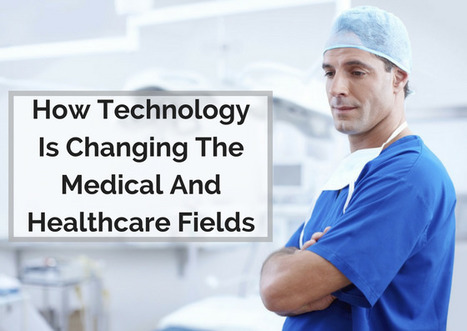
Astonishing Advantages In TechnologyHeart attacks are terrible and can kill you, but assisted cardiology methods today are saving lives across the world. This is just one example of technological advancement, but there are quite a few different changes which you may even be surprised by.
Let’s start with IoT. The Internet of Things is creating a network wherein common devices are connected continuously to the internet. This provides several advantages. One, information is uploaded regarding network and device operations such that optimization can occur. Hospitals can additionally monitor patients directly and proactively.
The second thing that happens is a sort of “floated” cloud—a cloud on the cloud, if you will. Cloud computing is a network of servers that function together as a whole. Edge computing outsources processing to individual IoT devices, so they function similar to how the cloud does. Here’s the thing: IoT has many more devices than the cloud. It can potentially be more effective.
Between cloud computing and the internet of things, information can continuously gather identifying trends that are negative, and curtailing them. Outbreaks can be caught and treated earlier. Pandemics can be contained with greater speed. Additionally, lifestyle choices resulting in extended lifespans can be found and studied almost collaterally.
Additional Areas Of Tech Development
Something else that’s characterizing the medical industry today is innovations which reduce operational expenses over time, allowing for expanded outreach, development, and innovation.
A substantial cost-reducer in terms of research comes from automated mouse ear tags; according to RapIDLab.com, these tags: “Are the newest, most humane miniature automated mouse ear tags available…[these are] the most cost-effective automated lab animal identification on the market.”
Basically, imagine a tattooed barcode instead of a clip through the ear. It takes less time to apply the tag, and it takes less time to scan the tag. Instead of writing each individual number down, researchers can use a barcode scanner and just run down the line. What took hours will now take minutes. Hours are worth hundreds, often thousands, of dollars to research facilities.
If fifteen hours are saved a month, that works out to 180 hours a year. At $100 an hour, that’s $18,000 a year. At $1,000 an hour, that’s $180,000 a year. How much does it cost an hour to run your research operation? Many operational managers will likely find even greater savings through such solutions. Component-Specific Production And MaintenanceAnother game-changer in the medical technology industry comes from Weiss-Aug.com; according to the site: “Whether a part requires stitching of terminals, molding of multiple inserts simultaneously, laser welding or wire attachment, we can help you with the proper assembly methods for your program.”
Now medical institutions can outsource business needs which previously could only be accomplished through skilled employees sourced internally, or who require a regular service agreement. This can substantially curb expenses while simultaneously expediting technology advancements which are often life-saving.
Increasing Tech Innovations Define A Zenith In MedicineMany medical businesses are called “practices” for a reason: as much as medicine has advanced in the last several decades, the human body seems to have become more mysterious, not less. For example: we know what DNA is, and we have some idea as to its inner-workings. But it’s an example of three-dimensional code more complicated than deliberately designed computer code—it’s beyond mankind’s ability for design.
Even though there are greater opportunities today in medicine than ever before, perhaps the most interesting feature of this situation is that these developments have revealed even greater potential than could have been imagined.

james brown's curator insight,
May 29, 2023 12:51 PM
https://farmaciadimagrante.com/Prodotto/acquista-ativan-online/
https://drogaspoderosas.com/producto/comprar-adderall-xr/
Scoop.it!

Connu en Flandres comme auteur d’un ouvrage un rien provocateur 'Nooit meer ziek’, ce professeur en oncologie et futurologue de la santé nous livre quelques réflexions pour passer de la 'sickcare' à la 'healthcare'. Via Philippe Marchal
|
Scoop.it!

La start-up Pocramé propose une solution innovante permettant à un opérateur non médical de diagnostiquer rapidement les maladies infectieuses.
Scoop.it!
From
hbr

Florian Morandeau's curator insight,
November 6, 2017 2:16 AM
Monitoring chronic diseases with digital is a huge challenge.
Scoop.it!

A Verily Life Sciences executive explains how the company targets better patient outcomes by harnessing analytics, machine learning, and other digital tools.
Scoop.it!
The ability to self-manage our health could break down barriers to efficient healthcare, but only if doctors embrace the technology
Scoop.it!
Diabetes Technology Moves Closer To Making Life Easier For Patients #esante #hcsmeufr #digitalhealth
While the technology is moving rapidly, insurance, regulatory, and supply challenges make it harder for patients to quickly access the latest medical advances to manage their condition.
Scoop.it!

Today, 17 October, at a high-level e-health conference in Tallinn, a joint declaration of e-health organizations was announced to accelerate digital innovation in health care. The declaration of over 100 European organizations’ calls for concrete steps to develop e-health in Europe and all stakeholders interested in the future of e-health are expected to co-endorse it and to [...]
Scoop.it!

Le Patient devient acteur de sa santé Le ministère des Solidarités et de la Santé lance un nouveau portail internet d’information, de service, mais aussi d’interaction avec l’usager : https://sante.fr/
Scoop.it!

Une enquête des Zooms de l’Observatoire Cetelem montre que les Français ont une appréhension positive de l’e-santé et l'intègrent progressivement dans leurs habitudes. Mais malgré de nombreux avantages, des doutes importants apparaissent quant à l'avenir de la médecine. Via Bruno Demay
Scoop.it!

Technology is changing every industry in significant ways. To help frame how, I’m starting a new series discussing top trends in various markets. First up: health care. No one can dispute technology’s ability to enable us all to live longer, healthier lives. From surgical robots to “smart hospitals,” the digital transformation is revolutionizing patient care in new and exciting ways. That’s not all. National health expenditures in the United States accounted for $3.2 trillion in 2015—nearly 18% of the country’s total GDP. It’s predicted that the digital revolution can save $300 billion in spending in the sector, especially in the area of chronic diseases. Clearly there is value—human and financial—in bringing new technology to the health care market. The following are just a few ways how.
Telemedicine Even back in 2015, 80% of doctors surveyed said telemedicine is a better way to manage chronic diseases than the traditional office visit. Why? Telemedicine offers patients and health care providers both a new wave of freedom and accessibility. For the first time, a patient’s care options are not limited by geographic location. Even patients in remote areas can receive the highest quality of care, providing they have an internet connection and smart phone. Telemedicine can also save both time and money. Patients no longer have to schedule their days around routine follow-up visits (and long office waits). Instead, they can hop on a conference call to get the prescription update or check-up they need. Nowhere has telepresence been more useful than in the mental health field. Now, those seeking emotional support can find access to a therapist or counselor at the click of a button, often for far less than they would pay for a full office visit. Internet therapies, for instance, “offer scalable approaches whereby large numbers of people can receive treatment and/or prevention, potentially bypassing barriers related to cost, location, lack of trained professionals, and stigma.” Telemedicine makes it possible.
Mobility And Cloud Access Have you ever played phone tag with your doctor while waiting for important test results? It’s so nerve-racking! That’s why mobility and cloud access have been such a tremendous help in increasing accessibility for patients and doctors alike. By 2018, it’s estimated that 65% of interactions with health care facilities will occur by mobile devices. Some 80% of doctors already use smartphones and medical apps, with 72% accessing drug info on smart phones on a regular basis. Gone are the days of paper charts and file rooms. Hospitals, insurance companies, and doctor’s offices are now storing patient medical records in the cloud, with patients able to access test results online 24/7. Given HIPAA laws relating to patient privacy, it’s probably no surprise this has also led to an increased focus on data protection and security. According to one report, “the black-market value of medical data is greater than even that of financial information.” Believe me when I say: No industry is more focused on virtualization security right now than health care.
Wearables And IoT I remember the days when going into the local grocery store and getting my blood pressure read at one of those prehistoric machines seemed exciting. Imagine: A machine that helped me manage my own well-being without setting foot in a doctor’s office. Now, mobile devices as small as my cell phone can perform ECGs, DIY blood tests, or serve as a thermometer, all without even leaving my house. With help from automation, patients can even be prompted to check their weight, pulse, or oxygen levels, and enter results into mobile patient portals. Even better: They can transmit the results to my doctor in real time. Those details, when entered regularly, can help predict one’s risk for heart disease and other illnesses, ultimately saving lives. This is far more than cool. It’s life-saving.
Artificial Intelligence And Big Data Big data is king in the digital world, and health care is no exception. Yes, it can be gathered to measure customer satisfaction. But perhaps more importantly, it can be used to automatically identify risk factors and recommend preventative treatment. Even more exciting: with the rise of the Internet of (Medical) Things (IoMT), mobile and wearable devices are increasingly connected, working together to create a cohesive medical report accessible anywhere by your health care provider. This data is not just useful for the patient. It can be pooled and studied en masse to predict health care trends for entire cultures and countries.
Empowered Consumers All of the above have led to an entirely new trend in healthcare: patient empowerment. While many of us have come to associate health care with high costs and long waits, patients are now in the driver’s seat, with better access to higher-quality doctors, and higher satisfaction rates overall. It’s a healthy new way to look at health care, and one that holds promise for all of us with easy access to the digital landscape. My blood pressure is already lowering just imagining the possibilities. Via Sandra Hoyer

Presenters's curator insight,
October 24, 2017 4:16 AM
Al pensar en tecnología recurrimos a muchos avances relacionados con la comunicación, educación... pero pocas veces nos planteamos que hay otros campos en los que también tiene una gran influencia. La industria tecnológica también está ayudando a cambiar el panorama de la salud. ¿Quieres conocer algunos de los avances tecnológicos más significativos en este campo?
james brown's curator insight,
May 29, 2023 12:52 PM
https://farmaciadimagrante.com/Prodotto/acquista-ativan-online/
https://drogaspoderosas.com/producto/comprar-adderall-xr/
Scoop.it!

Via Rémy TESTON
Scoop.it!

Le progrès technologique dans le secteur de la médecine va-t-il faire disparaître la figure du médecin ? Via Benjamin D'HONT, Vincent Denoel, DIGISANTE, Esposito Christelle
|






