(Page 2): Open source Internet of Things is growing fast. These software and hardware projects can help companies and DIYers experiment with Internet-connected devices.
Some say that the collapse of our ecological and societal systems is already inevitable. But many people and projects have already started to build the future we need. Open State will be a piece that is missing until now – a catalyst to help those shining lights break through into mainstream.
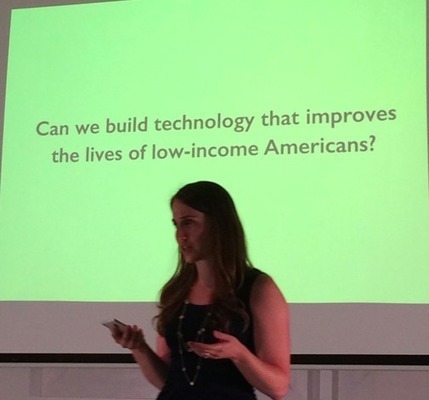
A few months ago, Significance Labs was little more than an idea with a beautifully designed home page, a home at Blue Ridge Foundation's hub in Brooklyn, and the seed funding to back up a daring pitch: Why not build technology aimed directly at addressing the needs of low-income Americans? Now, after picking six fellows from a pool of 150 applicants, the Labs is showcasing some inspiring results: five promising examples of working civic tech tools that can demonstrably help the poorest among us.
Have you heard about the open-source revolution? Like 3D printing, it only recently made its way into the mainstream, but like the additive manufacturing machines, it has been around for a while.
“The Pitchforks Are Coming ... For Us Plutocrats”! This is how self-proclaimed unapologetic capitalist Nick Hanauer addressed the explosion of global economic inequality. In this rather sensational title, he wrote a warning to his fellow .01%ers that the end game is in the cards with an imminent social uprising.
Review The Open-Source Everything Manifesto Transparency, Truth, and Trust Manifesto Series,Buy The Open-Source Everything Manifesto Transparency, Truth, and Trust Manifesto Series Cheapest,Cheap The Open-Source Everything Manifesto Transparency, Truth, and Trust Manifesto Series,Best The Open-Source Everything Manifesto Transparency, Truth, and Trust Manifesto Series,Purchase The Open-Source Everything Manifesto Transparency, Truth, and Trust Manifesto Series lowest price
Facebook is trying to redefine networking with a new open-source switch that functions pretty much like a server that more engineers can work with, while Cisco, Dell and other bigwigs try to catch up.
Join Jayce as he talks about how exactly Google makes money when Android is free. What Open Source actually means? Should you get a Phablet or a Phone/Tablet?
Open Source Ecology is a 501(c)(3) group that seeks to empower millions of people around the world by creating all the machinery and systems required to build a society from the ground up, while putting the costs within reach of the common man. In most cases, OSE’s machines cost are about 20% of the similar machinery that is currently available off-shelf. Unlike the equipment available on the market today, the OSE machines are designed and built for a lifetime by using commonly available parts, which may also be produced onsite, using the GVCS fabrication machinery.
“It’s a production model, not a business model,” says one executive. And a tough one too. The latest case in point is a move by Big Switch Networks to change the way it hopes to demolish Cisco.
The Internet of Things (IoT) is advancing at a tremendous rate, steadily outpacing desktop and mobile computing – by 2020, over 50 billion intelligent devices (Cisco) will connect to and exchange information over the Internet (vs. a projected 7.3 billion tablets, smartphones and PCs - Gartner), with an economic impact of nearly US$2 trillion (Gartner). This huge cohort of “things” comprises staggering diversity, from recognizable computers down to sensors and light switches and thermostats, as well as the infrastructure needed to support them. The impact of the IoT will span the gamut of industries and applications, including media, entertainment, medical, agriculture, manufacturing, consumer electronics, transportation and energy, And, like the existing Internet, the emerging IoT will rely upon and instigate adoption of open source technologies and open standards.
The still raging financial crisis of 2007–2008 has enabled the emergence of several alternative practices concerning the production, circulation and use of money. This essay explores the political economy of the Bitcoin ecosystem. Specifically, we examine the context in which this digital currency is emerging as well as its nature, dynamics, advantages, and disadvantages. We conclude that Bitcoin, a truly interesting experiment, exemplifies "distributed capitalism" and should be mostly seen as a technological innovation. Rather than providing pragmatic answers and solutions to the current views on the financial crisis, Bitcoin provides some useful and timely questions about the principles and bases of the dominant political economy.
When most of us think of 3D printers, we typically imagine the desktop machines that are used for creating small plastic objects, or the larger scale industrial level machines used for prototyping, and in some cases the printing of production ready parts. Then there are the extremely large 3D printers that have been created for the printing of concrete structured buildings and other large objects. Perhaps the printers which have the most intriguing uses are those which can print food. These printers, which are still only in the early stages of development, allow those with minimal food preparation experience to print out meals using specially designed software. All of these 3D printers have the potential to bring resources to countries and people who typically don’t have access to traditional means of manufacturing. Yet, none of them ensure massive food production that could help feed the world’s hungry.
Have you heard about the open-source revolution? Like 3D printing, it only recently made its way into the mainstream, but like the additive manufacturing machines, it has been around for a while.
This project surely deserves more traction as it combines open source electronics and crypto-currencies related security. I would definitely seen these problems solved.. in Open source!
The Ushahidi Platform is an open source tool for collecting, visualizing, and mapping information sent by anyone, anywhere via text message, email or web.
Simon Phipps has engaged at a strategic level in the world’s leading technology companies, starting in roles such as field engineer, programmer, systems analyst and more recently taking executive leadership roles around open source. He worked with OSI standards in the 80s, on collaborative conferencing software in the 90s, helped introduce both Java and XML at IBM and was instrumental in open sourcing the whole software portfolio at Sun Microsystems.
To get content containing either thought or leadership enter:
To get content containing both thought and leadership enter:
To get content containing the expression thought leadership enter:
You can enter several keywords and you can refine them whenever you want. Our suggestion engine uses more signals but entering a few keywords here will rapidly give you great content to curate.


 Your new post is loading...