Every woman in this story is confoundingly non-descript. Short hair, often grey. Conservative dress. Unmarried; soft-spoken. Most are well into their 70s, and all will tell you that their way of life is dying out. They will also tell you, with surprising conviction, that the world is in peril.
These videos are documents from two design courses taught by Bill Mollison at the Fossil Rim Wildlife Center in Glen Rose Texas in 1994 and 1995. They are a definitive selection from our original 16 part series. These tapes bear many viewings and will benefit anyone who wants to learn how to help regenerate the earth - from back yard to bio-region. Teachers of permaculture have found these tapes to be a valuable coaching tool - edited to one hour.
“When it comes to the “Homebrew” dream of an actual desktop factory, the most promising current development is the Fab Lab. The concept started with MIT’s Center for Bits and Atoms. The original version of the Fab Lab included CNC laser cutters and milling machines, and a 3-D printer, for a total cost of around $50,000.
The convergence of environmental awareness and consumer culture has created a whole new movement today whereby sharing is cool. Indeed, some environmentalists view sharing as key to maintaining our quality of life and our sanity in an increasingly cluttered world.
The world is getting hotter. In fact, it’s supposed to rise 11 degrees fahrenheit over land by the 2060s if we don’t meet our goals to reduce carbon impact, said Robin Chase, founder of Buzzcar, a peer-to-peer car sharing service and co-founder and former CEO of Zipcar, a car sharing service.
"In English, buen vivir loosely translates "good living" or "well living", although neither term sits well with Eduardo Gudynas, a leading scholar on the subject. Both sit too close to western notions of wellbeing or welfare, he says: "These are not equivalents at all. With buen vivir, the subject of wellbeing is not [about the] individual, but the individual in the social context of their community and in a unique environmental situation."
FOR CENTURIES OUR ANCESTORS PRODUCED SEED TO GROW THEIR OWN CROPS. EACH YEAR THEY SOWED IT. THE SEED GAVE PLANTS AND THE PLANTS GAVE SEED. EACH YEAR, FARMERS SELECTED SEED FROM PLANTS…
In the dismal reality of the deepening financial crisis in the European Union, exploiting the natural environment is seen by troubled member states as a quick-fix solution for rapid economic recovery.
"The Transition Research Network (TRN) is a self-organising peer group of academics and community activists which aims to: Help advance understanding and practice in Transition; Support Transition groups to address their research needs Help transform the crisis in our universities into an opportunity for positive change in research culture, making research relevant, fulfilling, and fun.
Evidence shows that without more land under local control, our ability to tackle climate change, fight poverty, increase food availability, and preserve cultural and biological diversity will be seriously impaired, said Andy White of the Rights and Resources Initiative at the opening of the Community Land and Resource Rights conference on September 19 and 20.
Nuestras Raíces is a grassroots organization that promotes human, economic, and community development in Holyoke, Massachusetts, through projects relating to food, agriculture and the environment.
International corporate responsibility for worker safety has worldwide ramifications. Today's post was shared by WCBlog and comes from www.commondreams.org
Author and independent scholar, Warwick Fox, is passionate about communicating his ideas to the general public. He hopes to spark change in our understanding that ethical decisions must include all beings on earth, not just human-to-human relationships. In a radio discussion with this author and his wife, he states that his books are oftentimes more academic than for the general reader, so he is grateful for opportunity we afforded him to translate his ethical theories into common parlance with practical examples.
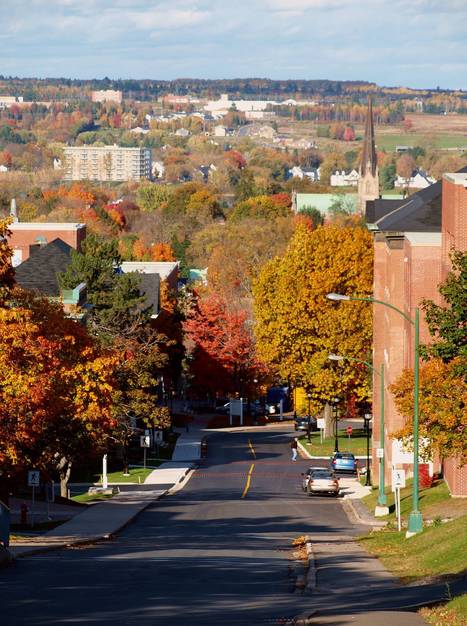
There seems to be a prevalent trend in media and political commentary about the Canadian province of New Brunswick where I live and am from; that the province is falling behind, in decline.
Solutions to the global challenges of climate change, food security, peak oil and biodiversity loss are within our reach.
Facilitated by the United Nations University, a think tank of the UN, the Our World 2.0 web magazine shares the research, ideas and actions of global citizens who are transforming our lives for the better.
This award-winning web magazine exchanges insight on these pressing topics through videobriefs, articles, debates, photo essays and public events.
Our World 2.0 web magazine reaches a broad cross-section of public, private, and academic audiences. Our key community consists of "influential leaders of the future", predominantly 25- to 45-year-olds, from both developing and developed countries.
We invite you to contribute to this growing global conversation.
Paul Hawken, environmentalist and entrepreneur, believes that the real question of our time is not how social and environmental movements are connected, but rather how they became separated.
A video featuring Paul Hawken, talking about the interconnection of people and the environment. Separation of people and the environment, he proposes, was born out of the will of the privileged. It relates to TimeBanking and other social movements through highlighting the importance of contributing to social benefit and environmental improvement.
" The basis of that theory is the uncontroversial fact that human societies routinely build more infrastructure than they can afford to maintain. During periods of prosperity, societies invest available resources in major projects—temples, fortifications, canal or road systems, space programs, or whatever else happens to appeal to the collective imagination of the age. As infrastructure increases in scale and complexity, the costs of maintenance rise to equal and exceed the available economic surplus; the period of prosperity ends in political and economic failure, and infrastructure falls into ruin as its maintenance costs are no longer paid.
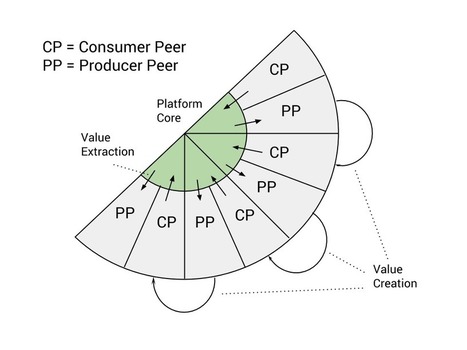
As some of you may recall, I recently shared with the community a canvas I created for the design of platforms (the so called Platform Design Canvas), which I also had the opportunity to present in Barcelona during the Design Thinking Week. The Canvas will also be the subject of the “Create Platforms, not Products” Workshop that I will give at Frontiers of Interaction Conference in Milan soon (See: http://2013.frontiersofinteraction.com/speakers/simone-cicero/ for details).
The contribution of this paper is to explain how to achieve a universally prosperous environmentally sustainable global society. This objective is incompatible with traditional economic policies dependent on environmentally exploitive growth in the population and/or full employment to generate prosperity. Politically attractive incentives of smaller taxes and government are identified as a way of changing the way an economy operates so that prosperity can be increased even with a declining and aging population. Localising the ownership and control of the means of production and exchange with individuals creates a way to create a universal minimum social dividend to replace the need for full employment, welfare, pensions, and big government. Local democracy is enriched with the power to nurture their host environment. The introduction of ecological forms of cost carrying money redeemable into local services of nature allows market forces to encourage production techniques that reduce their environmental impact. Increased life expectancy with depopulation is already occurring in twenty countries and this is expected to spread globally in the current century. This phenomenon with current environmental pressures create an imperative for achieving environmentally sustainable prosperity sooner rather than later.
Sometimes a city makes a pointed effort to create green where the people are. New York City is a great example of this movement. Outside of the Brooklyn Museum, the green space shown in Figure 3 is maintained by the city for use as a reading space, a place to congregate, and a reminder to slow down before entering the city streets again on the trek to the subway.
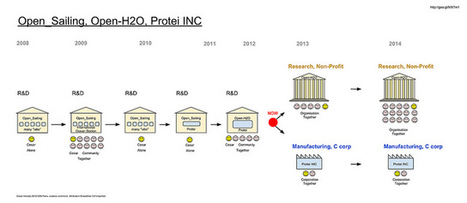
Do you want to transform your idea into an Open Hardware Technology for the Environment? And why not into a business or a non-profit organisation? This is how we are doing it. I am not saying it is the best, but it is our preferred way.
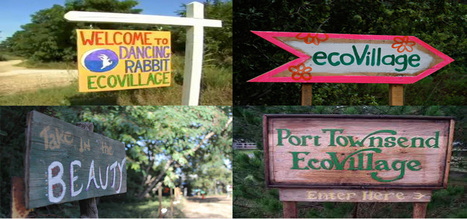
An ecovillage is a community committed to becoming more sustainable. The resources needed for life are sourced locally in a way that allows nature to continually supply humans. Ecovillages are also designed to maximize quality of life.
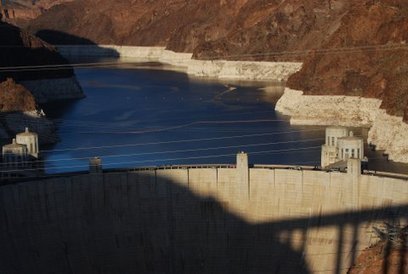
First, we must acknowledge that we’ve reached peak water in the American west. We have promised more water to users than nature provides. Until demand and supply are brought back into balance, groundwater levels will continue to drop and our rivers will continue to run dry, destroying natural ecosystems. Second, we must acknowledge that there are limits to new supply and that we must turn to the demand side of the problem. This means figuring out how to use water more efficiently and productively, and thinking about moving some water-intensive activities and products to more water-abundant regions. Maybe it is time to grow less rice, alfalfa, cotton, and pasture with flood irrigation. It is past time to retire the green lawn as an acceptable landscape option in arid climates. All toilets and washing machines should be water- and energy-efficient. Finally we have to stop assuming that the water available for future use is the same as in the past. Climate change ensures that it won’t be, but until politicians start to heed the warnings of climate scientists and the on-the-ground evidence of the current water situation, our water problems in the west, and elsewhere, will worsen.
Plus, today we're facing a number of rapidly converging global crises--not just global warming, but energy and other resource depletion, collapse of biodiversity and the food web (no food chain, no food), an increasingly toxic world which creates our increasingly toxic bodies, economic collapse, growing poverty, and other social ills such as the loss of our sense of community and connection to all that makes life worthwhile. We are not isolated, rugged individuals, and this is why activism or civic engagement is so necessary for wholeness--for personal, social and planetary health and well-being.
To get content containing either thought or leadership enter:
To get content containing both thought and leadership enter:
To get content containing the expression thought leadership enter:
You can enter several keywords and you can refine them whenever you want. Our suggestion engine uses more signals but entering a few keywords here will rapidly give you great content to curate.


 Your new post is loading...