CoinDesk reveals the key trends, challenges, and opportunities for bitcoin and blockchain technology in 2016. Reports are available to download for those who a…
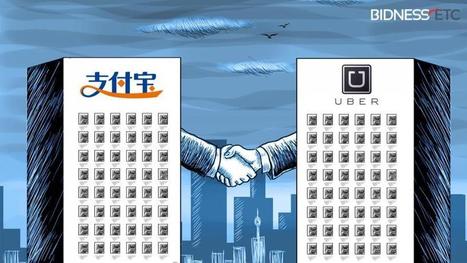
Uber has extended its cooperation with Alibaba Group Holding Ltd's (NYSE:BABA) online payment platform to allow its Chinese customers to pay their fare outside China using Alipay.
How can commoners meet their needs without replicating (perhaps in only modestly less harmful ways) the structural problems of the dominant money system?
By Leaders' editorial team Labour under Corbyn is often accused of lacking the strategic finesse of its forebears. In fact the last of the Blair years, the Brown years and the Miliband years were all ridden with communications disasters at one point or another. Things haven’t been ideal under Corbyn either – but for a…
"Richard Barbrook and Andy Cameron’s The Californian Ideology, originally published in 1995 by Mute magazine and the nettime mailinglist, is the iconic text of the first wave of Net criticism. The internet might have fundamentally changed in the last two decades, but their demolition of the neoliberal orthodoxies of Silicon Valley remains shocking and provocative. They question the cult of the dot-com entrepreneur, challenging the theory of technological determinism and refuting the myths of American history. Denounced as the work of ‘looney lefties’ by Silicon Valley’s boosters when it first appeared, The Californian Ideology has since been vindicated by the corporate take-over of the Net and the exposure of the NSA’s mass surveillance programmes. Published in 1999 at the peak of the dot-com bubble, Richard Barbrook’s Cyber-Communism offers an alternative vision of the shape of things to come, inspired by Marshall McLuhan’s paradoxical ‘thought probes’. With the Californian Ideology growing stronger, the Net was celebrated as the mechanical perfection of neoliberal economics. Barbrook shows how this futurist prophecy is borrowed from America’s defunct Cold War enemy: Stalinist Russia. Technological progress was the catalyst of social transformation.
US labor law divides workers into "employees," who are entitled to the coverage of certain laws like those relating to workers’ compensation, overtime pay, and the right to unionize, and "independent contractors" who are not covered by these laws. But a variety of jobs in what is sometimes called the "gig economy" don't fall neatly into either category. Someone who drives for Uber on an ongoing basis, and thus makes their availability known via Uber's computer system, follows pricing and service guidelines laid down by Uber, and participates in Uber's various rating systems, doesn't quite seem like an "independent contractor." But given that this worker is essentially free to set their own hours, and is not overseen by a supervisor, it doesn't quite seem like a standard employer-employee relationship, either
The "sharing economy" has been hailed as both the future of capitalism and a radical alternative to the market economy. Darren Sharp is the Australian editor of Shareable, an international website that promotes the sharing economy, the director of Melbourne-based consultancy Social Surplus, and the Melbourne coordinator of the Sharing Cities Network.
Can food be used as a way to bring strangers together, if only for a meal or two, and create the beginnings of a new type of community? Penny Travlou, a cultural geographer and ethnographer at the University of Edinburgh, decided to find out. In an interview posted on “Social Innovation Europe,” an EU website, she talks about her experience in co-organizing “pop-up dinners” that bring together immigrants with local Greeks in Athens. The idea is to use meal preparation and eating together as a way to break down cultural barriers and support migrant integration in Greece.
It’s been a bit more than a year since I and my urbanist comrades accomplished one of the most exciting things ever - well, at least as far as urban planning goes. Following about 10 months of work during evenings, weekends, and holidays, in October 2014 we finally published Pro Helsinki 2.0, the alternative master…
Amazon’s Mechanical Turk is a crowdsourced marketplace that allows people (turkers) to complete small tasks that computers cannot, such as transcribing an au...
The United Nations Children's Fund has recently launched a new initiative through which they will begin to invest more money into technology start-ups that have the potential to better the lives of disadvantaged and vulnerable children all over the...
r“Big Four” accounting firm, PricewaterhouseCoopers, has partnered with Eris Industries and Blockstream to help integrate the blockchain technology into its security services and elsewhere.
''WE are beginning to witness a paradox at the heart of capitalism, one that has propelled it to greatness but is now threatening its future: The inherent dynamism of competitive markets is bringing costs so far down that many goods and services are becoming nearly free, abundant, and no longer subject to market forces. While economists have always welcomed a reduction in marginal cost, they never anticipated the possibility of a technological revolution that might bring those costs to near zero.
ince the beginning, we wanted ‘a thousand tomorrows‘ not only to point to future-related happenings out there in the world, but also to dig into the minds of people at the forefront of developments which are redefining our future or have the potential to do so. Via interview sessions we would like to share with you a look through their eyes into today’s and tomorrow’s possible world(s). In our first interview, we’ll take a closer look into the fascinating peer-to-peer (r)evolution, together with Michel Bauwens.
American victim of repeated cold calls decided to fight phone technology with phone technology, conceiving a brilliant - and hilarious - plan to 'hit them ...
This panel critically addresses the prevailing vision of the Internet of Things (IoT) as a top-down mega-infrastructure of interconnected every-things, in an attempt to articulate viable bottom-up alternatives. Practices and methodologies for tweaking, disrupting, and appropriating existing infrastructures will be discussed, bringing to the foreground smaller-scale systems and networks of sensing devices, computational artifacts, and humans, to address issues of importance for the everyday life of the user and the local community. The panelists will ask whether such systems and interventions can become sustainable through enhancing citizens’ literacy on the use and appropriation of IoT technologies and sensor networks.
Blockchains are overhyped. There, I said it. From Sibos to Money20/20 to cover stories of The Economist and Euromoney, everyone seems to be climbing aboard the blockchain wagon. And no doubt like others in the space, we’re seeing a rapidly increasing number of companies building proofs of concept on our platform and/or asking for our help.
By Neal Gorenflo We have an epic choice before us between platform coops and Death Star platforms, and the time to decide is now. It might be the most important economic decision we ever make, but most …
J.R.R. Tolkien’s Lord of the Rings trilogy is a meditation on the corrupting influence of power. I felt like Frodo making his way towards Mordor in my effort to understand economic theory, but the person who came closest to playing a Frodo-like role in the recent history of economic thinking is Elinor Ostrom.
To get content containing either thought or leadership enter:
To get content containing both thought and leadership enter:
To get content containing the expression thought leadership enter:
You can enter several keywords and you can refine them whenever you want. Our suggestion engine uses more signals but entering a few keywords here will rapidly give you great content to curate.


 Your new post is loading...
 Scoop.it!