Your new post is loading...

|
Scooped by
jean lievens
October 24, 2014 12:36 PM
|
"I find it interesting that you focus on the subtitle of the book and not the title: Owning the Future. My guess is that the idea of treating the future as controlled by owners is a bit much. I think this book needs a more critical analysis. As I read Elinor Ostrom, for example,she is not talking about some kind of ownership of the commons, but citizens governing the commons. Kelly, on the other hand, sees the commons as a type of ownership. I think there remains a difference between an economy based on ownership, even co-ownership, and one based on civic membership. Citizens, of course, will design different ways of governing the commons, and in some cases, different types of ownership will be chosen. To choose ownership without a civic conversation among members of the civic seems to keep us in an economics of property rather than moving toward an economics of provision." (p2p blog, August 2012)
|
|
Scooped by
jean lievens
October 16, 2014 4:40 PM
|
“Diverse and devolved ownership, power and capital, alongside user, consumer and employee participation in governance and decision-making, are principles that we can all agree with. Unlike any other policy agenda, mutual, employee-owned and co-operative models, and their underpinning ideals, have attracted cross-party support and have been promoted as foundational players to our public institutions, private services and businesses, not just in this Government’s lifetime, but the ones that have preceded it also.
|
|
Scooped by
jean lievens
October 11, 2014 2:08 PM
|
Reddit’s CEO, Yishan Wong (formerly of Facebook) is doing the right thing. He’s planning to make Reddit’s users into owners, depending on their contribution to the site. There’s a way to create a form of liquid ownership that doesn’t require Wall Street. This new method is based on the bitcoin blockchain. That technology makes it possible to issue ownership to contributors in a decentralized and trusted way. The combination of blockchain stock, Yishan’s example, and the experience of participants will set in motion a wave of change in Silicon Valley. The message is: if you want to build an online company, you better find a way to make your customers/contributors owners.*
|
|
Scooped by
jean lievens
October 3, 2014 4:02 PM
|
“Yesterday I wrote about how Reddit’s CEO, Yishan Wong, is planning to issue ownership in Reddit to the users of its site.
|
|
Scooped by
jean lievens
September 7, 2014 1:33 PM
|
The issue is the following: this free (as in free speech) but also zero dollar approach, centered around common value production, does not have it’s own means of sustainability. And critically, advertising will not be able to fill the enormous gap between the exponential rise in common value production, and the linear monetization of attention through advertising. Also, critically, we do not (as yet, and perhaps never), live in a society which has a clear mechanism for funding common value production.
|
|
Scooped by
jean lievens
August 8, 2014 3:38 PM
|
This could be an important initiative aimed at creating a greater awareness of open cooperativism within the CIC, while also overcoming the problem of client-provider relationships between the Commons-oriented structure and productive projects.
|
|
Scooped by
jean lievens
August 6, 2014 2:27 AM
|
I am in Ecuador at the moment, where I arrived with my family 6 days ago for a three months trip in Latin America. I have just came back from a conference on the Yasuni area of the Amazon, where in the last 30 years, petroleum enclosures have been threatening the common land of the Waorani and some of the last indigenous peoples still living in isolation in the Amazon. We learn that there is no clean oil exploration, that the amount of toxic by-product — even in the case of no spillage — is enormous and very difficult to handle, with toxic consequences for sources of fresh water and all forms of life depending on it. Around the wells used to search for oil, the percentage of oil in the land was so high to be 20 or 30 thousands times above the maximum level for safe agricultural production.
|
|
Scooped by
jean lievens
July 29, 2014 12:09 PM
|
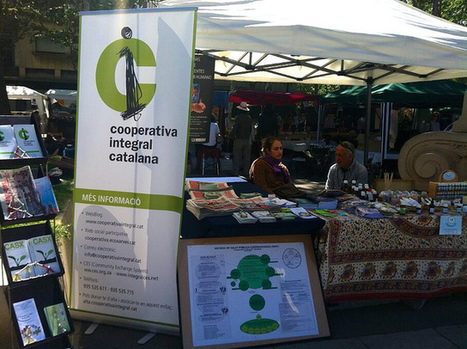
The P2P Foundation is a full supporting partner of the Cooperativa Integral Catalana, or CIC. We feel that they’re doing essential work in prototyping pre-figurative models of peer production, governance and property. You can find a lot of information about them, their ethics, and long term plans in their excellent English website, or in our own wiki entry on the CIC. We plan to report regularly on the CIC’s activities and our involvement with the group. Today, we want to highlight just one of their most inspiring initiatives: beyond specific target and time based crowdfunding, there is “Coop-funding“. Coopfunding’s own literature describes its platform in the following way. It is:
|
|
Scooped by
jean lievens
July 3, 2014 4:32 PM
|
"On your key point Henry below that the Levellers (civll rights movement) and Diggers (the commons and commonwealth movement) took separate paths, you are right. But this was not any intention as key Diggers were Levellers and they described themselves as True Levellers.
|
|
Scooped by
jean lievens
June 23, 2014 12:55 PM
|
We are witnessing the outstanding emergence of a new economic model, the collaborative commons, which some have already stated as the End of the Capitalist Era. One of the first analysts shedding light on the importance of these phenomena was Yochai Benkler in his book The Wealth of Networks. Few years ago I had the honour of being part of the translator team of this book into Spanish within the @Commontrad project. Leaded by professor Florencio Cabello, it consisted on translating this theoretical essay on the current economic production through collaborative practices by producing a book through a collaborative practice on PiratePad (rarely known tool at that time). Through this amazing experience, I immediately understood that common value generation is so efficient, democratic and socially valuable that would sooner or later supersede current economic model based on close standards and private property. In other words, this is a new reality that will prevail.
|
|
Scooped by
jean lievens
June 13, 2014 2:48 PM
|
= FairShares is a new brand and model for self-governing social enterprises operating under either Company or Co‑operative Law. [1]
|
|
Scooped by
jean lievens
May 29, 2014 10:12 AM
|
Imagine to limit the pressure to work to the minimum! Peer production combined with an unconditional basic income offers such a possibility. I will explore a scenario of reorganizing production of services and goods related to subsistence. The scenario will inform the debates on a universal basic income. Scenarios taking into account the personal perspective can help to decolonize the public discourse by freeing citizen's imagination.
|
|
Scooped by
jean lievens
May 3, 2014 2:16 PM
|
“Left on their current course and driven by the needs of capital, digital technologies can be deployed in ways that are extraordinarily inimical to freedom, democracy, and anything remotely connected to the good life. Therefore battles over the Internet are of central importance for all those seeking to build a better society”, writes researcher Robert McChesney in the conclusion of his book Digital Disconnect: How Capitalism is Turning the Internet Against Democracy[1]. P rofessor at the University of Illinois at Urbana–Champaign, McChesney studies the history and political economy of communication. He is also co-founder of Free Press, a national media reform organization in the USA. In the following interview with ALAI, he summarizes the arguments of his book, with emphasis on the tendency of the Internet economy to promote monopolies.
|
|
|
Scooped by
jean lievens
October 24, 2014 6:14 AM
|
In recent years, the collaborative economy has been growing exponentially , reaching a stage of co-dependency with the emerging new forms of the for-profit economy, which we have described in our recent book, ‘Network Society and Four Scenarios for the Collaborative Economy‘. The new ‘netarchical’ (= net-archy, the hierachy of the network) form of capital, is no longer investing in its own production through the hiring of labour, and making products that it sells on the market, but, as Google, Facebook and other platform owners show, is directly capturing profits from the free cooperation and contributions of the 99%. While it may seem a good thing for users that platforms are being built ‘for free’, or that buyers an sellers can directly connect with each other for a fee, it is also very problematic as it creates a deep value crisis, not just for the increasingly precarious workforce, but also for capitalism itself. Indeed, how can we imagine a successful capitalism, that produces products that it can no longer sell, because an increasing number of contributors are no longer paid for their value creation ? Thus today, after an increasing exodus of especially young people out of the system of paid labor for capital, the social tensions are not just between salaried labor and capital, but increasingly, between peer producers and netarchical platform owners.
|
|
Scooped by
jean lievens
October 14, 2014 12:02 PM
|
Reddit’s CEO, Yishan Wong (formerly of Facebook) is doing the right thing. He’s planning to make Reddit’s users into owners, depending on their contribution to the site. There’s a way to create a form of liquid ownership that doesn’t require Wall Street. This new method is based on the bitcoin blockchain. That technology makes it possible to issue ownership to contributors in a decentralized and trusted way. The combination of blockchain stock, Yishan’s example, and the experience of participants will set in motion a wave of change in Silicon Valley. The message is: if you want to build an online company, you better find a way to make your customers/contributors owners.*
|
|
Scooped by
jean lievens
October 11, 2014 2:03 PM
|
“Inventing a new global monetary system is – let us concede – unprecedented. But after twenty years of living in networked culture, it’s also safe to say that “the experts” never anticipated crazy ideas like Linux, wikis, social networking, Bittorrent, open design and manufacturing, 3D printing or Bitcoin, let alone that millions of users would adopt such innovations with breathtaking speed. What really needs adjusting is our imagination and courage. “
|
|
Scooped by
jean lievens
September 14, 2014 4:50 PM
|
Here’s Michel Bauwens in conversation with Álvaro Andoin on the need for P2P. Although the original interview was recorded over a year ago in Michel’s last visit to Spain, it’s still highly relevant and totally cool as culo.
|
|
Scooped by
jean lievens
August 24, 2014 3:39 PM
|
* Dissertation: Towards a New Form of Economic Development: Why the Need for an Ownership Revolution Has Never Been Greater. By Jerome Birolini. Schumacher College, MA Economics for Transition. 2014
|
|
Scooped by
jean lievens
August 6, 2014 2:43 AM
|
This text is the result of my intervention in the ‘Hacking the City’ workshop organised by radarq that took place in Seville, Spain, on September 2012. My goal was to think about the concept of Tactical Urbanism and its ability to empower citizens, considering the possibilities offered to us by the digital sphere and new technologies.
|
|
Scooped by
jean lievens
August 1, 2014 1:49 AM
|
“the new book .. describes how the Pilgrims imposed their notions of private property on the land commons in the New World. The consequences – while perhaps inevitable, whether from them or other settlers – were nonetheless pivotal in the future development of America.
|
|
Scooped by
jean lievens
July 15, 2014 12:48 PM
|
= "Solidarity cooperatives” are multi-stakeholder coops, bringing togther all parties involved in a particular endeavor―workers, consumers, producers and members of the larger community―in a democratic structure of ownership and control. [1]
|
|
Scooped by
jean lievens
June 29, 2014 2:27 PM
|
Now that the first round of intellectual debris left in the wake of French economist Thomas Piketty’s explosive best-seller “Capital in the Twenty-First Century” has begun to settle, it may be time to look more closely at the gaping hole it has left not only in political-economic analysis but also in conventional political strategy. After Piketty documented long-running trends that have turned over ever-increasing shares of national income to the owners of capital at the expense of the vast majority, the best solution he could muster was what he termed a utopian idea: a global tax on capital. Liberal economists, for their part, have largely rolled out the usual list of progressive tax reforms, often conveniently forgetting to confront the extraordinary political obstacles that stand in the way of any one policy remotely powerful enough to tackle the forces Piketty documents.
|
|
Scooped by
jean lievens
June 23, 2014 12:51 PM
|
Goyder wrote: “it is worth pausing to consider for a moment the underlying meaning of the word ‘own’. If I own a house, that means I have a right to live in it or dispose of it. But the word used for possession from the fourteenth to the seventeenth century was not ‘own’ but ‘owe’. Before me as I write lies a manuscript copy of John Wycliffe’s New Testament. At the side of the page is written ‘John Shaw oweth this book.’ (Sir John Shaw was Lord Mayor of London in 1501.) Many similar illustrations could be given of the fact that ownership was originally ‘owership’.””
|
|
Scooped by
jean lievens
June 1, 2014 3:41 PM
|
Society is distinct from the economy in that no direct monetary rewards flow from participation. Being popular may help you make money, and having money may in turn make you popular, but no one is paid a fee for his personal popularity, nor can I pay people to like me. The autonomy of society is limited but nevertheless real.
|
|
Scooped by
jean lievens
May 15, 2014 1:29 PM
|
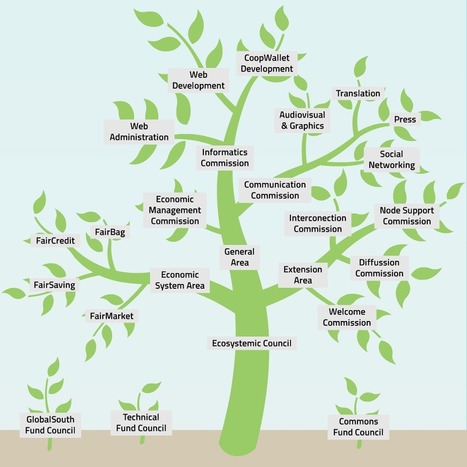
The CIC’s objective is to generate a self-managed free society outside law, State control, and the rules of the capitalist market. In this sense, it’s a model for transition more than a model for society, wherein we progressively construct practices and take decisions that move us away from our starting point within the system, and towards the world we want to live in. In our view, what we’re doing is activism, an activism for the construction of alternatives to capitalism.”
|