Panarchy is a near synonym to the concept of Peer Governance, and refers to networked governance. It is also the title of an important book on the logic of ecological systems.
Panarchy/panarchism has an older meaning, referring to a system of multiple extraterritorial governments, see here and our entry onMultigovernment for background.
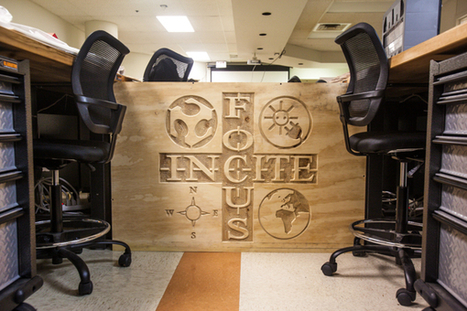
InnovoGraph offers strategic innovation services and management consulting to include strategy, business model innovation and ecosystem development. InnovoGraph services apply research, discovery and design practices to unlock value creation, delivery and capture capabilities for clients. The NC IOE is an InnovoGraph capabilities demonstration, part of InnovoGraph’s public service commitment to North Carolina.
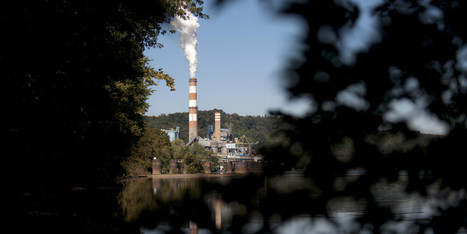
In Greek residents it is said that because the fuels became cheaper, they had to use cheap gas to warm the homes. This negatively impacted the air quality for their home. I learned a lot from this article. But I feel as though there was a lot of unnecessary information.
Ci2i Global has been working together since 2010 toward developing a professional support eco-system for changemakers around the world who are working with co-creative methods to achieve local and global social impact and innovation.
But, with the prospects for an urgently needed green economy being suffocated daily by business as usual, how difficult can it be to rewrite the failing, founding principles of mainstream, planet-eating, people-crushing, neoliberal economics? Not difficult at all, it turns out. In some cases you just need to change a few words to turn the world around. With celebrities talking revolution, students walking out of unreconstructed university economics lectures, and allegations flying of departments stuck in doctrine and dogma, it could prove a timely correction, as market analysts might say.
For over 17 years Furtherfield has been working in practices that bridge arts, technology, and social change. Over these years we have been involved in many great projects, and have collaborated with and supported a variety of talented people. Our artistic endeavors include net art, media art, hacking, art activism, hacktivism and co-curating. We have always believed that it is essential that the individuals at the heart of Furtherfield practice in arts and technology are engaged in critical enquiry. For us art is not just about running a gallery or critiquing art for art’s sake. The meaning of the art is in perpetual flux, and we examine its changing relationship with the human condition. Furtherfield’s role and direction as an arts collective is shaped by the affinities we identify among diverse independent thinkers, individuals and groups who have questions to ask in their work about the culture.
For those that are not familiar with it, open hardware is a practice where designs are shared through open licenses in a community, and those designs can then be used by manufacturers, who can make and sell the product, eventually making a profit, but they cannot rely on any rents deriving from intellectual property. We will see later why open design and free hardware are also linked to new modalities of production, i.e. open and distributed manufacturing
“I will talk today about the emerging green economy – its ethical basis, and in particular the unique opportunity for Sri Lanka to become a model that can inspire and teach the rest of the world.
The human species must acknowledge that any future that allows us to retain our humanity will jettison capitalism, patriarchy and white supremacy - and be based on an ecological worldview, says Jensen.
Through the case of the Helix_T wind turbine project, this article sets out to argue two points: first, on a theoretical level, that Commons-based peer production, in conjunction with the emerging technological capabilities of three-dimensional printing, can also produce promising hardware, globally designed and locally produced. Second, the Commons-oriented wind turbine examined here is also meant to practically contribute to the quest for novel solutions to the timely problem of the need for (autonomous) renewable sources of energy, more in the sense of a development process than as a ready-to-apply solution. We demonstrate that it is possible for someone with partial initial knowledge to initiate a similar, complex project based on an interesting idea, and to succeed in implementing it through collaboration with Commons-oriented communities, while using peer-produced products and tools. Given the trends and trajectories both of the current information-based paradigm and the problems of the predominant industrial modes of production with all the collateral damage they entail, this may be considered a positive message indeed.
David Bollier is a leading writer and advocate for all those real-life commons -- what we own, from the public lands, public airwaves, online information and local civic assets. He calls the commons a "parallel economy and social order that.... affirms that another world is possible. And more: we can build it ourselves, now."
The Monkey Farm in Costa Rica is entirely volunteer-driven, unique monkey rescue farm that combines organic farming and permaculture with wildlife rescue. We have had real challenges to get our food production and other activities started because every year in January-March fires spread from the neighboring properties and destroy everything. This effectively evicts the howler and white-faced monkeys whose natural habitat the Ocotal area is. After three miserable fires we had to decide: either we pack our bags and leave or do something and ensure the fires won't spread.
Geoff Mulgan author of The Locust and the Bee: Predators and Creators in Capitalism's Future explains the different types of capitalism, why preparing the ground work for the next economy is essential for our economic and ecological future, what the current economic debate misses and addressing inequality in the future economy.
The economy and the natural environment are interlinked: every economic action can have some effect on the environment, and every environmental change can have an impact on the economy.
"once you have a company generating local energy, you have an asset that you can use to back up a local currency. The problem with many local currencies such as LETS is that they can’t be exchanged for things in shops, and are not much use to business. Lietaer said you have to start with the idea that the currency can be used by business, and then also by the community. A currency backed by energy achieves this. Then people can part pay their bills in the local money, which would liberate the workpower needed to start to implement localisation in other areas such as land use and community development. The currency would be of use to everyone, not just to people who want an aromatherapy massage, as can sometimes be the problem with LETS. It can be either a printed currency or an electronic one. The company could give favourable loans to business start-ups that are driving forward the Energy Descent Action Plan." (http://transitionculture.org/?p=198)
The Open Government Partnership (OGP)—which held its most recent summit about three weeks ago—has made tremendous progress in its two years of existence. The OGP, a voluntary partnership between governments and civil society, aims to make governments more open, accountable, and responsive to citizens. Discussions at the summit made it clear that the partnership is already demonstrating impact. Sixty-two governments have now joined OGP, making 1,115 commitments to promote transparency, empower citizens, fight corruption, and harness new technologies to strengthen governance.
What can we learn from observing the self-sustaining ecosystems of the natural world? And with that knowledge, how can we design systems of our own, systems of all kinds, that mimic the intrinsic balance of ecosystems, with their capacity for diversity, renewal, and the transformation of waste into energy?
Russell Brand appeared on the BBC's Newsnight last night and a video of the interview is quickly spreading online. The host and interviewer, Jeremy Paxman, started with a dismissive line of questioning regarding what gave Brand, who started his career as a comedian and actor, the authority or the right to share his political views via The New Statesman magazine, where Brand has recently been named a guest editor. As you'll see, Brand spoke passionately about the need for revolutionary change in how governments and corporations are treating the planet and underserved populations.
The Economist has increasingly been copying the descent of the Wall Street Journal into dogma. One of it perennial hates is President Rafael Correa of Ecuador. Correa, an economist, has committed the unforgivable offense of succeeding through economic policies that The Economist despises. This is passing strange because Correa’s four foundational policies are expanded health care, expanded education, improved infrastructure, and encouraging entrepreneurs by reducing the time and cost of starting a business in Ecuador. The Economists’ pages are littered with praise for right-wing governmental leaders and candidates who promise that they will implement those same four policies (but rarely do in practice). Correa has actually delivered on his promises – quickly – and the improvements in the economy of Ecuador and the lives of ordinary citizens have been huge. The result is that Correa is the second most popular head of state in the Americas.
We’re collectively insane. Our civilisations now appears to be almost psychotic. We’ve created systems that if you were to look at them as if they were individuals, we would see them as being mentally ill to an extreme extent.
To get content containing either thought or leadership enter:
To get content containing both thought and leadership enter:
To get content containing the expression thought leadership enter:
You can enter several keywords and you can refine them whenever you want. Our suggestion engine uses more signals but entering a few keywords here will rapidly give you great content to curate.


 Your new post is loading...