


This is brain food for futurists and activists. Clearly the future of capitalism is a meaty topic, and the astute and interconnected mind of Indy Johar unpacked a load of carefully linked ideas, facts and possibilities that told a compelling story of what might be possible. Make sure you're sitting down and ready to absorb some big (and micro-massive) ideas.
Follow, research and publish the best content
Get Started for FREE
Sign up with Facebook Sign up with X
I don't have a Facebook or a X account
Already have an account: Login

Peer2Politics
140.8K views |
+75 today
on peer-to-peer dynamics in politics, the economy and organizations
Curated by
jean lievens
 Your new post is loading... Your new post is loading...
 Scoop.it!

“Without the sense of fellowship with men of like mind,” Einstein wrote, “life would have seemed to me empty.” It is perhaps unsurprising that the iconic physicist, celebrated as “the quintessential modern genius,” intuited something fundamental about the inner workings of the human mind and soul long before science itself had attempted to concretize it with empirical evidence. Now, it has: In Social: Why Our Brains Are Wired to Connect (public library), neuroscientist Matthew D. Lieberman, director of UCLA’s Social Cognitive Neuroscience lab, sets out to “get clear about ‘who we are’ as social creatures and to reveal how a more accurate understanding of our social nature can improve our lives and our society. Lieberman, who has spent the past two decades using tools like fMRI to study how the human brain responds to its social context, has found over and over again that our brains aren’t merely simplistic mechanisms that only respond to pain and pleasure, as philosopher Jeremy Bentham famously claimed, but are instead wired to connect. At the heart of his inquiry is a simple question: Why do we feel such intense agony when we lose a loved one? He argues that, far from being a design flaw in our neural architecture, our capacity for such overwhelming grief is a vital feature of our evolutionary constitution: 
Scoop.it!

"The term “econophysics” was introduced by analogy with similar terms, such as astrophysics, geophysics, and biophysics, which describe applications of physics to different fields. Particularly important is the parallel with biophysics, which studies living creatures, which still obey the laws of physics. It should be emphasized that econophysics does not literally apply the laws of physics, such as Newton’s laws or quantum mechanics, to humans, but rather uses mathematical methods developed in statistical physics to study statistical properties of complex economic systems consisting of a large number of humans. So, it may be considered as a branch of applied theory of probabilities. However, statistical physics is distinctly different from mathematical statistics in its focus, methods, and results.
Scoop.it!

With further calculations, the group found that the average rate at which carbon dioxide entered the atmosphere during the end-Permian extinction was slightly below today’s rate of carbon dioxide release into the atmosphere due to fossil fuel emissions. Over tens of thousands of years, increases in atmospheric carbon dioxide during the Permian period likely triggered severe global warming, accelerating species extinctions.
Scoop.it!

“How can science be stuck? You are missing the point of science! Science is not a thing it’s a method!” While I totally agree that science is a method, what I am alluding to in this article is that many of the theories we have come to believe that science has produced have been scientifically proven to be incorrect yet we continue to go along with them. The reason this happens is because in many cases we are no longer using the scientific method as it is meant to be used. The stage in the method where we are supposed to go back and a re-develop a hypothesis after evidence proves the the initial theory wrong, we instead get stuck in maintaing our belief because of the money, fear, ego and pride that get in the way.
Scoop.it!

At the same time, it is facile to dismiss science itself. The most careful scientists, and the best science journalists, realize that all science is provisional. There will always be things that we haven’t figured out yet, and even some that we get wrong. But science is not just about conclusions, which are occasionally incorrect. It’s about a methodology for investigation, which includes, at its core, a relentless drive towards questioning that which came before. You can both love science and question it.
Scoop.it!

KiCad: CERN's Contribution to Free/Open PCB Design EE Times One of the main issues the open hardware community must overcome to reach a maturity level akin to that of open-source is the lack of state-of-the-art free/open EDA (electronic design...
Scoop.it!
High-modernist idealists, when given unfiltered power to act on their ideologies, have a tendency to try to enact their vision through authoritarian means - the creation of laws and regulations, the manipulation of the major consensus narrative, through socioeconomic restructuring and societal design. As with the sudden introduction of any large scale perturbation to a chaotic system, the results are often unpredictable. There is plenty of evidence of historical flawed attempts at constructing rational utopia, where the perceived ability to control society leads to disaster, but the modern rational utopia - in its technologically superpowered glory - promises to fail in ways we have not yet fully fathomed. I talk about how authoritarianism is changing its nature, how rational utopias come about, look at how they fail and why fail, and try and figure out what we can do about it.
Scoop.it!

Citizen science is not a new practice; many of the world’s original naturalists weren’t trained scientists, but regular people with an interest in the outdoors. Gilbert White, who is regarded as England’s first ecologist, was a priest who kept detailed records of the plants and animals in his neighborhood in the 1700s. Those notes were then turned into The Natural History and Antiquities of Selborne, which is regarded as one of the earliest texts to record phenology.
Scoop.it!

Rachel Falconer writes about the cyberfeminist art collective subRosa,a group using science, technology, and social activism to explore and critique the political traction of information and bio technologies on women’s bodies, lives and work.
Scoop.it!

Congratulations to Mr. Englert and Mr. Higgs and the 10,000 others who contributed to this achievement.
Scoop.it!

Allow me to be the first to announce that TED is dead. Why? Because the group that organizes so-called “TED talks” has been thoroughly hijacked by corporate junk science and now openly rejects any talks about GMOs, food as medicine, or even the subject of how food can help prevent behavioral disorders in children. All these areas of discussion are now red-flagged from being presented on any TED stage.
Scoop.it!

IBM announced earlier today that some of its research scientists are now collaborating with Johns Hopkins University and the University of California, San Francisco, to combat illness and infectious diseases in real-time with smarter data tools for public health.
|
Scoop.it!

Randy W. Schekman, a professor at the University of California at Berkeley who was one ofthree winners of this year’s Nobel Prize in Physiology or Medicine, has declared a boycott of top science journals such as Cell, Nature, and Science, The Guardian reported.
Scoop.it!

An introduction to the new technology that could revolutionize how science is done.
Scoop.it!
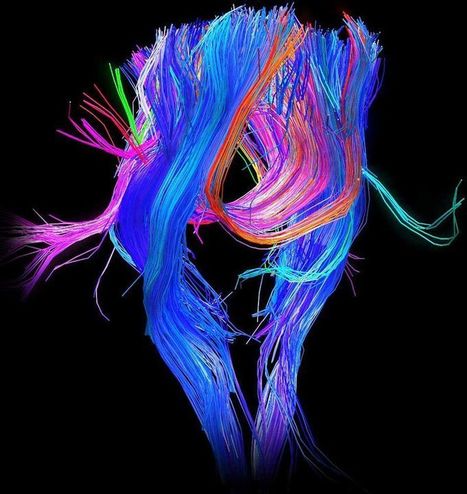
"Humans obviously evolved a much wider range of communication tools to express their thoughts, the most important being language," said John Hoffecker, a fellow at the University of Colorado's Institute of Arctic and Alpine Research. "Individual human brains within social groups became integrated into a neurologic Internet of sorts, giving birth to the mind."
Scoop.it!

Scientists still don't understand how the brain manages human behavior in increasingly complex social situations, or what parts of the brain are linked to deviant social behavior associated with conditions like autism and schizophrenia.
Scoop.it!

"The basic reality is, (Wikipedia) is no more or less error prone than other sources of information," Walsh says. "I mean, how did we know books, written by one person, were true? How could they be up-to-date? Part of the beauty of Wikipedia is, if there is something wrong, it can be changed immediately."
Scoop.it!

A widely lauded new technology for disease diagnosis in poor countries has failed to progress to field trial stage because of funding issues.
Scoop.it!

Scientists created the web — but the open web still hasn’t transformed scientific practice to the same extent we’ve seen in other areas like media, education and business. For all of the incredible discoveries of the last century, science is still largely rooted in the “analog” age. Credit systems in science are still largely based around “papers,” for example, and as a result researchers are often discouraged from sharing, learning, reusing, and adopting the type of open and collaborative learning that the web makes possible.
Scoop.it!
"In Reinventing Discovery, Michael Nielsen argues that we are living at the dawn of the most dramatic change in science in more than 300 years. This change is being driven by powerful new cognitive tools, enabled by the internet, which are greatly accelerating scientific discovery. There are many books about how the internet is changing business or the workplace or government. But this is the first book about something much more fundamental: how the internet is transforming the nature of our collective intelligence and how we understand the world. Reinventing Discovery tells the exciting story of an unprecedented new era of networked science. We learn, for example, how mathematicians in the Polymath Project are spontaneously coming together to collaborate online, tackling and rapidly demolishing previously unsolved problems. We learn how 250,000 amateur astronomers are working together in a project called Galaxy Zoo to understand the large-scale structure of the Universe, and how they are making astonishing discoveries, including an entirely new kind of galaxy. These efforts are just a small part of the larger story told in this book--the story of how scientists are using the internet to dramatically expand our problem-solving ability and increase our combined brainpower. This is a book for anyone who wants to understand how the online world is revolutionizing scientific discovery today--and why the revolution is just beginning"--
Scoop.it!
Congratulations to Nobel Prize Winners, and a Nod to Mass Collaboration
Scoop.it!

Johns Hopkins University physicists today are celebrating the important role they played in the discovery of a Higgs boson, the so-called "God particle" whose existence was predicted almost 50 years ago by Francois Englert of the Université Libre de Bruxelles and the University of Edinburgh's Peter Higgs, co-winners of the 2013 Nobel Prize in Physics.
Scoop.it!
On 4 July, good news arrived in the inbox of Ocorrafoo Cobange, a biologist at the Wassee Institute of Medicine in Asmara. It was the official letter of acceptance for a paper he had submitted 2 months earlier to the Journal of Natural Pharmaceuticals, describing the anticancer properties of a chemical that Cobange had extracted from a lichen.
|





