With the Hollywood blockbuster Transcendence playing in cinemas, with Johnny Depp and Morgan Freeman showcasing clashing visions for the future of humanity, it's tempting to dismiss the notion of highly intelligent machines as mere science fiction. But this would be a mistake, and potentially our worst mistake in history.
What have humans done with our current biological brains but make a gigantic mess of our planet without having the sense to even acknowledge and clean up after ourselves?
The sooner we correct our brains' function and perpetually limited perception, much like how we correct our vision with glasses, or our hearing with hearing aids, the sooner we'll be better off.
It's commonly accepted that science and spirituality are not compatible. Science is considered our reliable way forward, while spirituality often regarded as a sentimental relic of our past we can't quite let go of. So to say it is necessary for the two to work together may seem unrealistic. For centuries, science has led our progress; spirituality, as indicated through participation in orthodox religion has been in steady decline. But the unorganized, personal aspect of spirituality is the subjective pursuit of value, reality, and understanding through individual experience or consciousness. This aspect of spirituality has not declined. Instead, the drive to find external solutions to global problems that have value to our interior world is more powerful than ever. The scale of our planet's problems is too great to be solved without an integrated approach of science and spirituality. The power of consciousness needs the systemization of the scientific method, and the tools of science depend on the wisdom and creativity of individual consciousness to guide it in a meaningful direction.
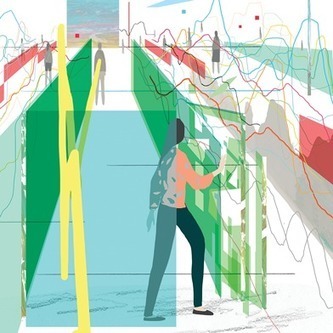
Tapping into big data, researchers and planners are building mathematical models of personal and civic behavior. But the models may hide rather than reveal the deepest sources of social ills.
It’s easy to forget that Irvine, the minutely planned southern California city awash in tract housing and shopping complexes, was regarded as a pretty radical place at the time of its 1971 incorporation. Almost entirely ranchland up until the mid-1900s, the area that would become Irvine jump-started its urban development as the egg-white to the University of California’s yolk. Looking for land to accommodate expanding enrollment, the UC bought a large chunk of dusty land owned by the Irvine Company to establish a new campus, adding surrounding territory for residential and commercial development. The school isn’t named after the city -- both are named after the Irvine Company. City and campus were master-planned by architect William Pereira, and the University opened in 1965, still largely unfinished but marked by Pereira’s concrete brutalism and Olmsted’s New York Central Park plan.
Developers say they are less than a year away from deploying prototype satellites that could someday soon broadcast free and universal internet all over the globe from high in orbit.
The Hub at Johns Hopkins David Kaplan's documentary shows the human side of physics The Hub at Johns Hopkins LHC construction began in 1998, a collaborative effort that now involves more than 10,000 scientists from more than 100 countries and an...
The future of the news is dependent on defining our relationship with data, which is currently in the "it's complicated" phase, said the director of ASU's Center for Science and the Imagination Monday night.
Can gaming cure disease? By creating games like EteRNA for protein folding and nano-engineering, Adrien Treuille and his colleagues are outsourcing research, each week scoring and then actually synthesizing top players' work. By studying players' strategies, scientists can improve their computer modeling while also creating new ways to fight disease.
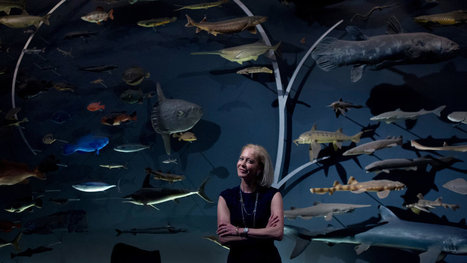
Taxonomic descriptions, introduced by Linnaeus in 1735, are designed to allow scientists to tell one species from another. Now there is a new futuristic method for describing new species that goes far beyond the tradition. The new approach combines several techniques, including next generation molecular methods, barcoding, and novel computing and imaging technologies, that will test the model for big data collection, storage and management in biology.
Citizen Science (or "Public Participation in Scientific Research"), has attracted attention as a new way of engaging the public with science through recruiting them to participate in scientific research. It is often seen as a win-win solution to promoting public engagement to scientists as well as empowering the public and in the process enhancing science literacy. This paper presents a qualitative study of interviews with scientists and communicators who participated in the "OPAL" project, identifying three potential flashpoints where conflicts can (though not necessarily do) arise for those working on citizen science professionally. We find that although participation in the CS project was generally valued, it does not seem to overcome continuing (and widely reported) concerns about public engagement. We suggest that enthusiasm for win-win situations should be replaced with more realistic expectations about what scientists can expect to get out of CS-style public engagement.
The submission guidelines are actually intentionally vague, according to the website, because Hackaday doesn’t want to limit the creativity of designers: “You must actually build something, it must involve some type of electronics that are connected to something.” The only catch, outside of having to be 13 years of age, is that it must be an “open” project,
Nevertheless, I believe that the distant future of the balance or unbalance between humankind and nature has a great importance. Certainly, if we look far enough ahead, it will be beyond our own lifetimes. But I feel that we we should think not only of our own children, and of their children and grandchildren, but also about the fate of all future human generations; and not only about humans, but also about what will happen to all the animals and plants and microbes with which we share our existence.
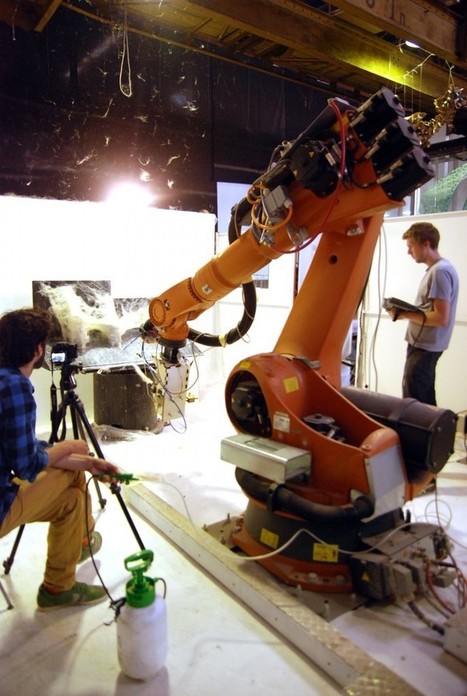
Stigmergic Fibers tackles the prospect of fiber aggregation under the influence of varying environmental and material properties, to produce controlled boundary and spatial conditions. The project was initiated by research on plant fiber and biology. To extract information from the behavioral methodologies of plant growth and structure, various experiments were conducted on differentiated growing conditions.
How can Sciences, Arts and Technologies collaborate together with Societies,Communities, Administrations and Businesses to foster a culture of Openness,Transparency, Freedom and Empowerment?
Fundamentally at stake, the critics say, is the social contract that cultivates science for the common good. They worry that the philanthropic billions tend to enrich elite universities at the expense of poor ones, while undermining political support for federally sponsored research and its efforts to foster a greater diversity of opportunity — geographic, economic, racial — among the nation’s scientific investigators.
3. The New Industrial Revolution. Science is no longer a closed world, just for geeks. Digital and technological advances are enabling us to create in new ways, leading to new creative forms, and helping us see a new appreciation of the digital as a thing of beauty.
In times of easy access to the Internet and cheap travel, we consider ourselves part of a global society, but how connected this really makes us will surprise many of us.
The topic “GitHub for Science” has been explored quite a few times before (1, 2, 3, 4) and with good reason: it is quite exciting to envision what breakthroughs in scientific collaboration could come from GitHub backed explorations, with substantial capital
"Slavoj Žižek answers the question, "Do you think science has replaced philosophy in discovering the bigger questions of life?" Philosophy is not dying, he says — in fact, we need it more now than ever."
To get content containing either thought or leadership enter:
To get content containing both thought and leadership enter:
To get content containing the expression thought leadership enter:
You can enter several keywords and you can refine them whenever you want. Our suggestion engine uses more signals but entering a few keywords here will rapidly give you great content to curate.


 Your new post is loading...













To this, I say "meh."
What have humans done with our current biological brains but make a gigantic mess of our planet without having the sense to even acknowledge and clean up after ourselves?
The sooner we correct our brains' function and perpetually limited perception, much like how we correct our vision with glasses, or our hearing with hearing aids, the sooner we'll be better off.
Good riddance to bad rubbish.
Think about it.