It’s inevitable that the open source hardware community will continue to grow. But, is there a point where the system gets too large and no longer works? It seems to me that the only thing keeping open source hardware designers in business is that most of the people buying open source products want to support buying from the original designer. Sparkfun is an interesting example of a larger company that copies and resells open source designs. Because Sparkfun believes in open source, they pay the designer a percentage of the profit.
Where open source really shines is in the ability to empower people to make completely custom interfaces without prior knowledge. How open hardware helps people with physical disabilities.
The last twelve months have seen some major upheavals in the technology world that few would have predicted last year. Microsoft CEO Steve Ballmer announcing he would be resigning as CEO(on the heels of Microsoft's acquisition of Nokia), the utter disaster that was the launch of Blackberry's new operating system, and fallout in the tech world over the National Security Agency's broad surveillance programs are among the most obvious.
Germany-based Neo900.org was announced in October, as a spinoff from OpenPhoenux, which itself was a spinoff from the splintered OpenMokoopen source smartphone project.
Reprap-inspired additive manufacturing unit prints in steel and costs less the $2,000 to build from off-the-shelf components. (The cost of Metal Additive Manufacturing (3D printing) should start to come down as designs become open source.
If you check the OSHW projects which people release probably 80% of them are made with Eagle for the same reason. When Eagle was available for free, nothing comparable existed, the open source tools were very immature and not so easy to use, then once you start using one CAD you get used to it and you make your own libraries, scripts, ULPs and you are tight bind to it so you do not want to move to other platform.
Open-source hardware (OSHW) is part of an emerging business model where all the design files of a product, including the circuit schematics, source code and physical design, are made publicly available under a license so that others can improve upon the design and share the improvements with the community. It works in a similar way to open-source software, where there are already established business models that allow for profitable companies. Here are 10 of the most successful open source hardware projects in 2013:
The Open Source Hardware Research Project at HIIG is inspired by our general interest to conduct research on participatory forms of interaction on the Internet. Open Source Hardware (OSHW) describes an emergent bundle of technologies, practices, business opportunities, and regulatory approaches for collaborative manufacturing. In the field of consumer 3D printing for instance, intense innovation activity has sprung from a surge of hardware devices and organizations. From our perspective this can be seen as an Internet innovation phenomenon because a) a lot of the exchange and self-organisation in the community of people who contribute to OSHW takes place online and b) online platforms that aggregate digital designs or services are an important — if not elemental — resource in OSHW.
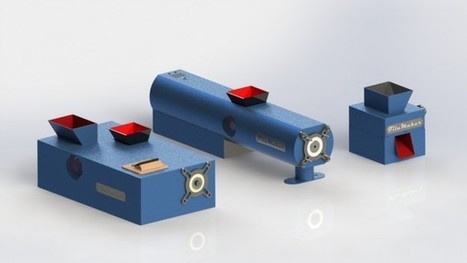
Marek was born in Slovakia and moved to the Czech Republic before settling in Germany. Now, he has his own machine shop where he builds parts for balconies, railings, stairs and more. His tools of choice are SolidWorks and Geomagic Studio and his workshop is slowly transitioning from CNC toward more machinery production and easy mechanical machines. One of these projects, FilaMaker, took a lot of time and effort to produce, especially getting it crowdfunded to start mass production.
As some of you may already know, this year I will be co-chairing Addie in organizing the Open Source Hardware Summit (here’s last year event website). Aside from the obvious excitement for the opportunity, since a few days, in addition to the more stringent organizational aspects – which is to finalize a location and date, be cool we are getting there – I began to think about the program.
Our colleague Hephaestus, has already embarked on his 3D printer voyage, and so we thought it time to come on board. Being advocates of Open Source, what better way to start than RepRap. RepRap takes the form of an almost free desktop 3D printer capable of printing plastic objects. Since many parts of RepRap are made from plastic and RepRap prints those parts, RepRap self-replicates by making a kit of itself – a kit that anyone can assemble given time and materials. It also means that – if you’ve got a RepRap – you can print lots of useful stuff, and you can print another RepRap for a friend…
What if there was an open source project that changed how we produce the most fundamental apsects of our lives? From the food we eat, to the houses we live in, this project wants to open source the tools we use to obtain what we need to live.
This post celebrates few of the most incredible Open Source Hardware project from 2013. Most of these projects were crowdfunded, and I believe this tells much about how innovations is funded and encouraged these days.
Learn how manufacturing trends such as crowdfunding, reshoring, additive manufacturing, open-source hardware, and advanced automation help small business.
The OpenDrone Community aims to create a quadcopter built on open source hardware and software. We are also developing a number of other open source hardware and embedded projects, such as a Wi-Fi Car, a Frets On Fire Guitar, and some OpenWrt-based projects.
Ever wonder whether it's possible to build a company around products that can be freely copied, modified, and re-distributed by anybody else, anywhere else? By now it's clear that individuals and organizations can -- and regularly do -- make money with open source software. But, do the same rules of business and strategies for financial success apply to open source hardware?
Mozilla, Deutsche Telekom, LG, Qualcomm, TCL/ALCATEL ONETOUCH, Telefónica, ZTE and a number of other tech companies today launched a new initiative that aims to promote the open Web device ecosystem by “encouraging API compliance as well as ensuring competitive performance.” TheOpen Web Device Compliance Review Board (CRB) will operate as an independent not-for-profit organization, but its standards will be based on Mozilla’s principles of user privacy and control and will also form the basis of Mozilla’s Firefox OS branding requirements.
However, unleashing their true technological potential will call for greater networking between these groups and borrowing concepts from business incubator models and the open-source hardware movement.
David Cuartielles is a Spanish microchip engineer, Independent Design Professional, and Electronics Laboratory Director at Malmo University, Sweden. David is...
While trying to start up a makerspace in my home town of Rome, Georgia over the past year or so, I’ve spent a lot of time thinking about this trend called “the maker movement.” It boils down to people banding together in communities to start workshops for creating, inventing and tinkering. Admittedly, I have a tenancy to over-think things like this, and to seek meaning in places where I should just accept that “it just is.” Easier said than done for me.
Take one of the world's simplest machines. Add GPS, WiFi and open source development to make it kick ass. (The world’s first open source piece of hardware was the bicycle.
It was his high school graduation year that Yoonseo came across the Open Source Ecology (OSE) project. Inspired by the promises of open source hardware, he decided not to attend college - against his parents' wish - and headed down to a farm in Missouri to collaborate with OSE. This ambitious young technologist offers his thoughts on how it is changing not only his life but our global society for the better.
To get content containing either thought or leadership enter:
To get content containing both thought and leadership enter:
To get content containing the expression thought leadership enter:
You can enter several keywords and you can refine them whenever you want. Our suggestion engine uses more signals but entering a few keywords here will rapidly give you great content to curate.


 Your new post is loading...
 Scoop.it!