With falling party memberships and a narrowing gene-pool of candidates, parties need to open up. Supporters should be able to sign up and vote online just as easily as they are able to buy something on Amazon.
"A new system of governance or collaboration that does not follow a competitive hierarchical model will need to employ stigmergy in most of its action based systems. It is neither reasonable nor desirable for individual thought and action to be subjugated to group consensus in matters which do not affect the group, and it is frankly impossible to accomplish complex tasks if every decision must be presented for approval; that is the biggest weakness of the hierarchical model. The incredible success of so many internet projects are the result of stigmergy, not cooperation, and it is stigmergy that will help us build quickly, efficiently and produce results far better than any of us can foresee at the outset."
Government is one of the biggest producers of data—and one of the few that deliver data to the public free of charge. Governments already regulate how organizations may use personal data and myriad other issues related to data.
The contribution of this paper is to explain how to achieve a universally prosperous environmentally sustainable global society. This objective is incompatible with traditional economic policies dependent on environmentally exploitive growth in the population and/or full employment to generate prosperity. Politically attractive incentives of smaller taxes and government are identified as a way of changing the way an economy operates so that prosperity can be increased even with a declining and aging population. Localising the ownership and control of the means of production and exchange with individuals creates a way to create a universal minimum social dividend to replace the need for full employment, welfare, pensions, and big government. Local democracy is enriched with the power to nurture their host environment. The introduction of ecological forms of cost carrying money redeemable into local services of nature allows market forces to encourage production techniques that reduce their environmental impact. Increased life expectancy with depopulation is already occurring in twenty countries and this is expected to spread globally in the current century. This phenomenon with current environmental pressures create an imperative for achieving environmentally sustainable prosperity sooner rather than later.
Using an open source desktop lowers the total cost of ownership by 40%, in savings on proprietary software licences and by reducing costs on IT management. Using Ubuntu Linux massively reduces the number of local technical interventions, says Major Stéphane Dumond. "The direct benefits of saving on licences are the tip of the iceberg. An industrialised open source desktop is a powerful lever for IT governance."
Former OTC senior fellow David Bollier and University of Iowa law professor Burns H. Weston recently published Green Governance (Cambridge University Press) a groundbreaking book on merging environmental rights and commons thinking could create a new paradigm of governance for the 21st Century. Gus Speth, professor at the Vermont Law School and former dean of the Yale School of Forestry and Environmental Studies, declares, “We must take these ideas very seriously, indeed.”
The barriers between political, economic and social issues have dissolved. The reality of our networked society is that global, regional and industry developments are intertwined and technological revolutions are disrupting our conventional decision-making processes. Today, to address these issues, the world needs a level of global cooperation that is increasingly difficult to attain, precisely due to the growing complexities in the world.
Protocally Power is a concept developed by Alexander Galloway in his book Protocol, to denote the new way power and control are exercized in distributed networks.
“Both brokering and boundary-spanning roles greatly increase the likelihood of leadership points to the importance of social positions that can unite open innovation communities. We argued that trust does not come easily to community members who fear cooptation by commercial interests or forking over technical disagreements. Because brokers by definition contrive less cohesive and less trusting contexts, the probability that they will assume leadership roles remains highly contingent on building trust with community members. We argue that aspiring leaders can build trust through physical attendance and, consistent with this argument, find a positive interaction with physical attendance. Also consistent with our emphasis on trust in open innovation communities, brokerage and boundary spanning demonstrated a negative interaction, indicating that brokers who span boundaries remain at a disadvantage. While brokerage alone demonstrates positive influence on becoming a leader, boundary spanning demonstrates a much stronger effect. Finally, we did not observe a contingent relationship between boundary spanning and attendance. Our results emphasize the importance of intermediary and integrating roles—for brokers within technological boundaries, and for boundary spanners across cohesive technological boundaries."
Through the case of the Helix_T wind turbine project, this article sets out to argue two points: first, on a theoretical level, that Commons-based peer production, in conjunction with the emerging technological capabilities of three-dimensional printing, can also produce promising hardware, globally designed and locally produced. Second, the Commons-oriented wind turbine examined here is also meant to practically contribute to the quest for novel solutions to the timely problem of the need for (autonomous) renewable sources of energy, more in the sense of a development process than as a ready-to-apply solution. We demonstrate that it is possible for someone with partial initial knowledge to initiate a similar, complex project based on an interesting idea, and to succeed in implementing it through collaboration with Commons-oriented communities, while using peer-produced products and tools. Given the trends and trajectories both of the current information-based paradigm and the problems of the predominant industrial modes of production with all the collateral damage they entail, this may be considered a positive message indeed.
Beyond the theoretical and historical arguments about the effects of enclosure on real property lie the question of how well those arguments translate to the world of the intangible and intellectual. It is that question which this chapter raises. Christopher May, A Global Political Economy of Intellectual Property Rights: The New Enclosures? (London: Routledge, 2000) offers a similar analogy—as do several other articles cited in the text. The key differences obviously lie in the features of intellectual property identified in the earlier chapters—its nonrivalrousness and nonexcludability—and on the ways in which a commons of cultural, scientific, and technical information has been central to the operation of both liberal democracy and capitalist economy. I owe the latter point particularly to Richard Nelson, whose work on the economics of innovation amply repays further study: Richard Nelson, Technology, Institutions, and Economic Growth (Cambridge, Mass.: Harvard University Press, 2005)."
In 2010, a small skunkworks team at USAID, working with two external experts, Dr. Rick Klausner, former Executive Director of Global Health at the Gates Foundation, and Dr. Carol Dahl, now head of the Lemelson Foundation, decided to design what was, for USAID, a completely novel approach to development – using open innovation to solve wicked development problems. Using the “Grand Challenges” model, pioneered by the Bill and Melinda Gates Foundation and Grand Challenges Canada, USAID adapted their world-class health research program to a means of sourcing and translating innovations around big global challenges. This allowed the Agency to move from incremental to revolutionary advances in its ability to tackle the world’s most difficult problems in many areas of development – health, energy, food security, education, and governance. We sought to pay homage to the genesis of the idea, naming the program Grand Challenges for Development (GCDs).
Where is our all-inclusive local media source, one that is not generic, yet doesn't cater to only one group, one that embraces local lore, custom and myth, one that encourages people who live the story, who are located downtown or in the community, whose lives are on the pulse of the daily, local narrative? They are to tell their story, to emphasize selected statements said by their own voice, and to speak from experience, because good media should begin with experience and end with experience. Good media should not begin with inexperience and end with inexperience. Good local media should reunite with social cause, and ultimately, incite action.
Increasingly, the relationship between Americans and their government has come to resemble a one-way mirror dividing an interrogation room. So here’s a beginner’s guide to some of what’s happening on the other side of that mirror.
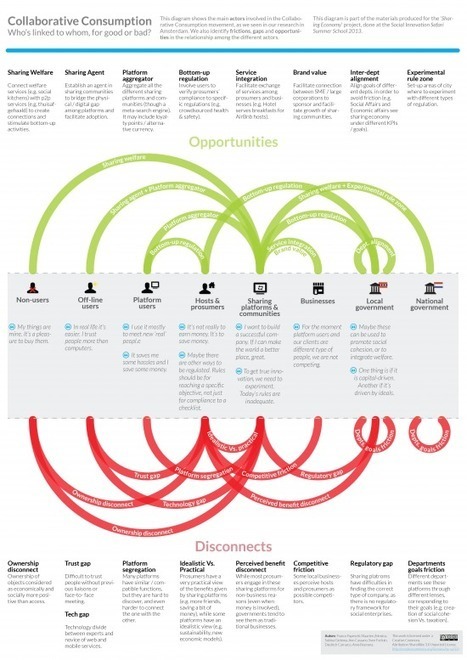
More and more people are sharing what they own, reusing what they have, and working together where they can. Citizen participation, social entrepreneurship and environmental responsibility have become increasingly common than in the last decades. For governmental organisations this leads to the question how they can jump on the bandwagon. And also, what are the remaining tasks for governments? What do citizens expect from a government when they are more self-organised? And are there people left out and forgotten when new networks and partnerships arise?
An annotated list of the 100 largest U.S. companies 50% or more employee-owned through an employee stock ownership plan (ESOP) or other means. (What comes after capitalism?
To get content containing either thought or leadership enter:
To get content containing both thought and leadership enter:
To get content containing the expression thought leadership enter:
You can enter several keywords and you can refine them whenever you want. Our suggestion engine uses more signals but entering a few keywords here will rapidly give you great content to curate.




 Your new post is loading...
 Scoop.it!