Free-market academic research policies have unleashed medical quackery and scientific fraud, forcing consumers to pay premiums for discoveries we’ve already funded as taxpayers.
Italian Operaismo and the Information Machine, is a must read by Matteo Pasquinelli. However the ‘accelerationism’ is the name of rapidly changing Zeitgeist(s) -the spirit of ‘space-time’, compressed increasingly into smaller units. The direction of meta-data and big-data research already moved further within the timespawn of Pasquinelli’s paper publication in early 2014. The theorization of the emerging ‘meta-data’ society, already has to make quantum leap further in order to make sense of the fundamentals of the ambiguous global (and absolute) control society/civilization vision set forth by the infamous, joke like Islamic State screenplay. For this one has to go further and simulataneoulsy problematize the most recent developments in quantum computing,quantum-like cognition and quantum-mind research, overlapping research and applications between genome, cybernetics, Internet of Everything, and [unifield fields] Theory of Everything in physics.
Publisher Leonardo/Olats writes: Artists have opened new avenues in the art world by employing these developments in biotechnology, synthetic biology and Artificial Life; going from inanimate to autonomous objects to living creatures; exploring the thin border between animate and inanimate; confronting the grown, the evolved, the born and the built; and raising aesthetic but also social, political and ethical issues.
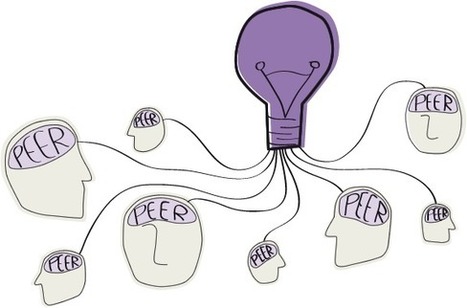
Science has often been described by many sociologists as a collective enterprise. Most scientific research is done in collaboration, and collaboration can even involve thousands of scientists — as in the case of theLarge Hadron Collider experiments. The standard publication system of science is based on colleagues’ collaboration and evaluation through the peer-review process.
Scientific, Technical, and Medical (STM) publishing is big business. It generates $19 billion in revenue per year, the majority of which is earned by a few powerful publishers that enjoy profit margins of up to 40 percent. Inflated subscriptions sold to academic libraries keep them moving ahead because the librarians feel they have no choice but to buy. These companies add little value to the actual publishing product but they are entrenched.
Citizen science is an increasingly popular way for ordinary citizens to engage with science across a variety of subject areas and mediums. A combined, cross-sector approach is necessary and the results can be more citizens engaged in the critical science policies that impact our society.
Sometimes, the laboratory just won't cut it. After all, you can't recreate an exploding star, manipulate quarks or forecast the climate in the lab. In cases like these, scientists rely on supercomputing simulations to capture the physical reality of these phenomena—minus the extraordinary cost, dangerous temperatures or millennium-long wait times.
Today's neuroscientists need expertise in more than just the human brain. They must also be accomplished hardware engineers, capable of building new tools for collecting and analyzing the brain.
Hawking Incorporated: Stephen Hawking and the Anthropology and the Knowing Subject by Hélène Mialet that deserves a spot on every Transhumanist's bookshelf.
Open-access publishing actually began in 2000, a year before the Budapest meeting, with the launch, in Britain, of BioMed Central, and in America, of the Public Library of Science (PLOS).
Humanists typically look toward the future with extreme pessimism, assuming conditions of technological oppressiveness: Surveillance is rampant, the human being has been shorn of dignity, the state is overpowering, and individuality is a lost cause before the powerful onslaught of the collective. Zamyatin and Orwell are prime examples of this kind of extrapolation. There are also instances of humanist utopias (beginning with Thomas Moore and continuing with the socialist utopias of William Morris and Edward Bellamy), but they tend to be curiously bloodless, lacking the conviction and richness of the dystopias.
The observation that science and politics make uneasy and often treacherous bedfellows is hardly revelatory. In science, all hypotheses must withstand the trial-by-fire of experiment; its methodology is self-correcting and objective, unconcerned with petty prejudices or personal conviction. Politics, by contrast, is deeply entangled with ideology – it is not bound to respect reality as science is, and thinks nothing of substituting convincing evidence for emotive rhetoric. And yet, when science and politics clash, it is all too often science that loses.
I further developed possible scenarios from the open peer review on. After addressing reviewer comments in a revised manuscript, I consider publishing my article on researchgate. Yes, this would be the first time an independent scientist publishes his own work on an open access platform with prior peer review and more as I will explain now.
e teach our students: We say that we have some theories about science. Science is about hypothetico-deductive methods; we have observations, we have data, data require organizing into theories. So then we have theories. These theories are suggested or produced from the data somehow, then checked in terms of the data. Then time passes, we have more data, theories evolve, we throw away a theory, and we find another theory that’s better, a better understanding of the data, and so on and so forth.
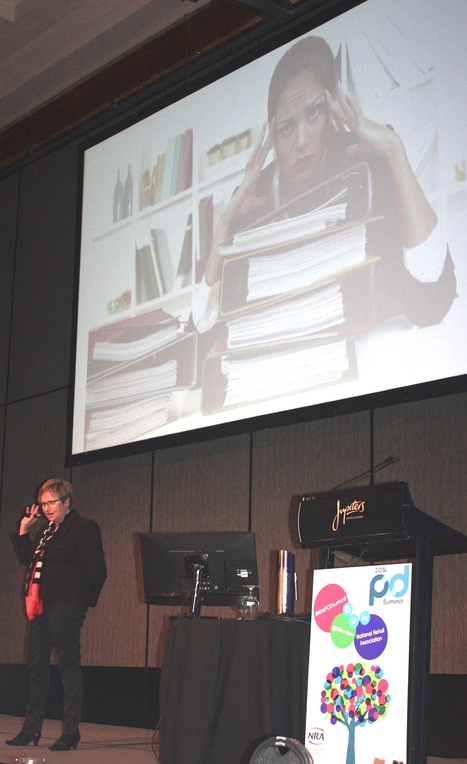
On the weekend of June 14-15, 2014, Linda Ray and Tara Neven, co-founders and co-directors of neuresource group, headed down to Jupiters Hotel & Casino on the Gold Coast for the National Retailers Association (NRA) Conference. Both had important roles to fill – Neven as the conference host and Ray as an ‘Insight’ speaker.
"Humans obviously evolved a much wider range of communication tools to express their thoughts, the most important being language," said John Hoffecker, a fellow at the University of Colorado's Institute of Arctic and Alpine Research. "Individual human brains within social groups became integrated into a neurologic Internet of sorts, giving birth to the mind."
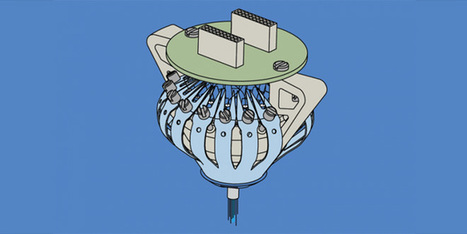
Graduate students Josh Siegle and Jakob Voigts were planning an ambitious series of experiments at their MIT neuroscience labs in 2011 when they ran into a problem. They needed to record complex brain signals from mice, but they couldn’t afford the right equipment: The recording systems cost upward of US $60,000 each, and they wanted at least four. So they decided to solve their dilemma by building their own gear on the cheap. And knowing that they wouldn’t be the last neuroscientists to encounter such a problem, they decided to give away their designs. Now their project, Open Ephys, is the hub of a nascent open-source hardware community for neural technology.
Around the world, scientific journals are making money by publishing the work of researchers without paying them. Even worse, their high subscription fees mean important discoveries are locked away from all but a privileged few. QUT’s Professor Tom Cochrane argues for a new system of distributing knowledge.
"Basically you submit your paper before to get advice and reviewing from people that is part of the project (free and open),they allow open (not blind) reviewing and submission (we all knew who is the other) , there are journals subscribed that can directly contact you to publish the reviewed version or you can send your work with the reviewing data to another journal that could accept your paper or ask for some more reviewing."
To get content containing either thought or leadership enter:
To get content containing both thought and leadership enter:
To get content containing the expression thought leadership enter:
You can enter several keywords and you can refine them whenever you want. Our suggestion engine uses more signals but entering a few keywords here will rapidly give you great content to curate.


 Your new post is loading...
 Scoop.it!